Two Easy Ways to Start Earning Rewards!
Become a member today! Members-only pricing and offers, personalized care notifications, Vital Care points back on every purchase and more!
 Become a credit card member today!
Earn 2X Pals Rewards points at Petco
when you use Petco Pay!APPLY NOWLearn More About Petco Pay Benefits
T-Rex Frog Decor & Accessories
Get It Today


Related Articles & Questions
- New Pet
White's Tree Frog Care Guide: Habitat, Food, Health for Thriving Frogs
Learn how to take care White's Tree Frogs, recommended diet and tank setup. Find the right food, supplies and equipment at your neighborhood Petco.
Updated on November 13th, 2025
- New Pet
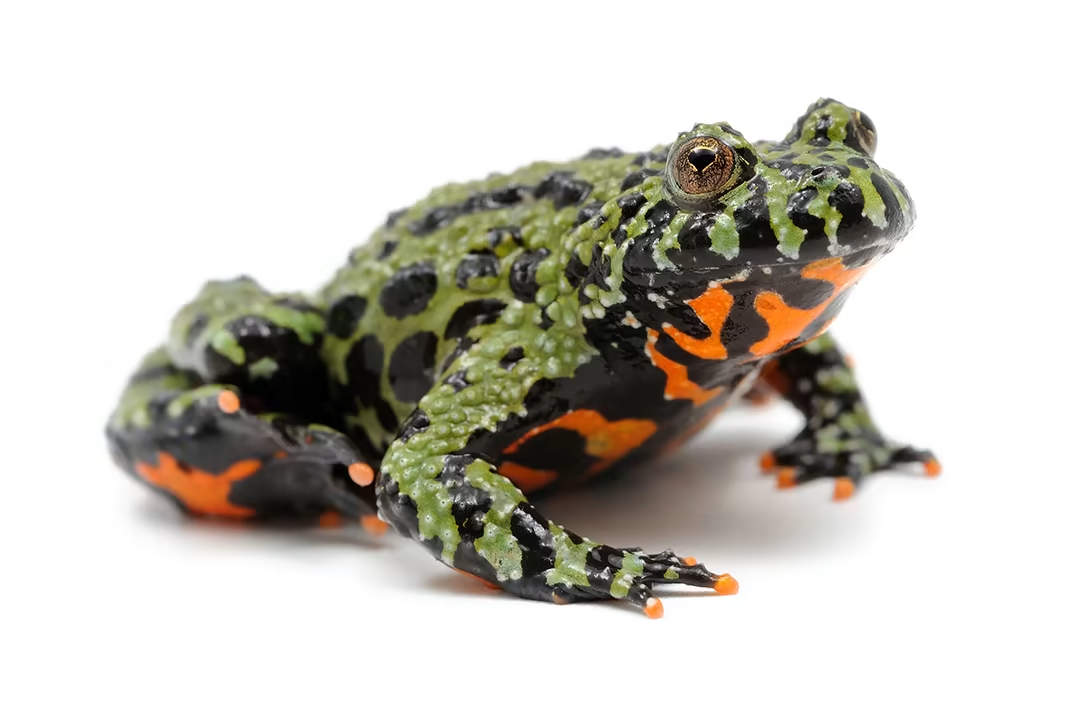
Fire-Bellied Toad Pet Care: Essential Guide to Setup, Food & Health
Learn how to care for Fire-Bellied Toads, recommended diet and habitat setup. Find the right food, supplies and equipment at your neighborhood Petco.
Updated on November 13th, 2025
- New Pet
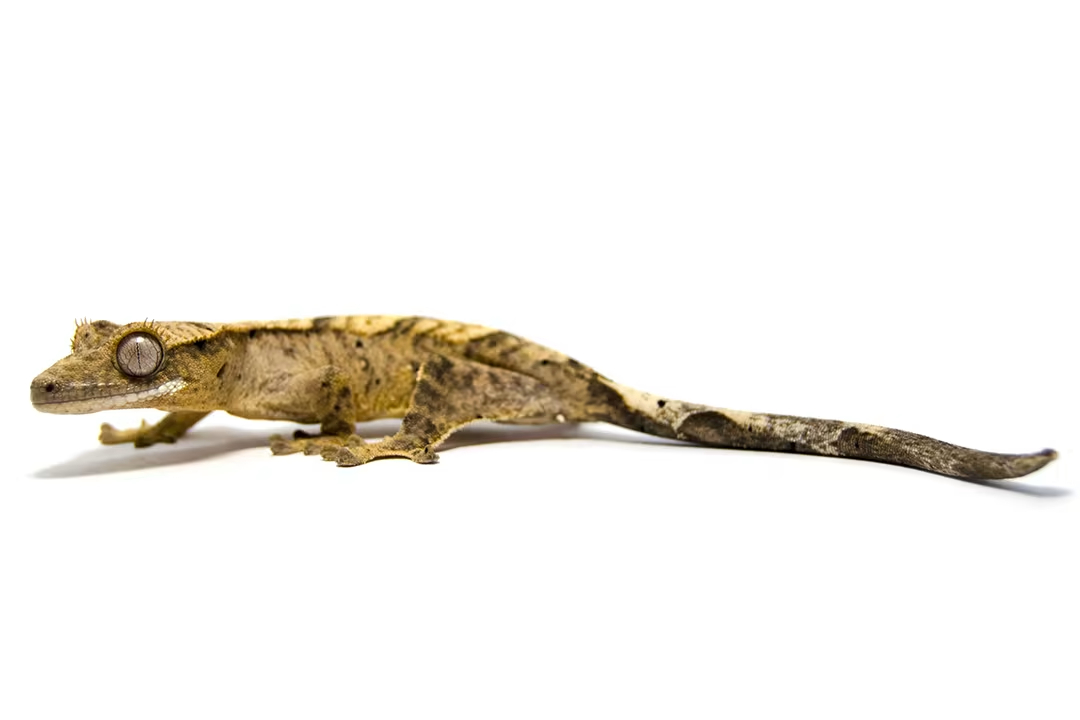
Crested Gecko Care: Habitat, Diet, Health, Supplies - Ultimate Guide
Learn how to take care of your Crested Gecko, tank size, diet & habitat setup. Find the right food, supplies and equipment at your neighborhood Petco.
Updated on November 13th, 2025
- Seasonal Topics
Don't Let Reptiles Freeze! Power Outage Warmth & Safety Tips
Learn some tips and strategies that can be used to get your pet reptiles safely through a power outage regardless of the time of year.
Updated on November 13th, 2025
- New Pet
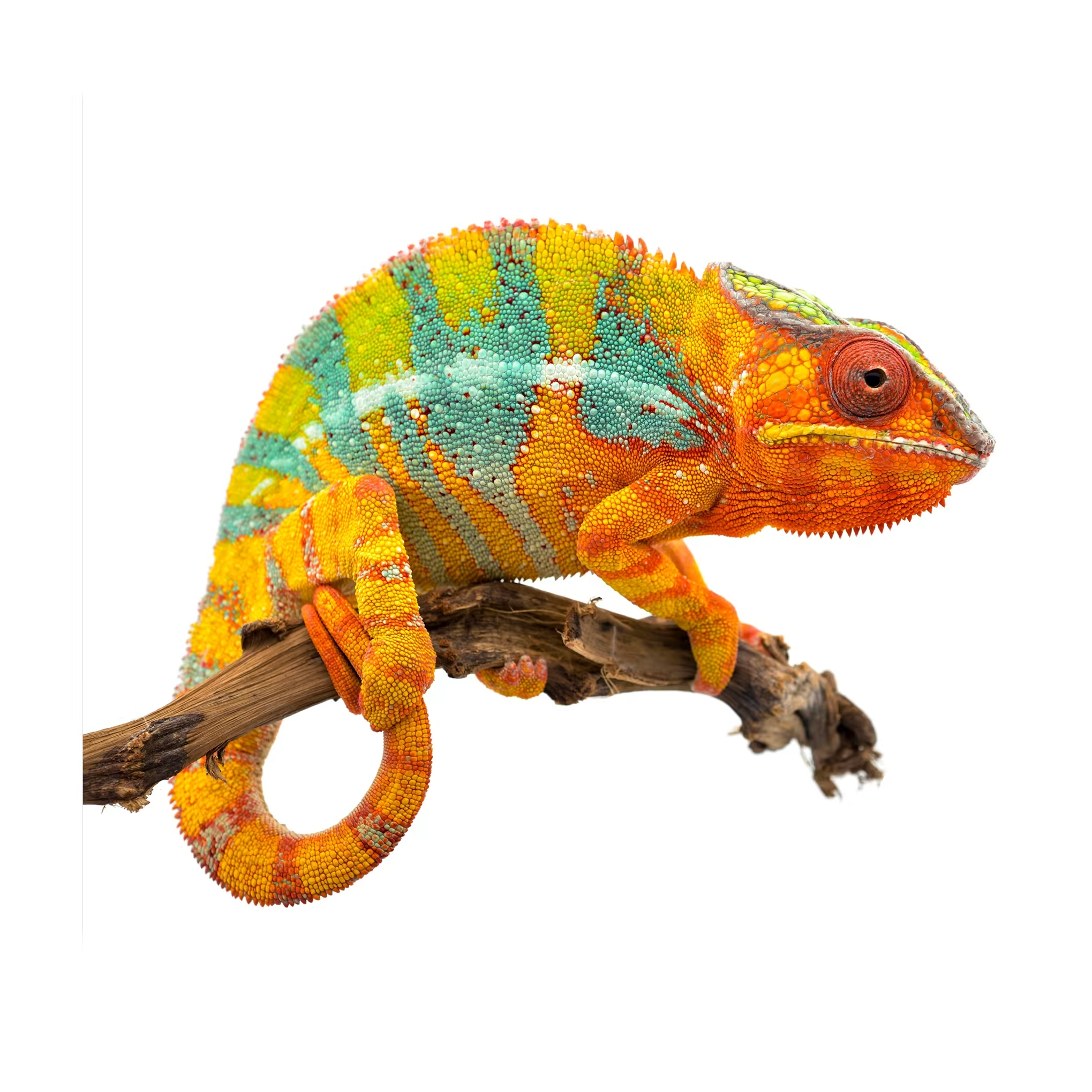
Warm Climate Chameleon Care: Best Food, Habitat & Health Tips
Learn how to care for warm climate Chameleons, recommended diet & habitat setup. Find the right food, supplies & equipment at your neighborhood Petco.
Updated on November 13th, 2025
- Health & Wellbeing
Is there a thing such as adding too much water conditioner? I use reptisafe for my African dwarf frog.
You would need to use an excessive amount in order to "overdose" most reptiles or amphibians. As long as you follow label directions, you should be fine. ReptiSafe is an excellent product. (This is my own opinion which comes from personal use)
Updated on August 12th, 2025
- Food & Nutrition
Carmine quit eating meal and wax worms about 2 weeks ago. He is a an adult male. He appears fat and sassy and not neurotic. Ha He is very tame and hangs out with me at my desk and types some interesting words when I am texting. And hangs out in
Confirm proper environmental parameters, especially temperature. Low temps can affect appetite in reptiles and amphibians. Be sure you are offering appropriately sized prey as well. Nothing bigger than the space between the eyes. I would suggest you correct the type of pet you have in the information section. I don't think you have a tadpole if he hangs out with you on the desk. Knowing the species allows us to provide more accurate advice.
Updated on August 12th, 2025
- Health & Wellbeing
Hello, I bought a frog eyed gecko from a petco and i brought him home and he hasn't been eating and he is only get thinner. I do not know what to do to help him.
Make sure his enclosure is warm enough. Low temps can affect appetite and digestion in reptiles. A hot spot between 85 F and 90 F should warm the rest or the enclosure sufficiently. Provide at least two homes as well. One on the warm side and one on the cool side. Offer appropriately sized prey, no bigger than the space between his eyes. Dust prey with an appropriate multivitamin and calcium supplement. You can soak him in a warm 50/50 solution of water and unflavored PediaLyte. This will warm him up and can treat or prevent mild dehydration. Of he doesn't begin eating in the next day or two, have him examined by your veterinarian or a vet experienced in treating reptiles.
Updated on August 12th, 2025
- Health & Wellbeing
I am about to graduate from college and will be moving back home to be with my mom who has cancer. I have a frog and a bearded dragon. Is it safe for them to be in the house with my mother?
Hello, and thanks for using Boop by Petco. While I would recommend your mother consult with her doctor about their recommendations for her, I see no reason why they couldn't be in the house. However, be aware that Salmonella bacteria is part of the natural skin flora of many reptiles, so I would take that into consideration and limit her contact with the pets. But, again, her doctor would be the best person to offer her guidelines. Hope this helps.
Updated on August 12th, 2025
- Health & Wellbeing
We purchased this bearded dragon from a local pet store. As I have researching proper care for him, I have noticed that he may in fact be a Rankins dragon. I am just curious as to what he is so we can provide proper care and housing for him. Thank yo
It is difficult to say for sure what type of dragon you may have. If this is a baby then it very well could just be a bearded dragon. Rankin dragons are usually smaller when they are fully grown that a bearded dragon. I would buy an enclosure big enough for a bearded dragon to be safe. Also, I would feed and treat it as if it is a bearded dragon. It is going to be less likely that you got a Rankin dragon from a local pet store. From my understanding, you have to seek out a Rankin dragon breeder to be sure you are getting this type of dragon. I hope this helps!
Updated on August 12th, 2025