

Two Easy Ways to Start Earning Rewards!
Become a member today! Members-only pricing and offers, personalized care notifications, Vital Care points back on every purchase and more!
 Become a credit card member today!
Earn 2X Pals Rewards points at Petco
when you use Petco Pay!APPLY NOWLearn More About Petco Pay Benefits
Sera Saltwater Fish Shop


Related Articles & Questions
- New Pet
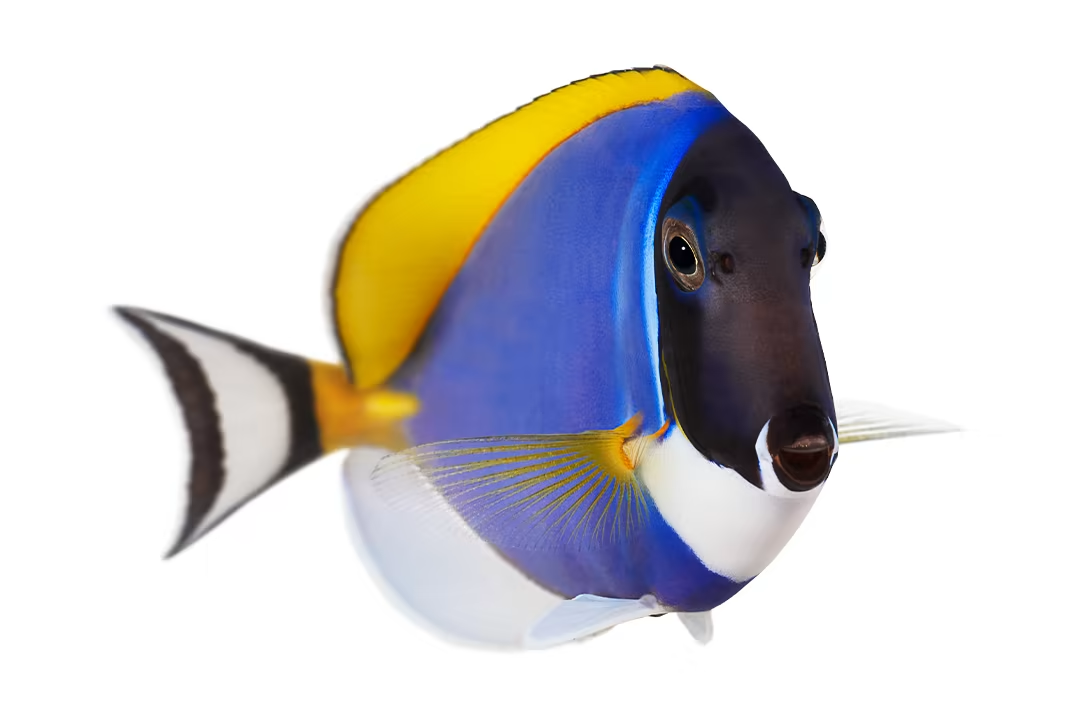
Your Ultimate Tang & Surgeonfish Guide: Tank, Food & Habitat
Learn how to care for a tang fish, recommended diet and aquarium setup. Find the right food, supplies and equipment at your neighborhood Petco.
Updated on October 23rd, 2025
- Home & Habitat
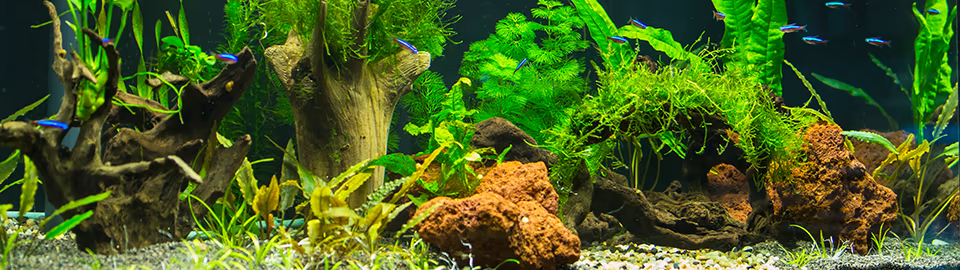
Aquarium Hardscaping: Essential for Healthy Fish & Gorgeous Aquascapes
Discover how to hardscape your aquarium here at Petco. Visit Petco and check out aquarium hardscape ideas, solutions and much more for your fish.
Updated on October 23rd, 2025
- New Pet
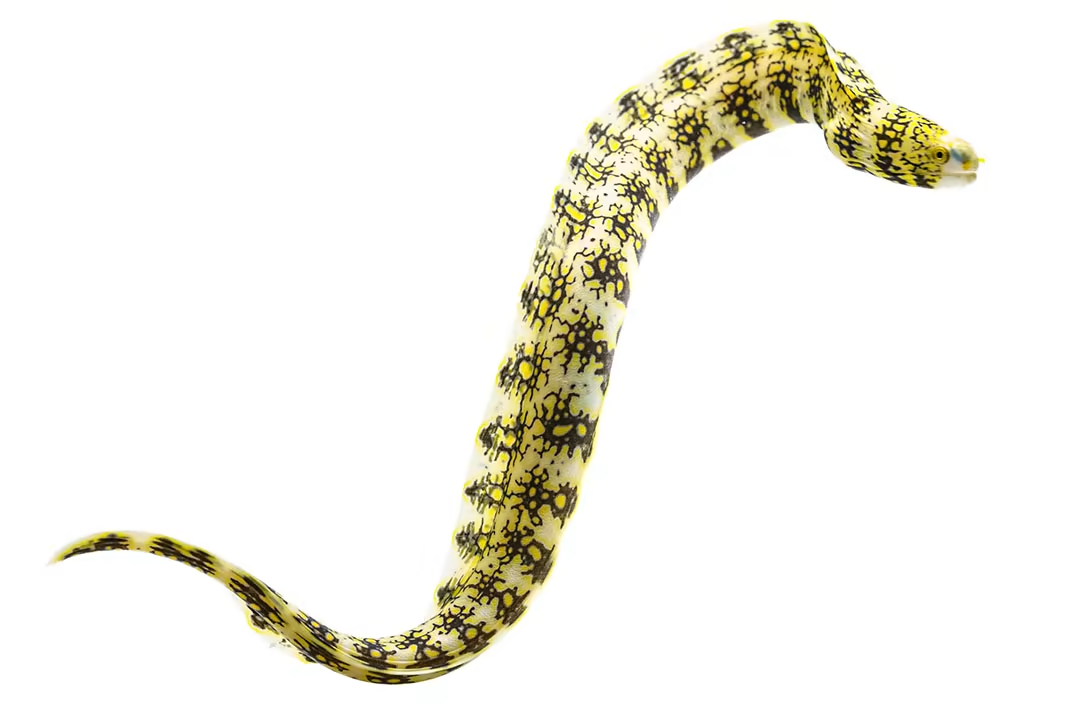
Mastering Marine Eel Care: Tank Setup, Diet, & Compatibility
Learn how to care for a Marine eel, recommended diet & aquarium setup. Find the right food, supplies & equipment at your neighborhood Petco.
Updated on October 23rd, 2025
- Food & Nutrition
Feeding Freshwater Fish: Ultimate Guide for a Thriving Aquarium
Feeding your freshwater fish isn't as simple as adding a pinch of flakes! Read these three tips to learn more about how to provide your pets the nutrition and environment they need.
Updated on October 23rd, 2025
- New Pet
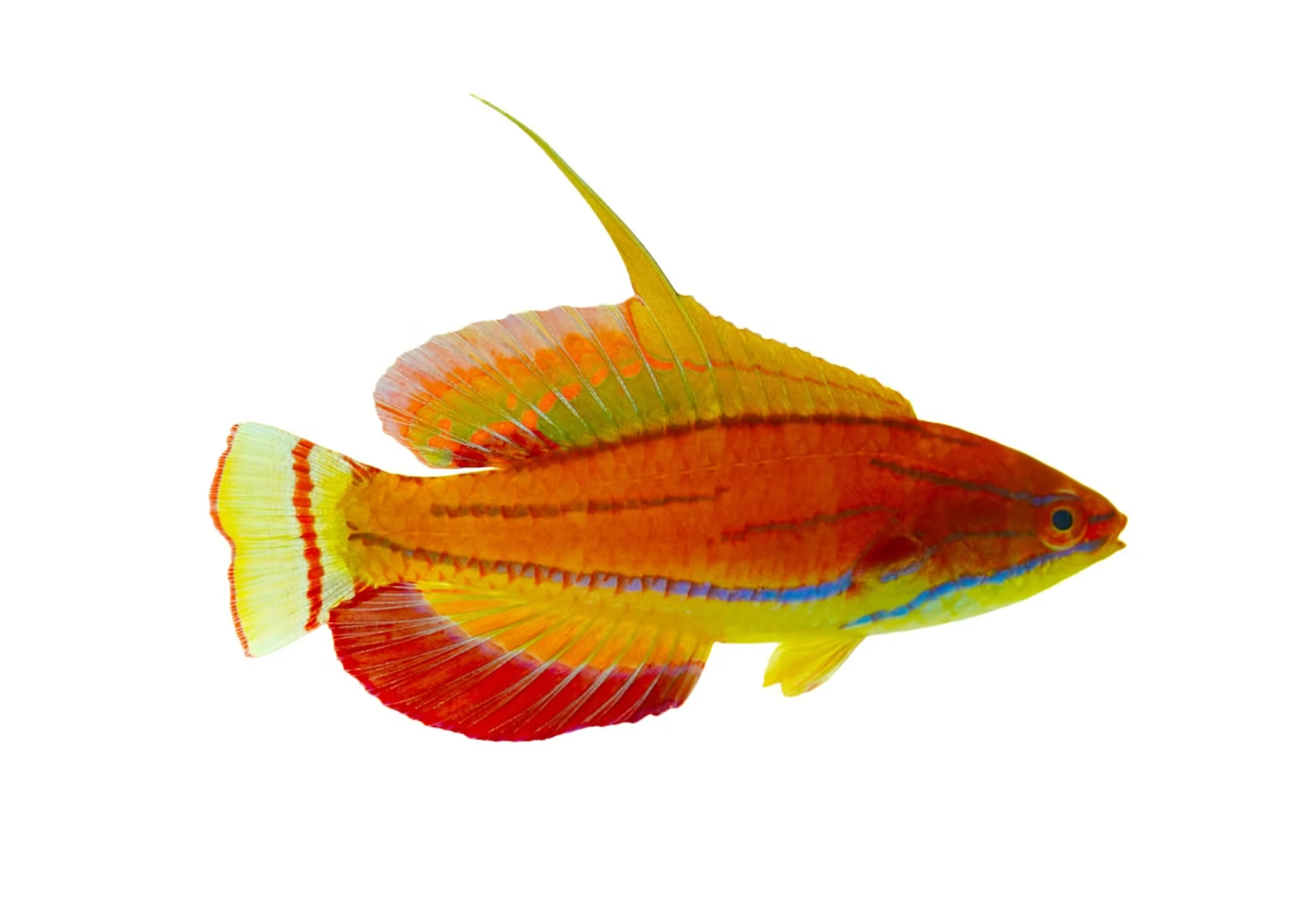
Ultimate Reef-Safe Wrasse Care: Tank Setup, Food & Compatibility
Learn how to care for a reef-safe wrasse, recommended diet and aquarium setup. Find wrasse for sale, supplies and equipment at your neighborhood Petco.
Updated on October 23rd, 2025
- Health & Wellbeing
I'm about to buy some new fishes mostly Tetra Can you help me what fish should I buy because I am beginner in this things. Please tell me what sort of things I should bring I have a one foot tank now other than that What should I purchase from Aquar
Before you buy any fish, you will need to set up the tank. A basic set up includes: a tank, filter, hood/light, heater, gravel and some decor. The tank should run without fish for at least 4 to 6 weeks. This gives it time to cycle. The Nitrogen Cycle is critical to the health of the tank and any fish you will be keeping. During this time, beneficial bacterial will populate the filter and substrate (gravel). These bacteria will be responsible for breaking down fish wastes and other wastes (uneaten food, dead plants, etc.). You will need a home test kit to monitor water chemistry (ammonia, nitrites, nitrates, pH) or you will have to submit water samples for testing. Most pet stores will do this for free or for a small fee. At first, you will see high levels of ammonia and nitrites. Over time, as bacteria grow, these levels will drop. When ammonia and nitrites are at 0 ppm and nitrates are below 20 ppm, you can consider adding fish. Regular (every 1 or 2 weeks) partial water changes as we
Updated on September 24th, 2025
- Health & Wellbeing
All of my fish died after using a product purchased at Petco called ACUREL-F. How do I get their water safe to put in new fish?
I would recommend to have the water completely changed. New water should be ideally submitted for quality testing. Most pet stores will do this for free or a nominal fee. High ammonia levels, PH imbalances may be responsible for that as well. Oxygen concentration and quality of the filters should be determined as well. Please do not hesitate to contact us again on the forum or by requesting a consultation if you have any more questions or to discuss it any further.
Updated on September 24th, 2025
- Health & Wellbeing
If I make water for salt water fish, about how much sea salt I need to put in water? And does the sea salt must be cleared
If your are using a product such as Instant Ocean ( www.instantocean.com ) or Reef Crystals ( http://www.instantocean.com/Products/Sea-Salt-Mixes/reef-crystals-sea-salt.aspx ), then directions will be on the container. Other products may also include instructions. The amount of sea salt will depend on the specific gravity you desire. Ocean water, or water used in marine tanks, has a specific gravity of 1.025, so you will need to dissolve enough salt into a quantity of water to reach that level. You will need to allow for 24 hours to make sure the salt has completely dissolved. If you want a step by step guide, click the link below. http://www.saltwatersmarts.com/guide-to-mixing-saltwater-517/
Updated on September 24th, 2025
- Health & Wellbeing
Hi . Sorry for the trouble again a few hours earlier I came with the Sam question. But now I seek a adviceLastweek I had one pair of glowlite tetras one black neon Tetra and 3 rosy but now I am left with only 1 rosy rest all have died (out of which
It is no trouble at all. It is why we are here! The first thing to check would be water chemistry. This can be done using a home test kit or by submitting a water sample for testing. Most pet stores will do this for free or for a small fee. Aim for 0 ppm ammonia and nitrites with a nitrate level of 20 ppm or less. Perform a partial water change, no more than 30% total volume, daily to stabilize or improve water chemistry. Use only aged or conditioned water that is temperature matched to prevent stress or shock. The species of fish you have do best in the mid to high 70s F up to about 82 F. If you have a newly set up tank, it may not have cycled properly or adequately. This would have led to toxic levels of ammonia which likely killed your fish. A tank needs to run, without fish ideally, for 4-6 weeks to establish a Nitrogen Cycle. This time period allows beneficial populations of bacteria to colonize the substrate and filter media. These bacteria are responsible for breaking down ammo
Updated on September 24th, 2025
- Health & Wellbeing
The fish has attacks of fast uncontrolled movement since we have it. Sometimes it hits itself on walls and objects. Lately it lays down on the floor on the side and rubs itself on objects. It got scratches all over and hurt his eye. It eats normally.
It certainly sounds like something is irritating this fish. Most often it is caused by parasites, usually ich. With ich you sometimes see salt like spots on the fins, you also may see a dusting in the dark if you shine a light. Other things that could cause itching would be irritants such as high ammonia levels. Personally I do not like adding chemicals to the water, especially not with other species such as snails and shrimp. To treat ich you can simply increase the water temperature and you can bathe the individual in salty water.
Updated on September 24th, 2025