

Two Easy Ways to Start Earning Rewards!
Become a member today! Members-only pricing and offers, personalized care notifications, Vital Care points back on every purchase and more!
 Become a credit card member today!
Earn 2X Pals Rewards points at Petco
when you use Petco Pay!APPLY NOWLearn More About Petco Pay Benefits
Sera Aquarium Protein Skimmers


Related Articles & Questions
- Home & Habitat
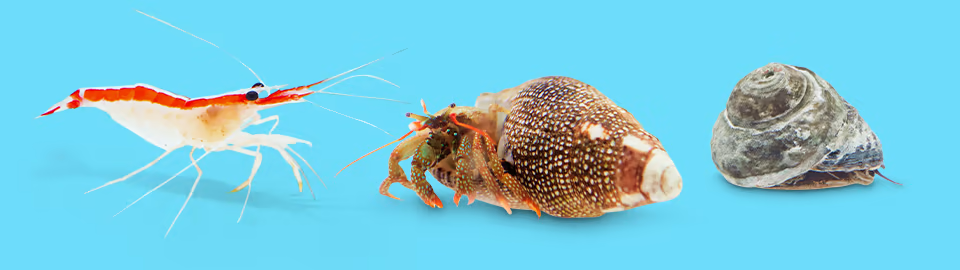
Saltwater Cleanup Crew: Banish Algae, Keep Your Tank Pristine
Visit Petco to learn about cleanup crews and how they can help your aquarium health.
Updated on October 23rd, 2025
- Home & Habitat
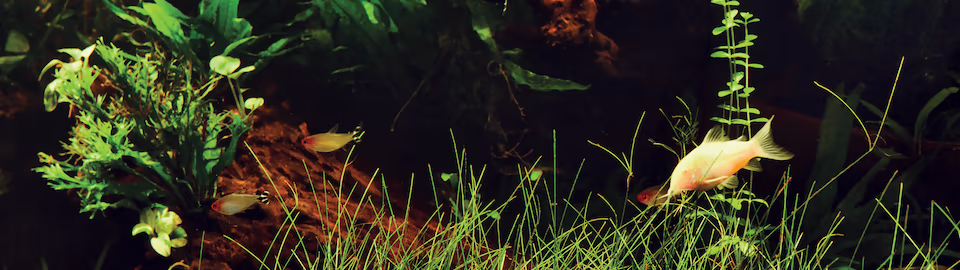
Your Guide to Healthy Freshwater Aquarium Plants & Thriving Fish
Learn how to pick the right aquarium plants, substrate, lighting, and fertilizers to ensure that your aquarium plants thrive and stay healthy.
Updated on October 23rd, 2025
- Home & Habitat
Aquarium CO2: Lush Plants, Vibrant Tanks & Thriving Aquatic Life
Wondering why you may need CO2 in your fish aquarium? Learn the basics from a Petco aquatics specialist.
Updated on October 23rd, 2025
- New Pet
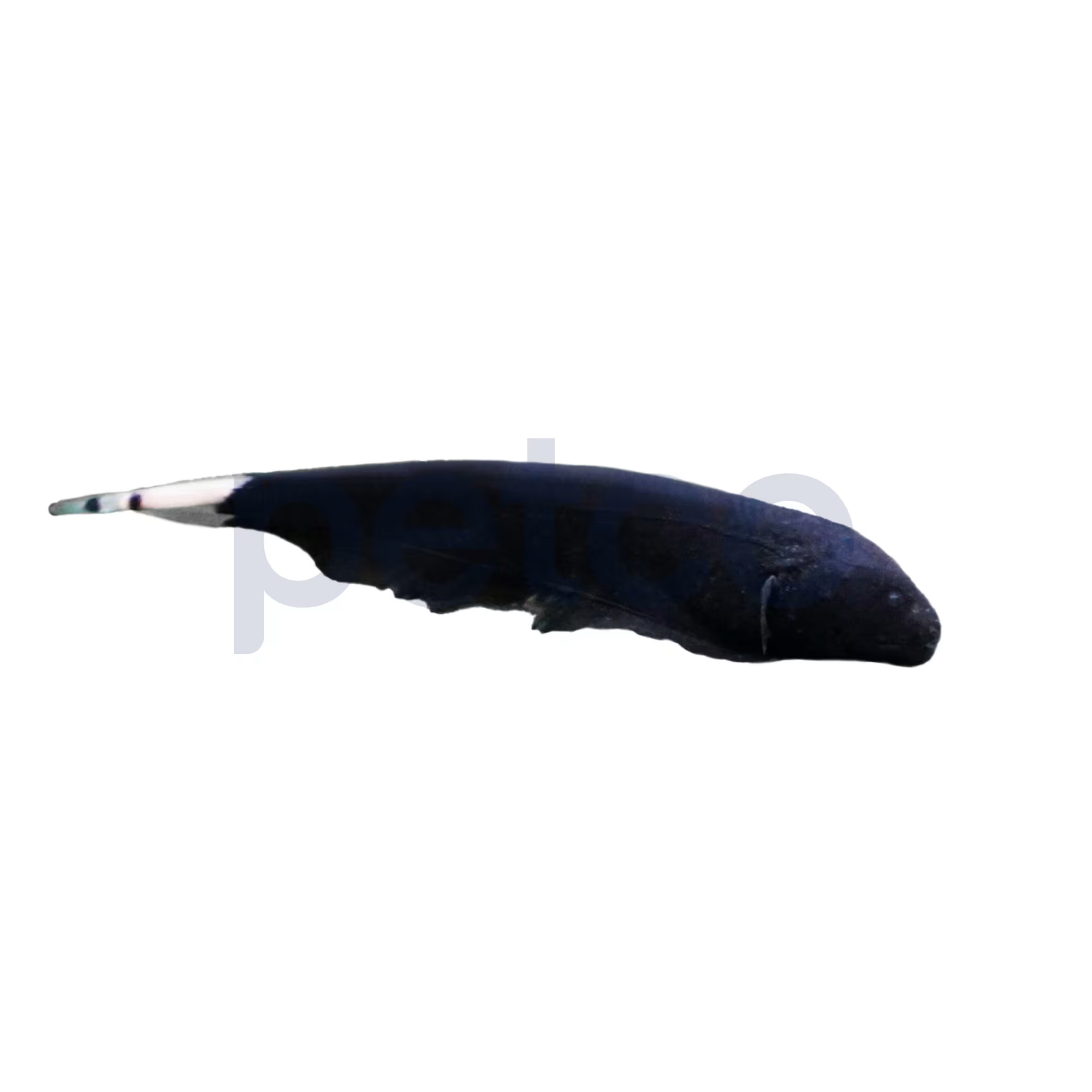
Ghost Knifefish Care: Setup, Diet, & Water for a Thriving Tank
Learn how to take care of Knifefish, recommended diet and tank setup. Find the right food, supplies and equipment at your neighborhood Petco.
Updated on December 22nd, 2025
- New Pet
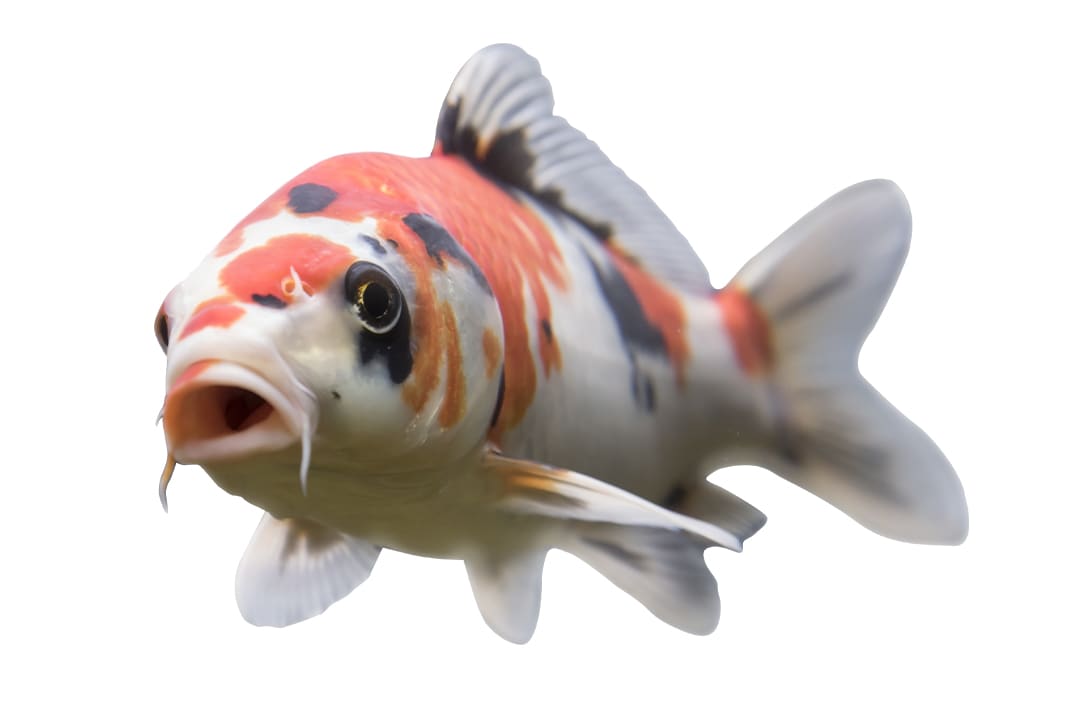
Mastering Koi Care: Optimal Tank, Food, Water Quality & Health Tips
Learn how to care for a Koi, recommended diet and aquarium setup. Find Koi for sale, supplies and equipment at your neighborhood Petco.
Updated on October 23rd, 2025
- Health & Wellbeing
How do you attach a skimmer to a tank filter?
Most protein skimmers simply attach to the intake of the filter. There should be installation instructions with the unit, but if not, you can use your preferred search engine to research "protein skimmer installation". Sites such as YouTube will also have videos showing the process.
Updated on September 24th, 2025
- Health & Wellbeing
What is the best way to clean a fish tank? Am I allowed to remove the fish so i can clean it more properly?
Hello, and thank you for using Boop by Petco. The most common (and easiest) way to clean a fish tank is with a siphon-style cleaner. Fish tanks should be cleaned in stages, generally replacing 10-15% of the water at a time. There are times where a larger cleaning might be necessary, but removing the fish and changing too much of the water at once can be quite a shock and can be dangerous to the fish, so this should be saved for only extenuating circumstances. Here's a helpful video on using a siphon cleaner: http://video.petco.com/v/18852/how-to-clean-your-aquarium-with-the-aqueon-siphon-vacuum-/ And some more reading you may find interesting on general fish tank cleaning and maintenance: http://www.firsttankguide.net/waterchange.php Hope this helps!
Updated on September 24th, 2025
- Health & Wellbeing
All of my 7 Fush are gulping on the top of the tank and I'm doing a water change now will that help I'm really scared pls help
Check the temperature and make sure the water is not too hot (heater defective?), check the pH and also the hardness and make sure they are within the parameters needed for your fish. Change 1/3 of the tank's water. Check the filter and make sure it is not plugged up with a lot of food and poop. Rinse the filter in warm water (same temperature as the water in the tank) so you do not kill off the good bacteria which keep the water clean. Check Nitrite(toxic) and nitrate (not toxic) levels. All this should help you ensure the perfect environment for your fish. If you do not have way to oxygenate the water you may want to extend the return pipe of your filter to the surface or above the surface of the water in order to make it integrate oxygen from the air.
Updated on September 24th, 2025
- Health & Wellbeing
My koi are loosing scales and one of my goldfish has white bumps on it's head. What could it be?
This could be bacterial or parasitic infection. It is difficult to determine definitively since the image provided is not clear. Fish can be difficult to photograph. Basic care includes checking water quality and chemistry. This can be done using a home test kit or by submitting a water sample for testing. The local Petco may do this for free or for a small fee. There should be an absence of ammonia and nitrites with nitrates at 20-60 ppm. pH should be as close to 7 as possible, avoiding large swings. Koi can tolerate a wide range in temperature, but generally do best between 65 F and 75 F. Again, avoid large swings in temperature to prevent stress or shock. If necessary, a partial water change can be done to stabilize chemistry and/or improve water quality. If you have other koi, consider placing this one in a hospital tank to make treatment easier and to prevent spread if the condition is infectious. Plain aquarium salt (NOT table or Epsom salt) can be used to reduce stress, impro
Updated on September 24th, 2025
- Health & Wellbeing
Help! The submersible pump on my 3.7 gallon is making loud motor sounds and spitting out small bubbles that by morning cover the whole top of the tank. I’m scared for my fishes life what should I do?
The impeller, the part that moves the water, may be bad or there may be a clog or debris in the pump. If you can get to it, check it for wear or damage and replace it or clear any debris or blockages. If you can't get to it, you may need to replace the entire unit.
Updated on September 24th, 2025