Two Easy Ways to Start Earning Rewards!
Earn 2X Pals Rewards points at Petco
when you use Petco Pay!
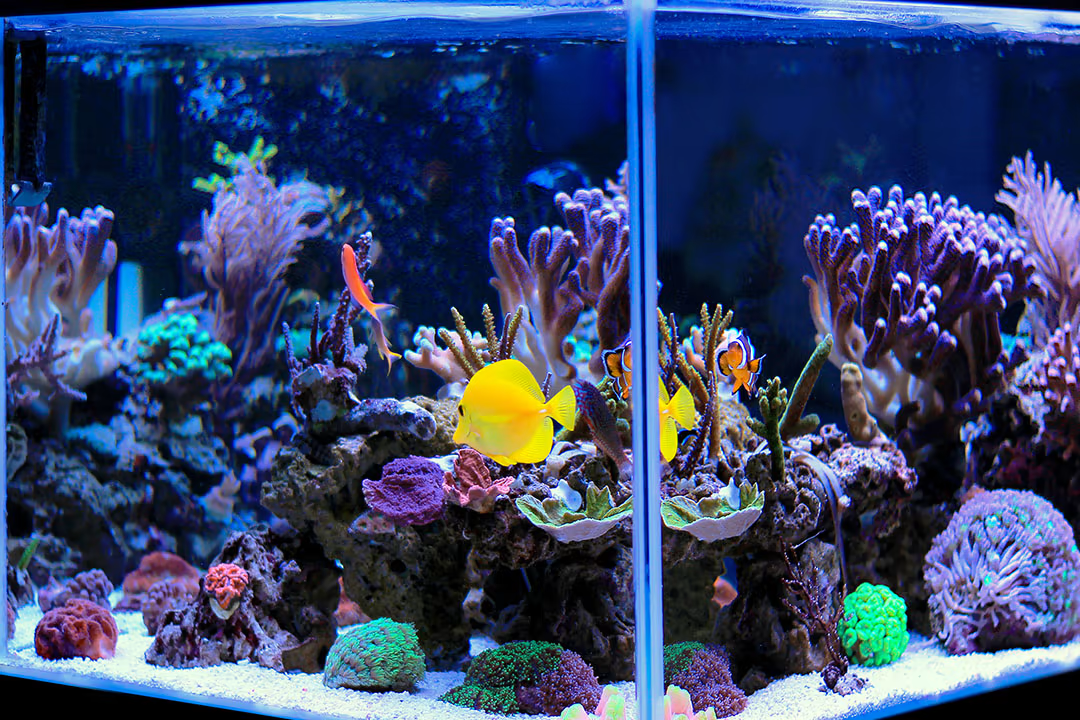
Learn how to set up a saltwater fish tank and key considerations regarding placement, supplies needed, and the overall set up process.
Updated on November 13th, 2025
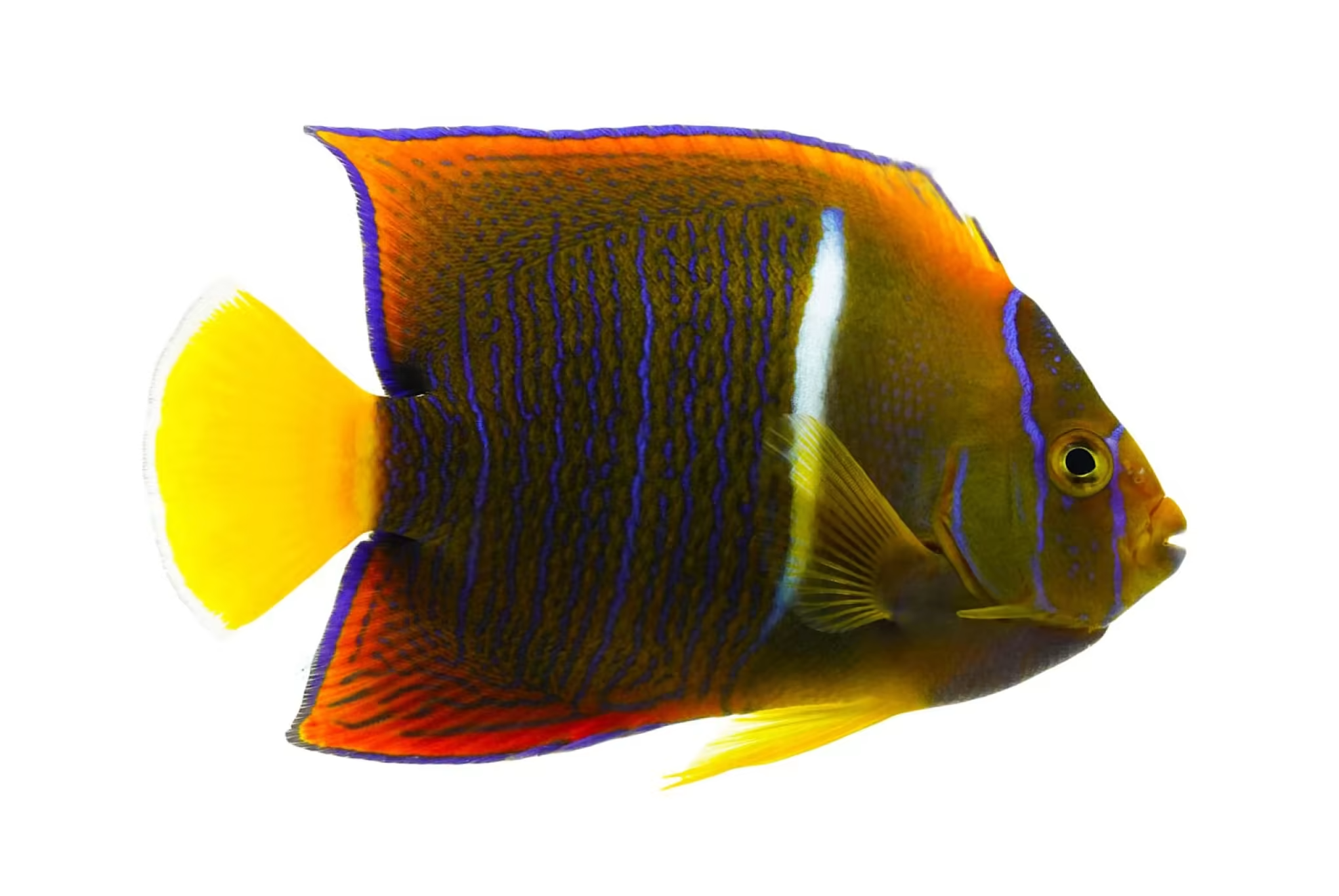
Learn how to care for large marine fish, recommended diet and habitat setup. Find the right food, supplies and equipment at your neighborhood Petco.
Updated on November 13th, 2025
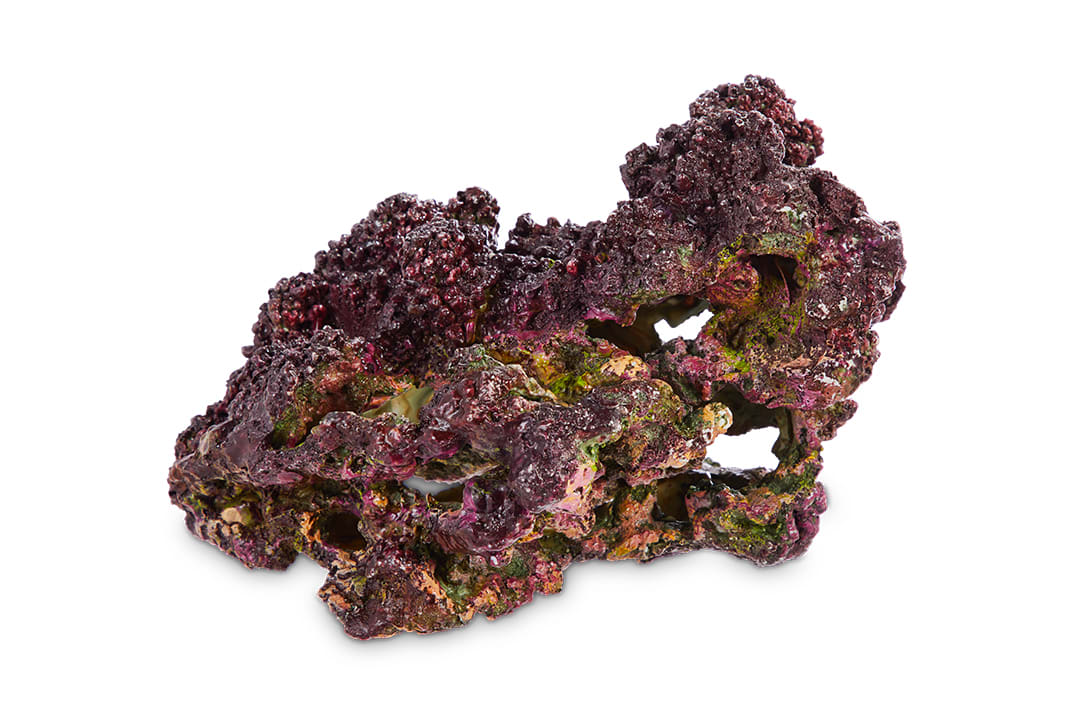
Learn how to care for live rock & sand. Live rock serves as a platform for coral and invertebrates and provides a surface for beneficial bacteria to live.
Updated on November 13th, 2025
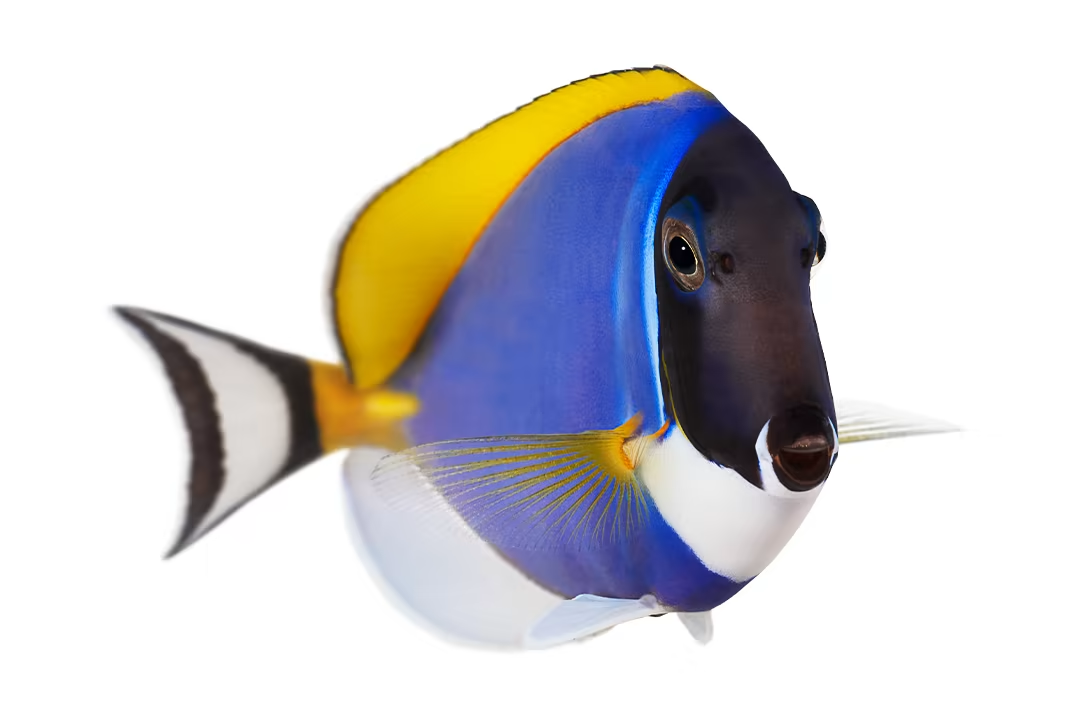
Learn how to care for a tang fish, recommended diet and aquarium setup. Find the right food, supplies and equipment at your neighborhood Petco.
Updated on November 13th, 2025
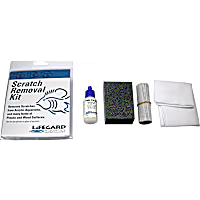
Find out what tools you’ll need and discover the best way to get your aquarium back on track without starting over and find out how to maintain a clean fish tank.
Updated on November 13th, 2025
Salt water aquarium requires a great deal of regular maintenance to keep the fish alive. This can be helped by adding live rock (similar to live coral) to the aquarium. Below is a link to some great information for maintaining a salt water. aquarium.http://www.madhattersreef.com/20-ways-improve-aquarium-husbandry/ I hope that helps and all is well with your fish.
Updated on August 12th, 2025
First, perform a partial water change, vacuum gravel thoroughly and wipe down any tank furniture. This is critical because clean water is the cornerstone for treatment and recovery. Use only conditioned water that is temperature matched to prevent stress or shock. Next, you can use any one of the commercial ich medications, such as Ich Guard (Tetra), Super Ick Cure (API) or Rid Ich Plus (Kordon). These can be found in the Aquarium section of the local Petco. Follow label directions carefully. This method will typically work with most fish. Another option would be to use plain aquarium salt ( NOT table or Epsom salt). Dissolve 1 tablespoon of salt per 5 gallons of water in a cup or two of tank water and gently pour it into the tank. At the same time, gradually increase the water temp to about 86 F. Hold it there for 14 days. The warm temps will speed up the life cycle of the parasite and the salt will kill it. Afterwards, gradually reduce water temp and perform another partial water ch
Updated on August 12th, 2025
Hi there! Thanks for using Boop by Petco! This is the same question I asked myself a few years ago when I started with my first saltwater aquarium. It really depends on a lot of factors. Consider that it requires a significant amount of time and money commitment if you want to do it the right way. It is really time consuming though extremely rewarding. Water quality and equilibrium of the tank are key and ensuring both requires using the right equipment and constantly testing the water and adjusting things as needed. I would consider reading a lot about it before commiting any money to it. I personally love it but it really is a second job I have every Saturday morning just to take care of my tank. Good luck!
Updated on August 12th, 2025
Maintain pristine water quality. This is the foundation of treatment. It will require partial water changes every few days and a complete cleaning of the substrate (if any) and any tank furniture. I see you have frogs, which can make treatment trickier. In tanks without amphibians or scaleless fish, plain aquarium salt (NOT table or Epsom salt) can be used at 1 tablespoon per 5 gallons of water for 14 days. You can remove the frog(s) and treat them separately if you want to use salt. The Pimafix, or Melafix also, can be used in conjunction with salt.
Updated on August 12th, 2025
The quick start liquid will add nitrifying bacteria but will not eliminate ammonia or nitrites. Both are harmful and can kill fish in high enough concentrations. You can use a home test kit to test the water or you can submit a sample for testing. Most pet stores or aquarists will do this for free or for a nominal fee. There are chemical additives you can use to decrease levels. When adding water, use treated water or aged water. Ideally, the tank should be left empty for about 4 weeks to properly establish the nitrogen cycle before adding fish. At this point, you may lose the second fish regardless of treatment. Test the water, make adjustments, let the tank cycle and start fresh. Adding an airstone can increase oxygen levels.
Updated on August 12th, 2025