Two Easy Ways to Start Earning Rewards!
Become a member today! Members-only pricing and offers, personalized care notifications, Vital Care points back on every purchase and more!
 Become a credit card member today!
Earn 2X Pals Rewards points at Petco
when you use Petco Pay!APPLY NOWLearn More About Petco Pay Benefits
Lifegard Aquatics Saltwater Fish Shop


Related Searches
Related Articles & Questions
- Care Sheets
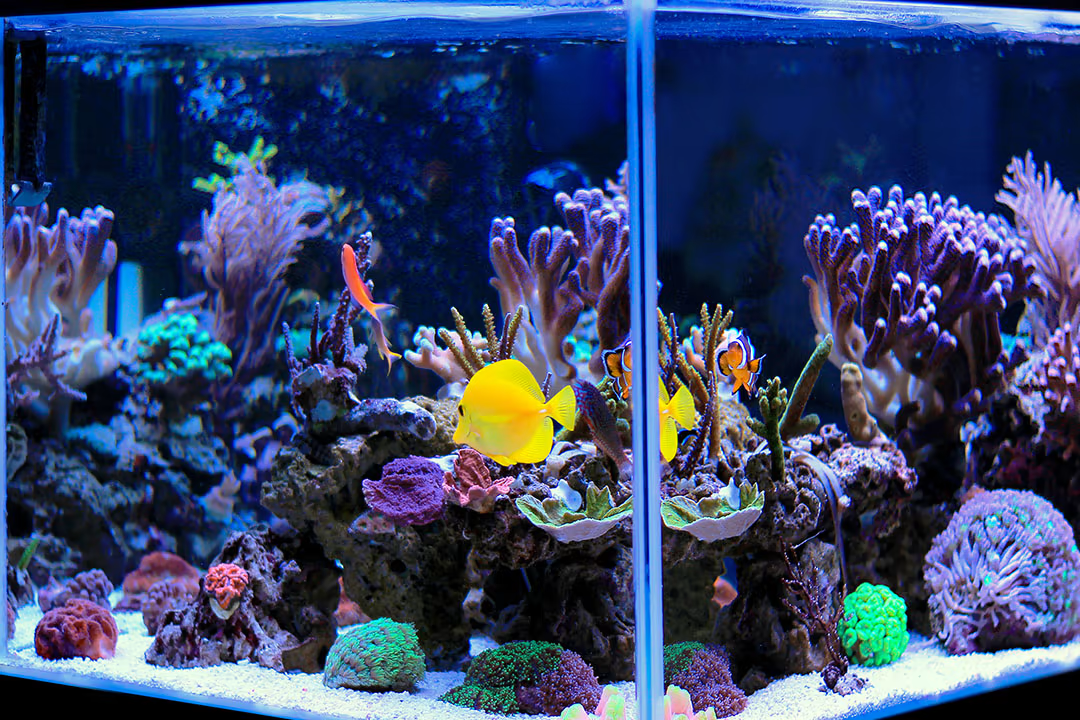
Build Your Thriving Saltwater Tank: Easy Setup for Marine Life
Learn how to set up a saltwater fish tank and key considerations regarding placement, supplies needed, and the overall set up process.
Updated on October 23rd, 2025
- Care Sheets
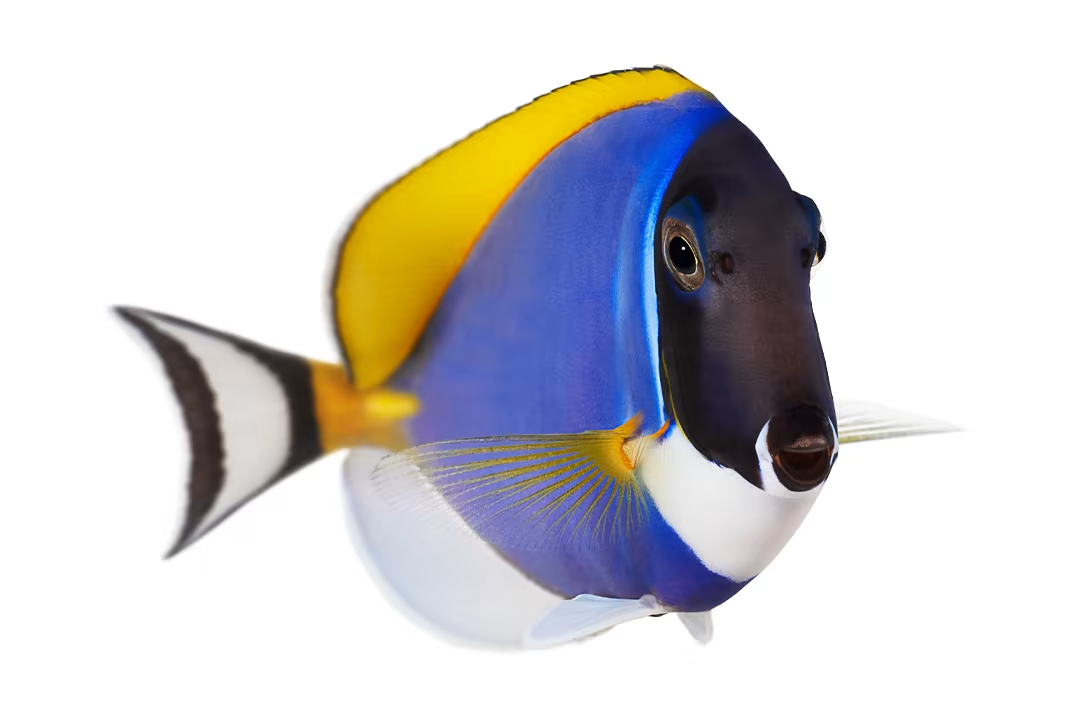
Your Ultimate Tang & Surgeonfish Guide: Tank, Food & Habitat
Learn how to care for a tang fish, recommended diet and aquarium setup. Find the right food, supplies and equipment at your neighborhood Petco.
Updated on April 9th, 2026
- Care Sheets
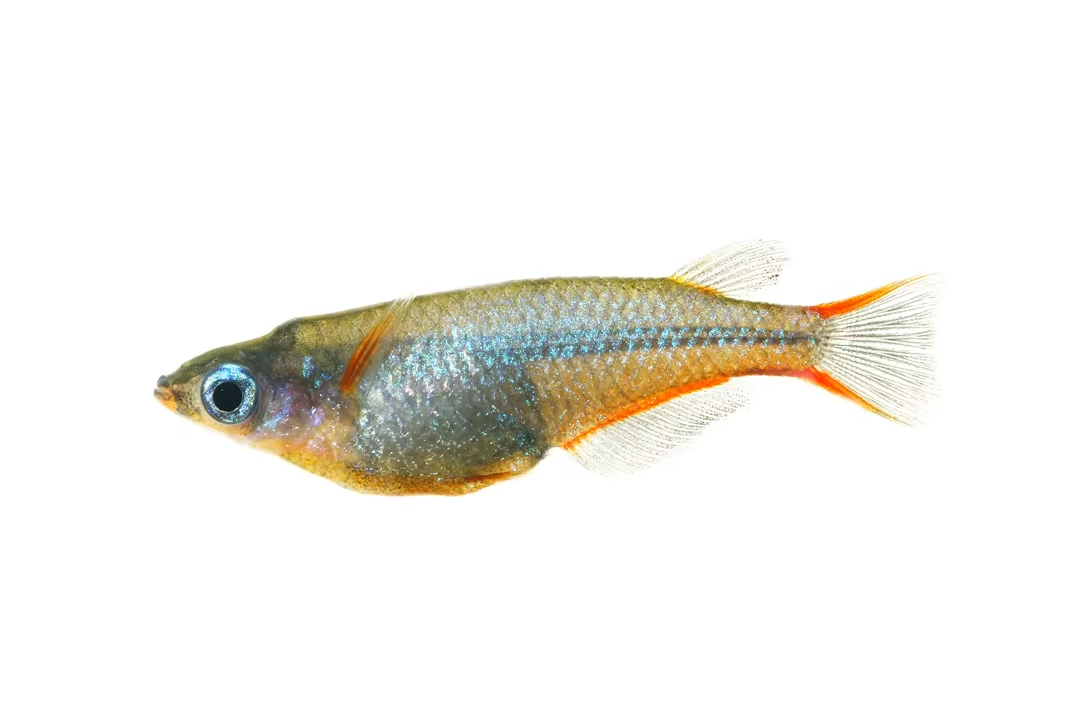
Complete Ricefish Care: Setup, Diet, & Habitat for Thriving Fish
Learn more about these slow moving fish and the care they need when added to your aquatic environment.
Updated on April 9th, 2026
- Care Sheets
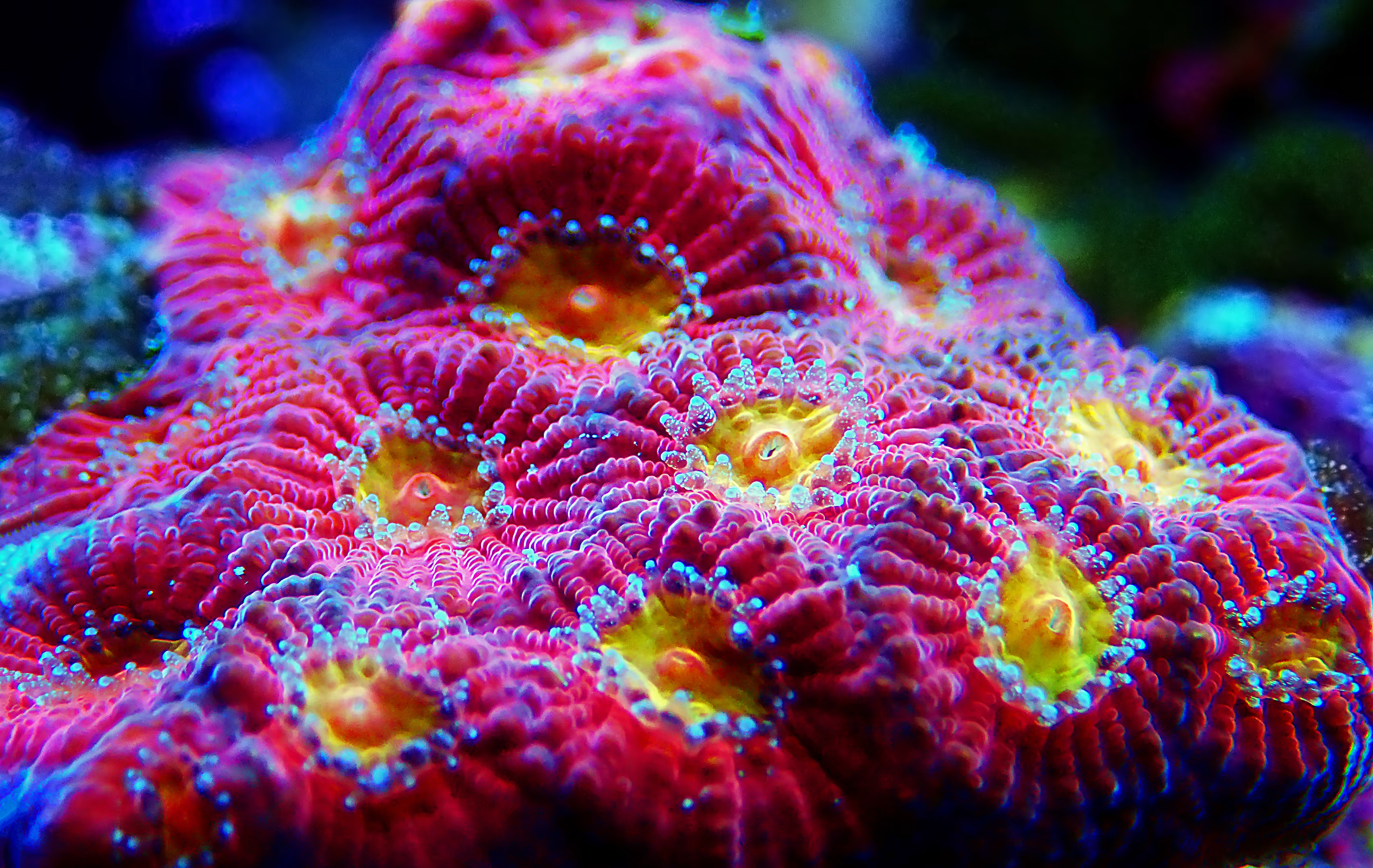
Hard Coral Care: Setup, Feeding, & Compatibility for Your Reef Tank
Learn how to care for hard coral, recommended diet and aquarium setup. Find the right food, supplies and equipment at your neighborhood Petco.
Updated on April 9th, 2026
- Care Sheets
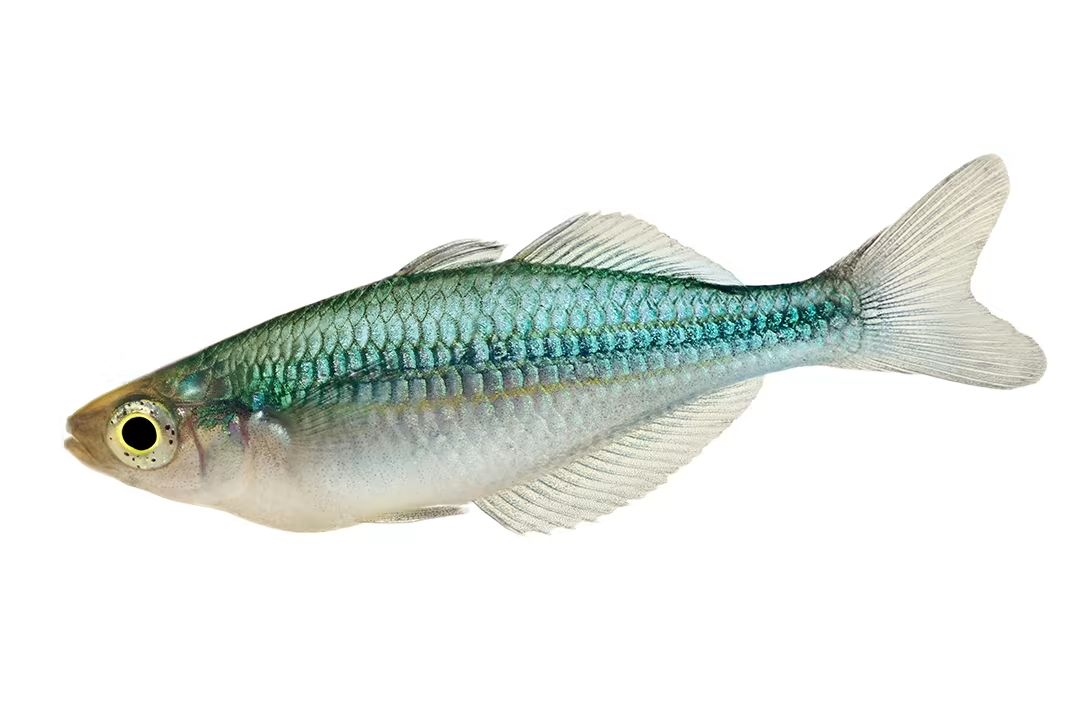
Rainbow Fish Care: Tank, Food, & Compatibility for Thriving Pets
Learn how to care for Rainbow fish, recommended diet and aquarium setup. Find the right food, supplies and equipment at your neighborhood Petco.
Updated on April 9th, 2026
- Vet Q & A
My fish died. How do I make my aquarium water safe for new fish?
I would recommend to have the water completely changed. New water should be ideally submitted for quality testing. Most pet stores will do this for free or a nominal fee. High ammonia levels, PH imbalances may be responsible for that as well. Oxygen concentration and quality of the filters should be determined as well. Please do not hesitate to contact us again on the forum or by requesting a consultation if you have any more questions or to discuss it any further.
Updated on September 24th, 2025
- Health & Wellness
Why is my fish sick, not eating, gasping, and darting in its tank?
Check water chemistry first. Use a home test kit or submit a water sample for testing. The local Petco may do this for free or for a small fee. Aim for an absence ( 0 ppm) of ammonia and nitrites with nitrates at 20 ppm or less. Perform partial water changes, no more than 30% at a time, to stabilize chemistry and/or to improve water quality. Use only conditioned water that is temperature matched to prevent stress or shock. Check water temp as well. Any of these can drive a fish to the surface. The "flashing" (darting about) can be due to infection (bacterial, fungal or parasites). Consider a broad spectrum antibiotic or an "all in one" product to treat multiple infections. Look in the Aquarium section of the local Petco for options. Follow label directions carefully and remove the carbon filter insert during treatment if indicated.
Updated on September 24th, 2025
- Vet Q & A
Why does my fish have a white growth on its head after coming inside?
Check water chemistry and filtration. Sunny may have developed a bacterial or fungal infection due to the switch in environment. Clean water is crucial to resolving infection. Perform regular partial water changes. Use only aged or conditioned water that is temperature matched to prevent further stress or shock. Maintain water temperature between 75 F and 72 F. Minor infection maybe resolved using plain aquarium salt (NOT table salt). Salt is a great general tonic. It reduces stress, improves gill function and aids in recovery. Dissolve 1 teaspoon of salt per gallon of water in a cup of tank water and gently pour it into the tank. Treat until symptoms resolve. When performing water changes, use just enough salt to treat the water being replaced, not the entire tank volume. If necessary, you can use a broad spectrum medication if symptoms persist. Look in the aquarium section of the local pet or fish store for products such as Kanaplex, Maracyn or Lifeguard by Tetra. Follow label directions carefully and remove the carbon filter insert if indicated.
Updated on September 24th, 2025
- Food & Nutrition
New to fish? What are the easiest fish and tank size for beginners?
Guppies or Neons are excellent "starter" fish. Care is simple and they are inexpensive. A standard 10 gallon tank is recommended to start. Most people don' t realize the amount of "work" needed to maintain a tank. Filter maintenance, monitoring water chemistry, water changes, monitoring fish health and providing a balanced diet are just a few items that need regular attention to keep a tank thriving. Even though fish aren't as cuddly as cats and dogs, they do have their own personalities and even respond to their owners, especially at feeding time! Studies have shown that simply watching fish in a tank can lead to a reduction in both heart rate and blood pressure. It is quite relaxing.
Updated on September 24th, 2025
- Vet Q & A
Why are my fish dying with bleeding, white spots, and polluted water?
I'm sorry you are having difficulties with your aquarium. There are several issues that should be dealt with right now. They are water chemistry, aquarium size and choice/number of fish. Any new aquarium should be set up and, ideally, run empty for several weeks (usually 4-6 weeks). This is so beneficial bacteria have an opportunity to populate the substrate and filter. These bacteria are necessary to break down wastes that fish will produce. The technical phrase for this is "establishing the Nitrogen cycle". These bacteria will break down wastes into ammonia then nitrites then nitrates. Nitrates can then dissipate or be absorbed/used by live plants. In high enough concentrations, ammonia and nitrites are toxic and can kill fish. Cycling a tank with fish is possible but it increases the risk of loss. Water chemistry should be checked every few days using a liquid home test kit. A water sample can be submitted for testing , but is not as convenient as testing yourself. Most pet stores or fish stores will do this for free or for a small fee. Partial water changes, no more than 30%, can be done as needed to stabilize chemistry and maintain water quality. Choices for water conditioners include NovAqua, AmQuel Plus, Prime, StressZyme or StressCoat. Tank size is another concern. With most fish, the widely accepted "one inch of fish per gallon" will be sufficient. For koi and other carp species, including goldfish, the rule is not sufficient. At full size, goldfish need 20 gallons per fish with an additional 10 gallons for each additional fish. Koi do best in larger tanks, much larger...we're talking in the hundreds of gallons or small ponds. These species produce a larger than average bio-load (wastes) that can quickly affect water quality in a tank. To combat this, large water volumes and powerful filtration are required. Any filter should be rated for at least twice the tank volume. I'm not sure what size tank you have now, it may be fine if the fish are young and small, but they will quickly outgrow it. The last issue is choice of fish. Koi and goldfish are cold water fish. They do best in water between 65F and 72F. Most species of sharks do best in the high 70sF to low 80sF. Keeping fish in incorrect water temperatures will lead to stress and illness. This could be compounded by the water quality/chemistry issues you are having currently. Until the chemistry is stable and water quality is maintained, your fish will continue to become ill and possibly die. Any treatment will not be successful in this situation. Do not purchase or add any more fish until the tank has cycled. If you have additional questions, you can post them in the forum or request a consultation to discuss the case in greater depth.
Updated on September 24th, 2025