Two Easy Ways to Start Earning Rewards!
Become a member today! Members-only pricing and offers, personalized care notifications, Vital Care points back on every purchase and more!
 Become a credit card member today!
Earn 2X Pals Rewards points at Petco
when you use Petco Pay!APPLY NOWLearn More About Petco Pay Benefits
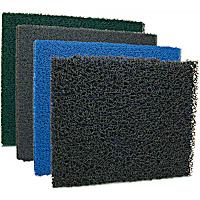
Lifegard Aquatics Pond Filters


Related Articles & Questions
- Care Sheets
Aquatic Pet Safety: Keep Your Home Aquarium Pets Healthy & Safe
Learn how to safely handle your aquatic life to avoid toxin & bacterial exposure. Find aquatic life care supplies at your neighborhood Petco pet care center.
Updated on October 23rd, 2025
- Care Sheets
Don't Release Pets: Protect Waters from Invasive Fish & Plants
Habitattitiude™ commits to environmental protection by not releasing unwanted fish into public areas.
Updated on October 23rd, 2025
- Care Sheets
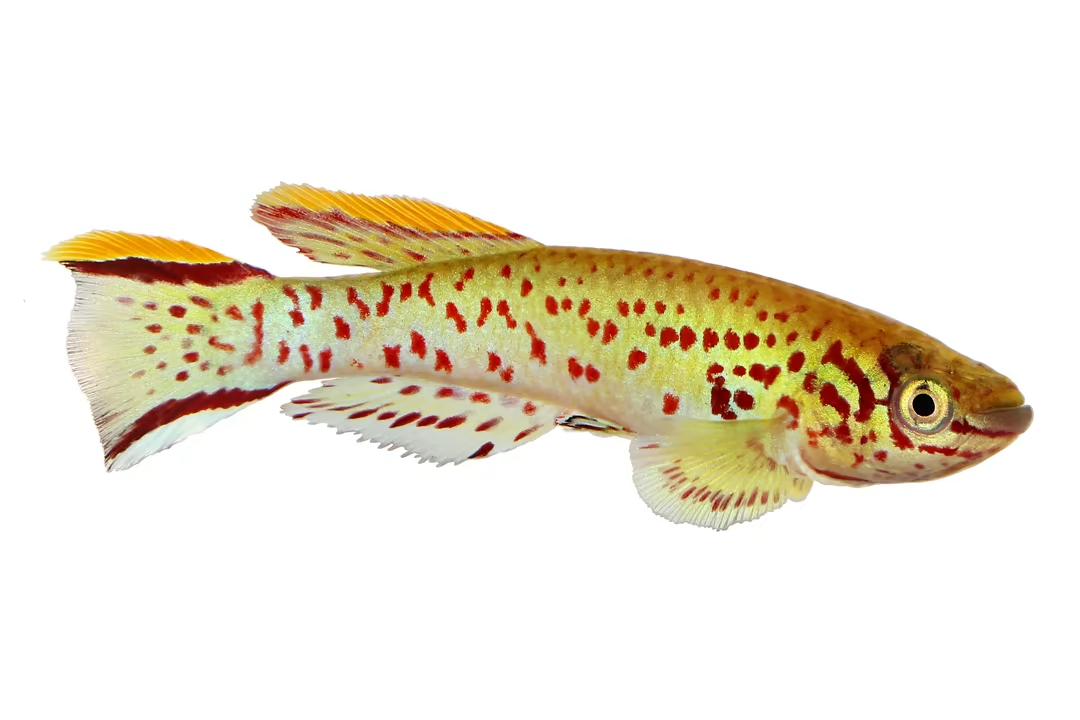
Killifish Care Guide: Unlock Vibrant Health for Your Aquarium Fish
Learn more about Killifish and their care to see if they are the right aquatic life to begin or add to your aquarium.
Updated on April 9th, 2026
- Care Sheets
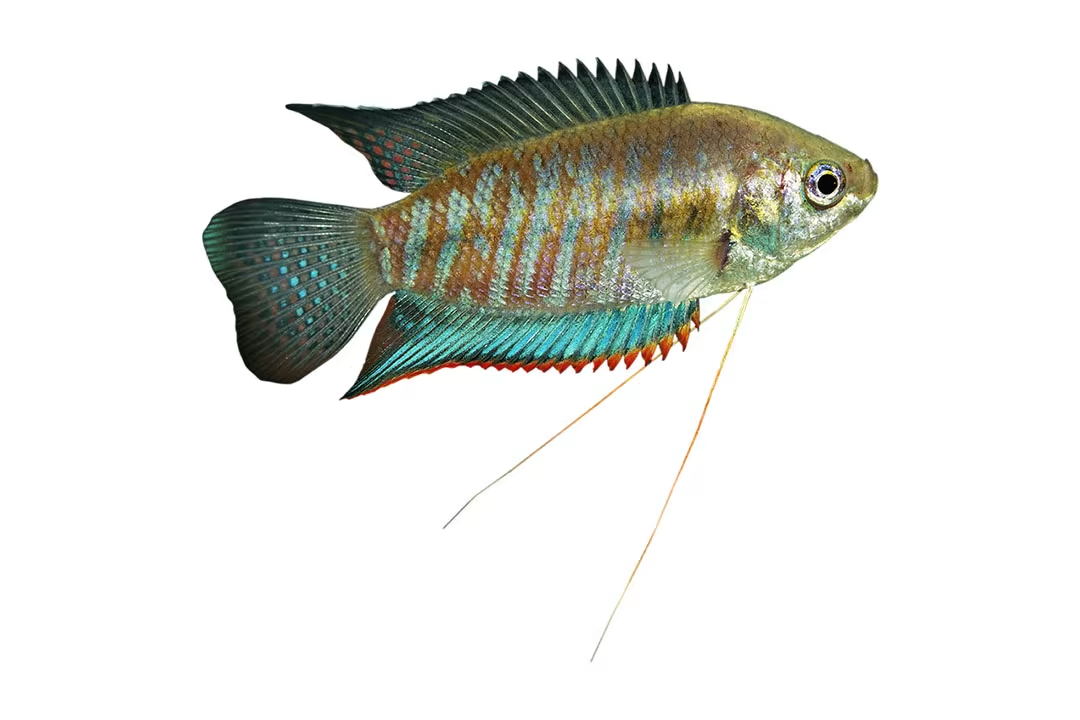
Paradise Fish Care: Complete Guide to Tank Size, Food, & Habitat Setup
Learn how to care for Paradise fish, recommended diet and aquarium setup. Find the right food, supplies and equipment at your neighborhood Petco.
Updated on April 9th, 2026
- Home & Habitat
How to Set Up a Fish Tank: Complete Setup Guide
Everything you need to know about how to start a fish tank. Learn about setting up an aquarium, choosing the right type, and acclimating new fish to your tank.
Updated on June 19th, 2026
- Food & Nutrition
What fish and supplies are best for a beginner's small tank?
Without anything to use for scale, it is hard for me to tell how big your tank is, but in general it seems very small. Also, the water that is in the tank appears very cloudy right now, so that would be the first place to start. Water quality is very important, and will make or break your ability to house and care for fish. I would recommend getting a good filter system (you can visit a local pet store to assist you with brands in your area, as I am not familiar with what you can get in India). Be sure to bring the measurements (height, length, width) of your tank, or the gallons or liters so they can tell you what capacity of filter you will need. Everything else will depend on what types of fish you get - if you plan on getting multiple fish, they will need to be small - a general rule of thumb is one square inch of fish per gallon of water. Depending on the species you get, you may need to also get a bubbler to ensure there is enough oxygen in the water for them, and you will also likely need to get some sort of substrate for the bottom and cage furniture (different species have different air requirements, and some are secretive and like to hide). You may also need a water heater, depending on the species you would like to house. But, depending on how small your tank is, it may be hard to get a water heater that will fit. The food type will also depend on what species you get, as there can be differences in diet type between species. I hope that gives you a place to start, and good luck!
Updated on September 24th, 2025
- Vet Q & A
First fish tank: What Tetras and supplies for my 12-inch tank?
Before you buy any fish, you will need to set up the tank. A basic set up includes: a tank, filter, hood/light, heater, gravel and some decor. The tank should run without fish for at least 4 to 6 weeks. This gives it time to cycle. The Nitrogen Cycle is critical to the health of the tank and any fish you will be keeping. During this time, beneficial bacterial will populate the filter and substrate (gravel). These bacteria will be responsible for breaking down fish wastes and other wastes (uneaten food, dead plants, etc.). You will need a home test kit to monitor water chemistry (ammonia, nitrites, nitrates, pH) or you will have to submit water samples for testing. Most pet stores will do this for free or for a small fee. At first, you will see high levels of ammonia and nitrites. Over time, as bacteria grow, these levels will drop. When ammonia and nitrites are at 0 ppm and nitrates are below 20 ppm, you can consider adding fish. Regular (every 1 or 2 weeks) partial water changes as well as filter changes will be needed to maintain stable water chemistry and adequate water quality. The size of your tank will determine what fish and how many you will be able to keep. Most Tetras do best in groups, so a 12 inch tank may not be large enough. There are several article in the Petco Pet Education Center, formerly Petcoach Library that will provide more detailed information. Click on "Educational Center" at the top of the page, then scroll down to "Articles" and click. Use the Search Bar to find articles regarding aquarium set up and fish keeping.
Updated on September 24th, 2025
- Food & Nutrition
How to care for Silver Perch? Tank, food, breeding, and water needs.
Depending on the number of fish you get, water quality will be the most important factor in maintaining their health. You'll need quite a large filter for a tank that size. Ideally, choose one that is rated to handle at least twice volume of water in the tank. Mechanical, chemical and biological filtration are all recommended as well as the inclusion of an ultraviolet filter. Silver perch are hardy and can tolerate a wide range of water parameters but thrive at temps between 23 C and 28 C. You may need a heater or heaters capable of maintaining that range. They will spawn anywhere between October and April depending on the age of the fish. Mature fish will spawn early, between October and February, while younger fish will spawn late winter into early Spring. They are an omnivorous species but do well on a commercial pelleted fish chow. One suggestion would be to contact local owners of fish ponds, pond builders and large scale breeders to get more detailed information and to see operations and set up in person.
Updated on September 24th, 2025
- Vet Q & A
Why does my fish have a white growth on its head after coming inside?
Check water chemistry and filtration. Sunny may have developed a bacterial or fungal infection due to the switch in environment. Clean water is crucial to resolving infection. Perform regular partial water changes. Use only aged or conditioned water that is temperature matched to prevent further stress or shock. Maintain water temperature between 75 F and 72 F. Minor infection maybe resolved using plain aquarium salt (NOT table salt). Salt is a great general tonic. It reduces stress, improves gill function and aids in recovery. Dissolve 1 teaspoon of salt per gallon of water in a cup of tank water and gently pour it into the tank. Treat until symptoms resolve. When performing water changes, use just enough salt to treat the water being replaced, not the entire tank volume. If necessary, you can use a broad spectrum medication if symptoms persist. Look in the aquarium section of the local pet or fish store for products such as Kanaplex, Maracyn or Lifeguard by Tetra. Follow label directions carefully and remove the carbon filter insert if indicated.
Updated on September 24th, 2025
- Health & Wellness
Why are my fish dying with pink and green algae in their tank?
Check the water chemistry using a home test kit or submit a water sample for testing. The local Petco may do this for free or for a small fee. Aim for an absence (0 ppm) of ammonia and nitrites with nitrates at 20ppm or less. Perform partial water changes to stabilize chemistry and/or to improve water quality. Rinse the filter media in tank water, not tap water, and replace it. Use only conditioned water that is temperature matched to prevent stress or shock. To limit algae growth, maintain pristine water quality via filtration and regular water changes. If possible, turn up filter flow to keep water moving. If this stresses the fish though, do not do it. Do not overfeed and remove any uneaten food promptly. Limit lighting to 8 hours daily and closely monitor water temperature as well. All these can promote algae overgrowth.
Updated on September 24th, 2025