

Two Easy Ways to Start Earning Rewards!
Become a member today! Members-only pricing and offers, personalized care notifications, Vital Care points back on every purchase and more!
 Become a credit card member today!
Earn 2X Pals Rewards points at Petco
when you use Petco Pay!APPLY NOWLearn More About Petco Pay Benefits
JurassiPet Reptile
Get It Today


Related Articles & Questions
- New Pet
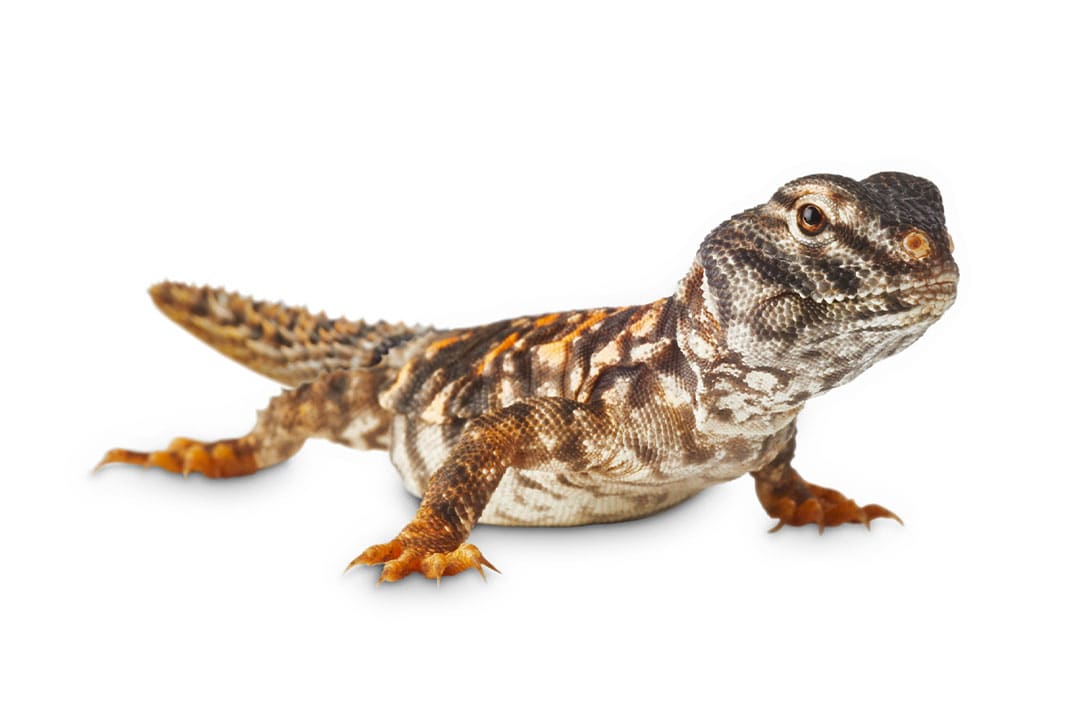
Your Ultimate Guide to Saharan Uromastyx Care: Food, Habitat & Health
Learn how to take care of Saharan Uromastyx, recommended diet and tank setup. Find the right food, supplies and equipment at your neighborhood Petco.
Updated on October 23rd, 2025
- Food & Nutrition
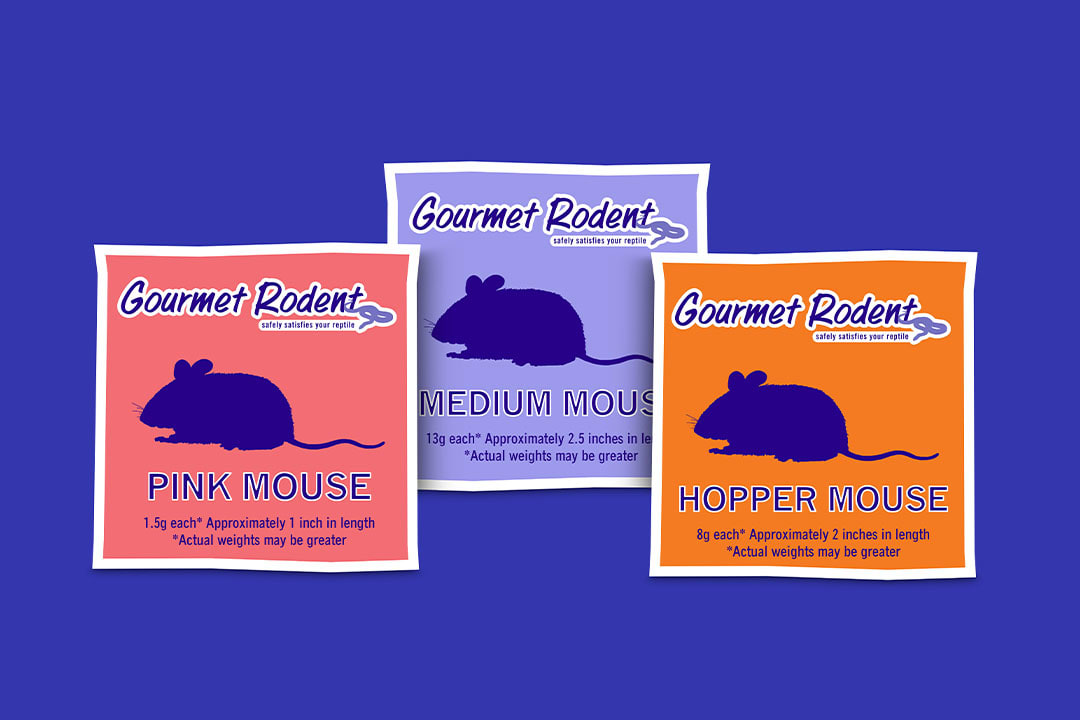
Boost Health: Frozen/Thawed Diet for Your Reptile & Amphibian
Learn how to thaw frozen mice for feeding time. Find out how to safely prepare and clean up after frozen meals at Petco.
Updated on December 16th, 2025
- New Pet
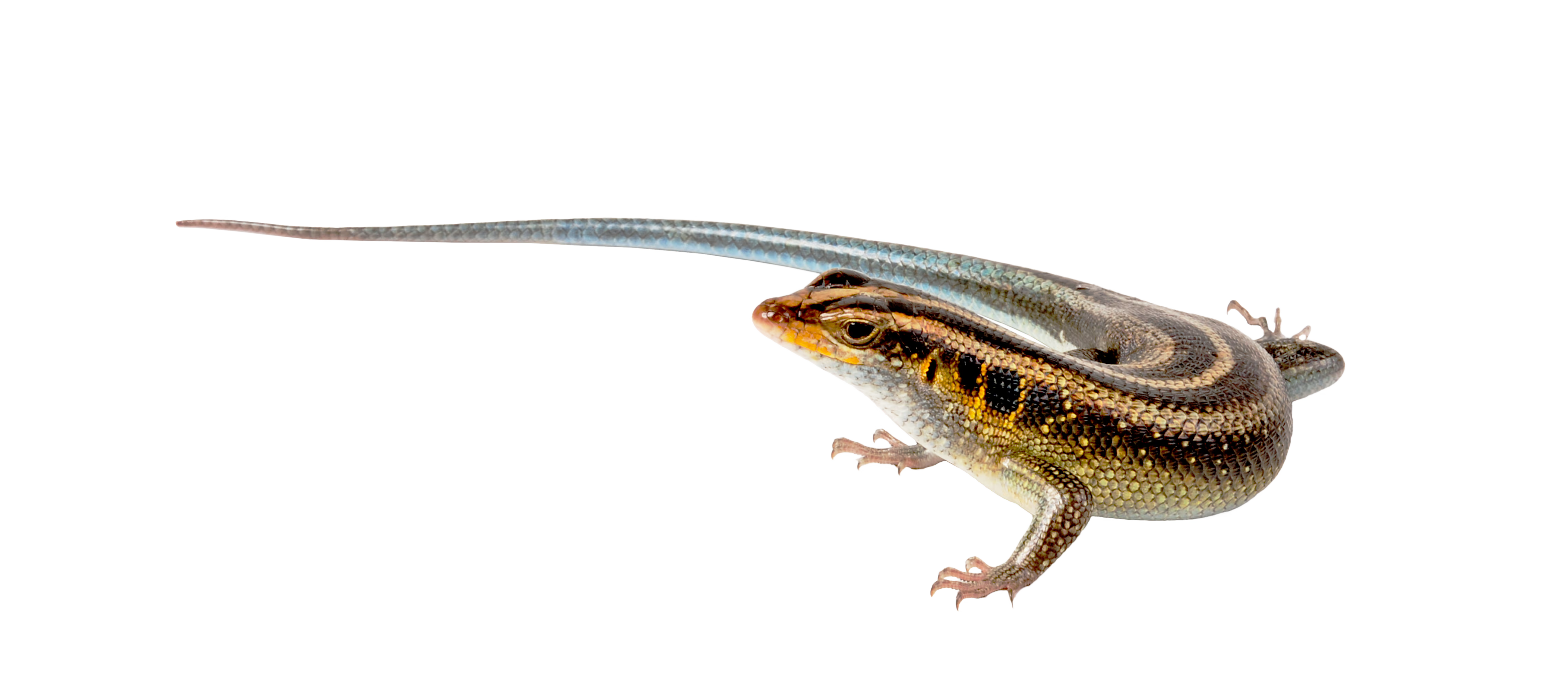
Arid Skink Care: Your Ultimate Guide to Habitat, Food & Health Tips
Learn how to care for an Arid Skink, recommended diet and habitat setup. Find the right food, supplies and equipment at your neighborhood Petco.
Updated on October 23rd, 2025
- New Pet
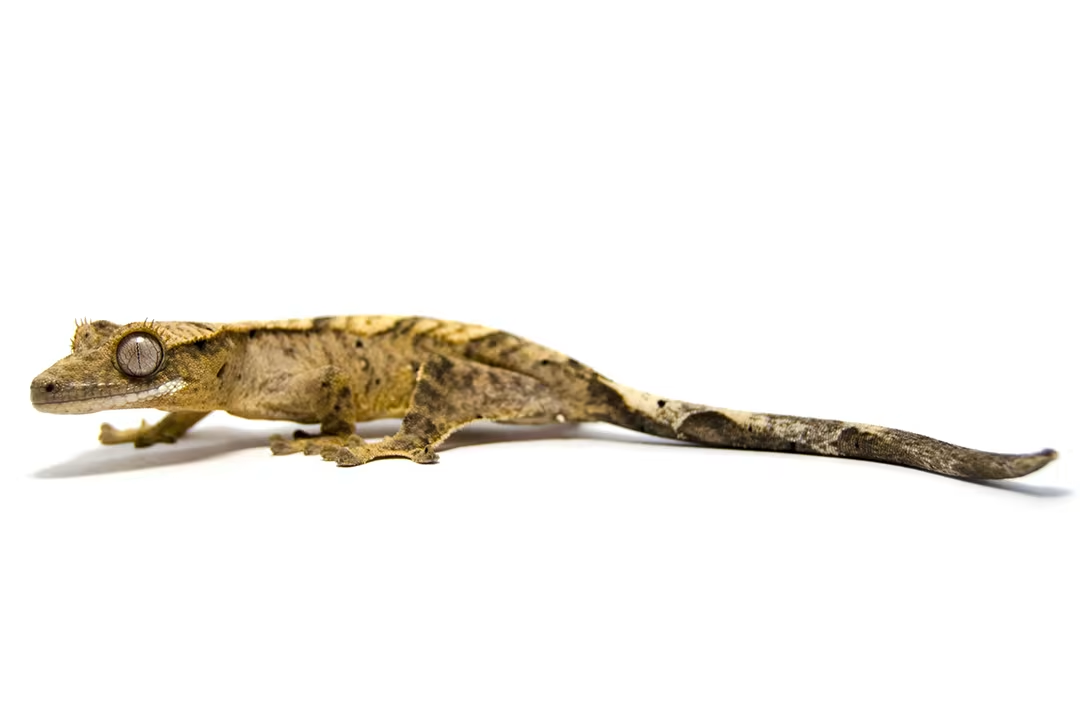
Crested Gecko Care: Habitat, Diet, Health, Supplies - Ultimate Guide
Learn how to take care of your Crested Gecko, tank size, diet & habitat setup. Find the right food, supplies and equipment at your neighborhood Petco.
Updated on December 22nd, 2025
- New Pet
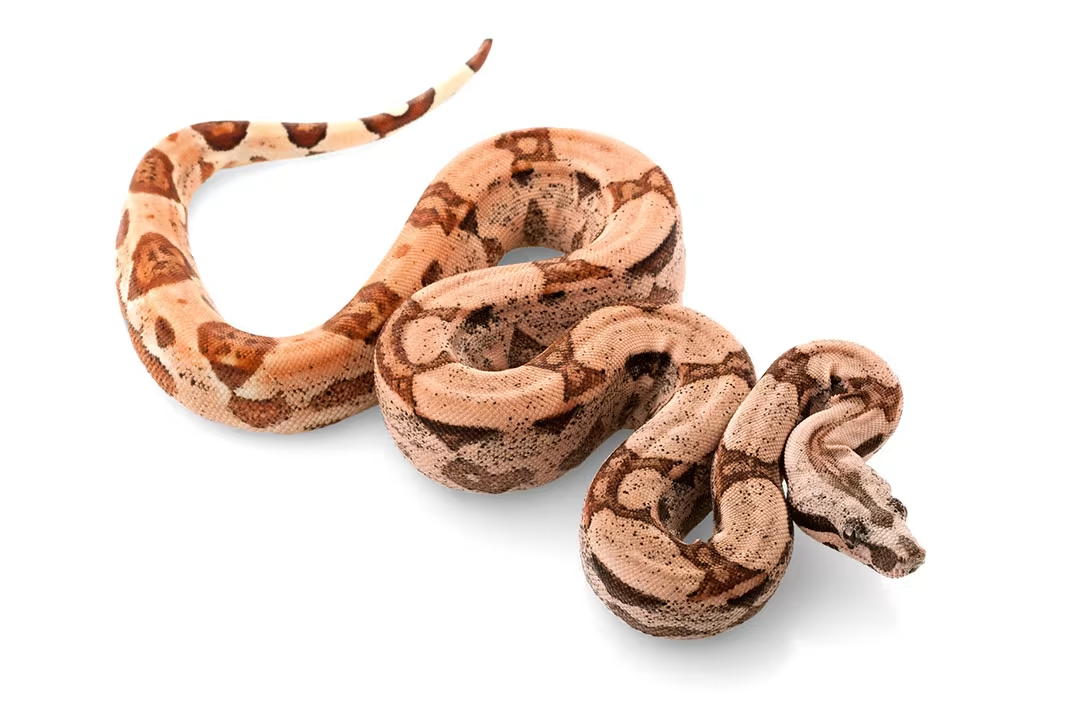
Boa Constrictor Care: The Ultimate Food, Habitat & Health Guide
Learn how to care for Boas, recommended diet & habitat setup. Find the right food, supplies & equipment at your neighborhood Petco.
Updated on October 23rd, 2025
- Training & Behavior
Wander won't eat I guess because he can't see, what do I do?
If he cannot see, you will have to have him examined by a reptile veterinarian. He may have a serious vitamin or mineral deficiency. He may have to be force fed. Please schedule an appointment with a reptile or exotic animal veterinarian.
Updated on September 24th, 2025
- Health & Wellbeing
I adopted a bearded dragon she is eight years old and she has not been eating since I have a doctor which has been one week she has been given what the lady that gave her told me to give her but she still has not eaten anything
I commend you on adopting such a wonderful creature! She may need time to adjust to her new home and enclosure. Make sure it is large enough for her and located away from loud noises, vibrations, direct sunlight or high traffic areas. The commercial pellets are an excellent diet. You should also offer dark, leafy greens, diced vegetables and prey such as crickets or dubia roaches. These can be purchased from your local pet store. Gut load prey for 24 hours prior to offering to maximize nutritional value. Dust with a calcium supplement 3-5 times per week. Use a multivitamin 2-3 times per week. Make sure the temperature in her enclosure is appropriate. Low temps can affect appetite and activity in reptiles. The cage should be in the mid 70s F on the cool side and mid to high 80s F on the warm side. A basking spot of 90-100 F is recommended. She will also need a UVB light source running the length of her cage and about 12-14 inches away. This is vital for calcium, metabolism. You c
Updated on September 24th, 2025
- Health & Wellbeing
My sister's cat brought in a Southern Alligator Lizard and we have been trying to provide what we can to help him. He lost his tail, he's about 4 in. long, and mildly sluggish. He is docile and has not displayed any aggression and allows us to hold a
Just like any reptile, these guys are going to require special habitats and nutritional requirements in order to maintain their health. This will include special lighting UVB, special substrate, and supplemental heating. Here is a link to some information on the general care of these guys: http://www.repticzone.com/caresheets/367.html This should get you started off pretty good on general husbandry and care. The main concern you should have is making sure that there are no injuries to it since your cat grab it pretty good. He may be sluggish right now just from the general shock of the entire experience, but if his demeanor doesn't start changing soon, I would look into finding a reptile vet or wildlife rehabber to obtain some advise and/or medical treatments. Hope this helps.
Updated on September 24th, 2025
- Health & Wellbeing
My Pet is a mid size lizard. Tegu began to tremble upper and lower toes. I could see his muscles spaz. He really cares for no food such as crickets and worms. He had a mouse 5 days ago. There was some soured watermelon in his cage I removed. I rea
Check the temperature in his enclosure. Low temps can affect appetite in reptiles. If he isn't eating or not exposed to high quality UVB lighting, he can become calcium deficient which could account for the tremors. If he is less than 30 inches long, confirm a basking temp of around 115 F. If he is bigger, bump basking temp to between 125 F and 135 F. Multiple lower wattage lights over a larger area are recommended over one high intensity light source. Try to get him to eat and offer a calcium supplement. If you can get a liquid supplement, that would be best right now. Zoo Med and Fluker's offer such a supplement.Soak him in a warm 50/50 solution of water and unflavored PediaLyte to treat or prevent minor dehydration. if he doesn't eat or if the tremors worsen, have him examined by your veterinarian or a vet experienced in treating reptiles as soon as possible.
Updated on September 24th, 2025
- Health & Wellbeing
I just purchased a baby leopard gecko from petco. I noticed it was the smallest of all of them and occasionally it will shake its legs individually like thumper... what could this be ? It eats really good!
If it is only occasionally, continue to monitor him/her. A nutritional deficiency is always a concern, especially in juveniles, but as long as the appetite is good this is not a concern. Be sure to supplement with a calcium/D3 at each feeding and a multivitamin several times a week. Repashy, HerptiVite and Rep-Cal w/D3 are all options. If the shaking/thumping worsens or if you see lethargy, lameness or swollen limbs/joints, then have the little one examined by your veterinarian or an experienced herp vet.
Updated on September 24th, 2025