Two Easy Ways to Start Earning Rewards!
Earn 2X Pals Rewards points at Petco
when you use Petco Pay!
Get It Today
Learn how to pick the right aquarium plants, substrate, lighting, and fertilizers to ensure that your aquarium plants thrive and stay healthy.
Updated on November 13th, 2025
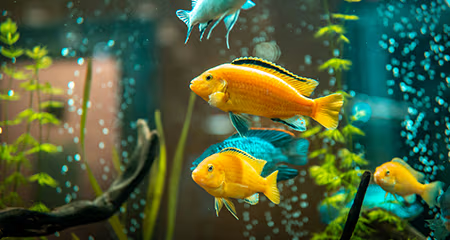
Learn how to care for semi-aggressive fish, recommended diet & aquarium setup. Find the right food, supplies & equipment at your neighborhood Petco.
Updated on November 13th, 2025
Learn how to care for freshwater livebearers, recommended diet & aquarium setup. Find the right food, supplies & equipment at your neighborhood Petco.
Updated on November 13th, 2025
Learn how to test your aquarium water. Poor water quality stresses fish, which leaves them susceptible to disease and possibly death.
Updated on November 13th, 2025
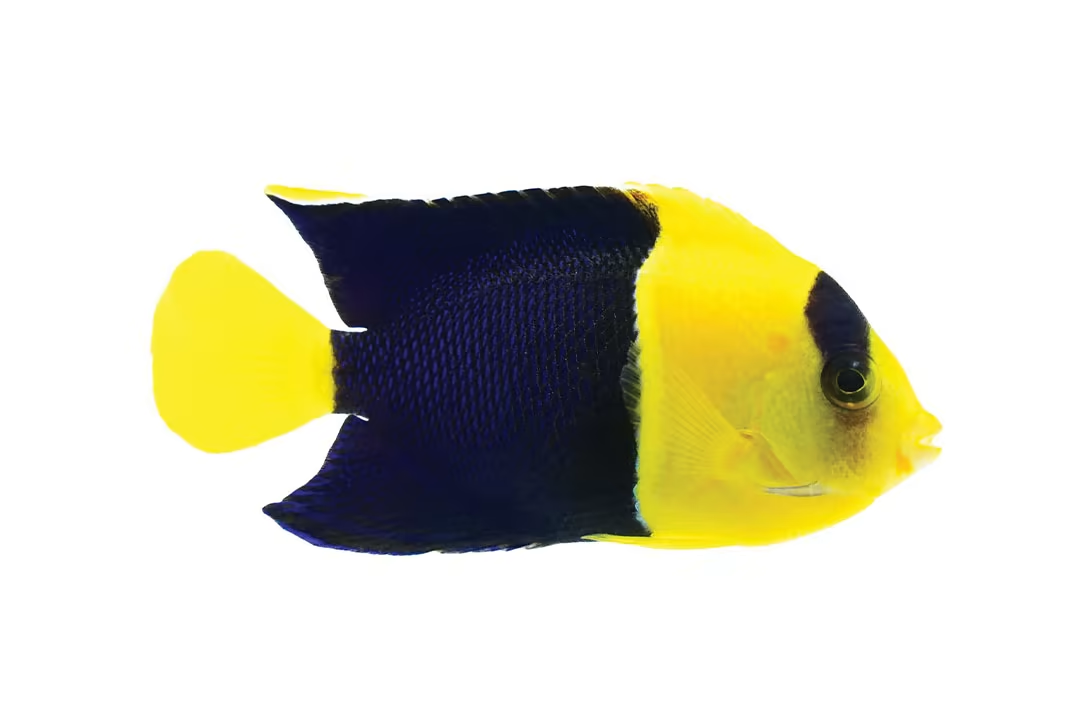
Learn how to take care of Dwarf Marine Angelfish, recommended diet and tank setup. Find the right food, supplies and equipment at your neighborhood Petco.
Updated on November 13th, 2025
Hi there! The fish will probably be ok for a day, but if the power doesn't come back on, you should consider purchasing a battery-operated aerator. I highly recommend that all fish owners keep one of these on-hand for situations like this. I don't know if this person ships to Turkey, but a similar product would be fine, too: https://www.ebay.com/p/Rapala-Battery-Powered-Aerator-Model-Raertr-c/1000293148?iid=371986500727 Most fish will come to the surface for air, but they really do need dissolved oxygen to thrive. Good luck!
Updated on August 12th, 2025
The most common cause of death of a newly acquired fish is usually shock or incorrect water quality. Fish tanks should be set up and left running without fish for at least 3-4 weeks to establish a proper nitrogen cycle. There are products that can shorten this time period. If this is not done, there may be high levels of ammonia, chloramine, nitrates and nitrites which can kill a fish. When introducing a fish, the bag should be floated in the tank for about 30 minutes to acclimate the fish to water temperature. This can prevent shock if the water is too hot or too cold. Test your water quality with a home test kit or submit a sample for testing. Most pet stores or aquarists will do this for free or for a nominal fee. Correct any imbalances as indicated. Slowly acclimate any new fish as written above. You can request a consultation to discuss your concerns in greater detail if necessary. Buying fish and starting a tank can be quite confusing initially.
Updated on August 12th, 2025
Without an image, it will be difficult to definitively identify the fish in question. It may be a wild guppy. You can request a consultation which will allow you to share images. It is not recommended to add wild caught fish to an existing aquarium without an acceptable quarantine period.
Updated on August 12th, 2025
Monitor for redness, white spots or fuzzy growths on him. The swimming fast may be "flashing", which a fish with an infection will do to "scratch an itch". Maintain pristine water quality via filtration and partial water changes. Use only aged or conditioned water that is temperature matched to prevent stress or shock when performing water changes. Bettas do best between 78 F and 80 F. Monitor water chemistry to confirm 0 ppm ammonia and nitrites with nitrates at 320 ppm or less. If you don't have a home test kit, most pet stores will test water for free or for a small fee.
Updated on August 12th, 2025
Thanks for reaching out about your aquarium. Sorry not very good at botany but there should be tropical fish clubs that might help in identification. But comments about your tank. First, not sure if light penetration will be good for a plant that low in the water column. Secondly, the balanced rock formation looks tenuous, and might fall. Good luck.
Updated on August 12th, 2025