Two Easy Ways to Start Earning Rewards!
Become a member today! Members-only pricing and offers, personalized care notifications, Vital Care points back on every purchase and more!
 Become a credit card member today!
Earn 2X Pals Rewards points at Petco
when you use Petco Pay!APPLY NOWLearn More About Petco Pay Benefits
Tetra Betta Fish Health & Wellness


Related Articles & Questions
- New Pet
Aquatic Pet Safety: Keep Your Home Aquarium Pets Healthy & Safe
Learn how to safely handle your aquatic life to avoid toxin & bacterial exposure. Find aquatic life care supplies at your neighborhood Petco pet care center.
Updated on November 13th, 2025
- Health & Wellbeing
Sick Fish? Dropsy, Swim Bladder, Popeye: Identify & Treat
Dropsy, Swim Bladder Disorder & Popeye are common illnesses in aquarium fish. Learn more about spotting the signs and treatment of these diseases.
Updated on November 13th, 2025
- New Pet
Freshwater Semi-Aggressive Fish: Top Secrets for a Thriving Tank
Learn how to care for semi-aggressive fish, recommended diet & aquarium setup. Find the right food, supplies & equipment at your neighborhood Petco.
Updated on November 13th, 2025
- New Pet
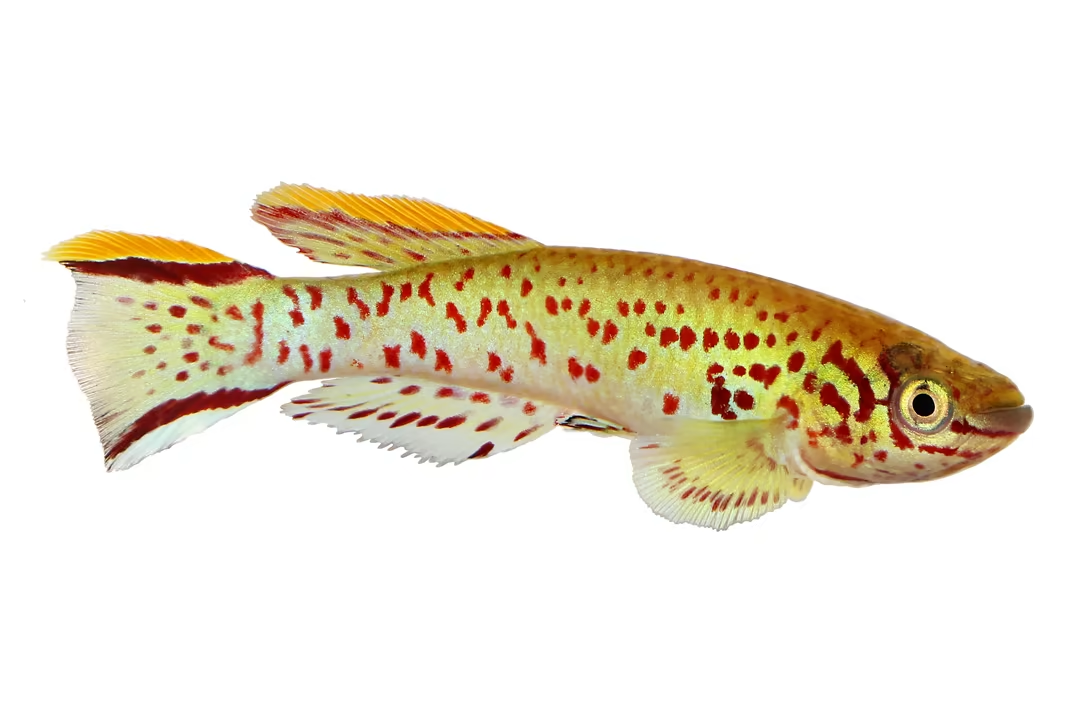
Killifish Care Guide: Unlock Vibrant Health for Your Aquarium Fish
Learn more about Killifish and their care to see if they are the right aquatic life to begin or add to your aquarium.
Updated on November 13th, 2025
- New Pet
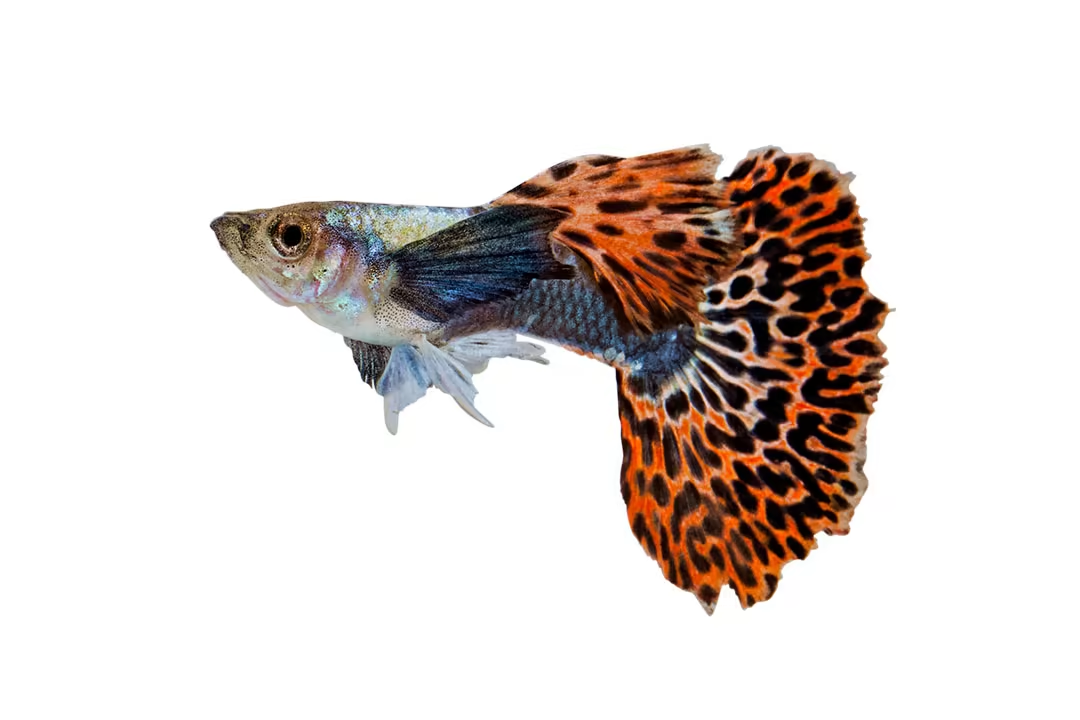
Beginner's Guide: Freshwater Livebearer Tank Setup, Food & Happy Fish
Learn how to care for freshwater livebearers, recommended diet & aquarium setup. Find the right food, supplies & equipment at your neighborhood Petco.
Updated on November 13th, 2025
- Health & Wellbeing
Hi, I'm planning on getting a betta fish and I'm wondering what foods are best for it
These are the two highest rated foods for your Betta! You can pick some up when your go in to purchase your Betta; Freeze dried bloodworms https://m.petco.com/shop/en/petcostore/product/omega-one-freeze-dried-betta-treat# Aqueon Natural Beta Food https://m.petco.com/shop/en/petcostore/product/aqueon-betta-color-enhancing-pellets-betta-food#
Updated on August 12th, 2025
- Health & Wellbeing
Hi, I have a Betta fish and it is very low on energy level these days and it is losing his color.
Bettas are tropical fish. They need warm water. They do best between 78F and 80F. Clean water is key in treating any infection. Check water chemistry using a home test kit or by submitting a water sample for testing. Aim for 0 ppm ammonia and nitrites with a 40ppm or less nitrate level. Perform partial water changes to stabilize chemistry and maintain water quality. Use only aged or conditioned water that is temperature matched to prevent stress or shock. A bit of aquarium salt (NOT table or Epsom salt) can be used as a general tonic to reduce stress, treat minor infection and aid in any recovery. Dissolve 1 teaspoon of salt per gallon of water in a cup of tank water and gently pour it into the tank. Treat for 10-14 days then reassess fin condition. More water changes can be done afterwards to reduce salinity.
Updated on August 12th, 2025
- Health & Wellbeing
My male Crowntail Betta fish is acting very lethargic, he stays at the bottom of the tank and only coming up for air, barely eats, his stomach looks hollow, and the scales along his back are raised. He has been this way for a few weeks but isn't gett
Check the water quality. This can be done with a home test kit or you can submit a water sample for testing. Most pet stores or aquarists will do this for free or for a nominal fee. Correct any imbalances as indicated. Check the water temp as well. Aim for 78 F to 80 F. Use a tank heater to prevent temps below 74 F. Offer a good quality pellet such as Hikari BioGold. You can also feed blackworms or bloodworms. Live worms may get him eating. Freeze dried tubifex worms may also stimulate his appetite. If there are no outward signs of bacterial or fungal infection, consider parasites. You can use metronidazole for fish. It is sold in most pet stores in the aquarium section. Follow label directions and gauge his response after treatment. The raised scales are a concern because that can be a symptom of dropsy. Dropsy is common in bettas and usually fatal. It is typically accompanied by a swollen abdomen though. Fish tuberculosis is another serious concern. This is a slow, p
Updated on August 12th, 2025
- Health & Wellbeing
I'm about to buy some new fishes mostly Tetra Can you help me what fish should I buy because I am beginner in this things. Please tell me what sort of things I should bring I have a one foot tank now other than that What should I purchase from Aquar
Before you buy any fish, you will need to set up the tank. A basic set up includes: a tank, filter, hood/light, heater, gravel and some decor. The tank should run without fish for at least 4 to 6 weeks. This gives it time to cycle. The Nitrogen Cycle is critical to the health of the tank and any fish you will be keeping. During this time, beneficial bacterial will populate the filter and substrate (gravel). These bacteria will be responsible for breaking down fish wastes and other wastes (uneaten food, dead plants, etc.). You will need a home test kit to monitor water chemistry (ammonia, nitrites, nitrates, pH) or you will have to submit water samples for testing. Most pet stores will do this for free or for a small fee. At first, you will see high levels of ammonia and nitrites. Over time, as bacteria grow, these levels will drop. When ammonia and nitrites are at 0 ppm and nitrates are below 20 ppm, you can consider adding fish. Regular (every 1 or 2 weeks) partial water changes as we
Updated on August 12th, 2025
- Health & Wellbeing
I bought my beta fish about two weeks ago from you guys. Lately, he has really only been surface breathing. He's lost a lot of color primarily in near the face, and his bottom "skinny" fin. He looks swollen right there too. His face is white, and it
Check the water quality and chemistry. In a small bowl without a filter, regular water changes will be necessary to maintain water quality. Poor water quality or imbalances in chemistry can predispose a fish to stress and illness. Ideally, water should have 0ppm ammonia and nitrites with a 40ppm or less nitrate level. The temperature for Bettas should range between 78F and 80F. When performing water changes, use only aged or conditioned water that is temperature matched to prevent stress or shock. Bettas are air breathers, so it is common to see them surfacing for air.
Updated on August 12th, 2025