

Two Easy Ways to Start Earning Rewards!
Become a member today! Members-only pricing and offers, personalized care notifications, Vital Care points back on every purchase and more!
 Become a credit card member today!
Earn 2X Pals Rewards points at Petco
when you use Petco Pay!APPLY NOWLearn More About Petco Pay Benefits
Mac's Frog Decor & Accessories
Get It Today


Related Articles & Questions
- New Pet
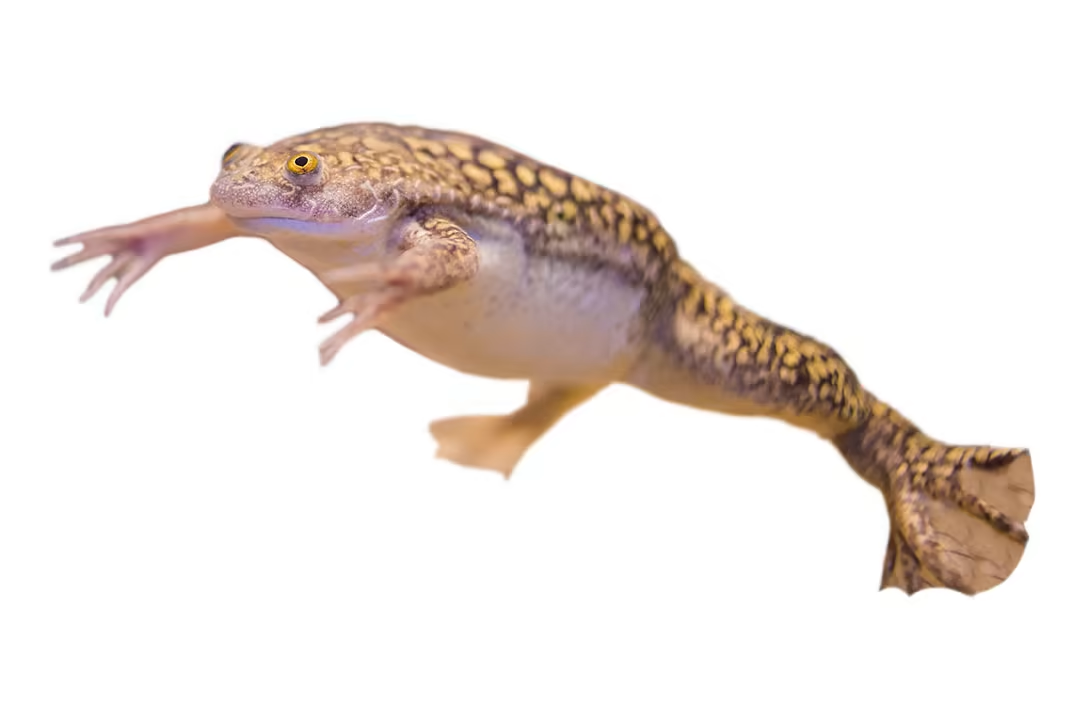
Freshwater Amphibian Care: Ultimate Tank, Food & Habitat Guide
Learn how to care for Freshwater Amphibians, recommended diet and habitat setup. Find the right food, supplies and equipment at your neighborhood Petco.
Updated on October 23rd, 2025
- New Pet
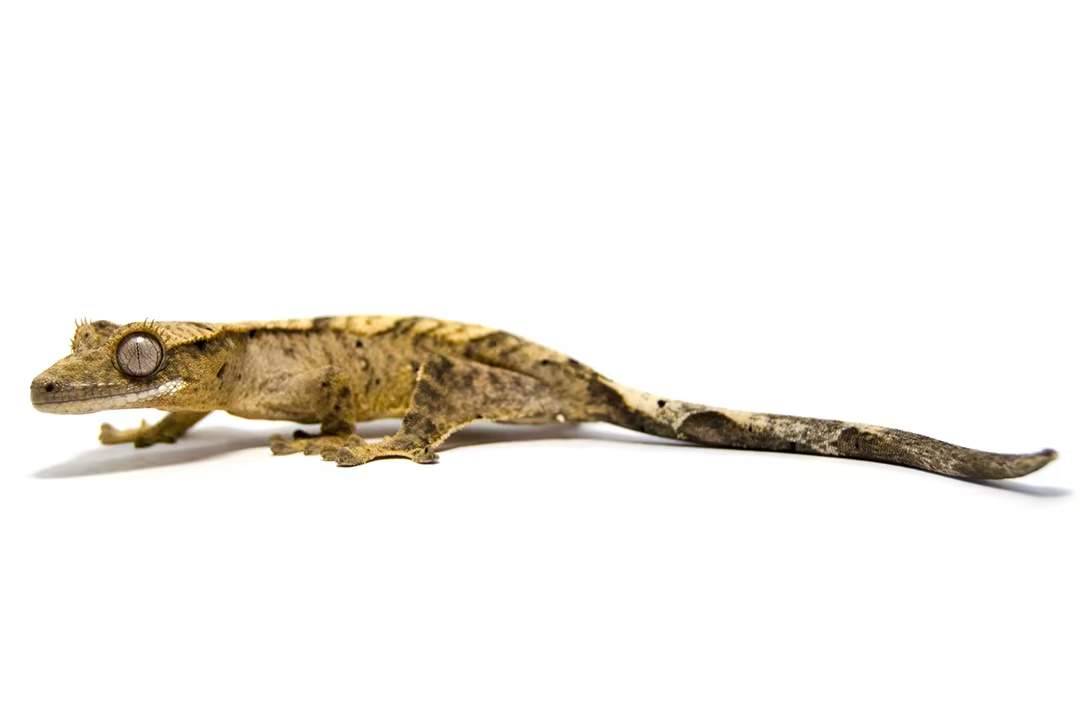
Crested Gecko Care: Habitat, Diet, Health, Supplies - Ultimate Guide
Learn how to take care of your Crested Gecko, tank size, diet & habitat setup. Find the right food, supplies and equipment at your neighborhood Petco.
Updated on December 22nd, 2025
- New Pet
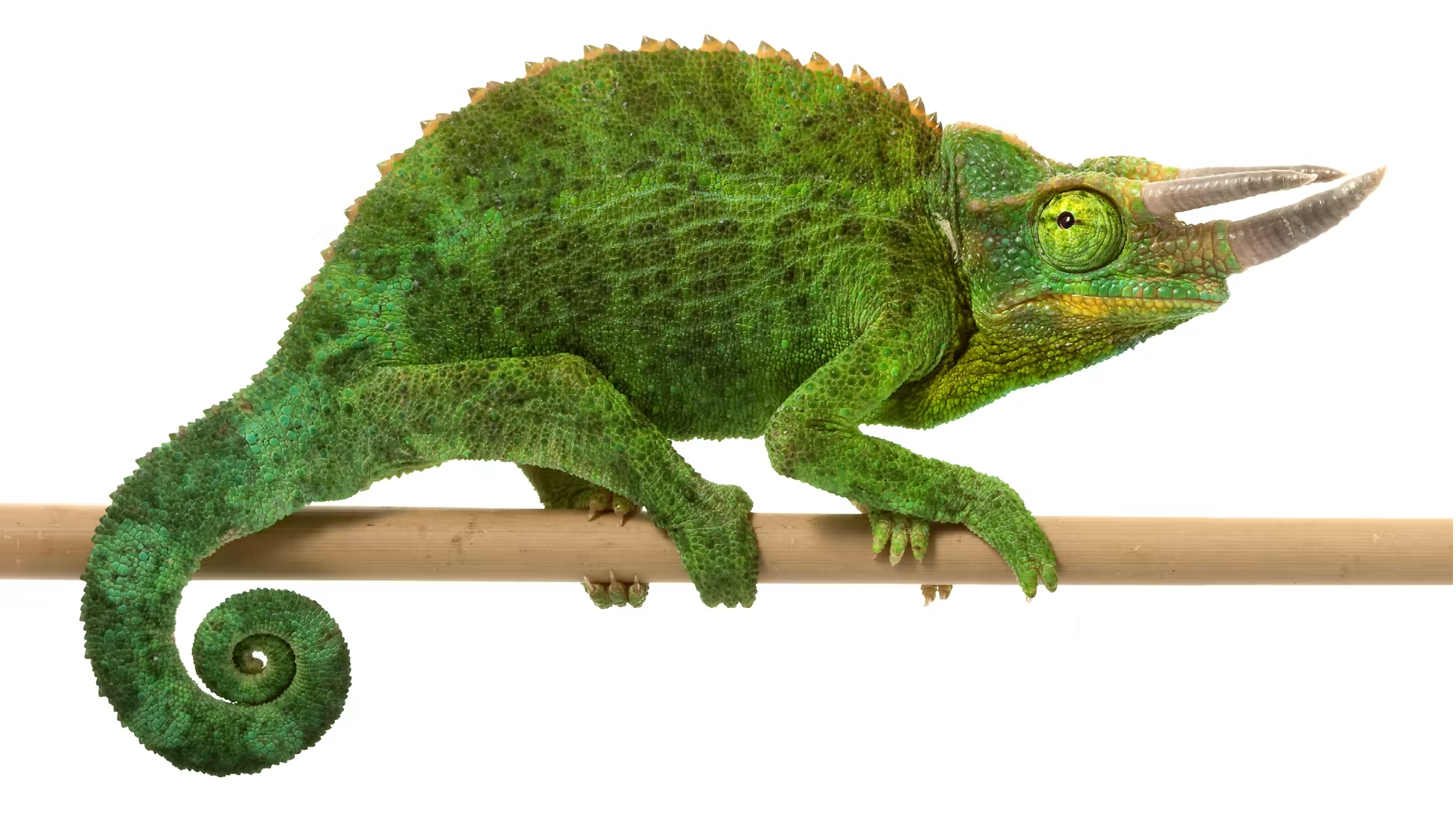
Jackson's Chameleon Care: Thrive Guide for Food, Habitat & Health
Learn how to care for Jackson's Chameleons, recommended diet & habitat setup. Find the right food, supplies & equipment at your neighborhood Petco.
Updated on October 23rd, 2025
- New Pet
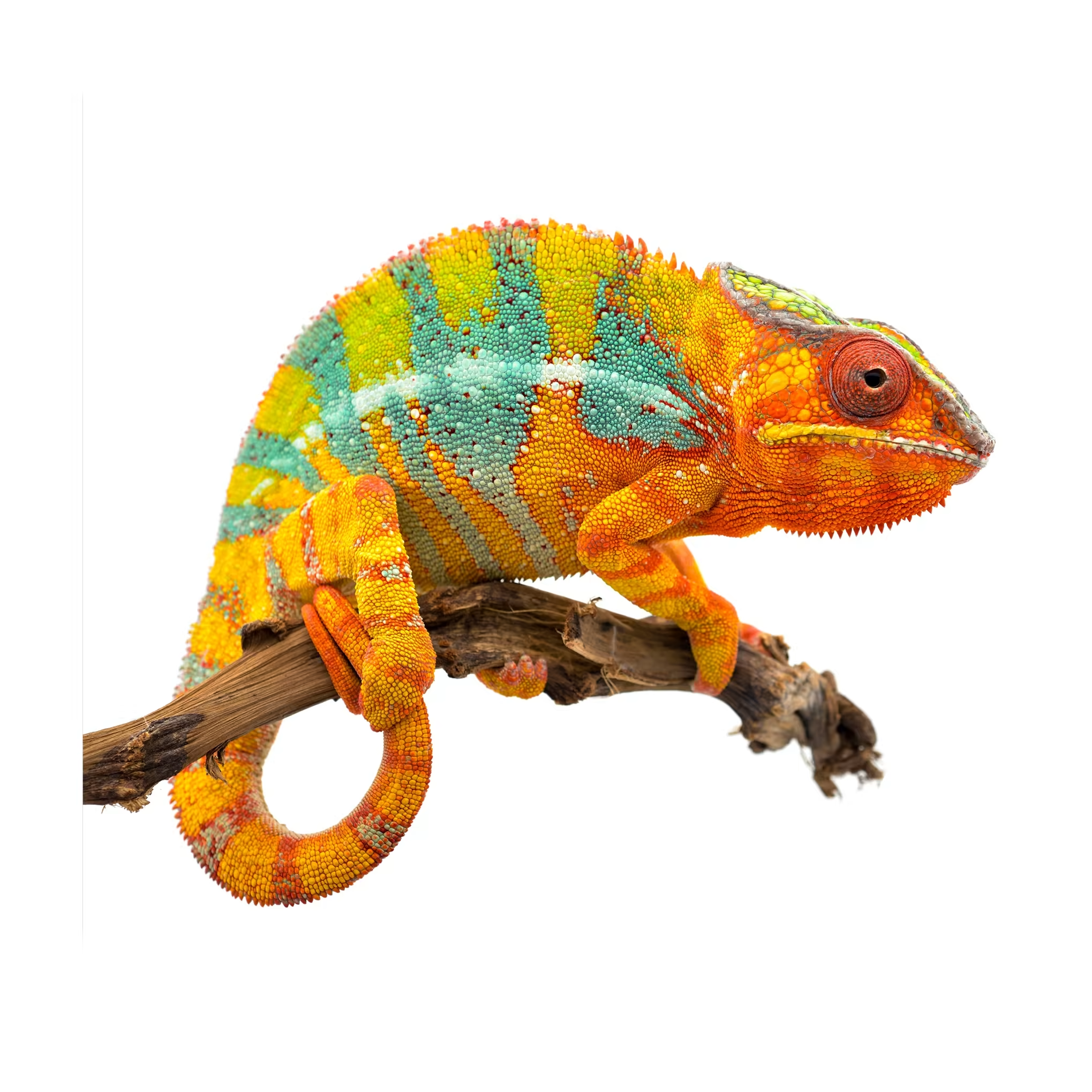
Warm Climate Chameleon Care: Best Food, Habitat & Health Tips
Learn how to care for warm climate Chameleons, recommended diet & habitat setup. Find the right food, supplies & equipment at your neighborhood Petco.
Updated on October 23rd, 2025
- New Pet
Pet Toad Care: Food, Habitat, Health & Safe Handling Guide
Learn how to care for a toad, recommended diet and habitat setup. Find the right food, supplies and equipment at your neighborhood Petco.
Updated on October 23rd, 2025
- Health & Wellbeing
Hello. I’m still thinking my African dwarf frogs back left foot may be broken or injured. I’ve been calling all day and can’t find any vets that will see him. I feel bad because I want to do everything I can to help him since I took on that responsib
Ok, I just tried my own link from the answer I just left you and it is not working. Google arav.org which stands for Association of Amphibian and Reptile Veterinarians. There is a link for "owners" along the top, with a drop down menu for "find a vet." Googling the website should work. I don't know why our links aren't working. Thanks again for using Boop by Petco!
Updated on September 24th, 2025
- Health & Wellbeing
Do you know about frogs? I have a Pacific tree frog & today it has a dark green almost black spot on its throat & a black dot on its belly near its back leg. It wasnt there 2 days ago. I'm really worried.
It almost looks like a bit of substrate stuck to the belly. It could be normal pigmentation developing. Keep an eye on both spots. Monitor for rapid change or growth, lethargy, loss of appetite, redness or spread. Keep the enclosure clean and at proper temps and humidity. Hoppers looks good in the images otherwise(no redness, not skinny, not dry).
Updated on September 24th, 2025
- Health & Wellbeing
Hello, I bought a frog eyed gecko from a petco and i brought him home and he hasn't been eating and he is only get thinner. I do not know what to do to help him.
Make sure his enclosure is warm enough. Low temps can affect appetite and digestion in reptiles. A hot spot between 85 F and 90 F should warm the rest or the enclosure sufficiently. Provide at least two homes as well. One on the warm side and one on the cool side. Offer appropriately sized prey, no bigger than the space between his eyes. Dust prey with an appropriate multivitamin and calcium supplement. You can soak him in a warm 50/50 solution of water and unflavored PediaLyte. This will warm him up and can treat or prevent mild dehydration. Of he doesn't begin eating in the next day or two, have him examined by your veterinarian or a vet experienced in treating reptiles.
Updated on September 24th, 2025
- Health & Wellbeing
Hi, i have an emergency, I have a chubby frog, (Asian painted bullfrog) He used to have a HUGE appetite and ate so much all the time, and starting a month in a half ago his appetite decreased significantly and by 1 month ago he completely stopped eat
Clean and sanitize the tank. Replace ALL the substrate with fresh organic topsoil or coco fiber. Do not use vermiculite or perlite. Avoid gravel, sand or wood chips. Ideal temperature ranges between 68F and 78F with the cooler end reserved for nighttime. Mist the cage several times weekly to maintain humidity. Provide a water bowl and clean it daily. Soak him in a tepid (75F) 50/50 solution of water and unflavored PediaLyte. This will provide warmth and hydration. A cold frog will not eat. Afterwards, offer live food. Something with a lot of movement like nightcrawlers or mealworms. If he still doesn't eat, have him examined by your veterinarian or a vet experienced in treating reptiles and amphibians.
Updated on September 24th, 2025
- Health & Wellbeing
He isnt eating well and hasnt had the appetite he used to for a long time also he had some nose rub im wondering what could be wrong if its his enclosure or him being stressed from being close to my chameleon or something i need to take him to the ve
Use a background to block his view. This may prevent glass surfing or nose rubbing as well as provide more privacy/security. Again, check the temps in his enclosure to make sure it is species appropriate. Offer a variety of crickets, mealworms, dubia roaches, silkworms and wax worms. Gut load prey for 24 hours prior to offering. Dust appropriately with vitamins and minerals regularly. He may also benefit from a soak in a warm 50/50 solution of water and unflavored PediaLyte. If his appetite does not return after adjustments to environment and diet, have him examined by your veterinarian or a vet experienced in treating reptiles. Submit a stool sample to diagnose intestinal parasites or bacterial overgrowth.
Updated on September 24th, 2025