


Two Easy Ways to Start Earning Rewards!
Become a member today! Members-only pricing and offers, personalized care notifications, Vital Care points back on every purchase and more!
 Become a credit card member today!
Earn 2X Pals Rewards points at Petco
when you use Petco Pay!APPLY NOWLearn More About Petco Pay Benefits
How to Care for a Pet Iguana: Complete Guide
Published on February 3rd, 2023
Updated on June 18th, 2026

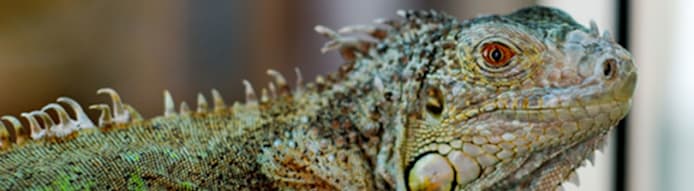
Know the signs of a healthy iguana and be attuned to your pet’s normal behavior so you can detect a problem before it becomes serious.
Keeping a pet iguana healthy and happy requires specialized care that is quite different from more conventional mammalian pets like dogs and cats. From heat lamps and terrariums to vegetarian diets and special humidity levels, it takes knowledge and planning to keep a reptile healthy—and iguanas—due to their large size—present special care requirements. An annual checkup with an exotic animal veterinarian will ensure that you are staying on top of any health concerns.
Between veterinarian visits, here's what you should look for in a healthy iguana:
- Clear eyes. Your iguana's eyes should be clear, with no tears, discharge or dry, crusty residue. Your iguana should be observant and attentive to what's going on in his environment. Iguanas have a third eye on top of their head that is called a parietal eye, and it looks like an oval-shaped pearl with an opaque covering. It is an actual organ, and is used to detect predators that may lurk above your iguana. This eye should also be clear and free of discharge.
- A healthy nose. Iguanas sneeze regularly to rid their bodies of excess salt, and after your iguana sneezes, you'll certainly notice small salt deposits on his nose. These nasal salt deposits are a normal part of your iguana's life and are not a cause for concern. An excessively runny nose or discharge, however, is a sign of trouble and should be investigated.
- Healthy skin. Your iguana's skin should be free of parasites, lesions, abrasions and sore spots. A healthy iguana will shed his skin anywhere from several times a year to once a year, depending on his size and age. You may need to help remove some of the dead skin from your iguana when he is shedding, but only if it can be done with little or no effort. Soaking, bathing and misting can also aid in the shedding process. Ask your veterinarian for tips on helping your iguana shed his skin.
- A pink mouth. Besides being reasonably clean, the inside of your iguana's mouth should be a healthy pink color and should be free of discharge or any sign of infection. Stomatitis (“mouth rot”) is somewhat common in iguanas, and may go unnoticed without routine checks.
- Strong bones. Pet iguanas are prone to Metabolic Bone Disease (MBD), which can be caused by lack of calcium in their diet, lack of UVB lighting or improper habitat temperatures. One of the first symptoms are thin bones that are easily broken from normal activities like climbing or jumping. You may notice swollen or bowed “Popeye” legs that feel lumpy or bumpy to the touch. Spinal cord injuries can also result from MBD, and can lead to paralysis if untreated. A spongy jawbone can also indicate MBD, and could cause a loss of appetite due to pain or difficulty eating. You can easily prevent MBD by taking proper care of your iguana.
- A generally happy pet. Your iguana's normal behavior should be active and perky. He should be aware of his surroundings and he should be alert. He should have a steady gate when he walks, and he should be able to move around easily using both arms and legs, as well as his tail, without limping or favoring his limbs. Lethargy and disinterest can be signs of an ill reptile or a parasite problem so if you notice a change in your pet's normal physical activities or eating habits, consult with your veterinarian.
- A good appetite. A serious drop in appetite—or avoidance of food altogether—can be an indication of illness. If your iguana gets too cold they will avoid eating until they're warmer; this is because reptiles need heat in order to digest their food. Monitor your iguana's droppings too, as any significant or prolonged change in habit or abnormal-looking feces could be an indicator that something is wrong.
Appropriate Habitat Size
Make sure your iguana's habitat is the proper size for his size. Your iguana should be able to move around freely and turn around easily in his habitat. There should also be enough space for a hiding area and branches for a basking area.
You may sometimes notice your iguana repeatedly rubbing his face or nose against his habitat, occasionally to the point of causing skin damage. While nose rubbing can be a sign of various frustrations—such as stress or breeding season—it's very often seen when the iguana's habitat is just too small. Iguanas require a surprisingly large habitat in order to thrive, and if this need isn't met, your pet can respond by nose rubbing. If other health or stress issues aren't present, consider providing a larger habitat for your iguana.
Despite your affection for your pet, and despite the fact they live in your home with you, iguanas are nonetheless wild animals, and do not always show obvious outward signs of illness (doing so in a natural environment can put them at risk to predators). It's up to you to be on the offense as a pet parent. Be attuned to your iguana's normal routine, appearance and behaviors so you can detect a problem before it becomes serious. Luckily for you, this simply involves spending time with your pet, which is something you likely wish to do more often anyway.
Frequently Asked Questions
How big of a habitat does a pet iguana need? Iguanas grow quickly and can reach 5–6 feet in length as adults, so their habitat must scale with them. A juvenile can start in a 40-gallon enclosure, but a full-grown iguana needs a custom or commercial habitat that is at minimum 6 feet long, 3 feet wide and 6 feet tall — large enough to turn around freely, climb branches and retreat to a hide. Nose-rubbing against the walls is a reliable signal that the space is too small.
What temperature and lighting does an iguana require? Iguanas are cold-blooded and depend entirely on their environment to regulate body temperature. Maintain a basking spot of 95–105 °F, an ambient warm side of 80–85 °F and a cool side no lower than 75 °F. Equally important is a UVB bulb (10.0 strength is widely recommended for iguanas) running 10–12 hours a day; without adequate UVB, your iguana cannot synthesize vitamin D3, which leads directly to Metabolic Bone Disease. Replace UVB bulbs every six months even if they still emit visible light, because UVB output declines before the bulb burns out.
What should I feed my pet iguana? Iguanas are strict herbivores. The bulk of the diet — roughly 70–80% — should be dark leafy greens such as collard greens, mustard greens, dandelion greens and turnip greens. The remainder can include vegetables like squash, bell pepper and shredded carrots, with fruit offered only as an occasional treat. Avoid spinach, beet greens and rhubarb, which contain oxalates that bind calcium and can worsen bone health. Iceberg lettuce offers almost no nutrition and should be skipped. Calcium supplementation (without phosphorus) dusted on food several times a week can help support healthy bones. Always consult your veterinarian about the right supplement schedule for your iguana.
How do I know if my iguana is sick? Watch for changes from your iguana's normal baseline. Key warning signs include discharge from the eyes, nose or mouth; a spongy or swollen jaw; swollen or bowed limbs; persistent lethargy or loss of appetite; abnormal droppings; and retained shed skin. Because iguanas instinctively mask illness — a survival trait from life in the wild — symptoms can be subtle until a condition is advanced. Schedule an annual wellness exam with an exotic-animal veterinarian, and call sooner if any of these signs appear.
How do I handle and socialize my iguana safely? Start handling sessions short — five to ten minutes — and gradually increase duration as your iguana grows comfortable. Always approach from the side rather than above (iguanas instinctively read overhead movement as a predator threat, which is why they have a light-sensitive parietal eye on top of the head). Support the full body and tail at all times; never restrain the tail, as iguanas can drop it under stress. Consistent, calm daily interaction from a young age produces the most tolerant adult iguanas.
What are the most common mistakes new iguana pet parents make? The three most frequent missteps are: (1) keeping the habitat too small, which causes chronic stress and nose-rubbing injuries; (2) using inadequate or expired UVB lighting, which is the leading preventable cause of Metabolic Bone Disease; and (3) feeding animal protein — insects, pinky mice or cat food — which can damage the kidneys over time in these strict herbivores. A fourth common error is skipping the exotic-animal vet entirely; iguanas need annual checkups just as dogs and cats do, and many health issues are far easier to treat when caught early.
This article was created with assistance from AI tools and reviewed for accuracy by Petco's content team.


FAQs About Iguana Care 101
Iguanas most commonly sneeze as a way to regulate salt levels in their bodies. Salt is natural byproduct created by your iguana when they digest food, and sneezing is how they get rid of extra salt that’s not absorbed by their body.
Uncommonly aggressive behavior, lethargy, an increase or decrease in appetite, attempts to escape their habitat and a darkening of their scales can all be indicators that your iguana is stressed. The causes of stress in iguanas include improper heating and lighting, a change to their habitat or routine or illness, but your vet can help you pinpoint the exact cause.
Acts of intimacy like approaching and cuddling you, allowing themselves to be pet (especially while their eyes are closed) and licking you are a good sign that your iguana likes you and doesn’t see you as a threat. If your iguana avoids your touch, tries to bite or scratch you or becomes stiff, they likely haven’t warmed to you yet.
If your iguana’s fecal pellet doesn’t hold a somewhat solid shape, isn’t a color other than dark brown or green, looks like it contains small white parasite eggs, smells especially awful or contains large pieces of undigested food, they may be experiencing a health issue. Similarly, if your iguana’s urate is discolored, they may be sick.