


Two Easy Ways to Start Earning Rewards!
Become a member today! Members-only pricing and offers, personalized care notifications, Vital Care points back on every purchase and more!
 Become a credit card member today!
Earn 2X Pals Rewards points at Petco
when you use Petco Pay!APPLY NOWLearn More About Petco Pay Benefits
Iguana Colouring: Why Green Iguanas Change Color
Published on November 1st, 2024
Updated on June 18th, 2026

Written by Petco Editorial Team
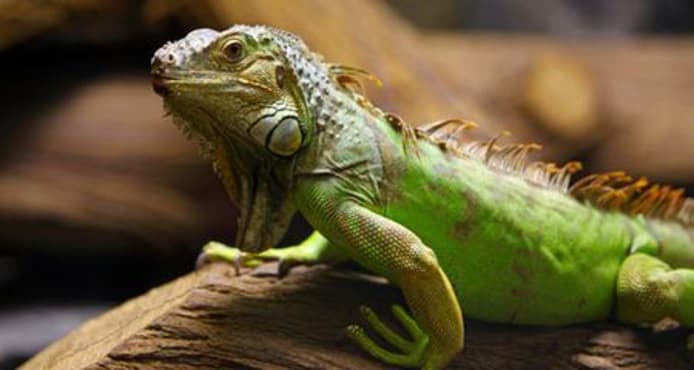
Any color changes in your iguana not related to breeding season or shedding are an indication that your iguana should be examined by a veterinarian.
The predominant color of green iguanas is green, but can actually range from brilliant green to a pale blue-gray. There are genetic variations in the color of iguanas. Some can appear more brown in color, while others are almost a turquoise blue. Blue, red and albino iguanas have also been bred and are available, however we will be focusing this article on color changes in green iguanas. One strain of green iguana from South America has a reddish cast to the head.
Age Differences
Young green iguanas are generally brighter green or blue with some dark brown striping on the body and tail. The striping pattern of some actually results in a reticulated pattern. This coloring helps to camouflage them as they live among the bright leaves in their natural habitat. As they age, the green color becomes less intense.
The dark patterns, striping, or banding on their bodies and tails become more intense as the iguana reaches approximately 18 months of age. The heads of older iguanas tend to be paler, appearing gray or almost white.
Iguana Breeding Season and Dominance
Male iguanas develop an orange to orange-red coloring as breeding season approaches. In some iguanas, the orange color may be diffuse over the entire body. In others, the orange can be concentrated in several areas including the dewlap, spikes, body, and legs. Female iguanas can also develop this orange coloration, though it is usually less intense.
Dominant males and females often retain the orange color past the breeding season. The orange color will persist if there are other iguanas present, or even dogs, cats, and people, over whom the iguana feels dominant.
Iguana Environment
Environment, especially temperature can influence the color of an iguana. Iguanas tend to become darker if they are cold. The darker color helps them absorb more heat. Color change in response to temperature is called "physiological thermoregulation." In addition to the darker color, an iguana may develop dark, wavy lines on its head or body if it becomes chilled.
Iguanas kept in too warm of an environment may become lighter in color.
Iguana Shedding
Several weeks prior to shedding, an iguana's skin may appear dull and take on a gray or yellowish-gray cast. Unlike snakes, iguanas, and other lizards do not shed the skin over their entire surface at one time. White patches will appear where the skin loosens, just prior to being shed.
Iguana Diseases
Iguanas with liver disease may appear yellow, especially their mucous membranes. This yellow color should not be confused with the yellow cast that may appear prior to shedding.
Red mite infestations may cause some scales on the skin to become raised and black. These are generally found on the ventral abdomen (belly) and limbs, and should not be confused with the normal striping or reticulated pattern. Darker raised areas can also be a result of fungal infections.
The skin over injuries will usually appear pink, smooth, and scaleless. Burns often appear black. With each shed, the affected area will become smaller. The new scales may be smaller and darker in color than neighboring scales.
Bacterial infections of the skin, often termed "blister disease," "scale rot," or "vesicular dermatitis," can at first cause blisters of the skin, and then turn the skin a dark brown to black color. These infections are usually due to poor habitat hygiene or too moist an environment. This disease can be fatal.
Heavy parasite infestations, gastrointestinal obstructions or constipation, malnutrition, and other chronic diseases can cause an iguana to become mustard yellow to dark brown or almost black in color. These color changes generally affect the body and head first, then extend to the limbs and tail.
These color changes can also occur due to other stressors such as:
· Poor environment (wrong temperature, humidity, photoperiod, inadequate enclosure, poor hygiene)
· Fear resulting from a dominant habitat mate, household pet, or person
Any color changes in your iguana, not related to breeding season or shedding, are an indication that your iguana may be ill and should be examined by a veterinarian.
Frequently Asked Questions
Why do iguanas change color? Iguana colouring shifts for several overlapping reasons: age-related pigment changes, temperature regulation, breeding-season hormones, the shedding cycle, dominance signaling, and — most importantly — illness or stress. A color change that doesn't fit one of the normal biological patterns (breeding, shedding, or a cold enclosure) is a red flag that warrants a veterinary visit.
Is it normal for my iguana to turn orange? Yes — during breeding season, male iguanas commonly develop orange to orange-red colouring across the dewlap, spikes, body and legs. Females can show a milder version of the same change. Dominant individuals of both sexes may hold onto that orange hue year-round, especially when other animals or people are present. This is normal hormonal and social signaling, not a sign of illness.
Why is my iguana turning dark or almost black? Darkening is most often a thermoregulation response — iguanas absorb heat more efficiently through darker skin when their enclosure is too cool. However, a mustard-yellow to dark-brown or near-black shift that spreads from the body and head toward the limbs and tail can signal serious underlying problems: heavy parasite loads, gastrointestinal obstruction, malnutrition, or other chronic disease. If your iguana's enclosure temperature is correct and the darkening persists, consult your veterinarian promptly.
What does a yellow iguana mean? A yellow cast appearing a few weeks before a shed is normal — skin looks dull and takes on a grayish-yellow tone as it loosens. A distinctly yellow color on the mucous membranes (the tissue inside the mouth and around the eyes), however, can indicate liver disease and is a veterinary emergency. When in doubt, have a reptile-experienced vet evaluate your iguana rather than assuming it's pre-shed coloring.
Can dark or raised scales be a sign of parasites or infection? Yes. Raised, blackened scales — particularly on the belly and limbs — can indicate a red mite infestation and should not be mistaken for normal striping. Darker raised patches may also point to a fungal infection. Bacterial skin infections (sometimes called "scale rot" or "blister disease") begin as blisters and progress to dark-brown or black discoloration; these are linked to poor enclosure hygiene or excessive moisture and can be fatal if untreated. If you notice any of these signs, contact your veterinarian as soon as possible. For guidance on environmental toxins that can compound skin and systemic stress in reptiles, the ASPCA Animal Poison Control Center is a reliable resource. https://www.aspca.org/pet-care/animal-poison-control
When should I call a vet about my iguana's color change? Any color change that cannot be explained by breeding season, an upcoming shed, or a temporarily cool enclosure should be treated as a potential health concern. Seek veterinary care promptly if you observe: yellowing of the mucous membranes, widespread darkening or blackening of the skin, raised or blistered scales, pink or smooth scaleless patches (possible injury or burn), or a general dull, washed-out appearance paired with lethargy or appetite loss. Early intervention significantly improves outcomes for reptile illness.
This article was created with assistance from AI tools and reviewed for accuracy by Petco's content team.
71Pet Parents found this article helpful


