


Two Easy Ways to Start Earning Rewards!
Become a member today! Members-only pricing and offers, personalized care notifications, Vital Care points back on every purchase and more!
 Become a credit card member today!
Earn 2X Pals Rewards points at Petco
when you use Petco Pay!APPLY NOWLearn More About Petco Pay Benefits
Iguana Head Bobbing & Body Language Explained
Published on November 1st, 2024
Updated on June 18th, 2026

Written by Petco Editorial Team
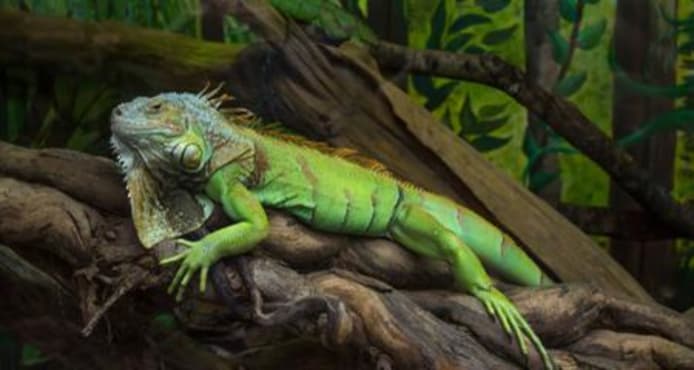
Learn the common behaviors and body languages of Green Iguanas.
How Iguanas Communicate: Understanding Head Bobbing and Body Language
Iguanas may live in loose groups in the wild, but they are not considered social animals. What they are is surprisingly expressive. They communicate through a rich vocabulary of body language — and learning to read those signals is one of the most rewarding parts of sharing a life with a green iguana. The most recognizable of these signals is head bobbing, but it's just one piece of a larger communication system that includes dewlap changes, body compression, hissing, tail movement, and eye position.
Head Bobbing: What It Means and Why It Matters
Head bobbing is your iguana's primary way of sending social messages — to other iguanas and to you. The speed and accompanying body posture tell you almost everything about what he's trying to say.
| Head Bob Type | What It Looks Like | What It Means |
|---|---|---|
| Slow, relaxed bob | Gentle up-and-down movement, body calm | A greeting — directed at other iguanas or familiar people |
| Slow bob + raised body + flared dewlap | Bob paired with upright posture and extended dewlap | A territorial advertisement; he's asserting his space |
| Rapid, repeated bobbing | Quick, emphatic head movement | Annoyance or offensive posturing — he's escalating |
The key is context. A slow head bob from a calm iguana basking on his branch is a very different message than a rapid bob paired with a puffed-up body and flared dewlap. When you see the latter combination, give your iguana space and time to settle before attempting handling.
Dewlap: The Mood Flag Beneath the Chin
The dewlap — the flap of skin that hangs beneath your iguana's chin — is one of his most expressive features. In a relaxed iguana, it simply hangs loosely and may show a few natural folds.
- Tucked up tight under the chin: A sign of submission.
- Rigid and fully distended: Signals fear, a warning to back off, or attraction toward a female during mating season.
- Distended dewlap + compressed upright body + raised neck and back crests: Your iguana is working hard to look as large and intimidating as possible. Respect that signal and give him room.
Body Compression: Making Himself Look Bigger
A relaxed iguana has a naturally rounded, full-looking body. When he feels threatened or is in an aggressive mood, he pulls his sides inward, making his silhouette taller and more imposing. This is almost always paired with an erect, high-legged posture — he's standing as tall as he can on all four feet. If you see this alongside rapid head bobbing and a flared dewlap, your iguana is communicating genuine distress or aggression and is not in a safe state for handling.
Hissing and Clicking: The Vocal Warning
When an iguana opens his mouth wide and produces a combination of hissing and clicking sounds, he is issuing a clear warning. This defensive posture is rarely a bluff. It is typically accompanied by:
- Full dewlap distention
- Lateral body compression to maximize his silhouette
- Active tail thrashing
If your iguana reaches this level of communication, stop the interaction immediately and allow him to calm down in a quiet, undisturbed space.
Tail Twitching and Lashing: A Sliding Scale of Upset
The tail is another reliable mood indicator. A slow twitch at the tip of the tail signals mild irritation — an early warning worth heeding. A full, forceful tail lash means your iguana is genuinely upset. Iguana tails can deliver a surprisingly sharp strike, so treat a lashing tail as a clear signal to disengage.
Eye Position: Open, Shut, or Glaring
Even your iguana's eyes carry meaning:
- Eyes softly closed: He's deeply relaxed and comfortable — a good sign in a well-socialized iguana.
- Eyes shut during handling: Can also indicate sensory overload; he may be shutting out too much stimulation.
- Wide open, fixed glare: Exactly what it looks like — an unhappy iguana making direct, unblinking eye contact as a warning.
Putting It All Together
No single signal tells the whole story. Iguana body language is cumulative — a slow head bob alone is a greeting, but a slow head bob layered with a rigid dewlap, compressed body, and a glaring stare is a very different conversation. The more time you spend observing your iguana at rest and during routine interactions, the faster you'll learn his individual baseline and recognize when something has shifted.
Respecting what your iguana is telling you through his body language builds trust over time and makes handling safer for both of you. If you notice persistent behavioral changes — especially signs of prolonged stress, aggression, or lethargy — consult your veterinarian, as these can sometimes signal an underlying health concern.
Frequently Asked Questions
What does head bobbing mean in iguanas? Head bobbing is a form of body-language communication iguanas use to send social cues to other iguanas — and to the people they share a life with. The meaning shifts depending on speed and accompanying posture: a slow, gentle bob is typically a greeting, while faster bobbing signals annoyance or an offensive mood. Always read the full picture of your iguana's body language before drawing conclusions.
Is iguana head bobbing a sign of aggression? It can be, but not always. Slow head bobbing paired with a relaxed body is usually a friendly acknowledgment. Rapid head bobbing combined with a flared dewlap, laterally compressed body and erect posture is a stronger warning that your iguana feels threatened or is asserting dominance. If you see those additional signals, give your iguana space and consult your veterinarian or a reptile behavior specialist if the aggression is frequent or escalating.
When do iguanas bob their heads most often? Head bobbing tends to increase during breeding season, when males are actively advertising territorial rights and attempting to attract females. You may also notice more frequent bobbing when your iguana encounters a new animal, a new person or an unfamiliar change in his habitat. Juveniles bob less than sexually mature adults.
Should I be concerned if my iguana bobs his head at me? A slow, single bob directed at you is generally a relaxed greeting — many iguana pet parents consider it a positive sign of recognition. Concern is warranted when the bob is rapid and paired with hissing, tail lashing, dewlap distension or a laterally compressed body, all of which indicate your iguana is stressed or feeling defensive. If stress behaviors are persistent, a reptile-experienced veterinarian can help rule out underlying health issues.
Can head bobbing indicate a health problem? Head bobbing itself is a normal behavioral display, not a symptom of illness. However, any sudden, involuntary or repetitive head movement that looks uncoordinated — rather than the deliberate, rhythmic bob described above — could point to a neurological or nutritional concern and warrants a prompt veterinary visit. Metabolic bone disease from calcium or UVB deficiency, for example, can affect muscle and nerve function in iguanas.
How is head bobbing different from other iguana body-language signals? Each signal serves a distinct communicative purpose. Head bobbing conveys greetings, territorial warnings or offensive intent depending on speed. Hissing with an open mouth signals a defensive warning. Dewlap distension communicates fear, a threat display or mating interest. Tail lashing or twitching indicates genuine agitation. Eye position — relaxed and half-closed versus wide open and glaring — reflects your iguana's comfort level. Reading these cues together gives you the clearest picture of what your iguana is communicating.
This article was created with assistance from AI tools and reviewed for accuracy by Petco's content team.
46Pet Parents found this article helpful


