


Two Easy Ways to Start Earning Rewards!
Become a member today! Members-only pricing and offers, personalized care notifications, Vital Care points back on every purchase and more!
 Become a credit card member today!
Earn 2X Pals Rewards points at Petco
when you use Petco Pay!APPLY NOWLearn More About Petco Pay Benefits
Signs of a Sick Chameleon: What Pet Parents Should Know
Published on September 18th, 2023
Updated on June 18th, 2026

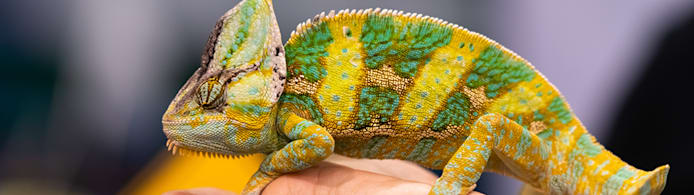
Go to Petco and learn some of the signs of a sick chameleon. Detect potential health problems early so you can get expert advice from your veterinarian.
Signs of a Sick Chameleon
If your chameleon is acting off, don't wait to see if things improve on their own. Chameleons are prey animals that instinctively hide illness — by the time symptoms are obvious, your pet may already need urgent veterinary care. Knowing what to look for early can make a real difference.
Below are the seven most common signs of a sick chameleon, followed by the care basics that help prevent many of these conditions in the first place.
7 Signs Your Chameleon May Be Sick
1. Lethargy
General lethargy — an overall weakness and slowness — is one of the clearest warning signs that something is wrong. If your once-active chameleon is now sitting listlessly on the floor of his habitat rather than moving through the branches, contact your veterinarian promptly. Lethargy is a nonspecific sign associated with many chameleon illnesses, which is exactly why it should never be dismissed as "just a slow day."
2. Lesions on the Skin or Mouth
Some sick chameleons develop oral or skin lesions — discolored, raised or flat areas of skin or mucous membrane that may appear scabbed or bleeding. Lesions can result from fungal, bacterial, viral or parasitic infections, as well as cancer, inflammation or trauma. If you notice sudden changes in the color or texture of the skin around your chameleon's mouth or anywhere on his body, have him evaluated by a veterinarian as soon as possible. When caught early, lesions and their underlying causes can often be treated successfully.
3. Sunken or Swollen Eyes
Your chameleon's eyes are a reliable health indicator. Sunken eyes are a common sign of dehydration — chameleons will become dehydrated quickly if they aren't provided with dripping water to drink, since they won't drink from a standing water dish. Swollen eyes, on the other hand, can point to other underlying health issues, such as a vitamin A deficiency. Any change in the position or appearance of your chameleon's eyes warrants a veterinary exam to identify the root cause.
4. Weight Loss
Weight loss in a chameleon can be harder to spot than in a dog or cat, but the signs are there if you know what to look for. Prominent ribs and sagging skin are indicators that your chameleon has lost muscle mass and fat. Sudden weight loss can stem from bacterial or parasitic infection, nutritional deficiencies or inappropriate environmental conditions. If you suspect your chameleon is losing weight, schedule a veterinary visit as soon as possible.
5. Fluid Under the Skin
Fluid accumulating beneath the skin — particularly under the jaw and along the neck — is a serious symptom that commonly occurs with kidney failure in chameleons. Other signs of kidney failure include a lump in front of the pelvis, an inability to defecate, bloodshot eyes and swollen joints. Subcutaneous fluid can also be caused by other illnesses, but regardless of the cause, any chameleon showing these signs needs to be examined by a veterinarian right away.
6. Decreased Appetite
A healthy chameleon should be eager to hunt the live insects you offer each day. When a chameleon is ill, he will often eat little to nothing. Any pet lizard who consistently ignores his daily ration of insects should be seen by a vet — a reduced appetite is rarely something to wait out.
7. Inability to Climb
Chameleons are natural climbers, using their opposable toes and prehensile tail to grip vines and branches with precision. A chameleon who struggles to grasp a branch, loses his footing repeatedly or shows no interest in climbing at all may not be feeling well. If your chameleon stops using the branches in his habitat, it's time for a veterinary visit.
Quick-Reference: Signs of a Sick Chameleon
| Sign | What to Look For | Possible Cause |
|---|---|---|
| Lethargy | Sitting on habitat floor; slow or unresponsive | Many illnesses; nonspecific |
| Lesions | Scabbed, discolored or bleeding skin/mouth tissue | Infection, inflammation, trauma, cancer |
| Sunken eyes | Eyes appear recessed or hollow | Dehydration, weight loss |
| Swollen eyes | Eyes appear puffy or enlarged | Vitamin A deficiency, infection |
| Weight loss | Prominent ribs, sagging skin | Infection, nutritional deficiency, poor environment |
| Fluid under skin | Swelling under jaw or along neck | Kidney failure, other systemic illness |
| Decreased appetite | Ignoring daily insect ration | Many illnesses; nonspecific |
| Inability to climb | Losing grip; avoiding branches | Weakness, neurological or metabolic issue |
Chameleon Care Basics That Help Prevent Illness
Many of the signs above are directly tied to unmet environmental or nutritional needs. Keeping these fundamentals in check is one of the most effective ways to support your chameleon's wellbeing.
Habitat setup: In the wild, chameleons live in trees — so their enclosure should reflect that. A tall habitat with plenty of climbing branches is essential. A spacious enclosure with a live ficus tree inside is an excellent starting point.
Temperature regulation: Chameleons are cold-blooded reptiles, meaning they rely entirely on external heat sources to regulate their internal body temperature. Their habitat must include both a warm zone and a cool zone. Most chameleons prefer a cool zone of 70–75°F and a warm basking zone of 85–95°F during the day. At night, with UV lighting off, temperatures should not drop below 65–70°F. The ideal range varies by species, so confirm the specific needs of your chameleon's breed with your veterinarian or a knowledgeable Petco associate.
UV lighting: Chameleons require exposure to full-spectrum (UVA and UVB) ultraviolet light within their habitat. On warm days, direct natural sunlight provides additional benefit.
Nutrition: Your chameleon needs to eat a variety of live insects daily — including crickets, mealworms, cockroaches, wax moths, superworms and waxworms. Feeder insects should always be gut-loaded with nutrient-rich foods and dusted with a calcium supplement before being offered. Veiled chameleons may also eat small amounts of leafy greens such as collard greens, kale and dandelion greens. Proper calcium and vitamin supplementation is critical; deficiencies are a common driver of the symptoms listed above https://www.merckvetmanual.com/management-and-nutrition/nutrition-small-animals/nutritional-requirements-of-small-animals.
Hydration: Chameleons will only drink moving water — they will not drink from a standing dish. Use an automated drip system or mist the plants in the habitat several times a day to create water droplets on leaves. Consistent access to dripping water is one of the simplest ways to prevent dehydration-related symptoms like sunken eyes.
When in doubt, call your vet. Chameleons decline quickly when something is wrong. If you notice any of the signs above — or anything else that seems off — contact a reptile-experienced veterinarian as soon as possible. Early intervention consistently leads to better outcomes.
Early Warning: How Chameleon Care Gaps Become Health Problems
Recognizing a sick chameleon often starts with understanding what "healthy" looks like — and where routine care, when it slips, creates the conditions for illness. The care requirements below aren't just husbandry tips; each one is directly tied to a specific set of symptoms you may notice when something goes wrong.
Hydration — and What Happens Without It
Chameleons do not drink from standing water. In the wild, they lap droplets from leaves, which means dehydration is one of the most common and preventable causes of illness in captive chameleons. Misting the habitat thoroughly for several minutes, twice a day, gives your chameleon the opportunity to drink naturally. If your schedule makes that difficult, an automatic mister or drip system is a reliable alternative.
Signs dehydration may already be a problem: sunken eyes, skin that stays "tented" after a gentle pinch, lethargy, or urates (the white portion of droppings) that appear orange or yellow rather than white.
Nutrition — Feeder Variety and Calcium Supplementation
A chameleon fed only crickets is a chameleon headed for nutritional deficiency. Rotating a variety of live feeder insects — crickets, dubia roaches, hornworms, silkworms — and dusting them with a calcium supplement before each feeding helps prevent metabolic bone disease (MBD), one of the most frequently seen diet-related illnesses in chameleons.
Signs a nutritional gap may be developing: rubbery or bowed limbs, tremors, difficulty gripping branches, or a chameleon that stops eating altogether.
Lighting — UV and Heat, Both Matter
Two lighting elements are non-negotiable:
- Full-spectrum UVB light: Chameleons synthesize vitamin D₃ in their skin when exposed to UVB radiation. Vitamin D₃ is what allows dietary calcium to be absorbed. Without adequate UVB, calcium supplementation alone is not enough, and MBD can still develop.
- A basking heat source: An over-the-tank ceramic heat bulb is a common choice. Use at least two thermometers to confirm you have both a warm basking zone and a cooler retreat — chameleons regulate their body temperature by moving between zones, and a habitat that runs uniformly hot or cold is a stressor that suppresses immune function.
Signs the lighting setup may be off: dark, dull coloration that doesn't brighten during basking, prolonged time spent in one zone, or visible bone deformity in older animals.
Humidity — the Right Range Prevents Two Different Problems
| Humidity Level | Risk |
|---|---|
| Below ~50% | Dehydration, incomplete or stuck shed (dysecdysis) |
| ~50–60% | Target range for most chameleon species |
| Consistently above 60–70% | Bacterial and fungal skin infections |
A hygrometer (humidity gauge) is essential — guessing humidity is not an option. Stuck shed around the toes, feet or eyes is an early, visible sign that humidity has been running too low. Discolored, weeping, or foul-smelling skin patches can signal a bacterial or fungal infection from humidity that has been running too high.
The Connection to Recognizing Illness
Every item above — hydration, feeder variety, calcium dusting, UVB exposure, temperature gradient, humidity — has a corresponding set of warning signs when it fails. If you notice any of the symptoms listed here, do not adjust husbandry and wait. A chameleon that appears unwell should be seen by a reptile-experienced veterinarian promptly. Chameleons are prey animals by instinct and will mask illness until they can no longer do so; by the time symptoms are visible, the underlying problem is often well established.
Petco tip: If you're setting up or auditing your chameleon's habitat, a knowledgeable Petco associate can help you confirm you have the right equipment in place before a health issue develops.
How do you tell if your chameleon has a respiratory infection?
If your Jackson’s chameleon or other species of pet chameleon has trouble breathing, it could be a sign of a respiratory infection. If you notice labored breathing, wheezing or bubbles coming from the mouth or nose, it’s time to consult your vet.
Several factors contribute to the development of respiratory infections in chameleons. If chameleons are housed in habitats where the temperature is too low, their bodies expend a great deal of energy trying to keep warm and their immune systems don’t function optimally—predisposing them to infection. Excess humidity can also lead to respiratory infection, as it contributes to the growth of harmful bacteria and fungi.
How do you know if a chameleon is dying?
Any time you suspect your pet is showing sick chameleon symptoms, you should take the situation seriously. Chameleons are delicate reptiles whose health can deteriorate quickly, leading to rapid death. Signs of illness in your chameleon that warrant a trip to your vet include weakness, dehydration, sunken eyes, inability to climb and refusal to eat.
A drastic change in color may also indicate that your pet chameleon is sick. Sick chameleon colors vary, but when a typically blue or green lizard suddenly starts to turn brown or black, they may be significantly ill.
How can I save my chameleon?
If you notice any signs of a sick chameleon, you should contact your veterinarian as soon as possible. You may also be able to provide some immediate care to help revive an ill lizard before getting them to the veterinarian. Hydration is key—if your chameleon is weak or is unwilling to eat live food, encouraging them to drink water is important. If they won’t drink, you can soak them in a shallow pan of warm water to help them become hydrated. You should also check the habitat’s thermometers to ensure the temperature range is appropriate and your chameleon isn’t too hot or cold.
Sick Chameleon Symptom Guide: Signs, Causes & What to Do
| Symptom | Possible Underlying Causes | Urgency | What to Do First |
|---|---|---|---|
| Lethargy / listlessness | Infection (bacterial, viral, parasitic), nutritional deficiency, incorrect temperatures, metabolic disease | High | Check habitat temps and UVB; call your veterinarian |
| Color change (persistently dark) | Stress, low body temperature, illness, pain | Moderate–High | Verify basking zone is 85–95°F; consult a vet if color does not normalize |
| Sunken eyes | Dehydration (most common), significant weight loss | Moderate–High | Increase misting frequency; confirm drip system is working; see a vet promptly |
| Swollen or puffy eyes | Vitamin A deficiency, infection, retained shed | High | Do not attempt home treatment; schedule a veterinary exam |
| Oral or skin lesions | Fungal, bacterial, viral or parasitic infection; trauma; cancer; inflammation | High | Isolate from other reptiles; veterinary evaluation as soon as possible |
| Weight loss / prominent ribs | Parasitic or bacterial infection, nutritional deficiency, inappropriate habitat conditions | High | Review gut-loading and calcium dusting protocol; vet exam required |
| Fluid under the jaw or neck | Kidney failure, edema from systemic illness | Emergency | Seek veterinary care immediately |
| Lump in front of pelvis / inability to defecate | Kidney failure, obstruction, parasites | Emergency | Veterinary care immediately |
| Decreased appetite / refusing insects | Any systemic illness, stress, incorrect temperatures, parasites | Moderate–High | Log feeding refusals; consult a vet if lasting more than 2–3 days |
| Inability to grip or climb | Metabolic bone disease (MBD), calcium/vitamin D deficiency, weakness from illness | High | Review calcium supplementation and UVB output; vet exam required |
| Labored breathing, wheezing, nasal bubbles | Respiratory infection (bacterial or fungal), excess humidity, low habitat temperature | Emergency | Adjust humidity to 50–60%; veterinary care immediately |
| Bloodshot eyes / swollen joints | Kidney failure, systemic infection | Emergency | Veterinary care immediately |
A note on color change: Chameleons shift color to thermoregulate and communicate — a persistently dark coloration outside of normal basking behavior is a red flag, not a party trick. If your chameleon stays dark even in a properly heated habitat, treat it as a symptom and contact your veterinarian.
Frequently Asked Questions
What are the most common signs of a sick chameleon? The most frequently reported signs include lethargy, sunken or swollen eyes, refusal to eat, inability to climb, skin or oral lesions, and abnormal color that does not resolve with proper basking temperatures. Any single sign warrants a call to your veterinarian, since chameleons often mask illness until a condition is advanced.
Can dehydration make a chameleon look sick? Yes. Because chameleons will only drink moving or dripping water, they are highly prone to dehydration if a misting or drip system is absent or inadequate. Dehydration commonly presents as sunken eyes and lethargy. Misting the habitat for several minutes at least twice daily — or running an automated drip system — is essential to keeping your chameleon hydrated.
Why does my chameleon have fluid under its chin? Subcutaneous fluid buildup under the jaw and along the neck is a recognized sign of kidney failure in chameleons, though it can also accompany other systemic illnesses. Additional signs of kidney failure include a lump in front of the pelvis, bloodshot eyes, swollen joints and an inability to defecate. This is a veterinary emergency — do not wait to seek care.
How does incorrect UVB lighting cause illness in chameleons? Chameleons rely on full-spectrum UVA and UVB light to synthesize vitamin D3 in their skin, which in turn enables them to absorb dietary calcium. Without adequate UVB exposure, chameleons can develop metabolic bone disease (MBD), which causes weakness, inability to grip branches and, in severe cases, bone fractures. Ensure your UVB bulb is replaced on the manufacturer's recommended schedule, as output degrades before the bulb visibly burns out.
How do I know if my chameleon has a respiratory infection? Watch for labored or open-mouth breathing, wheezing, and mucus or bubbles around the mouth or nostrils. Respiratory infections in chameleons are often triggered by habitat temperatures that are too low (suppressing immune function) or humidity that is consistently too high (promoting bacterial and fungal growth). Ideal humidity sits at approximately 50–60%. Contact your veterinarian right away if you observe any of these breathing changes.
When should I take a sick chameleon to the vet immediately? Seek same-day or emergency veterinary care if your chameleon shows any of the following: fluid under the jaw or neck, labored breathing or wheezing, complete refusal to eat for more than two to three days, inability to move or grip, bloodshot eyes, swollen joints or a visible lump near the pelvis. Chameleons are adept at concealing illness, so by the time symptoms are obvious, prompt professional evaluation is critical.
Frequently Asked Questions
When should I call a vet about my sick chameleon? Call your veterinarian as soon as you notice any combination of the following: lethargy lasting more than a day, sunken or swollen eyes, labored breathing, wheezing, bubbles from the mouth or nose, visible lesions, fluid under the jaw or neck, an inability to climb, or a complete refusal to eat. Chameleons are prey animals by instinct and tend to mask illness until symptoms are advanced — so early action matters. When in doubt, err on the side of a vet visit rather than a wait-and-see approach.
Can I treat a sick chameleon at home? For most signs of illness — respiratory infection, kidney failure, parasitic infection, vitamin deficiency — home treatment is not appropriate and can delay care that your chameleon urgently needs. What you can do at home is correct husbandry issues immediately: ensure dripping or misted water is available twice daily, confirm your habitat has a proper temperature gradient (70–75°F cool zone, 85–95°F warm zone), verify UVA/UVB lighting is functioning, and check that humidity sits between 50–60%. These steps support recovery but do not replace a veterinary diagnosis or treatment plan. Always consult your veterinarian before attempting any home remedy.
What does it mean when a chameleon turns very dark or stays one color? While chameleons do shift to darker colors to absorb heat, a chameleon that remains persistently dark, dull or unusually pale — especially outside of normal basking behavior — may be signaling stress, pain or illness. Color change alone is not a diagnosis, but combined with any of the seven warning signs (lethargy, weight loss, decreased appetite, etc.), it warrants a prompt call to your veterinarian.
How do I know if my chameleon is dehydrated? The clearest sign of dehydration is sunken eyes — the eyes appear to recede into the skull rather than sitting full and prominent. You may also notice infrequent or very dark-colored urates (the white portion of a chameleon's waste). Dehydration most often occurs when dripping or misted water is not consistently available, since chameleons will not drink from a standing water dish. Misting the plants in your chameleon's habitat for several minutes at least twice a day, or using an automated drip system, can help support proper hydration. If sunken eyes persist after correcting water access, see your vet to rule out underlying illness.
Are there toxins or household items that are dangerous to chameleons? Yes. Many common houseplants, pesticides and cleaning product residues can be harmful to chameleons, particularly because they spend time on live plants and may ingest residue while drinking water droplets from leaves. Never use pesticide-treated feeder insects, and rinse any live plants thoroughly before placing them in your chameleon's habitat. If you suspect your chameleon has been exposed to a toxic substance, contact your veterinarian or the ASPCA Animal Poison Control Center immediately. https://www.aspca.org/pet-care/animal-poison-control
How often should a chameleon see a veterinarian? Even a chameleon that appears completely well benefits from at least one wellness exam per year with a veterinarian experienced in reptile care. Routine exams allow a vet to catch early signs of parasitic infection, nutritional deficiency or organ stress before they become emergencies. New chameleons should be seen within the first few weeks of coming home to establish a health baseline.
This article was created with assistance from AI tools and reviewed for accuracy by Petco's content team.
Related Articles


