


Two Easy Ways to Start Earning Rewards!
Become a member today! Members-only pricing and offers, personalized care notifications, Vital Care points back on every purchase and more!
 Become a credit card member today!
Earn 2X Pals Rewards points at Petco
when you use Petco Pay!APPLY NOWLearn More About Petco Pay Benefits
Aquarium Hardscape: The Complete Setup Guide
Published on September 18th, 2023
Updated on July 16th, 2026

Written by Don Spaeth
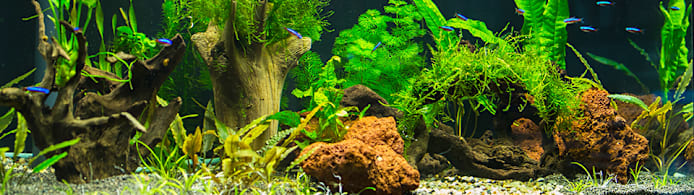
Discover how to hardscape your aquarium here at Petco. Visit Petco and check out aquarium hardscape ideas, solutions and much more for your fish.
Whether you care for a solo betta in a five-gallon aquarium or a variety of aquatic life in a big community tank, your aquarium hardscape not only provides visual appeal but is essential for fish health and wellness.
Introduction to aquarium hardscaping
Your aquarium hardscape includes items like driftwood, aquarium hardscape rocks, coral, caves and substrate.
The second part of your aquascape is known as the softscape, which includes your aquatic plants. You also have functional accessories like your filter, lights, oxygenation, heater, etc. Here we will focus on just the hardscape of your aquarium.
What is the function of aquarium hardscaping?
Your aquarium’s hardscape is the foundation of the entire habitat. It helps influence the health and happiness of all your aquatic life. Hardscaping can also add beneficial tannins and surface area for healthy bacteria to colonize in your pets’ ecosystem.
Aquarium hardscape rocks and driftwood provide places for your aquatic life to hide. Driftwood also provides a food source for algae eaters. Your substrate provides feeding grounds for catfish and algae eaters and can affect or help you maintain healthy water quality. Substrate also provides a foundation for any live plants you add to your softscape to grow and flourish.
Most popular substrate choices
The aquarium sand, gravel or substrate you choose for your aqua hardscape depends on the type of aquatic life, the look you want and whether you have live plants.
Sand
This is the finest type of substrate and a popular choice by some aquarists for a natural-looking hardscape aquarium. Sand can be a good choice for burrowing fish—including catfish, loaches and wrasses—and is often used in saltwater habitats. Sand grains come in various sizes—from .25 to 3 or more millimeters in diameter.
Gravel
Gravel is a great choice for freshwater aquariums because it allows water to flow through it, helping to prevent the buildup of detritus. Gravel is heavier and larger in diameter than sand—at about 3 to 6 millimeters. It also typically comes in more diverse colors than sand—such as black and neon—so it may better match your desired look. You don’t even have to choose one over the other—one fun aquarium hardscape idea is to use sand and gravel for an interesting textured effect.
Nutrient-rich substrate
Clay, basaltic, stratum and peat-type aquarium soils are commonly used in planted aquarium hardscapes. Substrates between 1 to 3 millimeters in diameter are typically utilized. This helps prevent compaction by allowing water and oxygen to flow to your plants’ roots. It can also improve or change your water’s pH level—so it may take some tinkering to find the right balance for your habitat.
The nutrients in aquarium soils will deplete over time, which means you’ll periodically need to replace it or add more. You can also use organic potting soil that has been cleaned and filtered, but this is not recommended for beginning plant aquarists.
Most popular rock choices
The type of aquarium rocks you choose depends on your aesthetic as well as the size of your fish and your aquarium.
Natural rocks
Natural aquarium hardscape rocks are very popular. They look great, come in various shapes, textures and colors and are low-maintenance. Some popular natural stones include:
- Seiryuis a blue-gray, jagged stone that looks like small granite mountains. It does release carbonates when submerged, which can increase your water hardness and pH.
- Dragon Stone, also called Ohko, is a light, porous rock with an interesting textured look—you can even attach plants to it. Better yet, it won’t affect your water hardness.
- Elephant Skinis naturally found in caves, where it’s been shaped by magnesium-rich water that gives it a shiny, textured and variegated look. This type of rock can raise water hardness and pH.
- Pagoda Stone is a unique layered rock that comes in many colors—including red, black and brown—but can also raise water hardness and pH.
You can also collect your own rocks for your aquarium, but stick to granite, lava, slate, sandstone, onyx or quartz. Stay away from calcites, marble, geodes and alabaster, and don’t use rocks that crumble easily, have sharp edges or come from polluted areas. Be sure to clean all rocks thoroughly before you hardscape your aquarium.
Most popular wood choices
Natural woods native to aquatic environments can also make visually appealing additions to the hardscape in an aquarium and provide benefits to your plants and pets.
Natural driftwood
Driftwood in your aquarium can help you create a variety of fascinating looks that are sure to be conversation starters.
Driftwood can be very good for aquariums when used properly. It naturally releases tannins into the water, which can help boost natural immune systems in aquatic life to lower your pH and is especially helpful if your water is alkaline. You’ll likely see these effects within the first few weeks, but you’ll need a long-term solution if your pH remains high. Tannins can also increase the amount of oxygen in the water.
Aquarium wood can also promote the growth of beneficial bacteria, helping to balance the ecosystem. Beneficial bacteria love to grow on the added surface area of driftwood, and these colonies can help break down waste. It isn’t just bacteria that benefits from driftwood—aquatic life love it, too. It likely exists in their natural habitat in some form, providing them with a place to hide, breed and explore. And for algae eaters, it can provide an excellent food source.
- Bogwood has unique color patterns and comes in jet black, dark brown and red-brown colors. Real bogwood can be difficult to find—today, most woods are dried outside rather than undergoing the long process of anaerobic preservation.
- Burma petrified wood stone is gaining popularity thanks to its beautiful texture, variegated color and variety of sizes.
- Malaysian driftwood is a traditional standby—it’s rugged-looking, comes in many sizes and shapes and breaks down slowly. Like mopani wood, it’s very dense and typically won’t float when you add it to your aquarium. It has natural, rugged good looks and is extremely versatile. Moss and live plants take well to it.
- Spider wood is actually a root—and as its name implies, it does resemble a spider. Because it is a root, spider wood is very light and will need to soak for a long time before it sinks. Spider wood also does not leach as many tannins as other species of driftwood.
- Cholla wood comes from cacti and has a porous, hollow texture that many smaller fish and algae eaters love.
Can you find your own driftwood? Yes, but be sure to properly clean, sterilize and soak it. Also, be sure to only use hardwoods—softwoods can deteriorate quickly and leach into the water.
How do I prepare driftwood for an aquarium?
Whether you get your aquarium wood from a store or your local pond, river or lake, you must properly clean, sterilize and soak it before adding it to your habitat. Here’s how.
Clean:
First, use a clean, dry brush to wipe off dirt or dust. Then add clean, plain water and scrub the wood to remove anything else on it. Always use a brush that has never been used before—an unused toothbrush should work well—and ensure your water and the bucket you put it in are also clean and free of any cleaning solutions or soap.
Sterilize:
You can sterilize driftwood by boiling it in water. The length of time depends on the size of the piece and the type of wood but can range from 30 minutes for smaller, softer woods to several hours for large, hard pieces of wood. If you need to boil the wood for a long time, add water as it evaporates to keep the entire portion of wood submerged.
Boiling is the recommended way to sterilize driftwood, but what if you have a very large piece that won’t fit in a stovetop pot? You can also soak it in a solution of 2–3 tablespoons of bleach per gallon of water for about 24–48 hours. Make sure your bleach solution isn’t too strong, and after soaking your driftwood, place it in another bucket of clean water and a dechlorinator for around a day to get rid of the bleach before you add it to your aquarium.
Curing:
Curing is the process of removing some of the tannins from your driftwood and weighing it down. You don’t necessarily have to cure driftwood for aquariums, but it has several benefits. First, it will help your driftwood sink to the bottom rather than float on the top, which is especially important for lighter woods like cholla wood and spider wood. Second, allowing some pre-leaching of the tannins can help keep your water clearer. Without leaching, most driftwood can cause the water to become yellow or brown. This is fine for aquatic life (and even beneficial), but most aquatic parents prefer clear water and clear views.
To cure your aquarium wood, all you have to do is soak it in plain, clean water. Choose a container that can completely submerge the wood, and change the water every day. How long will it take? That depends on the size and type of wood, but typically about 1–2 weeks. Continue changing the water daily until it is clear and you’re ready to add it to your aquarium.
How to Create an Aquarium Hardscape
Building your aquarium hardscape is where vision meets craft. Follow these steps in order — layout first, materials prep second, assembly last — and you'll end up with a stable, fish-safescape that looks intentional rather than accidental.
Step 1: Plan Your Layout Before You Touch a Single Rock
Resist the urge to start stacking. A few minutes of planning prevents hours of re-doing.
Apply basic design principles to your fish tank:
- Rule of thirds. Mentally divide your aquarium into a 3×3 grid. Place your primary focal point — your tallest rock formation or most dramatic piece of driftwood — where two grid lines intersect, not dead center. Off-center arrangements read as natural; centered arrangements read as staged.
- Create a focal point. Every great hardscape has one dominant element that draws the eye first. Everything else supports it. Choose one statement rock or wood piece and build outward from there.
- Design for flow and depth. Use taller hardscape elements toward the back and sides, shorter ones toward the front. This creates a sense of depth and leaves open swimming lanes in the mid-water column — important for active fish species.
- Think like your fish. Map out hiding spots, sight-line breaks and resting ledges based on the species you're keeping. Cave-dwelling fish need enclosed overhangs; schooling fish need open water; territorial fish need visual barriers that divide the space.
- Account for your substrate depth. Rocks and wood will sink into soft sand or fine gravel. Plan your heights with that settlement in mind, and note where substrate layers or color patterns will be visible between hardscape elements.
Sketch your layout on paper or take a photo of a dry run on a table before anything goes into the fish tank. It's far easier to adjust now than after the water is in.
Step 2: Prepare Your Rocks and Wood
How you prep your hardscape materials depends on where they came from. Never skip this step — untreated rock and wood can introduce pathogens, pH-altering compounds or toxic residues into your water column.
Natural stones (store-bought):
- Soak in hot water.
- Scrub thoroughly with a firm brush — no soap.
- Rinse until the water runs clear.
Found rocks (collected from outdoors):
- Scrub with a firm brush under hot water.
- Soak in a diluted bleach solution — 2 to 3 tablespoons of bleach per gallon of water — for 48 hours.
- Remove and rinse thoroughly.
- Soak again in clean water with a dechlorinator additive to neutralize any remaining bleach before the rock enters your fish tank.
- Dry completely before use.
Any bleach residue in your aquarium can be harmful to fish and aquatic life. Dechlorinating the rock after bleaching is not optional — it's a critical safety step.
Driftwood (found or store-bought):
- Scrub thoroughly with a firm brush.
- Sterilize by boiling (preferred for smaller pieces) or by using the bleach-soak method described above.
- If bleach was used, follow the same dechlorinator rinse-and-soak step.
Note that driftwood will often release tannins into the water, gradually tinting it amber. This is harmless for most fish and actually preferred by some species, but if you want crystal-clear water, pre-soaking driftwood for several days — changing the water daily — will leach out much of the tannin before the wood goes into your display tank.
Step 3: Prepare and Add Your Substrate
Even store-bought gravel and sand can carry dust and fine particles that will cloud your water. Rinse it before it goes in — every time.
- Add your gravel or sand to a clean bucket.
- Fill with water and work the substrate with your hand to agitate it.
- Run a hose or faucet over it continuously for approximately 15 minutes, or until the runoff water is clear.
- Drain and repeat if needed.
Once clean, add your substrate to the fish tank. If you're using a single type, pour it in and slope it gently — slightly higher toward the back creates natural depth. If you're layering different substrate types or creating color patterns, add each layer or section separately and use a card or divider to keep clean edges between materials. Aim for a depth of at least 2 inches for most setups, and deeper if you're keeping burrowing species or planting live plants.
Step 4: Add Rocks, Then Wood — In That Order
Sequence matters here. Rocks go in first because they need to be fully stable before anything else is placed against them.
Adding rocks:
- Place the largest, heaviest anchor stones first, directly on the bare bottom of the fish tank (before or after substrate, depending on your design — placing large rocks on the glass bottom before substrate prevents them from shifting or toppling if a fish digs underneath).
- Stack carefully and test stability before moving on.
- Use aquarium-safe silicone to bond stacked rocks together if there's any risk of them shifting. This is especially important in larger fish tanks where a toppling rock formation could crack the glass or injure fish.
- Keep all rocks clear of the glass walls — rock-to-glass contact can stress or crack the panel over time.
Adding driftwood:
- Once your rock formation is locked in, position your driftwood.
- Secure it so it can't float or shift: embed the base into the substrate, wedge it between rocks, or use aquarium-safe silicone to attach it to a rock anchor.
- Driftwood that isn't fully waterlogged will want to float — weighting or anchoring it is essential until it becomes saturated.
When every element is stable, your hardscape is complete and you're ready to add water, cycle the tank and — eventually — introduce your fish.
Quick-Reference: Hardscape Prep by Material
| Material | Source | Prep Method | Extra Step |
|---|---|---|---|
| Store-bought rock | Retailer | Hot-water soak + scrub | None |
| Found rock | Outdoors | Scrub → bleach soak (2–3 tbsp/gal, 48 hrs) → dechlorinator soak | Must dechlorinate before adding to tank |
| Driftwood (any source) | Either | Scrub + boil or bleach soak | Dechlorinator soak if bleached; pre-soak to reduce tannins |
| Gravel or sand | Retailer | Bucket rinse + 15-min running-water rinse | Repeat until runoff is clear |
Aquarium Hardscape at a Glance: Substrate & Rock Comparison
Use this table to quickly match your substrate or rock choice to your fish, plants and water-chemistry goals. Always test your water parameters after adding new hardscape materials, and consult your veterinarian or an aquatic specialist if you notice changes in your fish's behavior or health.
| Material | Type | Grain / Particle Size | Water Chemistry Effect | Best For | Plant-Friendly? | Notes |
|---|---|---|---|---|---|---|
| Sand | Substrate | 0.25 – 3 mm | Minimal (saltwater sand may buffer pH) | Burrowing fish (catfish, loaches, wrasses); saltwater fish tanks | Limited — fine grains can compact around roots | Rinse thoroughly before use; stir regularly to prevent anaerobic pockets |
| Gravel | Substrate | 3 – 6 mm | Neutral; does not alter pH or hardness | Freshwater community fish tanks; beginners | Moderate — allows water and oxygen flow to roots | Larger gaps allow detritus to settle below; vacuum regularly |
| Nutrient-Rich Soil (clay, basalt, stratum, peat) | Substrate | 1 – 3 mm | Can raise or lower pH depending on formula; monitor closely | Planted freshwater fish tanks | Excellent — releases nutrients directly to roots | Nutrients deplete over time; replace or supplement periodically |
| Seiryu Stone | Rock | Varies (sold by piece) | Raises pH and water hardness (releases carbonates) | Aquascapes with hard-water fish; cichlid fish tanks | Yes, plants can be attached | Striking blue-gray color; jagged texture mimics mountain scenery |
| Dragon Stone (Ohko) | Rock | Varies (sold by piece) | Neutral — does not affect pH or hardness | Soft-water fish tanks; planted aquascapes | Yes — excellent surface for mosses and epiphytes | Lightweight and porous; one of the most versatile hardscape rocks |
| Elephant Skin Stone | Rock | Varies (sold by piece) | Raises pH and water hardness | Hard-water species; decorative focal points | Limited | Shiny, variegated texture; naturally cave-formed |
| Pagoda Stone | Rock | Varies (sold by piece) | Raises pH and water hardness | Decorative layered aquascapes; hard-water fish | Limited | Available in red, black and brown; dramatic layered appearance |
| Malaysian Driftwood | Wood | Varies (sold by piece) | Lowers pH; releases tannins | Soft-water and blackwater fish tanks; planted fish tanks | Excellent — moss and live plants attach readily | Dense; sinks without prolonged soaking; breaks down slowly |
| Spider Wood | Wood | Varies (sold by piece) | Minimal tannin release compared to other driftwoods | Aquascapes requiring delicate branching structure | Yes — fine branches support mosses | Very light; requires extended soaking before sinking |
| Cholla Wood | Wood | Varies (sold by piece) | Minimal pH effect | Small fish, shrimp, algae eaters | Limited | Hollow, porous structure; provides shelter and grazing surface |
| Bogwood | Wood | Varies (sold by piece) | Lowers pH; releases tannins | Blackwater biotope fish tanks; soft-water species | Moderate | True anaerobic bogwood is rare; verify sourcing before purchase |
Quick rule of thumb: If your fish prefer soft, acidic water (think bettas, discus or tetras), lean toward Dragon Stone, Malaysian driftwood or nutrient-rich soil. If your fish thrive in harder, more alkaline water (cichlids, livebearers), Seiryu, Elephant Skin or Pagoda Stone can help you maintain those parameters naturally. Always cycle your fish tank fully before adding livestock, and retest water chemistry 24–48 hours after introducing any new hardscape element.
Frequently Asked Questions
Will aquarium rocks change my water chemistry? It depends on the rock type. Seiryu Stone, Elephant Skin Stone and Pagoda Stone all release carbonates that raise pH and water hardness, while Dragon Stone is neutral and will not alter your parameters. Always test your water 24–48 hours after adding new rocks and consult your veterinarian or an aquatic specialist if parameters shift beyond your fish's preferred range.
Is driftwood safe for all fish tanks? Natural driftwood is widely used and generally well-tolerated, but the tannins it releases will lower your pH and tint the water amber — which benefits soft-water species but may stress hard-water fish. Spider wood releases fewer tannins than Malaysian or bogwood, making it a gentler option if you are concerned about pH swings. If you notice your fish behaving unusually after adding driftwood, consult your veterinarian.
Can I use rocks or wood I collected outside? You can, with caution. For rocks, limit your collection to granite, lava rock, slate, sandstone, onyx or quartz. Avoid calcite, marble, geodes and alabaster, and never use rocks from polluted waterways. For wood, use only hardwoods — softwoods deteriorate quickly and can leach harmful compounds into the water. Clean, sterilize and soak all collected materials thoroughly before placing them in your fish tank.
What substrate works best for a planted fish tank? Nutrient-rich soils (clay, basalt, stratum or peat-type) in the 1–3 mm range are the most supportive choice for live plants because they deliver nutrients directly to roots and resist compaction. Keep in mind that these soils can shift your pH, so monitor water chemistry closely and be prepared to adjust. The nutrients will deplete over time and will need to be replenished or replaced.
How do I know if my hardscape is affecting my fish's health? Watch for changes in behavior — lethargy, loss of appetite, unusual swimming patterns or color changes can all signal a water-chemistry problem. Test your ammonia, nitrite, nitrate, pH and hardness regularly, especially in the weeks after adding new hardscape materials. If parameters look normal but your fish still seem off, contact your veterinarian for guidance.
Are there any hardscape materials I should never use? Yes. Avoid rocks that crumble easily, have very sharp edges or come from areas that may be chemically contaminated. Never use softwoods, painted or treated wood, or any material that has been exposed to pesticides or household cleaning products. Certain minerals — including calcite, marble and alabaster — can dramatically and unpredictably alter water chemistry. When in doubt, purchase hardscape materials from a reputable retailer and verify they are labeled safe for aquarium use. the ASPCA
This article was created with assistance from AI tools and reviewed for accuracy by Petco's content team.


