


Two Easy Ways to Start Earning Rewards!
Become a member today! Members-only pricing and offers, personalized care notifications, Vital Care points back on every purchase and more!
 Become a credit card member today!
Earn 2X Pals Rewards points at Petco
when you use Petco Pay!APPLY NOWLearn More About Petco Pay Benefits
Blackwater Aquarium: Setup, Fish & Care Guide
Published on July 18th, 2024
Updated on June 18th, 2026

Written by Don Spaeth
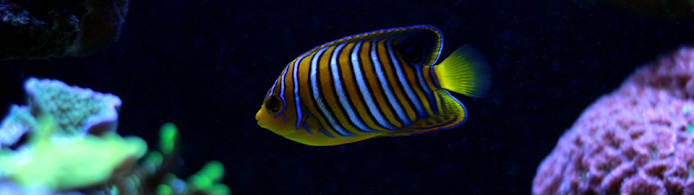
Search Petco to learn about blackwater fish aquariums. We want to help you decide what lifestyle is best for your unique fish.
Beautiful, unique and even a little mysterious, a blackwater aquarium can add a special mystique to your home. Perhaps more importantly, a growing consensus maintains that a blackwater setup can be healthier for certain types of pet fish compared to a typical aquarium setup. While it can be more of a challenge to assemble, many aquarists believe a blackwater tank is well worth the effort.
What is blackwater, and where does it come from in nature?
Bodies of blackwater are found all over the world, typically in the form of ponds, temporary pools and freshwater rivers that run through tropical rainforests and peat bogs. The dark color of the water, which can range from a light tea hue to a rich coffee brown, comes from the accumulation of dissolved humic substances and plant tannins. Humic substances comprise a mixture of many different organic compounds, including peat and soil.
When a river moves into a floodplain, it picks up leaf litter, twigs, branches, fruits and seeds that all begin to decay. This decay releases the humic substances and tannins that stain the water—the more of these decaying materials, the darker the water. The release of humic substances also lowers the pH of the water, making it more acidic.
What is a blackwater aquarium?
Building a successful blackwater fish tank means mimicking the chemistry and physical structure of blackwater found in nature. Aquarists need to pay close attention to maintaining a low pH, limiting minerals in the water and adding the right balance of organic matter into the tank.
A new blackwater setup will need time to age as the organic matter undergoes the decomposition process. You should notice the color of your aquarium water darkening over time. This is a good sign the aquarium is aging well. Keeping the water chemistry at the right level takes patience, practice and some experimentation.
What are the benefits of a blackwater tank?
You may be puzzled why anyone would want to create a blackwater aquarium. The idea of putting aquatic life in dark-colored water may seem a little odd. However, there are several benefits to creating this type of aquarium for many species of aquatic life.
- Improved health for your fish Emerging evidence is showing that blackwater tanks may enhance the health of your fish, allowing them to heal faster and resist disease better. This may be because blackwater more closely mirrors the natural environment of certain types of fish. Some aquarists have found that fish in blackwater setups are more likely to breed and showcase natural behaviors.
- Lower maintenance needs The dark hue of the water means that algae does not grow as quickly in blackwater aquarium setups as compared to more standard aquariums. Aquarists may also find they need to perform fewer water changes and/or replace less water during each change.
- A unique and beautiful visual With the right lighting, blackwater fish tanks can highlight the iridescent colors of your fish. Your fish will display dazzling streaks of color as they swim through the water. Additionally, adding stones, driftwood and leaves into your tank will create a soothing, natural-looking environment.
How to Set Up a Blackwater Aquarium
Ready to give a blackwater fish tank a try? Setting one up successfully comes down to getting six key elements right: tank size, organic matter, water chemistry, substrate, equipment and livestock. Work through each step below and you'll have a thriving, tea-colored biotope that your fish will love.
Step 1: Choose Your Tank Size
One of the most freeing things about a blackwater setup is that any tank size can work — from a compact nano fish tank to a 100-gallon showpiece or larger. Browse aquariums and fish tanks to find the right footprint for your space. The main constraint isn't volume; it's matching your fish species to the tank size (more on that under livestock below).
Step 2: Add Organic Matter to Build Tannins
Tannins are the engine of blackwater chemistry — they acidify the water, stain it amber-brown and release humic acids that many tropical fish thrive in. You have two broad approaches: slow-release organic sources (the most natural method) and instant liquid additives (useful for a quick chemistry correction). Most experienced hobbyists use both.
Slow-Release Organic Sources
| Organic Source | How to Use It | What It Contributes | Notes |
|---|---|---|---|
| Peat | Mix into the substrate layer or place in a mesh bag inside the filter | Humic acids, tannins, pH reduction | Replace every 4–6 weeks as it exhausts |
| Malaysian driftwood | Cure in a bucket of water for 1–2 weeks before adding; place in tank | Tannins released slowly over months to years | Pre-soaking reduces initial tannin burst and prevents floating |
| Mopani wood | Same curing process as Malaysian driftwood | Dense, long-lasting tannin source | Sinks readily; very durable |
| Indian almond (Catappa) leaves | Scatter 2–4 leaves on the bottom; replace monthly | Tannins, humic acids, mild antibacterial properties | Leaves float at first — they'll sink naturally within a few days; also a well-known addition to betta fish setups |
| Alder cones | Drop 5–10 cones per 10 gallons; replace monthly | Humic substances, mild tannins | Catkins of the black alder tree; small and easy to scatter |
Instant Blackwater Additives
Commercially available blackwater extracts (often labeled "blackwater conditioner" or "tannin extract") let you dial in water color and chemistry quickly. These are especially handy when you first fill the tank or after a large water change dilutes your tannin levels. Follow the manufacturer's dosing instructions and retest water parameters after 24 hours.
Step 3: Dial In Your Water Chemistry
Getting the water right is the single most important step. Blackwater fish are adapted to soft, acidic water, and keeping parameters in range will reduce stress and support long-term fish health. Consult your veterinarian or an aquatic specialist if you notice unexplained fish illness, as water chemistry imbalances can be an underlying cause.
Target parameters for a blackwater fish tank:
| Parameter | Target Range | Notes |
|---|---|---|
| pH | 5.5–6.8 (ideally below 7) | Wild blackwater can reach 4.5, but most aquarium fish do better above 5.5 |
| Carbonate hardness (KH) | 2–5 dKH | Soft water; low buffering capacity |
| General hardness (GH) | 2–5 dGH | Soft water |
| Temperature | 72–82°F | Varies by species — research your specific fish |
If your tap water is too hard (a very common challenge in the US), use reverse osmosis (RO) water or distilled water as your base, then blend back in a small amount of tap water or use a remineralizer to reach your target GH/KH. Adding organic matter will gradually lower pH over time; if you need a faster drop, use a commercially available instant blackwater additive.
What to avoid: Never use marine salt, crushed coral or marine-grade gravel to buffer a blackwater tank — these raise pH and hardness in the opposite direction of your goal.
Step 4: Select the Right Substrate
Your substrate choice directly affects water chemistry, so it deserves careful thought. Explore aquarium substrate and gravel options with the following guidelines in mind:
Good choices:
- Acidic clay or soil substrates — actively contribute humic substances and support live plant roots
- Fine freshwater sand — pH neutral; excellent for bottom-dwelling species like Corydoras and Kuhli loaches that sift through the sand
- Fine freshwater gravel — pH neutral; provides good root anchorage for live plants
Avoid:
- Marine sand or gravel (often made from crushed aragonite or limestone) — these dissolve slowly and raise both pH and hardness, working directly against your blackwater chemistry
- Calcium-rich rocks or substrates — same problem; always test an unfamiliar rock with a drop of vinegar before adding it to the tank (fizzing indicates carbonate content)
You can also mix peat directly into the bottom layer of your substrate before adding your top layer of sand or gravel — this creates a slow, steady tannin and humic acid release from below.
Step 5: Set Up Equipment
Filtration
Filtration is the trickiest part of a blackwater setup because standard filter media is designed to remove the very organic matter you're trying to keep.
- Remove activated carbon from any power filter or canister filter — carbon will strip tannins and humic acids from the water within hours, clearing the water and reversing your chemistry work.
- Replace carbon with peat in a mesh media bag, or use sponge media instead. Sponge provides excellent biological filtration without stripping organics.
- Keep flow moderate — many blackwater species (bettas, discus, angelfish) prefer calmer water that mimics slow-moving Amazonian streams.
- Monitor your filter frequently — a high load of decaying leaves and wood can clog mechanical filter media faster than in a standard setup. Rinse mechanical media in tank water (never tap water) every 2–4 weeks.
Heater
A standard submersible heater works perfectly. Set it to maintain 72–82°F, adjusting toward the upper end for discus and angelfish and the lower end for hardier species like cherry barbs and Corydoras. Use a separate thermometer to verify accuracy — heater thermostats can drift.
Lighting
Most lighting types work in a blackwater fish tank. Your choice depends on whether you plan to keep live plants:
- No live plants: Any LED or fluorescent fixture works. Lower-intensity, warmer-toned lighting enhances the amber water color and creates a moody, natural look.
- Live plants: Choose a full-spectrum daylight-style LED fixture. Brighter light also creates beautiful ripple effects that mimic sunlight filtering through a forest canopy — a stunning visual in a dark-water tank.
Step 6: Choose Compatible Livestock
More than 200 species of freshwater fish — plus a number of invertebrates — live in natural blackwater environments, giving you a wide selection. Always research compatibility, adult size and temperament before adding any fish. Some blackwater species grow very large (a pacu can exceed 2 feet in length), and some are aggressive toward tankmates (firemouth cichlids, for example, will make short work of small tetras in a shared tank).
Popular blackwater fish and invertebrates:
| Category | Species |
|---|---|
| Tetras | Neon tetra, cardinal tetra and other small tetra species |
| Cichlids | Discus, angelfish, firemouth cichlid, ram cichlid, dwarf cichlid, Geophagus |
| Catfish | Pictus catfish, Corydoras, Otocinclus |
| Labyrinth fish | Betta |
| Loaches | Kuhli loach |
| Barbs | Cherry barb |
| Invertebrates | Bamboo shrimp, bee shrimp, trumpet snail |
Compatibility note: Firemouth cichlids and small tetras are not a good pairing — the tetras will disappear quickly. Always cross-check adult size, water parameter overlap and temperament before combining species.
Step 7: Add Plants and Decorations
Live plants aren't required in a blackwater tank, but they can look stunning — their greens pop brilliantly against dark, tinted water. If you add rocks or decorations, research them first: calcium-rich rocks (marble, limestone, some sandstones) will leach carbonates and raise hardness over time. The vinegar drop test is a quick field check.
Best live plants for blackwater aquariums (all tolerate medium to low light and soft, acidic water):
- Anubias
- Cryptocoryne
- Java moss
- Java fern
- Water sprite
These species are hardy, slow-growing and well-suited to the lower light levels common in blackwater setups. Attach Anubias and Java fern to driftwood or rocks rather than planting them in the substrate — burying their rhizomes will cause them to rot.
Quick-reference setup checklist: - [ ] Tank sized to your target species - [ ] Organic matter selected (peat, driftwood, leaves, alder cones) - [ ] RO or distilled water sourced if tap water is hard - [ ] pH, KH and GH test kit on hand - [ ] Activated carbon removed from filter; replaced with peat or sponge - [ ] Substrate confirmed pH neutral or acidic (no marine sand/gravel) - [ ] Heater set to species-appropriate temperature - [ ] Livestock compatibility researched before purchase
Managing a blackwater aquarium
With patience and perseverance, you can recreate natural blackwater conditions in your fish tank. The work doesn’t stop there, however. As with any aquarium, you’ll need to continually monitor and manage your water conditions.
With a blackwater tank, you’ll need to regularly monitor the water for:
- Water hardness
- Water pH
- Ammonia, nitrite and nitrate levels
Water testing kits are a must to ensure you maintain proper water chemistry for your blackwater fish. Your local Petco Pet Care Center also offers free water testing.
Perform water changes every two to four weeks, replacing around 10-25% of the water at each change. Be aware of the hardness of your home water and mix your new water with reverse-osmosis or distilled water if needed.
Monitor the pH of your water after each water change. If the pH rises too high, a few drops of an instant blackwater additive can help bring the pH back down to a healthy level. Petco offers a range of aquarium water conditioners and additives that can help you better manage your tank’s water.
If you notice the water in your tank getting too dark, you can increase the frequency of your water changes, change out a larger amount of water during each change or add activated carbon to your aquarium filter.
Embrace the challenge of a blackwater fish tank
If you are ready for a challenge and want to create a truly unique aquarium, a blackwater tank is a great option. Petco offers all the solutions you need to set up and populate your blackwater aquarium. Our Pet Care Center aquatic specialists are happy to answer any questions you have—whether you want to create a blackwater tank or want to know more about saltwater aquariums, tanks and kits.


