


Two Easy Ways to Start Earning Rewards!
Become a member today! Members-only pricing and offers, personalized care notifications, Vital Care points back on every purchase and more!
 Become a credit card member today!
Earn 2X Pals Rewards points at Petco
when you use Petco Pay!APPLY NOWLearn More About Petco Pay Benefits
Self-Sustaining Aquarium Fish Tank: Complete Setup Guide
Published on February 2nd, 2023
Updated on June 18th, 2026

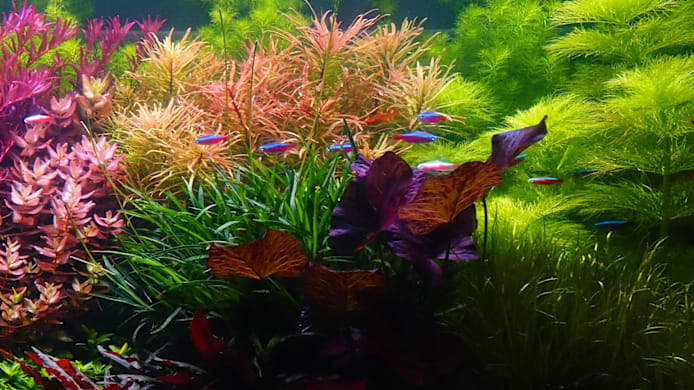
Learn how to make a self-sustaining aquarium. Visit Petco to learn all the steps to create the self-sustaining aquarium of your dreams!
A self-maintaining aquarium is a fish tank that is designed to maintain itself with minimal input from the owner. This is achieved through a variety of means, including using live plants, beneficial bacteria, automatic feeders, automatic water equipment and a self-sustaining food chain that take care of each other simultaneously.
While some aquarists find aquarium cleaning to be meditative, most of us would prefer to skip this unpleasant and time-consuming chore. In nature, lakes and rivers are self-cleaning—so is there a way to create a self-sufficient aquarium?
While you’ll never be able to build an entirely self-sustaining aquarium, you can come close by creating an aquatic ecosystem that mostly supports and filters itself. Do you want to learn how to create a self-sustaining fish tank ecosystem? Here’s what you need to know.
How does a self-maintaining aquarium work?
In a nutshell, a self-sufficient aquarium is intentionally designed so the plants and other aquatic life in the habitat take care of each other and maintain a healthy environment for all.
In a normal aquarium, uneaten food, waste and decomposing plants release dangerous ammonia into the water. Beneficial bacteria in the water oxidize ammonia into nitrites and then—eventually—into nitrates. Though nitrates are less poisonous than ammonia and nitrites, they can still be harmful and even deadly to your aquatic life in high concentrations.
This is why it’s so important to regularly perform partial water changes. The beauty of a self-sustaining habitat is that the live plants in the aquatic ecosystem can absorb ammonia and nitrates, thereby naturally removing them from the water. The plants can also provide a food source for aquatic life as well as hiding places to help them rest and relax. In turn, aquatic life provides ammonia, which will eventually turn into the nitrates that nourish the plants.
What are the benefits and drawbacks of a plant and fish ecosystem?
Creating a self-sustaining mini ecosystem takes work and planning and requires you to carefully choose the plants and aquatic life you add to the aquarium. However, when up and operating, this system can offer lots of benefits.
The number one benefit of this type of bioactive aquarium is that it can save you the time and effort of continually cleaning your habitat and changing your water. With a normal aquarium, you may need to partially change the water every 2–4 weeks to keep it clean and healthy.
With the right aquatic ecosystem, you can easily go on vacation or work trips without having to worry too much about your habitat. The right natural aquarium will give you some extra freedom.
Of course, there are a few challenges to creating a self-sustaining aquarium that you should consider before beginning this endeavor. First, a self-sustaining ecosystem with aquatic life requires a lot of upfront work, planning and effort. Additionally, self-sufficient aquariums are typically more expensive than a basic aquarium setup—so if you are on a budget, this option might not be right for you at this time. Finally, putting together a self-sustaining aquarium doesn’t completely eliminate the need for routine monitoring and maintenance.
However, many aquarists find that the extra effort and cost of creating a natural aquarium setup are well worth the time saved and extra freedom allowed by a well-functioning habitat. If you want to give a self-sufficient aquarium a try, here are the supplies you need.
What you need for setting up a self-sustaining aquarium
An aquarium:
When it comes to creating a natural planted tank, the bigger the better. You’ll need plenty of space for all the plants that will be required to clean the water. At a minimum, your aquarium should be at least 30 gallons and can go up all the way to 200 gallons. Take a look at our aquarium kits for possible options.
Substrate:
The substrate you add to the bottom of your aquarium plays an important role in developing an ecosystem. The substrate cultivates beneficial bacteria and provides a rooting medium for your plants, helping to stabilize and nourish them. You can purchase a premade substrate mixture formulated for a planted ecosystem or combine mineral-rich substrate on your own. Put the substrate with the smallest particles on the bottom of the aquarium first—so it should go soil, sand and then gravel. Using a cupful of substrate from an existing established tank can help to speed up the cycling process as well.
Water:
Both aquatic life and plants can be sensitive to water temperature, pH, chemicals and specific gravity. Make sure to treat your water and invest in a good water testing kit to ensure your water is healthy. Your local Petco also offers free water testing. If possible, use some of the water from a healthy aquarium, which has already been cycled and includes nutrients.
Lighting:
Plants need the right amount of light to thrive. When preparing your self-cleaning aquarium with plants, don’t forget to look into lighting and hoods. You’ll want to add lights to the aquarium and keep them on for 8–10 hours a day. Be sure to purchase lights that match the needs of the plants you intend to put in the aquarium or lights that can be dimmed or brightened. Too intense or too little light can damage your plants and invite algae to flourish.
Plants:
The number one ingredient to a successful self-sustaining ecosystem is live plants. These natural filters are necessary to absorb harmful ammonia and nitrates in your aquarium’s water. The more plants you have in the ecosystem, the more natural water cleaning power you get.
When choosing the right plants for your natural aquarium setup, consider the size and growth speed of potential plants, along with their nutritional, lighting and temperature needs. You’ll want to choose plants that will live well together and have similar needs.
You can choose from many kinds of plants—including rooted plants, free-floating plants and even plants that grow out of the aquarium—if you want to also experiment with aquaponics.
Some of the more popular plants for a self-sustaining mini ecosystem are:
- Anubias
- Duckweed
- Hair grass
- Java ferns
- Java moss
- Sword plants
Aquatic life:
The final puzzle piece to complete your self-sufficient aquarium is your aquatic life. Think carefully about what kinds of aquatic life you want. You’ll need to make sure they can live together in harmony and keep the ecosystem balanced. If you add too much aquatic life, they could create more nitrates than the plants can absorb. Larger fish also create more waste, so aquatic ecosystems typically include smaller species.
Some of the most common fish added to a self-sustaining aquarium are:
- Bloodfin tetras
- Bristlenose plecos
- Cory catfish
- Guppies
- Mollies
- Neon tetras
- Platies
- Swordtails
Build Your Cleanup Crew: Nature's Tank Maintenance Team
No self-sustaining fish tank is complete without a cleanup crew — a group of invertebrates that work around the clock to break down waste, graze on algae and consume uneaten food before it can decompose and destabilize your water chemistry. Think of them as living filtration: they close the nutrient loop that keeps a balanced aquarium fish tank with fish running with minimal intervention from you.
When organic matter — uneaten flakes, fish waste, decaying plant leaves — sits on the bottom of your tank, it breaks down into ammonia and nitrites, compounds that are harmful to fish even at low concentrations. A well-chosen cleanup crew intercepts that waste before it reaches that stage, reducing the burden on your filter and helping maintain the stable parameters a self-sustaining setup depends on.
The Right Invertebrates for the Job
Not every cleanup crew member does the same work. Matching the right species to your tank's specific needs — algae load, substrate type, fish community — makes the difference between a crew that thrives and one that goes ignored or gets eaten. Here's how the three most common options compare:
| Cleanup Crew Member | Primary Job | Best For | Tank Compatibility Notes |
|---|---|---|---|
| Dwarf crayfish (e.g., CPO crayfish) | Scavenging uneaten food, detritus and decaying plant matter from the bottom | Tanks with larger gravel or open substrate areas | Generally peaceful with fish too large to be grabbed; avoid housing with long-finned or slow-moving fish |
| Shrimp (e.g., cherry shrimp, Amano shrimp) | Grazing on algae, biofilm and fine food particles across plants, glass and aquarium gravel | Planted tanks; tanks with fine or dark substrate that shows algae growth | Best kept with small, non-aggressive fish; larger fish may prey on them |
| Snails (e.g., nerite snails, mystery snails) | Scraping algae from glass, décor and broad plant leaves; consuming leftover food | Almost any community tank setup | Nerites won't overpopulate; mystery snails are larger and visible — good for monitoring tank health |
Why Each One Earns Its Place
Dwarf crayfish are bottom-dwellers that patrol the substrate like tiny custodians, picking up the food scraps and decomposing organic material that sink past your fish entirely. Because they stay small (typically under two inches), they're far less disruptive to tank mates than full-sized crayfish, making them a practical choice for community setups.
Shrimp are arguably the most versatile members of any cleanup crew. Amano shrimp are particularly well regarded for their appetite for filamentous algae — the stringy, fast-growing kind that can overtake a tank quickly. Cherry shrimp, meanwhile, graze constantly on biofilm and fine algae across every surface, including plant stems and the fine gravel or sand on the tank floor. Their near-constant activity makes them one of the most visible contributors to a self-sustaining ecosystem.
Snails tackle the surfaces shrimp and crayfish often miss — particularly the glass walls and the tops of broad-leafed plants where algae sheets tend to form. Nerite snails are a especially popular choice because they won't reproduce in freshwater, so you won't wake up to a snail population explosion. Mystery snails are larger, slower and easy to spot, which makes them useful as informal indicators of tank health: a mystery snail that retreats into its shell and stays there can signal a water quality issue worth investigating.
A Few Things to Keep in Mind
- Stock proportionally. A cleanup crew supplements your filtration — it doesn't replace it. Overstocking invertebrates adds to your tank's bioload just like adding fish does.
- Check compatibility first. Some fish, including cichlids and certain larger tetras, will make short work of shrimp and small snails. Research your fish community before adding invertebrates.
- Feed lightly when needed. If your tank is very clean and your shrimp or snails seem to be searching for food, a small amount of algae wafer or blanched vegetable can supplement their diet without compromising water quality.
If you notice your cleanup crew struggling — shells thinning on snails, shrimp dying unexpectedly — it's worth testing your water parameters and consulting your veterinarian or an aquatic specialist, as these invertebrates can be sensitive to copper-based medications and sudden shifts in pH https://vcahospitals.com/know-your-pet.
How to start a self-sustaining aquarium
You’ve got all the supplies for your self-sufficient aquarium. Now, how do you put all the pieces together to create a planted aquatic ecosystem that will take care of itself?
Assemble your aquarium:
Rinse your new enclosure thoroughly with warm water, then add your substrate and décor. Fill with water and treat with a water conditioner. Follow all manufacturer’s instructions and make sure your filter, lights and heater are working properly. Test your water after 24-48 hours to make sure it is at the right temperature.
Add your plants:
When your water is ready, it’s time to add your plants. Follow the instructions for setting up each plant. Some plants may need to be buried in the substrate, while others may do best as free floaters.
Patience:
This is probably the hardest part of the natural freshwater aquarium process. After adding plants and a few hardy aquatic life species to the aquarium, you’ll need to wait a few weeks for your ecosystem to “establish”—meaning your plants take root in the substrate and beneficial bacteria begin to multiply. The bacteria are essential to transforming ammonia and nitrites into nitrates, and they need time to colonize your aquarium. If you add too many aquatic life species to your habitat too early, they may become stressed or sick if the nitrogen cycle isn’t yet up and running. Adding some water or substrate from another healthy aquarium or the addition of a bacteria supplement can help jump start the process.
During this waiting period, you may notice algae appearing in the aquarium. This is very common, and you haven’t done anything wrong. As your plants and beneficial bacteria become established, the algae growth will start to subside. In the beginning, though, you’ll want to change your water regularly to prevent algae blooms.
Add a cleanup crew:
After a few weeks, your aquarium should be ready for some aquarium helpers. Begin with a cleanup crew—such as snails—who will immediately get to work consuming algae. These creatures will help strengthen the nitrogen cycle in the habitat, making it a more welcoming environment for additional aquatic life.
Add more aquatic life:
At last, it’s time to add more aquatic life to your ecosystem. As exciting as it is, be sure to take things slowly. Introduce new aquatic life one by one or in small numbers. Give them time to adapt to the environment and for the environment to adapt to them. Be sure to test the ammonia, nitrite and nitrate levels in your aquarium to make sure they are safe before adding more aquatic life.
Carbon dioxide (CO2):
CO2 is an essential component in a planted aquarium. During photosynthesis, aquarium plants use light and CO2 to produce the food required for growth. As plants continue growing or as more are added to the aquarium, they will use up the supply of CO2 within the aquarium. Adding carbon dioxide is essential to prevent a drop in or overly low CO2 levels, as well as preventing plants from taking in too much bicarbonate, causing fluctuations in pH. Without the addition of CO2, plant growth rates may also become stunted. With new liquid CO2 alternatives such as Flourish Excel, a fully automated CO2 system is no longer a necessity for healthy plants.
Supplements:
Supplementing trace elements such as iron and manganese, as well as items like carbon and vitamins, will help provide additional nutrients so your plants can grow and thrive. Items like Leaf Zone, Flourish and Flourish tabs will help fulfill these supplemental needs.
How do I make my aquarium maintenance-free?
Despite what the term “self-sufficient” implies, no aquarium can truly run on its own. Even the most balanced aquatic ecosystem will need ongoing monitoring, maintenance and even some cleaning. In a well-balanced planted ecosystem, you may only need to change 10% of the water every 4 weeks, which is far less upkeep than you’d do for a basic aquarium.
In the end, being an aquarist means keeping your habitat healthy. A self-sufficient aquarium can relieve you of some of the work and offer you a beautiful ecosystem inspired by the balance found in nature.
Frequently Asked Questions
How long does it take for a self-sustaining aquarium to establish itself? Most fish tanks go through a nitrogen cycle that takes 4–8 weeks to fully complete. During this period, beneficial bacteria colonies build up in your substrate and filter media, converting harmful ammonia into nitrites and then into less-toxic nitrates. Adding a cup of substrate or a small amount of water from an already-cycled tank can shorten this window. Until the cycle is complete, test your water every few days and hold off on adding all your fish at once.
What if I get an algae bloom in my planted fish tank? Algae blooms are almost always a sign that something in your tank is out of balance — too much light, excess nutrients, or too few plants competing for those nutrients. Start by reducing your lighting period to 6–8 hours per day and checking your nitrate levels with a water test kit. Adding algae-eating cleanup crew members such as snails, shrimp, or bristlenose plecos can help bring a mild bloom under control. If the bloom persists or your fish show signs of stress, consult your veterinarian or an aquatic specialist, as some algae types can affect water quality in ways that harm fish health. https://vcahospitals.com/know-your-pet
Can I use tap water in a self-sustaining aquarium? Yes, tap water is suitable for most freshwater fish tanks — but it must be treated first. Municipal tap water typically contains chlorine or chloramines that are toxic to fish and will kill the beneficial bacteria your ecosystem depends on. Always use a quality water conditioner to neutralize these chemicals before adding water to your tank. After treating, test pH, hardness and temperature to confirm they match the needs of your specific fish and plants. Your local Petco offers free in-store water testing if you want a second check. https://vcahospitals.com/know-your-pet
What size fish tank works best for a self-sustaining setup? Bigger is genuinely better here. A minimum of 30 gallons gives plants and fish enough room to create a balanced ecosystem, but 55–75 gallons is a more forgiving starting point for most pet parents. Larger water volumes dilute ammonia and nitrate spikes more slowly, giving your biological filter time to catch up if something goes wrong. Very small tanks — under 20 gallons — fluctuate in water chemistry too quickly for a stable self-sustaining cycle to take hold.
How often will I still need to perform maintenance on a self-sustaining aquarium? A well-planted, properly stocked fish tank dramatically reduces — but does not eliminate — the need for maintenance. Instead of partial water changes every 2–4 weeks (typical for a standard aquarium), a balanced planted ecosystem may only require occasional top-offs for evaporation, periodic pruning of fast-growing plants, and monthly equipment checks. You should still test your water regularly and watch your fish daily for any behavioral changes that could signal a water-quality problem. If fish appear lethargic, stop eating, or show physical changes, contact your veterinarian promptly. https://www.merckvetmanual.com/all-other-pets
Are there any fish or plants I should avoid in a self-sustaining aquarium? Large, high-waste fish — such as goldfish or large cichlids — produce more ammonia than most planted systems can absorb, throwing the ecosystem out of balance. Similarly, avoid plants with very different lighting or temperature requirements, since compromising on those conditions tends to weaken all the plants and invite algae. Never add fish or invertebrates collected from the wild without proper quarantine, as they can introduce pathogens that spread quickly in a closed ecosystem. When in doubt about compatibility or potential toxicity of a new addition, consult your veterinarian before introducing it to your tank. https://www.aspca.org/pet-care/animal-poison-control
This article was created with assistance from AI tools and reviewed for accuracy by Petco's content team.


