


Two Easy Ways to Start Earning Rewards!
Become a member today! Members-only pricing and offers, personalized care notifications, Vital Care points back on every purchase and more!
 Become a credit card member today!
Earn 2X Pals Rewards points at Petco
when you use Petco Pay!APPLY NOWLearn More About Petco Pay Benefits
CO2 for Fish Aquariums: What Every Pet Parent Should Know
Published on January 21st, 2020
Updated on July 16th, 2026

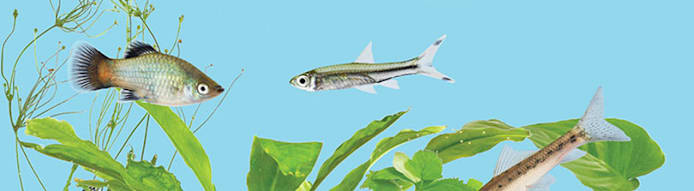
Wondering why you may need CO2 in your fish aquarium? Learn the basics from a Petco aquatics specialist.
CO2 in Fish Tanks: What It Is and Why It Matters
Carbon dioxide (CO2) is one of the most important — and most misunderstood — elements in a planted fish tank. In simple terms, CO2 is the gas your fish exhale and your aquatic plants absorb to fuel photosynthesis and growth. Your fish tank already contains some CO2 naturally, but in most planted setups that baseline level isn't enough to keep plants truly thriving. Supplementing CO2 gives live plants the raw material they need to grow dense, green and healthy — which in turn benefits your fish by producing oxygen and absorbing ammonia from the water. Merck Veterinary Manual
Understanding how to add CO2 correctly — and how to avoid common mistakes — is what separates a lush, balanced planted tank from one where plants slowly decline.
Why Live Plants Need Extra CO2
Plants are the foundation of a balanced fish tank ecosystem. They produce oxygen, absorb CO2 and help process ammonia generated by fish — all of which supports cleaner, more stable water. In the wild, fish are surrounded by abundant plant life that performs exactly these functions. Replicating that balance in your aquarium or fish tank means giving plants what they need to do their job: light, nutrients and sufficient CO2.
The CO2 your fish naturally release is a start, but in a densely planted tank it rarely meets demand. Supplementing CO2 encourages faster, fuller plant growth — and healthier plants mean a more stable environment for your fish.
Ways to Add CO2 to Your Fish Tank
There are two primary methods for supplementing CO2, each suited to different tank sizes and experience levels.
| Method | How It Works | Best For | Key Consideration |
|---|---|---|---|
| Pressurized CO2 bottles | Compressed CO2 delivered through a regulator and diffuser | Medium to large tanks; planted aquascapes | Most precise control; regulators prevent dangerous pH swings at night |
| CO2 liquids (e.g., Seachem Flourish Excel) | Liquid carbon formulation added directly to the water | Smaller tanks with lower CO2 demand | Requires consistent daily monitoring and dosing adjustments |
| CO2 tabs | Dissolvable tablets that release CO2 | Very small tanks only | Generally inefficient for long-term use in any tank of meaningful size |
Pressurized CO2 bottles are the most reliable option for most planted setups. They come in a range of sizes to match your tank volume, and modern systems include regulators that let you dial in a precise CO2 rate. Many regulators also include monitoring systems designed to prevent sudden pH drops overnight — a real risk when CO2 levels spike while plants stop photosynthesizing in the dark.
CO2 liquids deliver a liquid carbon formulation rather than pure CO2 gas, which can be a practical choice for smaller tanks with modest plant loads. Unlike pressurized systems, they don't automate delivery, so you'll need to monitor and adjust dosing regularly.
CO2 tabs are worth mentioning mainly to set expectations: outside of very small tanks, they typically can't deliver CO2 consistently enough for meaningful plant growth over time.
CO2 Mistakes to Avoid
Getting CO2 supplementation wrong can harm your fish. "While a small increase in the amount of CO2 in the water causes lush plant growth, too much CO2 can be toxic to aquatic life," says Don Spaeth, Petco program manager and aquatic life specialist. Merck Veterinary Manual
Keep these common mistakes in mind:
- Never use dry ice. Dry ice does release carbon dioxide, but when placed in water it creates an explosive reaction with large, violent bubbles. That agitation drives CO2 out of the water and into the air almost as fast as it's added — leaving very little usable CO2 for your plants. Dry ice also contains an oil that is harmful to aquatic life, and handling it poses human safety risks as well.
- Don't over-agitate the water surface. Excessive surface movement or air bubbling causes dissolved CO2 to off-gas into the atmosphere before plants can use it. If you're running a strong surface agitator or airstone alongside a CO2 system, you may be working against yourself.
- Don't set it and forget it. CO2 supplementation requires ongoing monitoring. Levels that are safe during daylight hours — when plants are actively consuming CO2 — can climb to harmful levels at night when photosynthesis stops. Test your water regularly and use a drop checker or CO2 indicator to keep levels in a safe, productive range.
- Watch for signs of CO2 stress in fish. Gasping at the surface, rapid gill movement or unusual lethargy can signal that CO2 levels are too high. If you observe any of these signs, increase surface agitation immediately to off-gas excess CO2 and consult your veterinarian.
Choosing the Right Setup for Your Tank
The right CO2 method depends on your tank size, plant density and how hands-on you want to be. Pairing a good CO2 system with quality aquarium gravel or substrate gives your plants a complete foundation — nutrients from below, CO2 from the water column and light from above.
When in doubt about CO2 levels, water chemistry or signs of stress in your fish, consult your veterinarian or a knowledgeable Petco associate. A little forethought goes a long way toward a fish tank that's as healthy as it is beautiful.
Frequently Asked Questions
Do I need to add CO2 to my fish tank? Not every fish tank requires supplemental CO2. If your aquarium contains only fish and low-light or slow-growing plants, the CO2 naturally produced by your fish is often sufficient. However, if you're keeping a densely planted tank with fast-growing or high-light plant species, adding supplemental CO2 can help support stronger, lusher plant growth. When in doubt, consult your veterinarian or a knowledgeable Petco associate about your specific setup.
How much CO2 is safe for a fish tank? Most planted aquariums do well with CO2 levels in the range of 20–30 mg/L (parts per million), though the right amount depends on your tank size, plant load and fish species. Too little CO2 limits plant growth; too much can be toxic to your aquatic life. A drop checker or inline CO2 monitor is a reliable way to track levels and catch dangerous swings before they harm your fish. Always defer to your veterinarian if you notice signs of fish distress such as gasping at the surface.
What is the safest way to add CO2 to an aquarium? A pressurized CO2 system with a regulator is widely considered the most controllable method for most tank sizes. Regulators let you dial in a consistent flow rate and many include solenoids that shut off CO2 at night — when plants stop photosynthesizing and CO2 can accumulate unchecked — helping prevent sudden pH drops that stress fish. Liquid carbon supplements (such as Seachem Flourish Excel) are a lower-tech alternative suited to smaller tanks with modest plant loads.
Why should I never put dry ice in my fish tank? Dry ice causes a violent, explosive bubbling reaction when it contacts water, which rapidly drives CO2 out of the water column and into the air rather than delivering it to your plants. Dry ice also contains oils that are harmful to aquatic life, and handling it poses serious safety risks to people. It is not a safe or effective CO2 source for any aquarium.
Can too much CO2 kill my fish? Yes. Elevated CO2 lowers water pH and reduces the oxygen available to fish, which can be fatal if levels rise too high or too quickly. Signs of CO2 stress include fish gasping near the surface or clustering around filter outlets. If you observe these behaviors, increase surface agitation immediately to off-gas excess CO2 and contact your veterinarian.
Do CO2 tablets work for planted aquariums? CO2 tablets can deliver a small, temporary boost of carbon dioxide, but they are generally inefficient for anything beyond very small aquariums. They dissolve quickly, are difficult to dose consistently and rarely produce the steady, measurable CO2 levels that a thriving planted tank requires over the long term. For most setups, a pressurized system or liquid carbon supplement will give you far more reliable results.
CO2 System Comparison: Choosing the Right Option for Your Fish Tank
| Feature | Pressurized CO2 System | CO2 Liquid (e.g., Flourish Excel) | CO2 Tablets |
|---|---|---|---|
| Best for | Medium to large fish tanks (20+ gallons) | Small fish tanks (under 20 gallons) | Very small fish tanks only (nano/pico) |
| CO2 delivery | Precise, continuous gas injection | Liquid carbon compound dosed manually | Slow-dissolving tablet |
| Precision & control | High — regulator allows fine-tuned dosing | Moderate — requires daily manual adjustment | Low — difficult to control output |
| pH impact | Can cause nighttime pH swings; use a timer or controller to minimize | Minimal direct pH impact | Minimal direct pH impact |
| Setup complexity | Moderate — starter kits available; regulator, diffuser, tubing required | Low — add measured dose to water column | Very low — drop tablet in tank |
| Ongoing cost | Moderate (cylinder refills) | Low-to-moderate (regular bottle purchases) | Low (per tablet), but inefficient long-term |
| Long-term efficiency | High — consistent, reliable plant support | Moderate for small tanks; insufficient for large | Low — not practical beyond nano tanks |
| Safety considerations | Never use dry ice as a substitute; monitor levels to avoid CO2 toxicity to aquatic life | Follow label dosing strictly; overdosing can harm fish | Risk of underdosing; limited real-world CO2 benefit |
| Recommended monitoring | Drop checker or CO2 test kit; daily observation | Daily visual check; water test weekly | Visual observation |
Quick rule of thumb: Aim for a CO2 concentration of approximately 20–30 ppm in a planted fish tank — enough to fuel vigorous plant growth without stressing your fish. Too much CO2 can be toxic to aquatic life, so consistent monitoring is essential. If you notice fish gasping at the surface or behaving unusually, reduce CO2 input immediately and consult your veterinarian.
Frequently Asked Questions
Why do live plants in a fish tank need added CO2? Plants rely on carbon dioxide for photosynthesis — the process they use to grow and produce oxygen. While fish naturally release some CO2 into the water, heavily planted fish tanks often benefit from supplemental CO2 to sustain lush, vigorous plant growth. A thriving planted tank, in turn, helps absorb ammonia and replenish oxygen for your fish.
How much CO2 is too much for a fish tank? Too much CO2 can be toxic to aquatic life. A general target range for planted fish tanks is 20–30 ppm; levels above 30 ppm can begin to stress fish, and significantly higher concentrations can be fatal. If you notice fish gasping near the water surface or appearing lethargic, reduce CO2 immediately and consult your veterinarian.
Can I use dry ice to add CO2 to my fish tank? No — never add dry ice to your fish tank. Dry ice causes a violent, explosive reaction in water, agitating the surface so severely that CO2 escapes into the air before plants can use it. Dry ice also contains oils harmful to aquatic life and poses serious human safety risks during handling.
Is a pressurized CO2 system or a CO2 liquid better for my fish tank? It depends on your tank size. Pressurized systems offer precise, consistent CO2 delivery and are well-suited for medium to large fish tanks. CO2 liquids (liquid carbon compounds) are a practical, lower-cost option for smaller fish tanks with modest carbon demands, though they require daily manual dosing and close monitoring.
Do I need to monitor CO2 levels even after I set up a system? Yes — adding CO2 to a fish tank is never a set-it-and-forget-it task. CO2 levels can fluctuate with lighting cycles, plant density and fish load. Use a drop checker or CO2 test kit regularly, and factor in that CO2 levels naturally shift overnight when plants stop photosynthesizing, which can cause pH swings that stress fish. Consult your veterinarian if you have concerns about your fish's health in relation to water chemistry.
Are CO2 tablets a reliable long-term option for planted fish tanks? For most fish tanks, CO2 tablets are not an efficient long-term solution. They are difficult to dose precisely and typically do not deliver enough consistent CO2 to meaningfully support plant growth in anything beyond a very small nano tank. Pressurized systems or CO2 liquids are generally more dependable choices for sustained plant health.
This article was created with assistance from AI tools and reviewed for accuracy by Petco's content team.


