


Two Easy Ways to Start Earning Rewards!
Become a member today! Members-only pricing and offers, personalized care notifications, Vital Care points back on every purchase and more!
 Become a credit card member today!
Earn 2X Pals Rewards points at Petco
when you use Petco Pay!APPLY NOWLearn More About Petco Pay Benefits
Marine Aquarium Clean Up Crew: Complete Guide
Published on May 21st, 2024
Updated on June 18th, 2026


Written by Dawn Burch
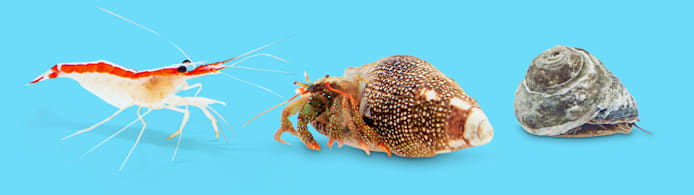
Visit Petco to learn about cleanup crews and how they can help your aquarium health.
When you brought home a saltwater aquarium, you probably envisioned yourself enjoying a pristine display of aquatic life. To make this a reality, your underwater marine oasis requires routine maintenance. Despite the dedication you put into scraping algae, siphoning the substrate and performing water changes, it can be difficult and time-consuming to remove all debris and algae, reaching every crevice yourself.
Undesirable algae, uneaten food and organic waste can quickly accumulate on your aquarium’s panels, rocks and substrate. What you hoped would resemble a serene oceanic environment may be overcome with unsightly gunk. Decaying matter in your aquarium can also lead to spikes of nitrate, phosphate and ammonia, which can negatively impact the wellbeing of your aquatic pets. Saltwater cleanup crews can play a vital role in the aquarium cleaning process and help prevent this from happening.
To help keep your aquarium clean, try recreating the ecosystems found in ocean environments. Coral reefs are one type of marine environment that many hungry animals who scavenge debris and algae call home, and these reef cleanup crews are responsible for the tidy appearance of their environments.
A cleanup crew is a diverse community of invertebrates and small fish who feed on organic matter like detritus and undesirable algae. Common saltwater aquarium cleaner animals include some species of snails, crabs, shrimp, urchins and sea cucumbers. If you want help keeping your saltwater aquarium clean, these animals should be well-represented.
Cleanup crew basics
There’s a reason these pets are collectively known as a crew—they really do work together to aid in maintaining the proper environment for saltwater pets to thrive. These creatures are crucial to establishing and maintaining a prosperous ecosystem within your aquarium. Each organism plays a unique role, eating specific kinds of algae or debris commonly referred to as detritus.
Most saltwater tank cleaners are divided into three categories, depending on what they consume: Herbivores eat algae, detritivores eat decomposing organic matter (such as fish waste and uneaten food) and omnivores eat multiple kinds of matter.
Niche partitioning
Diversifying your cleanup crew for a saltwater tank can be crucial to their effectiveness and efficiency. Each cleaner should have their own resources according to their specialty. In nature, this is known as niche partitioning. When each species cleans the aquarium in unique ways, it allows them not just to coexist but thrive as a collective.
There are a wide variety of invertebrates who make up an effective cleaning crew. Because of their small size, blue leg hermit crabs can reach into tight crevices to eat detritus, cyanobacteria and algae that bigger invertebrates cannot reach. They also help aerate the sand while scavenging for food. Emerald crabs are one of the few species that eat unwanted bubble algae. Coral banded shrimp scour the aquarium for uneaten food and detritus.
Scarlet skunk cleaner shrimp are known for employing a slightly different cleaning method, setting up cleaning stations on coral reefs to assist with the removal of parasites and dead tissue from the body, gills and mouth of fish or eels. This helps protect the fish and eels from contracting diseases and infections. These shrimp also help keep the aquarium clean and prevent water contamination by feeding on uneaten food and detritus.
Another small but mighty cleaner is the peppermint shrimp, which is part of the cleaner shrimp family but is considered more of a scavenger. They may help control nuisance anemones such as small aiptasia.
Let’s not forget about snails, inching their way around the tank, consuming algae at record speed! Astrea and turbo snails, who should be provided ample room to roam, enjoy grazing on algae that grows on the sides of the aquarium and on rocks.
Let’s look at how some cleaning animals work together, starting with nassarius snails and copepods. The snails can eat more detritus, uneaten food, decaying organics and fish waste in shorter periods, but the tiny copepods can access and clean smaller areas that the snails can’t reach. Nassarius snails can also coexist with pincushion urchins, with the snails consuming detritus and the urchins consuming algae.
Rounding out the ultimate cleaning crew, we have starfish. Chocolate chip starfish feed on detritus and uneaten food, which helps prevent the contamination of water in the aquarium, while sand-sifting stars are effective at moving large amounts of sand as they search for food, thereby cleaning and aerating it.
Common algae to combat
Aquariums go through multiple cycles of algae blooms. While not all algae are inherently harmful, they can grow in extreme proportions. If algae become a nuisance, your aquarium may have a nutrient imbalance or an inadequate cleanup crew.
Keeping your aquarium clean throughout algae blooms can be challenging without an effective saltwater cleanup crew. Introducing these creatures before algal populations get out of hand is recommended.
Diatoms: The first algae bloom in a saltwater aquarium brings the growth of diatoms, which are natural and show up as a brown layer or dusting along the sand bed and on the walls of the aquarium. They are commonly seen during new tank setup or when re-establishing an aquatic environment. Diatoms feed on silicates in the sand, so you’ll need cleaners who specialize in sifting sand, such as sand-sifting starfish, fighting conchs, blue leg hermit crabs or nassarius snails. It’s also ideal to have creatures that eat diatoms, such as cerith and banded trochus snails.
Film algae: If you’ve ever had to scrape algae from the glass because it was blocking your view, you’ve encountered film algae. Film algae often grow on the glass but can also be found on rocks and décor. Many cleaners eat this algae, including trochus and astraea turbo snails.
Hair algae: Another common problem is hair algae, which is caused by an excess of available nutrients, particularly phosphates and nitrates and appears as long, green strands along rocks. Hair algae are enjoyed by many cleanup crew organisms, including cerith and nerite snails, blue leg and red leg hermit crabs, pincushion urchins, emerald crabs and sea hares.
Cyanobacteria: Your aquarium may also experience a cyanobacteria bloom, which is generally caused by an increase in nutrients and organic buildup and appears as a red or purple slime. While cyanobacteria are often considered algae, they are technically classified as photosynthetic bacteria and are more prevalent when low water circulation (or dead zones) is present and water temperatures are over 80°F.
Cerith and nerite snails, as well as red leg and blue leg hermit crabs, can help clean up cyanobacteria.
Bubble algae:Commonly found on live rock, bubble algae are green, round or tubular in shape and can range from the size of a pea to that of a quarter. Under the right (or technically wrong) conditions, bubble algae blooms can be explosive, coating nearly everything in the tank and even clogging filters. Some herbivorous fish (such as tangs or rabbitfish) may help, but if you are looking for a cleanup crew addition, look no further than the emerald crab.
When should I get a cleanup crew?
Introduce a saltwater cleanup crew once the aquarium is fully established and has completed the nitrogen cycle. If you add cleaners before algae or detritus appear, they may not have sufficient food to eat. Be prepared to supplement your cleanup crew’s diet with commercially available food to ensure they receive all the nutrients they need to thrive.
Do I quarantine my cleanup crew?
Fish-borne parasites and illnesses are concerns whenever introducing new organisms into your aquarium. To be cautious, you can quarantine your new invertebrates in separate aquariums for a minimum of two weeks. However, if your cleaning pets are kept within their own habitats before you bring them home, there is typically no risk of fish-born parasites or illnesses being transmitted. Be sure to provide your crew species-specific food if housed in a quarantine tank that does not contain a buildup of algae and detritus.
What is the ideal cleanup crew for my aquarium?
You’ll want a diverse cleanup crew for a saltwater aquarium. The exact species and size of the team depends on your aquarium’s ecosystem and size, as well as other aquatic inhabitants, and an eclectic combination of these hungry pets is a great way to manage the buildup of organic matter. Common cleaners to start with include some species of snails, crabs, copepods and sand-sifting starfish. At Petco, our Pet Care Center aquatic specialists can even help you put together a saltwater cleanup crew package with the ideal cleaners for the size and variety of aquatic life in your habitat.
What cleanup crew members eat fish waste?
Fish produce waste like all living things. Thankfully, many snails, hermit crabs and shrimp will eat fish waste. A diverse team of cleaners should help you manage the accumulation of fish waste. You can also use a substrate vacuum or water changer to manually remove debris that goes uneaten.
How many nassarius snails per gallon is appropriate?
Nassarius snails are some of the best saltwater aquarium cleaners. While they are small creatures, they have a big appetite for uneaten food, detritus and fish waste. They like to burrow into substrate, so make sure you have a sand bed before putting them in your aquarium. When they are buried in the sand, you can usually see the tip of their shell’s siphon poking out.
There are no set rules for the number of snails in your habitat, but a general guideline is one to two snails per every 5 gallons. Our Pet Care Center aquatic specialists can help you determine the finer points of your cleanup crew.
Do I need trochus snails in my cleanup crew?
Trochus snails are another common member of snail cleanup crews. With attractive shells, they add ornamental qualities to many aquariums. They typically feed mostly on algae and cyanobacteria. Another reason to consider trochus snails is their longevity. The trochus snail lifespan can be up to15 years or longer.
A good guideline is to have between one and five trochus snails per gallon. The intensity of the algal buildup and your desired cleanup speed will help you determine how many trochus snails you need.
Frequently Asked Questions
What animals make up a marine aquarium clean up crew? A saltwater clean up crew typically includes a diverse mix of invertebrates: snails (cerith, trochus, nassarius, astrea), hermit crabs (blue leg, red leg), emerald crabs, cleaner shrimp (scarlet skunk, coral banded, peppermint), pincushion urchins, sand-sifting starfish and sea hares. Each species targets different types of algae or detritus, so a varied crew is far more effective than relying on a single animal.
How many clean up crew members do I need for my fish tank? A commonly cited starting point is roughly one clean up crew invertebrate per gallon of water, adjusted for your tank's bioload and algae pressure — a heavily stocked aquarium or one with persistent algae blooms will benefit from a larger crew. Because nutrient levels vary by tank, consult your local Petco aquatics associate to dial in the right numbers for your specific setup.
When is the right time to add a clean up crew to a new saltwater aquarium? Wait until the aquarium has fully completed the nitrogen cycle and visible algae or detritus have begun to appear. Adding invertebrates too early means there is insufficient food to sustain them. If your crew arrives before a food source is established, supplement their diet with commercially available invertebrate foods to keep them nourished.
Which clean up crew animals work best together without competing? Species that practice niche partitioning — meaning each one targets a different food source or habitat zone — coexist most successfully. For example, nassarius snails consume detritus on the sand bed while pincushion urchins graze algae on rock surfaces, and scarlet skunk cleaner shrimp pick parasites from fish at dedicated cleaning stations. Pairing animals with non-overlapping diets and territory reduces competition and maximizes cleaning coverage.
Do I need to quarantine clean up crew invertebrates before adding them to my display tank? Quarantining new invertebrates is a cautious, recommended practice because introducing any new organism carries a small risk of transferring pathogens or unwanted hitchhikers into an established aquarium. A separate quarantine fish tank allows you to observe new arrivals for signs of illness before they join your display. Consult your veterinarian or an aquatics specialist if you notice unusual behavior or appearance during quarantine.
Can a clean up crew fully replace manual aquarium maintenance? No — a clean up crew is a powerful supplement to routine maintenance, not a replacement for it. Regular water changes, substrate siphoning and glass scraping remain essential. Think of your invertebrates as a first-response team that handles the debris and algae your tools cannot easily reach, helping to keep nitrate, phosphate and ammonia levels more stable between your scheduled maintenance sessions.
Marine Aquarium Cleanup Crew: Species Comparison Guide
Choosing the right members for your marine aquarium clean up crew means matching each animal's specialty to your tank's specific needs. Use this table to compare the most popular saltwater cleanup crew species by role, minimum tank size, care level and compatibility — so you can build a balanced, effective crew from day one.
| Species | Primary Role | Algae / Waste Targeted | Minimum Tank Size | Care Level | Reef Safe? | Compatibility Notes |
|---|---|---|---|---|---|---|
| Astrea / Turbo Snail | Herbivore — glass & rock grazer | Film algae, hair algae | 10 gal | Beginner | Yes | Peaceful; needs open grazing space; may topple in high flow |
| Cerith Snail | Herbivore / Detritivore | Diatoms, cyanobacteria, detritus in sand | 10 gal | Beginner | Yes | Excellent sand-bed worker; very peaceful community species |
| Banded Trochus Snail | Herbivore | Film algae, diatoms | 10 gal | Beginner | Yes | Can right itself if flipped; long-lived; reef safe |
| Nassarius Snail | Detritivore | Fish waste, uneaten food, decaying organics | 10 gal | Beginner | Yes | Burrows in sand; pairs well with pincushion urchins |
| Nerite Snail | Herbivore | Hair algae, cyanobacteria, film algae | 10 gal | Beginner | Yes | Hardy; avoid with aggressive crabs |
| Blue Leg Hermit Crab | Omnivore — crevice cleaner | Detritus, cyanobacteria, hair algae | 10 gal | Beginner | Yes | May evict snails for shells; provide spare shells |
| Red Leg Hermit Crab | Omnivore — crevice cleaner | Hair algae, cyanobacteria, detritus | 10 gal | Beginner | Yes | Similar shell competition risk; generally less aggressive than blue leg |
| Emerald Crab | Herbivore — specialist | Bubble algae (primary), hair algae | 30 gal | Intermediate | Yes (with caution) | One of very few species that targets bubble algae; may pick at slow fish if underfed |
| Coral Banded Shrimp | Detritivore / Scavenger | Uneaten food, detritus | 30 gal | Intermediate | Yes (with caution) | Territorial toward other shrimp; keep one per tank unless mated pair |
| Scarlet Skunk Cleaner Shrimp | Parasite / Tissue Cleaner + Scavenger | Dead tissue, parasites on fish; uneaten food | 30 gal | Intermediate | Yes | Sets up cleaning stations; peaceful; excellent fish health support |
| Peppermint Shrimp | Scavenger / Nuisance Anemone Control | Detritus, uneaten food; may help reduce aiptasia | 10 gal | Beginner | Yes (with caution) | May nip at certain soft corals; confirm aiptasia ID before adding |
| Pincushion Urchin | Herbivore | Hair algae, coralline algae, film algae | 30 gal | Intermediate | Yes | Pairs well with nassarius snails; can knock over loose rock in smaller tanks |
| Sand-Sifting Sea Star | Detritivore — sand aerator | Detritus, organisms in sand bed | 55 gal | Intermediate | Yes (with caution) | Needs deep, mature sand bed; can deplete microfauna in small tanks |
| Chocolate Chip Sea Star | Detritivore | Detritus, uneaten food | 55 gal | Intermediate | No | Not reef safe — will consume corals and invertebrates; fish-only systems only |
| Fighting Conch | Detritivore — sand sifter | Diatoms, detritus, film algae on sand | 30 gal | Beginner | Yes | Peaceful; needs open sand bed; great diatom-bloom responder |
| Sea Hare | Herbivore — specialist | Hair algae (rapid consumer) | 30 gal | Intermediate | Yes (with caution) | Can release ink if stressed — remove before it dies to avoid ammonia spike |
| Copepods | Micro-detritivore | Micro-detritus, film in tight spaces | Any (refugium ideal) | Beginner | Yes | Complement nassarius snails; also serve as live food for mandarin dragonets |
How to read this table: "Reef safe" means the species is generally considered compatible with corals and sessile invertebrates under normal feeding conditions. Individual behavior can vary — always observe new additions closely and consult your local Petco aquatics associate if you have questions about compatibility in your specific setup.
Frequently Asked Questions
How many cleanup crew members do I need per gallon in a marine aquarium? A commonly cited starting point is roughly one snail and one hermit crab per 1–2 gallons of display volume, adjusted for your bioload and algae pressure. Overstocking the crew can deplete food sources quickly, leaving animals malnourished, so introduce members gradually after your tank has completed the nitrogen cycle and visible algae or detritus has appeared.
When is the right time to add a marine aquarium clean up crew? Wait until your saltwater aquarium has fully cycled and you can see the first signs of algae or detritus — this ensures your crew has enough food to survive. Adding cleanup crew animals to an uncycled tank can result in rapid die-off from ammonia and nitrite spikes, which ironically worsens water quality for every other inhabitant.
Do I need to quarantine my cleanup crew before adding them to the display tank? Quarantine is always the cautious choice when introducing any new organism to an established aquarium. A separate quarantine tank allows you to observe new arrivals for signs of illness or hitchhiker pests before they have contact with your existing livestock. Consult your veterinarian or a knowledgeable Petco aquatics associate if you notice unusual behavior or appearance in new arrivals.
What eats bubble algae in a reef tank? The emerald crab is one of the very few cleanup crew species reliably known to consume bubble algae. Certain herbivorous fish — such as tangs or rabbitfish — may also help, but results vary. Avoid popping bubble algae manually, as rupturing the cells can release spores and accelerate the bloom.
Will my cleanup crew eat all the algae so I don't have to do water changes? No — a marine aquarium clean up crew is a complement to routine maintenance, not a replacement for it. Regular water changes, protein skimming, proper flow and nutrient management are still essential. Your crew handles the organic matter and algae that accumulates between maintenance sessions, helping prevent the nitrate, phosphate and ammonia spikes that can harm your aquatic life.
Can cleanup crew animals starve if my tank is too clean? Yes. If algae and detritus levels drop too low, some crew members — particularly snails and urchins — may not find enough food to sustain themselves. Be prepared to supplement their diet with commercially available foods such as dried seaweed sheets or sinking pellets to ensure they receive the nutrition they need to stay active and healthy.
This article was created with assistance from AI tools and reviewed for accuracy by Petco's content team.


