


Two Easy Ways to Start Earning Rewards!
Become a member today! Members-only pricing and offers, personalized care notifications, Vital Care points back on every purchase and more!
 Become a credit card member today!
Earn 2X Pals Rewards points at Petco
when you use Petco Pay!APPLY NOWLearn More About Petco Pay Benefits
Can Dogs Eat Almonds? What Pet Parents Must Know
Published on January 11th, 2023
Updated on June 16th, 2026

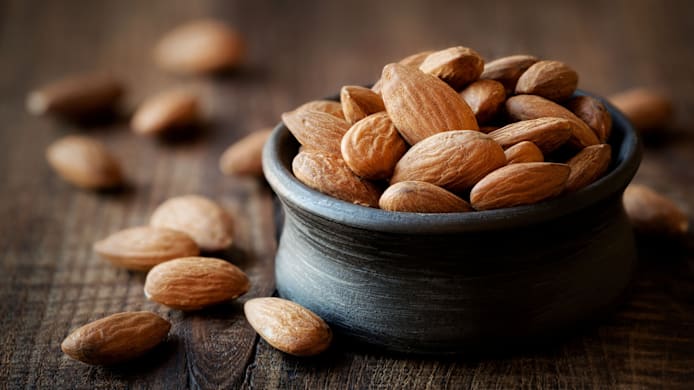
Do you have questions about whether or not it is safe to give your dog almonds? Petco has the answers to this & other canine diet questions!
“Can my dog eat almonds?” you may be asking yourself. The answer is no. Almonds—like many other nuts—contain many toxins that aren’t harmful to people but can be particularly detrimental to dogs when consumed in large doses. Unprocessed bitter almonds are the most dangerous for dogs—consuming as few as seven of them can be fatal. Processed almonds, on the other hand, which are also the most popular kind for snacking, are far less harmful. If your dog accidentally gets their paws on them, the result won’t likely be fatal, but it could still compromise their health. If your dog consumes almonds and has an adverse reaction, take your dog to the vet or emergency clinic and call pet poison control immediately.
How Many Almonds Can Hurt — or Kill — a Dog?
The short answer: even a small number of the wrong type of almond can be dangerous, and no amount of any almond is truly safe for dogs. The risk depends heavily on the variety.
Unprocessed bitter almonds are the most acutely dangerous. Consuming as few as seven bitter almonds can be fatal to a dog because of their high cyanide content https://www.aspca.org/pet-care/animal-poison-control. Sweet almonds — the kind most commonly sold for snacking — are far less likely to cause acute poisoning, but they can still trigger serious gastrointestinal distress, choking, bladder or kidney stones, and aflatoxin poisoning https://www.aspca.org/pet-care/animal-poison-control. Bottom line: no type of almond belongs in your dog's diet.
Types of Almonds and What Each Means for Your Dog's Safety
Not all almonds carry the same level of risk. The table below breaks down each variety so you know exactly what you're dealing with if your dog gets into your snack stash.
| Almond Type | Key Hazard(s) | Risk Level |
|---|---|---|
| Bitter almonds | High cyanide content; as few as 7 can be fatal | 🔴 Severe — emergency |
| Salted almonds | Excess sodium → salt toxicity, water retention | 🔴 High |
| Seasoned / flavored almonds | Potentially toxic spices (garlic, onion powder, xylitol) | 🔴 High |
| Roasted almonds (oil/butter) | Unhealthy fats, added seasonings, harder texture → choking | 🟠 Moderate–High |
| Raw / plain sweet almonds | GI distress, rare Salmonella risk, choking hazard | 🟠 Moderate |
| Pasteurized plain almonds | GI distress, high fat, aflatoxin mold risk | 🟠 Moderate |
Bitter Almonds
Bitter almonds contain significantly higher concentrations of cyanogenic compounds than sweet almonds, making even a small handful potentially fatal for dogs — and for young children https://www.aspca.org/pet-care/animal-poison-control. They are uncommon in US grocery stores but can appear in specialty or international food shops. If you suspect your dog has eaten any bitter almonds, treat it as a veterinary emergency immediately.
Salted Almonds
Salt is never a wholesome addition to your dog's diet. Too much sodium can cause salt toxicity — a serious condition marked by excessive thirst, urination, vomiting and, in severe cases, neurological symptoms https://www.aspca.org/pet-care/animal-poison-control. Even a moderate serving of salted almonds can push a small dog well past a safe sodium threshold. Keep salted nuts completely out of reach.
Seasoned or Flavored Almonds
This is where the danger compounds quickly. Many flavored almonds are coated with garlic powder, onion powder or other spices that are directly toxic to dogs. Some sweet or chocolate-coated varieties may contain xylitol, an artificial sweetener that is acutely toxic even in tiny amounts https://www.aspca.org/pet-care/animal-poison-control. Always read the ingredient label — and then keep the bag away from your dog regardless.
Roasted Almonds
Roasting makes almonds crunchier and denser, which increases the choking risk and makes them harder for your dog to digest. Commercially roasted almonds are frequently prepared with oils, butter or salt, adding unnecessary fat and sodium to an already problematic snack. Even plainly dry-roasted almonds offer no nutritional benefit to dogs and carry the same GI risks as raw varieties https://www.merckvetmanual.com/management-and-nutrition/nutrition-small-animals/nutritional-requirements-of-small-animals.
Raw Almonds
Truly raw, unpasteurized almonds are rare in the US — California law requires almond producers to pasteurize nuts before sale. If your dog does eat raw almonds, expect gastrointestinal distress (vomiting, diarrhea, gas) and, in rare cases, a risk of Salmonella contamination https://www.aspca.org/pet-care/animal-poison-control.
Why Are Almonds Bad for Dogs?
Dogs are omnivores, but their digestive systems are not built to process high-fat, hard-shelled nuts https://www.merckvetmanual.com/management-and-nutrition/nutrition-small-animals/nutritional-requirements-of-small-animals. Here's what can go wrong:
- Gastrointestinal distress — vomiting, diarrhea and gas are the most common reactions to any almond variety.
- Choking and obstruction — almonds are a size and shape that can lodge in a dog's esophagus, stomach or intestines, especially in small breeds.
- Pancreatitis — the high fat content in almonds can trigger painful pancreatic inflammation, which may require hospitalization https://www.merckvetmanual.com/management-and-nutrition/nutrition-small-animals/nutritional-requirements-of-small-animals.
- Bladder or kidney stones — repeated exposure to high-phosphorus foods like nuts can contribute to stone formation https://www.aspca.org/pet-care/animal-poison-control.
- Aflatoxin poisoning — almonds are particularly susceptible to Aspergillus mold, which produces aflatoxins. Even almonds that look and smell fine can carry this toxin https://www.aspca.org/pet-care/animal-poison-control.
- Salt toxicity — a real risk with any salted or seasoned variety.
- Allergic reactions — uncommon in dogs but documented; watch for facial swelling, hives or difficulty breathing https://www.aspca.org/pet-care/animal-poison-control.
Signs of Almond-Related Distress in Dogs
If your dog has eaten almonds of any type, monitor him or her closely. Contact your veterinarian or an emergency clinic right away — and call the ASPCA Animal Poison Control Center (888-426-4435) — if you notice any of the following:
- Vomiting
- Diarrhea
- Excessive gas or bloating
- Lethargy or unusual tiredness
- Loss of appetite
- Visible discomfort or abdominal pain
- Jaundice (yellowing of the eyes, gums or skin — a sign of aflatoxin-related liver damage)
- Excessive thirst or urination (a sign of salt toxicity)
- Difficulty breathing or swallowing (a sign of choking or allergic reaction)
When in doubt, call first. You don't need to wait for symptoms to worsen before reaching out to your vet.
What to Do If Your Dog Ate Almonds
Stay calm, then act quickly. Here's a step-by-step approach:
- Identify what your dog ate. Note the almond type (bitter, salted, seasoned, plain), the approximate quantity and whether any packaging listed toxic ingredients like garlic powder or xylitol.
- Call the ASPCA Animal Poison Control Center at 888-426-4435 or your veterinarian immediately — even before symptoms appear https://www.aspca.org/pet-care/animal-poison-control.
- Watch for symptoms. If your dog ate only one or two plain sweet almonds and is a large breed, acute poisoning is unlikely — but GI upset is still possible. Monitor closely for 24–48 hours.
- Seek emergency care without delay if your dog ate bitter almonds, a large quantity of any almonds, or seasoned almonds containing toxic ingredients. Do not wait to see if symptoms develop.
- Do not induce vomiting unless specifically instructed to do so by a veterinarian or poison control professional.
How to Keep Your Dog Away from Almonds
Prevention is always easier than treatment. A few practical habits go a long way:
- Store nuts in sealed containers on high shelves your dog cannot reach — even with a counter-surf attempt.
- Clean up immediately after snacking. Almonds are small enough to roll under furniture or get wedged in couch cushions where a curious dog will find them later.
- Isolate food-motivated dogs in another room while you enjoy nuts or nut-based snacks.
- Brief everyone in the household — including guests — that almonds and other nuts are off-limits for your dog, no matter how much he or she begs.
- Check ingredient labels on baked goods, trail mixes and flavored snacks before leaving them anywhere accessible; many contain almonds as a secondary ingredient.
If you're looking for a wholesome, dog-appropriate way to reward your pup, explore Petco's dog treats — formulated with ingredients that are actually good for him or her — or browse nutritious dry dog food options built around your dog's real dietary needs. Your veterinarian can also help you identify safe, nutritious snack alternatives that fit your dog's size, age and health profile.
Frequently Asked Questions
Can dogs eat almonds at all — even just one or two? Technically, one or two plain, processed (sweet) almonds are unlikely to be fatal for most dogs, but they are still not recommended. Even small amounts can trigger gastrointestinal upset — including vomiting, diarrhea and gas — and almonds pose a real choking and obstruction risk, especially for smaller dogs. There is no safe serving size for almonds as a dog treat. https://www.aspca.org/pet-care/animal-poison-control
What if my dog ate almonds — what should I do right now? Stay calm, but act quickly. First, identify what type of almond your dog ate (bitter, salted, seasoned or plain processed) and roughly how many. If your dog shows any signs of distress — vomiting, lethargy, labored breathing or jaundice — take him to your veterinarian or an emergency animal clinic immediately and call the ASPCA Animal Poison Control Center (888-426-4435). Even if your dog seems fine, monitor him closely for at least 24 hours and contact your vet for guidance. https://www.aspca.org/pet-care/animal-poison-control
What are the symptoms of almond poisoning in dogs? Watch for vomiting, diarrhea, excessive gas, lethargy, loss of appetite, visible discomfort or abdominal bloating. In more serious cases — particularly with bitter almonds or almonds contaminated with Aspergillus mold — jaundice (yellowing of the skin, eyes or gums) can signal aflatoxin poisoning, which affects liver function. Salt toxicity from heavily salted almonds may cause additional signs such as excessive thirst, urination and muscle tremors. Any of these symptoms warrant an immediate call to your veterinarian. https://www.aspca.org/pet-care/animal-poison-control
Can dogs eat almond butter? Almond butter is not recommended for dogs. While it does not contain the whole-nut choking hazard, it is calorie-dense, high in fat and often contains added salt, sugar or sweeteners — including xylitol, which is severely toxic to dogs. Always read the ingredient label carefully. If you want to offer your dog a nut-butter-style treat, ask your veterinarian which options are appropriate and confirm the product contains no xylitol or other harmful additives before sharing any with your dog. https://www.aspca.org/pet-care/animal-poison-control https://www.merckvetmanual.com/management-and-nutrition/nutrition-small-animals/nutritional-requirements-of-small-animals
Why are bitter almonds so much more dangerous than regular almonds? Bitter almonds contain significantly higher concentrations of amygdalin, a naturally occurring compound that the body converts to hydrogen cyanide. This makes even a small number of bitter almonds potentially fatal for dogs — and for young children. Processed sweet almonds sold in US grocery stores have far lower cyanide precursor levels, but they are still not appropriate for dogs. Because bitter almonds are not commonly sold in mainstream US retail, most almond-related incidents involve processed sweet almonds — but the risk is real if your dog accesses specialty or imported products. https://www.aspca.org/pet-care/animal-poison-control
Are there dog-safe alternatives to almonds as a treat? Yes. Rather than nuts, consider offering your dog small pieces of plain, cooked lean protein or veterinarian-approved fruits and vegetables as occasional treats — keeping all treats at or below 10% of your dog's daily caloric intake. Look for treats formulated specifically for dogs and produced to pet food safety standards. Your veterinarian or a knowledgeable Petco associate can help you find wholesome, species-appropriate snack options that satisfy your dog's curiosity without the risks almonds carry. https://www.aafco.org/consumers/understanding-pet-food/ https://wsava.org/global-guidelines/global-nutrition-guidelines/
This article was created with assistance from AI tools and reviewed for accuracy by Petco's content team.


