


Two Easy Ways to Start Earning Rewards!
Become a member today! Members-only pricing and offers, personalized care notifications, Vital Care points back on every purchase and more!
 Become a credit card member today!
Earn 2X Pals Rewards points at Petco
when you use Petco Pay!APPLY NOWLearn More About Petco Pay Benefits
Leopard Gecko Not Eating? Here's Why & What to Do
Published on August 17th, 2022
Updated on June 18th, 2026

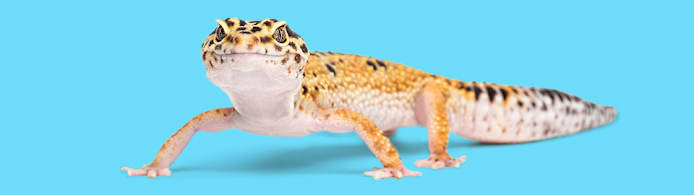
Do you have questions about why your gecko isn’t eating? Petco has the answers. Visit us to learn about leopard gecko dietary needs and more.
Thanks to their small size, relatively low-maintenance care and adorable spotted faces, leopard geckos are one of the most popular pet reptiles. Leopard gecko habitats, tanks and terrariums don’t take up much space, and this reptile can be a fantastic pet for both beginner and experienced reptile parents. With the appropriate diet and care, they can live up to 20 years in captivity. However, leopard geckos not eating can become a concern. There are many possible reasons for a leopard gecko to stop eating, so it’s important to try to understand the specific reason your leopard gecko is not eating so that you can seek proper treatment.
Check out our leopard gecko care sheet to learn more about what your leopard gecko needs to thrive. Without the right leopard gecko supplies, you may be left saying, “Help! My leopard gecko won’t eat.” Read on to discover potential reasons why your leopard gecko won't eat and what you can do about it.
Why is my leopard gecko not eating?
Temperature and lighting issues
As soon as you notice your leopard gecko not eating, take a look at their habitat. Like all reptiles, leopard geckos are cold-blooded, meaning they can’t regulate their own body temperature but instead rely on the temperature of their environment to set their internal temperature. Body temperature affects metabolism and digestion, so leopard geckos need specific heaters and lights to keep their body temperature constant and their metabolism and digestive systems working properly.
If a leopard gecko gets too cold, their metabolism will slow down and they may lose their appetite. They may also become lethargic and inactive. Alternatively, if they get too hot, they may avoid eating as they hide in the cooler spots of the tank. If your gecko is hiding, a too high body temperature could be the cause.
Shedding
The answer to, “Why won’t my leopard gecko eat?” isn’t necessarily a bad thing. There are a few nonpathogenic reasons your gecko might not eat—one of the most common being shedding. Adult geckos shed—or replace their skin—about every four to eight weeks.
About a week before they start shedding, your leopard gecko’s skin may look milky or gray and they may hide in their cave. They’ll start scratching on rocks and accessories in their habitat to help their skin peel off. They may not eat for a few days during this process or eat their shed skin, both of which are normal.
Breeding
Another period during which some leopard geckos won't eat is breeding season. Captive geckos can breed at any time, but in nature, they typically breed from January until as late as September. While they typically won’t stop eating for that entire time, male geckos can get distracted and consume less.
Female leopard geckos often produce eggs during breeding season—even if there is no male present and the eggs aren’t fertilized. As they prepare to lay eggs, or if they can’t find a suitable spot to lay their eggs, they may stop eating. You can encourage egg-laying by providing moist, soft substrate such as clean vermiculite in a quiet dark place where she’ll feel comfortable.
Age
Your gecko’s age also impacts their appetite. Knowing the age and life stage of your pet is helpful in determining an appropriate eating frequency for them.
Is your baby leopard gecko not eating? If they’re newly hatched, they may be absorbing nutrients from an external yolk sac through their umbilical cord. So, if they have this yolk sac, it’s often normal for them not to eat for as long as a week. Once they absorb all of the yolk sac, baby geckos should eat once a day. Adult geckos, who are often less active than their younger counterparts, may only eat every other day.
Geckos (especially males) who are reaching sexual maturity—at around 8 to 10 months to a year old—and females who are getting ready to breed often become so preoccupied with breeding that they may experience a period in which they don’t eat. Other telltale signs that your gecko is becoming sexually mature are territorial behavior in males and skittish behavior in females.
Stress
If you notice your new leopard gecko not eating, one of the most common reasons is stress. When you bring your gecko home, they need to adjust to their new environment. Initially, they may hide and refuse to eat. Adding a new gecko to an existing gecko’s habitat can also stress the original gecko, as reptiles are often territorial.
Another potential cause of stress in leopard geckos is excessive handling. Geckos don’t typically like to be handled. If you are going to handle your gecko, start slowly with about five minutes per day. Add a minute or two to each handling session each week. Ultimately, try to limit handling your gecko to less than 15 minutes per day.
Nutritional deficiencies
Leopard geckos require calcium and vitamin D3 in order to grow, metabolize and properly digest food. Pet geckos need nutritional supplements, including vitamin and mineral powders, sprinkled on their food to ensure they receive all the nutrients they need. You should also “gut load” the insects you give your gecko, which means feeding the insects a commercially available, nutritionally balanced diet so that they pass on the right nutrients to your pet.
Sometimes, leopard geckos just don’t like certain foods. If they refuse to eat a particular type of feeder insect, try something else. If you have tried a variety of different insects but your leopard gecko won’t eat anything, contact your veterinarian to determine if an underlying problem is causing your pet to lose their appetite.
Illness or injury
Other reasons for a leopard gecko not eating include illness and injury. For example, infection causing sores in the mouth (a condition called stomatitis) can make eating painful, while other injuries may prevent geckos from moving around normally to catch their food. Respiratory tract infections may make it hard for your gecko to breathe and decrease the energy they have available for hunting.
Other medical conditions can decrease geckos’ appetites, including:
- Gastrointestinal (GI)parasites like cryptosporidium, pinworms, nematodes and coccidia
- Gastrointestinal tract obstruction or impaction, which is a blockage due to ingestion of foreign objects (such as indigestible bedding or sand)
- Skin infections
- Metabolic bone disease, which is a life-threatening condition in which lack of dietary calcium or vitamin D causes bones to soften and fracture and the GI tract to function improperly
- Kidney or liver failure
What should I do if my leopard gecko is not eating?
Provide the right habitat
Leopard geckos are crepuscular, meaning they’re most active at twilight, the time in nature when they typically hunt for prey. Unlike many other reptiles, in nature, leopard geckos don’t bask in sunlight and they get most of their heat by lying on warm rocks. As pets, they require a warm zone in their habitats ranging from 88 to 93°F to keep their bodies warm. An under-tank heater or ceramic heat emitter attached to a thermostat to regulate temperature can be used to provide heat. While geckos who live outside are more active during darkness and don’t bask in sunlight, pet geckos do better when provided with ultraviolet (UV) light. UV light helps pet geckos make vitamin D in their skin, which aids in absorption of dietary calcium. UV light should be provided to pet leopard geckos for eight to 12 hours a day.
If your habitat is heated properly but you’re still wondering, “Why is my leopard gecko not eating?” their environment might be too dry. Leopard geckos need their habitat humidity to be maintained around 35% in order to shed properly, so mist their tank a few times a day and monitor tank humidity with a humidity gauge. Provide snug hiding places and caves where your gecko can go to feel safe, and create a humid hide by placing moist sphagnum moss in their favorite hiding spaces to help them shed properly. Finally, make sure you’re not using indigestible substrate such as wood chips, walnut shells or sand that they might eat or accidentally ingest and develop a GI tract impaction/obstruction.
Why Live Insects — and the Right Ones — Can Restart Your Leopard Gecko's Appetite
When your leopard gecko's habitat conditions are on point and illness isn't a factor, the simplest next step is taking a closer look at what you're offering and how you're offering it. Feeder insect selection and feeding technique both play a bigger role than most pet parents expect.
Live Prey Is Non-Negotiable
Leopard geckos in the wild eat only live insects — the movement of live prey is what triggers their hunting instinct and drives them to strike. A pet leopard gecko not eating may simply be refusing dead or motionless feeders, which don't register as food the way a wriggling cricket or roach does. If you've been offering pre-killed or frozen-thawed insects, switching to live feeders is the single fastest fix to try.
Timing matters just as much as prey type. Leopard geckos are crepuscular, meaning they're most active — and most motivated to hunt — at dusk and into the evening. Offering food in the evening mimics that natural activity window and can make a reluctant gecko far more likely to eat.
Choosing the Right Feeder Insect
Not all feeder insects are equal when it comes to nutrition, digestibility and palatability. Use the table below to match the right feeder to the situation.
| Feeder Insect | Best Use | Key Consideration |
|---|---|---|
| Crickets | Everyday staple | High in protein; must be gut-loaded before feeding |
| Dubia roaches | Everyday staple | Excellent protein-to-fat ratio; soft-bodied and easy to digest |
| Silkworms | Variety/enrichment | Nutritious and soft; a good option for picky geckos |
| Hornworms | Variety/hydration boost | High moisture content; use as an occasional supplement |
| Beetle larvae | Variety | Offer occasionally alongside staple feeders |
| Mealworms | Occasional only | Hard exoskeletons can be difficult for geckos to digest; limit frequency |
| Waxworms | Treat only (sparingly) | Very high in fat; highly palatable but can cause geckos to refuse other foods if offered too often |
One sizing rule applies to every insect on this list: the feeder should be no larger than the distance between your gecko's eyes. Offering prey that's too large is a common reason leopard geckos refuse to eat — and it carries a real risk of impaction.
A Note on Mealworms and Waxworms
These two feeders deserve a little extra attention because they're widely available and genuinely tempting to geckos — but both come with trade-offs.
- Mealworms provide a satisfying crunch that some geckos love, but their hard chitin exoskeletons are harder to digest than the softer bodies of crickets or roaches. Offer them occasionally rather than as a daily staple.
- Waxworms are the gecko equivalent of candy — plump, fatty and almost irresistible. Most leopard geckos will eat a waxworm when they won't touch anything else, which makes them a useful short-term appetite stimulant. The catch: waxworms are very high in fat, and geckos that receive them too often can become "addicted," refusing more nutritious feeders altogether. Reserve them as a true treat, offered sparingly.
Feeding Technique Tips
Even the right insect won't work if the approach is off. A few small adjustments can make a real difference:
- Feed in the evening. Match your gecko's natural activity peak for the best chance of a response.
- Use feeding tongs. Gently wiggling a live insect with soft-tipped tongs in front of your gecko mimics the erratic movement of prey and can trigger a strike from even a reluctant eater.
- Remove uneaten insects promptly. Crickets left overnight can stress — or even injure — a gecko, which can make the eating problem worse.
- Keep portion sizes realistic. Offer two to three appropriately sized insects at a time rather than flooding the habitat, which can overwhelm a gecko that's already off its food.
If your leopard gecko continues to refuse food after you've optimized feeder selection and technique, consult your veterinarian — a reptile-savvy vet can rule out underlying health issues that appetite alone won't resolve.
Encouraging your gecko to eat
If your gecko is not eating, there are a couple of things you can try to help pique their appetite:
- If your gecko is comfortable being handled, you may be able to feed them by hand. Hold your gecko in one hand and present a live mealworm close to their face. If your gecko tends to nip, consider using tweezers or tongs rather than your fingers
- Place a mealworm inside a small paper cup laying on its side so that it can’t easily escape. Allow your gecko to hunt inside the cup
Never force your gecko to eat, as that can cause them to choke. If they don’t respond to the hand feeding or feeding inside the cup, it’s time to visit your veterinarian.
Consult your veterinarian
Leopard geckos’ slow metabolism and fatty deposits—which they store in their tails—mean they can sometimes survive a month or more without food. It’s a unique ability, but it can make it hard to know when to be concerned when your leopard gecko won’t eat.
If your gecko shows no interest in their favorite foods for a week or so, rapidly loses weight or shows other signs that something is wrong—like lethargy, hiding or skin issues—it is time to consult your veterinarian. Bring a stool sample, if possible, to help them diagnose any issues. They’ll examine your pet, create a diagnostic plan to review with you and provide tips on how to encourage your gecko to eat.
If your leopard gecko is not eating, don’t panic. You may be able to figure out why your pet is not eating and simply make adjustments in their habitat. However, if your pet isn’t responding to habitat adjustments, has not been eating for a long time or is exhibiting any other unusual signs, see your veterinarian right away.
Frequently Asked Questions
How long can a leopard gecko go without eating? A healthy adult leopard gecko can typically go two to three weeks without eating before it becomes a serious concern — but duration depends heavily on the underlying cause. A gecko that is shedding or adjusting to a new home may refuse food for a few days to a week and bounce back on its own. Any gecko that refuses food beyond two weeks, loses visible weight, or shows lethargy should be evaluated by a veterinarian.
When should I call a veterinarian about my leopard gecko not eating? Contact your veterinarian promptly if your gecko has not eaten for more than two weeks, shows rapid weight loss, has swollen joints or a rubbery jaw (signs of metabolic bone disease), produces abnormal droppings, or displays labored breathing. These can signal conditions — including gastrointestinal parasites, impaction, stomatitis or kidney failure — that require professional diagnosis and treatment.
What temperature should a leopard gecko's habitat be to encourage eating? The warm zone of your leopard gecko's habitat should be maintained between 88 and 93°F, with a cooler side around 74 to 80°F. Because leopard geckos are cold-blooded, a habitat that is too cool slows metabolism and digestion, directly suppressing appetite. Use an under-tank heater or ceramic heat emitter attached to a thermostat, and verify temperatures with a reliable digital thermometer rather than estimating.
Is it normal for a baby leopard gecko to not eat right after hatching? Yes — for the first several days after hatching, a baby leopard gecko may not eat at all while it absorbs nutrients from its external yolk sac. This is completely normal and can last up to a week. Once the yolk sac is fully absorbed, hatchlings should begin eating small, appropriately sized feeder insects once daily. If a hatchling still refuses food after the yolk sac is gone, consult your veterinarian.
Could a nutritional deficiency cause my leopard gecko to stop eating? Yes. Leopard geckos require adequate calcium and vitamin D3 to support digestion and metabolism. A deficiency can contribute to metabolic bone disease, a life-threatening condition that impairs GI function and reduces appetite. Dusting feeder insects with a veterinarian-recommended calcium and D3 supplement and gut-loading insects with a nutritionally balanced diet before feeding can help support your gecko's nutritional needs. https://www.merckvetmanual.com/management-and-nutrition/nutrition-small-animals/nutritional-requirements-of-small-animals
Can stress alone cause a leopard gecko to refuse food? Absolutely. Stress is one of the most common reasons a newly rehomed leopard gecko won't eat. A new environment, the presence of another gecko in the same habitat, or excessive handling can all trigger a stress response that suppresses appetite. Limit handling to around five minutes per day when first bringing your gecko home, increase gradually, and keep sessions under 15 minutes total. Most geckos begin eating once they feel secure in their surroundings.
This article was created with assistance from AI tools and reviewed for accuracy by Petco's content team.


