


Two Easy Ways to Start Earning Rewards!
Become a member today! Members-only pricing and offers, personalized care notifications, Vital Care points back on every purchase and more!
 Become a credit card member today!
Earn 2X Pals Rewards points at Petco
when you use Petco Pay!APPLY NOWLearn More About Petco Pay Benefits
How to Lower Ammonia in Your Fish Tank
Published on September 18th, 2023
Updated on July 16th, 2026


Reviewed by Don Spaeth
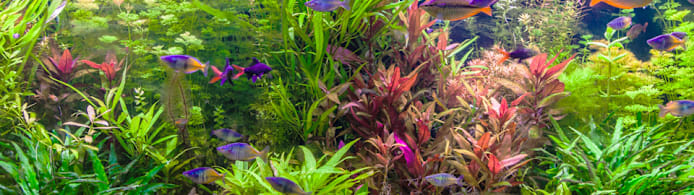
Ammonia is the most toxic nitrogenous waste product in an aquarium which can cause stress and possible death to aquatic life if not addressed.
You do not need to be a chemist to set up an aquarium, but there are a few items that you will want to familiarize yourself with, a critical one being ammonia (NH3). Ammonia is the most toxic nitrogenous waste product in an aquarium which can cause stress and possible death to aquatic life if not addressed.
Where does Ammonia come from?
There are several ways ammonia can enter your aquarium, fish gills being one of the largest contributors of ammonia to a tank. Overstocking or adding too many fish at once to a new aquarium that has not gone through the nitrogen cycle can increase ammonia levels that the tank is unable or ready to accommodate. Ammonia also enters the aquarium through the decomposition of uneaten food, fish waste and plant matter. Overfeeding can lead to large buildups of ammonia if left to accumulate. Water treatment facilities may utilize chloramine, a chemical that bonds chlorine to ammonia, as a disinfectant to make water safe to drink. Therefore, if untreated, tap water can contribute to ammonia entering the aquarium.
After setting up an aquarium your tank will go through a biological filtration process called the nitrogen cycle. This process is where beneficial bacteria establish themselves by feeding off waste and byproducts within the aquarium, converting it into less harmful byproducts. If a rapid change in water chemistry happens, like an aquarium filter failure or addition of medications, bacteria colonies can be disrupted or destroyed causing harmful ammonia to become elevated, often referred to as ammonia poisoning.
The Dangers of Elevated Ammonia
Elevated ammonia is so dangerous because it has a direct impact to your finny friends’ blood and gills. Fish will try to combat ammonia burn by producing additional mucus. This extra buildup of mucus can cover the gills, reducing their ability to absorb oxygen. Ammonia also has a direct effect of concentration of hemoglobin in fish. Hemoglobin is responsible for transporting oxygen from the gills to their body tissue.
Because ammonia can build quickly or over the course of a couple days, ammonia poisoning may not be noticed immediately. The gills of fish are their most sensitive area and fish breathing heavily, or gasping, at the top or bottom of the aquarium is a good indicator there may be an issue with elevated ammonia levels. A bright red or purplish coloration may also occur. As the effects of ammonia buildup continues, your fish will become lethargic, settle to the bottom of the aquarium, and refuse to eat. As a fish’s natural immune response is to produce mucus, you may notice discoloration and a grey like appearance.
Removing Ammonia from your Aquarium
How to Lower Ammonia in Your Fish Tank
If your aquarium water tests high for ammonia, act quickly — ammonia is toxic to fish even at low concentrations, and every hour counts. Follow these steps in order.
Step 1: Do a 50% Water Change Immediately
A 50% water change is the single fastest way to dilute ammonia and give your fish relief right now. When you refill the aquarium:
- Use a dechlorinator if your tap water is chlorinated — chlorine will stress fish and can disrupt the beneficial bacteria you need to establish.
- Match the temperature of the new water to within one degree of your existing aquarium water. A sudden temperature swing adds stress on top of ammonia exposure.
One large water change may not be enough. Plan on small daily water changes until your biological filtration is fully established and ammonia readings return to zero. Each partial change keeps ammonia at a safer level while your tank's nitrogen cycle catches up Merck Veterinary Manual.
Step 2: Stop Feeding Your Fish
If your fish are not actively eating, remove any uneaten food immediately and pause feeding altogether. Any food that goes uneaten sinks, decays and feeds the ammonia problem directly. Resuming regular feeding before ammonia is under control only makes the situation worse. Once water quality stabilizes and your fish are behaving normally, you can reintroduce small, controlled feedings.
Step 3: Use Ammonia-Neutralizing Products
While water changes physically remove ammonia, a few products can help detoxify what remains:
| Product | How It Works | Best For |
|---|---|---|
| Liquid ammonia neutralizers | Chemically bind ammonia into a less toxic form, buying time for your cycle to process it | Freshwater and saltwater aquariums |
| Zeolite crystals | Absorb ammonia directly from the water column | Freshwater aquariums only |
Important: Liquid neutralizers detoxify ammonia — they do not remove it. Your test kit may still show ammonia present after treatment, which is normal. Continue water changes and monitor daily until readings reach zero Merck Veterinary Manual.
Zeolite crystals are a freshwater-only solution; they are not effective in saltwater setups. Place them in your filter media compartment for best results, and replace or recharge them according to the manufacturer's directions.
Step 4: Prevent Ammonia from Spiking Again
Once the immediate crisis is under control, prevention is your most powerful long-term tool.
Test your water regularly. Check ammonia, nitrite and nitrate levels at least twice a month — more often in a newly established aquarium or after adding new fish. Catching a rise early means a small water change instead of an emergency one.
Control feedings. Feed your fish only what they can consume in two to three minutes. You are feeding the fish, not the aquarium — excess food is excess ammonia waiting to happen.
Add fish gradually. Every fish you add increases the biological load your filter bacteria must process. This is especially critical for newly started aquariums, where the beneficial bacterial colony is still growing and cannot yet handle a sudden increase in waste. Add new fish in small groups and allow several weeks between additions so your cycle can adjust .
Quick-reference prevention checklist:
- Test water at least twice a month (more often for new tanks)
- Feed small amounts; remove uneaten food within a few minutes
- Add fish gradually — never all at once
- Rinse filter media in old tank water (not tap water) to preserve beneficial bacteria
- Never overstock your aquarium
When to call for help: If ammonia remains elevated after 48 hours of water changes and treatment, or if fish show signs of distress such as gasping at the surface or clamped fins, consult a knowledgeable aquatics associate at your local Petco or reach out to your veterinarian for guidance .
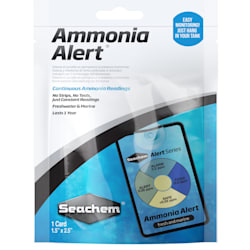
Recommended Products for Ammonia Testing and Detoxification
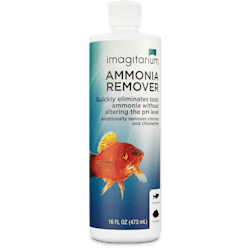
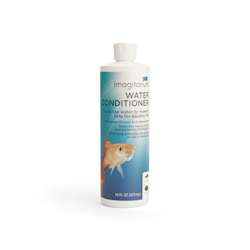
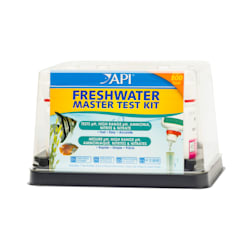
Ammonia-Lowering Methods at a Glance
Use this quick-reference table to compare the most common ways to reduce ammonia in your aquarium — including how fast each works, what it's best for, and how often to act.
| Method | How It Works | Best For | Speed of Relief | Freshwater | Saltwater | Notes |
|---|---|---|---|---|---|---|
| Partial water change (25–50%) | Dilutes ammonia concentration immediately | Any ammonia spike; first response to poisoning | Fast (minutes) | ✓ | ✓ | Always match temperature within 1°F; treat tap water with a dechlorinator before adding |
| Daily small water changes (10–15%) | Keeps ammonia diluted while beneficial bacteria establish | New tanks cycling; ongoing spikes | Ongoing | ✓ | ✓ | Continue until the nitrogen cycle is complete and readings hold at 0 ppm |
| Liquid ammonia neutralizer / detoxifier | Chemically binds ammonia into a less toxic form; bacteria can still process it | Emergency stabilization between water changes | Very fast (minutes) | ✓ | ✓ (check label) | Does not remove ammonia — detoxifies it temporarily; retest water after dosing |
| Zeolite crystals | Physically adsorbs ammonia onto the crystal surface inside the filter | Freshwater tanks; quarantine setups | Moderate (hours) | ✓ | ✗ | Loses effectiveness in saltwater; must be recharged or replaced regularly; not a permanent fix |
| Dechlorinator / water conditioner | Neutralizes chloramine (chlorine bonded to ammonia) in tap water before it enters the tank | Tap-water top-offs and water changes | Immediate (add before water) | ✓ | ✓ | Essential step whenever tap water is used; chloramine releases free ammonia if untreated |
| Reduce feeding / remove uneaten food | Eliminates a primary ammonia source at the root | All tanks, especially during a spike | Preventive | ✓ | ✓ | Feed only what fish consume in 2–3 minutes; remove leftovers promptly |
| Avoid overstocking | Lowers the biological load (waste output) the filter must process | New and established tanks | Preventive | ✓ | ✓ | Add fish gradually so beneficial bacteria colonies can grow to match the bioload |
| Routine water testing | Detects rising ammonia before it reaches dangerous levels | All tanks, all experience levels | Preventive (early warning) | ✓ | ✓ | Test at least twice a month under normal conditions; test immediately if fish show stress signs |
Key Takeaways - A 25–50% water change is always your first move when ammonia is elevated. - Liquid neutralizers and zeolite buy time — they are not substitutes for a fully cycled tank. - Tap water treated with chloramine contributes ammonia unless a quality dechlorinator is used every time. - Prevention through consistent testing, controlled feeding and gradual stocking is far easier on your fish than treating a crisis. - If fish are gasping, showing red or purple coloration, or becoming lethargic, act immediately and consult your veterinarian if symptoms persist after water quality is corrected.
Frequently Asked Questions
What is a safe ammonia level in a fish tank? Ammonia should read 0 ppm in an established, cycled aquarium. Any detectable ammonia is a concern; levels above 0.25 ppm can cause gill damage and stress in most fish.
How quickly can ammonia rise to dangerous levels? Ammonia can spike within 24–48 hours — sometimes faster in a new, uncycled tank or after a filter failure. Because the rise can be gradual, fish may show stress signs before you notice a problem, which is why routine testing at least twice a month is so important.
Can I use zeolite in a saltwater aquarium? No. Zeolite crystals are effective only in freshwater setups. Salt ions interfere with the adsorption process and can actually cause zeolite to release ammonia back into the water, making the problem worse. Stick to water changes and liquid detoxifiers for marine tanks.
Does a liquid ammonia neutralizer actually remove ammonia? Not exactly. These products chemically bind ammonia into a less toxic compound that your beneficial bacteria can still break down during the nitrogen cycle. They provide critical short-term relief but do not eliminate ammonia from the water — retesting after dosing is essential, and water changes remain necessary.
Why does tap water sometimes add ammonia to my aquarium? Many municipal water treatment facilities use chloramine — a compound that bonds chlorine to ammonia — as a disinfectant. Standard dechlorinators that only neutralize free chlorine will not break this bond. Use a full-spectrum water conditioner specifically labeled to neutralize chloramine every time you add tap water to your aquarium.
When should I call a veterinarian about ammonia poisoning? If your fish are gasping at the surface, showing bright red or purple gill coloration, lying on the bottom, or refusing food even after you have performed an emergency water change and corrected water chemistry, contact an aquatic or exotic-animal veterinarian promptly. Ammonia poisoning can cause lasting gill and organ damage that requires professional evaluation.
Frequently Asked Questions
How often should I test ammonia levels in my fish tank? Test your aquarium water for ammonia at least twice a month under normal conditions. If you have a newly set-up aquarium that is still cycling, fish are showing signs of stress, or you have recently added new fish, test every day or every other day until readings are stable. Early detection is the single most effective way to prevent ammonia poisoning from becoming a crisis.
What ammonia level is safe for fish? The only truly safe ammonia level in a fish tank is 0 ppm (parts per million). Even low concentrations — as little as 0.25 ppm — can cause gill irritation, immune suppression and chronic stress in fish over time. Any detectable ammonia reading is a signal to act immediately: perform a partial water change, stop feeding temporarily and investigate the root cause.
How long does it take to lower ammonia in a fish tank? A 50% water change can reduce ammonia by roughly half within minutes, giving your fish fast relief. However, achieving a stable 0 ppm reading long-term depends on how well your nitrogen cycle is established. In a cycling aquarium, beneficial bacteria colonies can take anywhere from two to six weeks to grow large enough to consistently convert ammonia into less harmful compounds. Liquid ammonia-neutralizing products work quickly to detoxify ammonia in the meantime, but they are a bridge — not a permanent fix — while your biological filtration matures.
Can I use an ammonia remover or neutralizer alongside beneficial bacteria? Yes, with an important distinction. Liquid detoxifiers (such as water conditioners that neutralize ammonia) bind ammonia into a less toxic form that beneficial bacteria can still process, so they generally do not harm your bacterial colony. Zeolite crystals, however, physically absorb ammonia and can deprive bacteria of the food source they need to grow — use zeolite cautiously in a cycling tank and remove it before adding bacterial supplements. Always read product labels and, when in doubt, consult a knowledgeable aquatics associate at your local Petco.
Why does my ammonia spike even though I have a filter running? A functioning filter is not the same as a fully cycled filter. Mechanical filtration removes debris, but it is the beneficial bacteria living in your filter media that actually break down ammonia biologically. Ammonia can spike even with a running filter if the tank is overstocked, if you have recently cleaned filter media with tap water (which kills bacteria), if a filter failure occurred, or if medications were added that disrupted bacterial colonies. Tap water treated with chloramine — a chlorine-ammonia compound used by many municipal water facilities — can also introduce ammonia directly if a dechlorinator that neutralizes chloramine is not used during water changes.
Is ammonia poisoning in fish reversible? Caught early, yes — many fish can recover with prompt intervention including a large partial water change, temporary fasting and ammonia-neutralizing treatment. Fish showing mild symptoms such as rapid gill movement or hovering near the surface often improve noticeably within 24 to 48 hours once ammonia levels drop. Fish that have progressed to lethargy, loss of color, clamped fins or refusal to eat for multiple days face a more difficult recovery. If your fish do not improve after corrective steps, consult a veterinarian with aquatic experience for guidance.
This article was created with assistance from AI tools and reviewed for accuracy by Petco's content team.
Related Articles


