


Two Easy Ways to Start Earning Rewards!
Become a member today! Members-only pricing and offers, personalized care notifications, Vital Care points back on every purchase and more!
 Become a credit card member today!
Earn 2X Pals Rewards points at Petco
when you use Petco Pay!APPLY NOWLearn More About Petco Pay Benefits
Aquarium Algae Types: ID, Causes & How to Remove
Published on September 9th, 2022
Updated on June 18th, 2026


Written by Dawn Burch
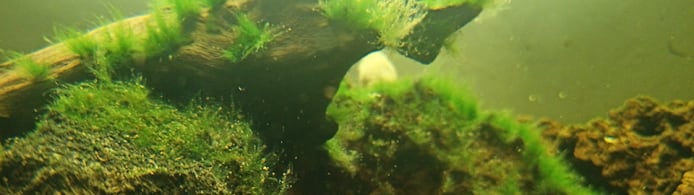
Do you have questions about algae in your aquarium? Petco has the answers! Learn about the types, causes and treatment options for aquarium algae.
You’ve got your aquarium all set up and cycled. You’ve added some beautiful fish, colorful accessories and even live plants. The filter is running and the temperature is within range. Yet you notice a brown film on your substrate or patches of green on your rocks—this is aquarium algae. Whether it’s common types of freshwater algae or various saltwater algae species, every aquarist has to deal with this persistent aquatic organism. So is algae bad for an aquarium? How can you get rid of it? Read on for answers to these questions and more.
What kind of algae is in my aquarium?
The first step to addressing algae in your aquatic habitat is familiarizing yourself with the different aquarium algae types and learning how to identify them. There are four common types of algae that affect both saltwater and freshwater habitats and several more common saltwater aquarium algae types.
Green hair algae
Green hair algae is one of the most common types of aquarium algae in both saltwater and freshwater habitats. It can grow in clumps of short, fluffy hair-like fibers or cover surfaces with strands up to two inches long. In any form, green hair algae are a bright green color and look a lot like a soft grass—and can be just as difficult to eradicate as the weeds in your lawn might be.
Green spot algae
Green spot algae appear as bright green, circular patches on the sides of your aquarium or on accessories like rocks and coral. A little bit of spot algae in an aquarium is common and isn’t typically harmful. However, if the spots begin to grow, you’ll need to scrape off this hardy aquarium algae type by hand and make adjustments to prevent it from growing back.
Brown algae
Brown algae in aquariums are common and can thrive in low-light conditions. Also known as diatoms, it’s typical to find brown algae in newly set up aquariums that haven’t completed a nitrogen cycle where beneficial bacteria are not yet established. Brown algae initially looks like a thin film on the surfaces of your habitat and can quickly get out of control.
Blue-green algae
This isn’t actually an algae, but it behaves similarly and is often grouped into this category. Blue-green algae in aquariums are actually photosynthesizing bacteria that also feed off the nutrients in your habitat. It appears as a fast-growing, slimy film that can be blue, green or even brown.
Red slime algae
While red slime algae can be found in freshwater, it is a much more common saltwater aquarium algae type. Red slime algae are cyanobacteria, the same as blue-green algae. In saltwater, this organism can appear not only as blue or green but also red, purple and black. Red slime and blue-green algae both have one thing in common—the presence of these cyanobacteria is a sign of an imbalance within the aquarium and should be dealt with immediately.
Coralline algae
Coralline is a red calcareous algae belonging to the division known as Rhodophyta. Unlike red slime algae, it is a true algae that can be good for your habitat. This type of algae in marine aquariums appears as a hard, pink, red, purple, blue, yellow or green crust on your aquarium walls, rocks, decor and substrates. Along with the gorgeous colors this algae produces, it can also help encourage the growth of stony coral. If you have a reef aquarium, you should consider promoting the development of coralline algae.
Bubble algae
This is a particularly common marine fish tank algae type, as it grows in tropical and subtropical ocean waters around the world. Bubble algae look just as their name implies—they are green, shiny bubbles that appear anywhere from a single bubble to tightly packed bunches on the base of your coral and other hardscape décor. Like coralline algae, they aren’t necessarily bad for your aquarium if they are properly managed, but they can grow out of control quickly and start to cause issues. In fact, they can even compete with coralline algae for space.
What Algae Is Bad for Fish?
Not all aquarium algae are created equal — and a few aren't even algae at all. Blue-green algae and red slime algae are actually cyanobacteria, a type of bacteria that can produce toxins harmful or deadly to fish and other aquatic life https://www.merckvetmanual.com/all-other-pets. That distinction matters, because true algae and cyanobacteria require different removal strategies.
Most true aquarium algae, on the other hand, can actually benefit your fish tank by acting as a natural food source and a supplemental biological filter — as long as growth stays under control.
How Algae Affect Water Chemistry
Like all plants, true aquarium algae photosynthesize: they absorb carbon dioxide during daylight hours and release it at night. In a heavily planted or algae-dense fish tank, that nightly CO₂ release can measurably lower pH by morning, creating an unhealthy swing in water chemistry that stresses fish https://www.merckvetmanual.com/all-other-pets. Sensitive species are especially vulnerable to these fluctuations, so consistent pH monitoring is essential whenever algae growth is significant.
That said, the pH swing itself is usually a symptom, not the root problem. Algae overgrowth is most often a signal that your water is out of balance — too many nutrients, too much light, or both. Beyond water chemistry, heavy algae growth is simply unsightly: it coats coral, decorations and the walls of your fish tank, making it hard to see your fish clearly.
When Algae Are Actually Good
Some algae genuinely earn their place in a fish tank — particularly in marine setups. Coralline algae, for example, is prized in reef aquariums for stabilizing calcium and alkalinity levels and for outcompeting less desirable algae for space on rock surfaces. Finding the right balance between coralline algae and other beneficial marine algae types can help a saltwater fish tank thrive. The goal is never zero algae — it's the right algae, in the right amounts.
What Causes Aquarium Algae?
Different algae types favor different conditions, but the root cause of most algae problems is the same: an imbalance of light and nutrients inside your fish tank. Three factors drive that imbalance more than any others.
1. Too Much Light
Because algae rely on photosynthesis, light is their primary fuel. An artificial light that is too intense, or one left on for more than ten hours per day, is one of the most common triggers of algae overgrowth in both freshwater and saltwater fish tanks. Natural sunlight is even more potent — placing your fish tank near a window or skylight that receives direct sun is an invitation for rapid algae growth. Position your fish tank away from direct sunlight and use a timer to keep your lighting schedule consistent and capped at ten hours or fewer per day.
2. Overfeeding
Overfeeding is remarkably easy to do, and the consequences go beyond a full fish. Uneaten food sinks to the gravel or sand at the bottom of your fish tank and begins to decay, releasing ammonia, nitrates and phosphates into the water. More food also means more fish waste — and more waste means even more ammonia and nitrates. Nearly every type of aquarium algae feeds eagerly on nitrates and phosphates, so overfeeding essentially fertilizes algae growth from the bottom up. Feed only what your fish can consume in two to three minutes, and remove any visible uneaten food promptly.
3. Poor Water Quality
Consistent water changes are one of the most effective tools for keeping algae in check. Aim to change 10–20% of your fish tank's water every two to four weeks, adjusting frequency based on tank size and how many fish you keep. Smaller fish tanks accumulate waste more quickly and typically need more frequent changes. Always treat new water with an appropriate dechlorinator to remove ammonia, chlorine or chloramine before adding it to your fish tank. You can also use water-conditioning additives designed to break down the nitrates and phosphates that algae use as food — a useful extra layer of prevention between water changes. Explore aquarium substrate and gravel options that are easy to vacuum clean, since debris trapped in gravel is a hidden nutrient source for algae.
How Can I Get Rid of Aquarium Algae?
Prevention is always the most efficient approach, but if algae have already taken hold, you'll need to act directly. The fastest way to remove established algae is mechanical removal: scrape the sides and flat surfaces of your fish tank with an algae scraper, then remove decorations and scrub them thoroughly with a sponge or toothbrush. Decorations can also be soaked in a 3% bleach solution to kill stubborn algae — just be sure to rinse them completely afterward, or soak them in clean water with a dechlorinator and allow them to dry fully before returning them to the fish tank.
Will algae go away on its own? Sometimes — but it depends on the type. Brown algae (diatoms) often disappear on their own as a fish tank matures and light or silicate levels stabilize. Green algae, however, will not resolve without intervention. Restoring balanced water conditions is the only lasting solution. If mechanical removal and water-quality corrections aren't enough, commercially available algaecides can help as a last resort — follow label directions carefully and remove any chemical-sensitive invertebrates before treating.
What Are the Best Aquatic Algae Eaters?
Algae-eating animals are one of the most enjoyable and effective ways to manage algae long-term. The right species not only grazes on algae but also contributes to a more balanced, thriving fish tank overall.
Freshwater Algae Eaters
| Species | Minimum Tank Size | Notes |
|---|---|---|
| Plecostomus (common) | 75+ gallons | Some species reach 12–24 inches; not suitable for smaller fish tanks |
| Siamese algae eater | 20+ gallons | Active, effective on many algae types |
| Otocinclus catfish | 10+ gallons | Gentle; ideal for community fish tanks |
| Nerite snails | 5+ gallons | Excellent on glass and hard surfaces; won't reproduce in freshwater |
| Amano shrimp | 10+ gallons | Highly effective on hair algae and film algae |
Saltwater Algae Eaters
| Species | Minimum Tank Size | Notes |
|---|---|---|
| Angelfish, tangs, foxface rabbitfish | 70+ gallons | Enthusiastic grazers; require large fish tanks |
| Tailspot blenny / sailfin blenny | 30+ gallons | Hardy; well-suited to mid-size reef fish tanks |
| Gobies (various species) | 10+ gallons | Many species ideal for nano reef setups |
| Shrimp, crabs, snails, urchins | Varies | Excellent cleanup crew for a wide range of marine algae types |
When choosing algae eaters, always match the animal to your fish tank's size and the specific algae type you're dealing with. A knowledgeable Petco associate can help you find the right fit for your setup — browse aquariums and fish tanks to find the right size fish tank for the species you want to keep.
Recommended Aquarium Algae Products
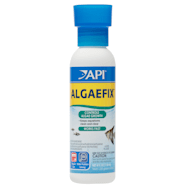
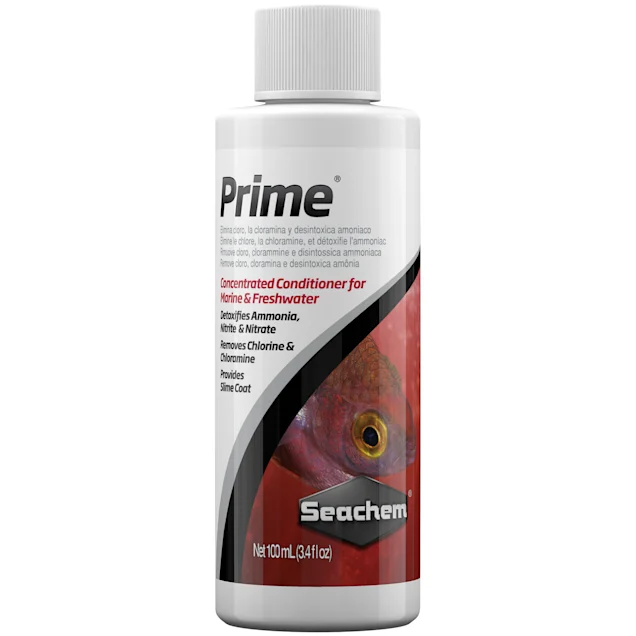
Aquarium Algae at a Glance: Quick-ID Comparison Table
| Algae Type | Appearance | Freshwater / Saltwater / Both | Harmful to Aquatic Life? | First-Line Treatment |
|---|---|---|---|---|
| Green hair algae | Bright green, hair-like fibers or strands up to 2 inches long; fluffy or mat-forming | Both | Not directly harmful in small amounts; overgrowth depletes oxygen at night and signals nutrient imbalance | Manual removal; reduce lighting to ≤10 hrs/day; lower nitrates and phosphates with water changes |
| Green spot algae | Small, circular, bright-green hard patches on glass and hardscape | Both | Rarely harmful in small amounts; heavy growth can shade plants and coral | Scrape by hand; increase CO₂ for planted tanks; check phosphate levels |
| Brown algae (diatoms) | Thin, dusty brown film on glass, substrate and decorations | Both (especially new tanks) | Generally harmless and often self-resolving once the nitrogen cycle completes | Wipe away manually; improve lighting; allow beneficial bacteria to establish |
| Blue-green algae (cyanobacteria) | Fast-spreading, slimy film; blue, green or brown; foul odor | Both | Yes — produces toxins that can be harmful to aquatic life; signals serious water imbalance | Blackout treatment; manual removal; large water change; address root nutrient cause immediately |
| Red slime algae (cyanobacteria) | Slimy, spreading mat; red, purple, black or blue-green | Primarily saltwater | Yes — same cyanobacterial toxin risk as blue-green algae; indicates water imbalance | Manual siphoning; improve water flow; reduce nutrients; consult your aquatic veterinarian if fish show stress |
| Coralline algae | Hard, encrusting crust; pink, red, purple, blue, yellow or green | Saltwater / reef only | No — beneficial; encourages stony coral growth | Encourage and maintain; keep calcium and alkalinity stable |
| Bubble algae | Shiny, round green bubbles; single or tightly packed clusters on coral and hardscape | Saltwater (tropical/subtropical) | Not directly harmful if managed; can outcompete coralline algae and spread rapidly if popped | Remove bubbles carefully without bursting; introduce natural grazers such as emerald crabs |
How to use this table: Match what you see in your aquarium to the "Appearance" column first, then confirm freshwater or saltwater. Any row marked Yes under "Harmful?" warrants prompt action — and if your fish show signs of stress or illness alongside an algae outbreak, consult your veterinarian right away.
Frequently Asked Questions
Is all aquarium algae bad for fish? No. True algae — such as green hair algae, green spot algae and coralline algae — can act as a natural food source and contribute to biological filtration when kept in check. The organisms that pose the greatest risk are cyanobacteria (blue-green and red slime algae), which produce toxins that can be harmful to aquatic life. Overgrowth of any algae type, however, can cause nighttime pH swings that stress fish, so balance is key.
What causes algae to suddenly appear in my aquarium? The root cause is almost always an imbalance of light and nutrients — specifically elevated nitrates and phosphates. Common triggers include leaving aquarium lights on more than 10 hours per day, overfeeding (uneaten food decays and releases ammonia and phosphates), placing the tank near a window with direct sunlight, or skipping regular 10–20% water changes every two to four weeks. Correcting these factors is the most reliable long-term solution.
Will aquarium algae go away on its own? It depends on the type. Brown algae (diatoms) commonly disappear on their own once a new tank completes its nitrogen cycle and beneficial bacteria become established. Green algae and cyanobacteria, however, will not resolve without intervention — you'll need to manually remove the growth and correct the underlying water conditions.
Can aquarium algae harm my fish directly? Most true algae are not directly toxic to fish. The exception is cyanobacteria — sold under the common names blue-green algae and red slime algae — which produce compounds that can be harmful to aquatic life. If you notice a foul smell, a fast-spreading slimy film and fish that appear lethargic or are gasping at the surface, contact your veterinarian promptly.
How do I get rid of algae fast without harming my fish? Start by manually scraping glass surfaces and scrubbing decorations with a sponge or soft brush. Accessories can be soaked in a 3% bleach solution, then rinsed thoroughly and soaked in dechlorinated water before returning them to the tank. Reduce lighting duration, perform a water change, and pretreat new water with a dechlorinator to remove chlorine and chloramine. Avoid adding any algae-control product without confirming it is safe for your specific fish and invertebrates — when in doubt, ask your veterinarian.
Is coralline algae good for a reef aquarium? Yes. Coralline algae is a true red calcareous algae (division Rhodophyta) that forms a hard, colorful crust on rock and hardscape. In a reef aquarium it is considered highly beneficial because it can help encourage the growth of stony coral and competes for space against less desirable algae types. Maintaining stable calcium and alkalinity levels supports its growth.
Frequently Asked Questions
How do I identify which type of algae is in my aquarium? Start by noting color, texture and location. A thin brown film on gravel and glass in a newer tank points to brown algae (diatoms). Bright green circular spots on the glass suggest green spot algae. Long, hair-like green strands are green hair algae. A slimy, fast-spreading blue, green or brownish mat is likely cyanobacteria (blue-green or red slime algae), which signals a water-quality imbalance and should be addressed promptly. In marine tanks, hard pink or purple crusting is typically coralline algae, while shiny green bubbles on coral bases are bubble algae. When in doubt, bring a water sample to your nearest Petco for a free water quality test — poor water parameters are the most reliable clue to which algae is gaining the upper hand.
Which aquarium algae types are considered safe — or even beneficial? Most true algae are not inherently harmful to fish; the main risks are oxygen depletion at night and the water-quality problems that fuel overgrowth. Coralline algae is actively beneficial in reef tanks, helping encourage stony coral growth and outcompeting nuisance species for space. Small amounts of green spot algae and bubble algae are manageable and not dangerous to aquatic life when kept in check. The algae types to treat as urgent are blue-green algae and red slime algae — both are cyanobacteria, not true algae, and both produce toxins that can be harmful to fish and other aquatic life [https://www.merckvetmanual.com/all-other-pets]. If you notice fish behaving unusually alongside a cyanobacteria bloom, consult your veterinarian.
What is the fastest way to remove each type of aquarium algae? Removal method depends on the algae type:
- Brown algae (diatoms): Wipe away with a soft cloth or magnetic scraper; improve lighting and complete your nitrogen cycle. Brown algae often resolves on its own once the tank matures.
- Green spot algae: Scrape firmly with a razor blade scraper or algae pad — this type is hard and won't wipe off easily. Reduce phosphate levels and adjust light duration to under ten hours per day.
- Green hair algae: Remove manually by twisting strands around a toothbrush; follow up with a reduction in nitrates and phosphates through regular 10–20% water changes.
- Blue-green algae / red slime algae (cyanobacteria): Siphon out as much as possible, perform a water change, improve circulation and address nutrient imbalances immediately. Because these organisms produce toxins, do not delay treatment [https://www.merckvetmanual.com/all-other-pets].
- Bubble algae: Pop or remove bubbles carefully before they burst and spread spores; manually extract the base with tweezers.
- Coralline algae: Use a plastic scraper on glass (metal can scratch acrylic); leave what you want on rockwork, as it is beneficial.
Can algae-eating fish or invertebrates help control aquarium algae? Yes — certain fish and invertebrates are well known for grazing on specific algae types. Snails, hermit crabs and urchins are popular choices in marine tanks for managing hair algae and film algae, while species such as otocinclus catfish and nerite snails are frequently used in freshwater setups. Algae eaters are a helpful part of a balanced approach but are not a standalone solution; they work best alongside proper lighting schedules, regular water changes and controlled feeding. Ask a knowledgeable Petco aquatics associate which algae-eating species are compatible with your existing fish before adding new aquatic life.
Does too much light always cause algae, and how much is the right amount? Light is the primary fuel for photosynthetic algae, so duration and intensity both matter. Leaving aquarium lights on for more than ten hours per day is one of the most common triggers for algae blooms. Placing your tank near a window or skylight that receives direct sunlight compounds the problem significantly. A programmable timer set to eight to ten hours of light per day is a straightforward preventive step for most freshwater and marine tanks. If you have live plants or coral that require higher light, balance that need carefully against the risk of algae overgrowth by also managing nutrient levels through consistent water changes.
When should I call a veterinarian about aquarium algae? Most algae issues are environmental rather than medical, but cyanobacteria blooms (blue-green or red slime algae) are the exception. Because these bacteria produce toxins, fish exposed to a significant bloom may show signs of stress — labored breathing, lethargy or loss of appetite [https://www.merckvetmanual.com/all-other-pets]. If your fish display any of these symptoms alongside a cyanobacteria outbreak, contact an aquatic or exotic animal veterinarian promptly. For general water-quality concerns, a free in-store water test at Petco is a good first step before escalating to a vet visit.
This article was created with assistance from AI tools and reviewed for accuracy by Petco's content team.


