


Two Easy Ways to Start Earning Rewards!
Become a member today! Members-only pricing and offers, personalized care notifications, Vital Care points back on every purchase and more!
 Become a credit card member today!
Earn 2X Pals Rewards points at Petco
when you use Petco Pay!APPLY NOWLearn More About Petco Pay Benefits
What Kills Algae in Fish Tanks: 10 Proven Tips
Published on August 21st, 2000
Updated on July 16th, 2026

Written by Petco Editorial Team
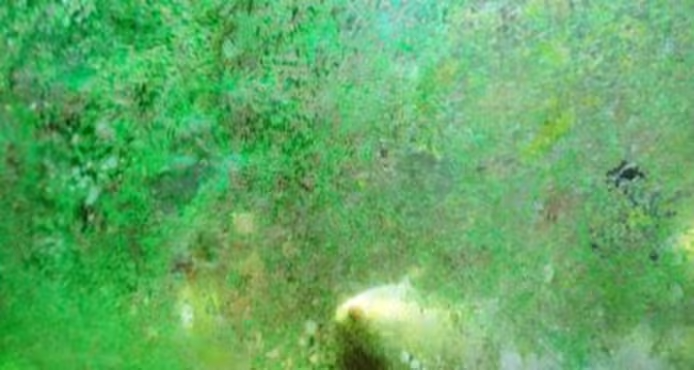
Our top ten most important tips for removing and keeping algae out of your aquarium.
What Kills Algae in a Fish Tank? 10 Proven Ways to Take Control
Algae overgrowth is one of the most common frustrations in the aquarium hobby — and the good news is that it's almost always fixable. The most effective ways to kill and control algae in a fish tank are: reducing excess nutrients (from overfeeding and fish waste), dialing in your lighting schedule, performing regular water changes, upgrading your filter media, adding live plants, and stocking algae-eating fish. A small amount of algae is completely normal in a wholesome, balanced aquarium — but when it starts coating your glass or smothering your plants, it's a signal that something in the tank is out of balance and needs to be addressed promptly.
Work through the ten strategies below in order. The first five eliminate the root causes; the last five give you tools to clean up what's already there and keep it from coming back.
#1 — Feed Your Fish Sparingly
Overfeeding is the single most common cause of algae overgrowth in home aquariums. Uneaten food breaks down quickly, releasing ammonia and phosphate — the two nutrients algae thrive on most.
Here's the rule of thumb experienced hobbyists follow: feed only what your fish can consume within two minutes. That usually means one feeding per day, or two to three smaller portions daily if you prefer — as long as nothing is left floating or sinking to the gravel. The moment food hits the bottom and stays there, it starts feeding algae instead of your fish.
Practical tips:
- Use a small pinch rather than a generous pour
- Watch the tank for two full minutes after feeding; remove any uneaten food with a net or turkey baster
- If you're going on vacation, consider a slow-release feeding block rather than asking someone to overfeed in your absence
#2 — Control the Aquarium Lights
Light is the other half of the algae equation. Algae, like plants, photosynthesize — so the longer your lights run, the more energy algae has to grow.
If you turn your aquarium lights on when you wake up and off before bed, you may be running an 14–16 hour light cycle without realizing it. That's far more than your fish or plants need, and algae will take full advantage.
Recommended daily light schedules:
| Aquarium Type | Daily Light Duration |
|---|---|
| Planted aquarium | 8–12 hours |
| Ornamental (no live plants) | 6–10 hours |
Put your lights on an inexpensive timer so the schedule stays consistent — consistency matters as much as duration. Also replace fluorescent bulbs at least once a year. As bulbs age, they lose both spectrum and intensity; that spectral shift actually encourages algae growth even as the tank looks dimmer to you.
#3 — Change Aquarium Water Regularly
In the wild, rain and water currents continuously dilute and carry away the nutrients that fuel algae. Your closed aquarium system has no such relief — which means regular water changes are essential to remove the phosphates, nitrates and dissolved organics that algae feed on.
Target: change 10–25% of your tank water every two to four weeks. Depending on your stocking level and feeding habits, you may need to increase that frequency.
Every water change is also an opportunity to siphon debris and decaying plant matter out of your gravel or sand — that decomposing material is a direct nutrient source for algae. Pair your water changes with a thorough substrate vacuum for the best results. Browse aquarium substrate and gravel options that make vacuuming easier and more effective.
#4 — Test Your Tap Water Before Water Changes
Here's a step many pet parents skip: testing the tap water itself before it goes into the tank. Municipal tap water can contain measurable levels of phosphate right out of the faucet — meaning every water change could be adding algae fertilizer rather than removing it.
If your tap water tests high for phosphates or other algae-promoting compounds, water changes alone won't solve your problem. In that case, consider:
- A reverse osmosis (RO) unit — removes phosphates, heavy metals and other dissolved solids at the source
- A tap water filter — a more affordable option that reduces many of the same compounds
Test first, then treat. Skipping this step can turn a diligent water-change routine into a frustrating cycle of algae regrowth.
#5 — Maintain Your Aquarium Filter Media
Your filter is your first line of defense against the nutrients that feed algae — but only if the media inside it is working properly. Exhausted, saturated filter media doesn't just stop removing phosphates; it can actually leach them back into the water.
Key filter media options for algae control:
| Media Type | What It Does |
|---|---|
| Poly Filters | Removes phosphate and heavy metals; changes color to signal existing problems |
| Carbon + Phosphate Remover (combination products) | Carbon clarifies water and absorbs dissolved organics; phosphate remover reduces algae fuel |
| Biological booster media | Supports beneficial bacteria that process ammonia and nitrite |
Replace mechanical and chemical filter media once a month. Biological media can be rinsed gently in old tank water and reused, but chemical and mechanical media should be swapped on a regular schedule before they become saturated.
#6 — Use the Right Algae-Removal Tools
Algae on glass or acrylic doesn't stand a chance against the right scraper. Magnetic cleaners — like the popular Mag-Float style — let you scrub the inside of the glass without getting your hands wet, using a magnet on the outside of the tank to drive a scrubbing pad on the inside. Keep one under your aquarium cabinet so it's always within reach.
For tougher spots or hard-to-reach corners, long-handled scrubbers and blade scrapers work well on glass (use plastic blades on acrylic to avoid scratching). Regular light scrubbing during water changes prevents buildup from becoming a major project.
#7 — Add Live Plants to Outcompete Algae
One of the most natural and effective long-term strategies: fill your aquarium with live plants. Plants compete directly with algae for the same light and nutrients — and when given proper conditions, plants almost always win that competition.
A densely planted tank leaves very little room — nutritionally or physically — for algae to establish itself. Fast-growing stem plants like hornwort, water sprite and anacharis are especially effective at pulling excess nutrients out of the water column quickly. Explore live plant options to find varieties suited to your lighting and tank size.
#8 — Stock Algae-Eating Fish
Put your fish community to work. Several species are genuinely useful algae controllers:
| Fish | Best For | Tank Size Note |
|---|---|---|
| Otocinclus catfish | Grazes constantly on soft green algae on glass and plants | Suitable for smaller aquariums |
| Common Pleco | Heavy-duty algae grazing | Grows very large — not suitable for small tanks |
| Cory catfish | Scavenges uneaten food and decaying plant matter from the bottom, reducing ammonia and nitrate buildup | Community-friendly; good for most tank sizes |
The Otocinclus is a standout choice for smaller setups — it's a tireless worker, moving methodically across every surface in search of algae. The Cory catfish plays a complementary role, vacuuming the bottom before decaying matter can spike ammonia and nitrate levels that feed algae higher in the water column.
#9 — Know Your Enemy: The Three Main Types of Algae
Not all algae responds to the same treatment. Identifying what you're dealing with helps you choose the most effective approach.
| Algae Type | Appearance | Difficulty | Best Removal Strategy |
|---|---|---|---|
| Green Carpet Algae | Flat coating on glass and structures | Easiest | Scrapers, algae-eating catfish, invertebrates |
| Green Hair Algae | Stringy, hair-like strands on plants and décor | Moderate | "Spaghetti fork" method — twist it off with an aqua plant clip; improve water quality to prevent regrowth |
| Beard Algae (Black Brush Algae) | Dark, brush-like tufts; clings stubbornly to leaves and driftwood | Most difficult | Prune affected leaves; remove and clean affected driftwood and decorations outside the tank |
The most important takeaway: all three types are symptoms of the same underlying issues — excess nutrients and/or too much light. Removing algae manually buys you time, but fixing water quality is what keeps it from coming back.
#10 — Know When a Little Algae Is Actually OK
Before you declare total war on every trace of green in your tank, take a moment to look at the big picture. A thin film of algae on driftwood or rocks can actually look natural and attractive — blending structures into the planted landscape the way it would in a river or lake environment.
More importantly, algae isn't purely a villain. It consumes excess nutrients and produces oxygen, playing a small but real role in your tank's ecosystem.
The goal isn't a completely algae-free tank — it's a balanced one. If algae isn't coating your glass, blocking light from your plants, or visibly overtaking your aquarium, there's no need to panic. Success in the algae battle looks like a stable, balanced ecosystem where algae exists at low, manageable levels rather than dominating the tank.
A note on your aquarium setup: If you're starting fresh or upgrading your system, the right aquarium or fish tank — properly sized and filtered for your fish — makes every one of these strategies more effective from day one. If algae problems persist despite following these steps, consult a knowledgeable Petco associate or your veterinarian for guidance tailored to your specific setup.
Algae Control Methods at a Glance
| Method | How It Works | Effectiveness | Best For |
|---|---|---|---|
| Reduce feeding frequency | Less uneaten food means fewer phosphates and less ammonia entering the water column | High — addresses the #1 root cause | All fish tank types; especially overstocked or heavily fed setups |
| Limit light to 8–12 hrs/day (planted) or 6–10 hrs/day (ornamental) | Algae photosynthesize; cutting excess light starves growth cycles | High — simple, zero-cost fix | Any aquarium receiving too much ambient or artificial light |
| Regular water changes (10–25% every 2–4 weeks) | Dilutes phosphates, nitrates and dissolved organics before algae can feed on them | High — foundational maintenance step | All aquariums; increase frequency for heavily stocked tanks |
| Phosphate-removing filter media (e.g., Poly Filters, carbon-phosphate combo) | Physically adsorbs phosphate and heavy metals; carbon absorbs dissolved organics | Moderate–High — works continuously between water changes | Tanks with confirmed high phosphate readings from tap or fish waste |
| Test and treat tap water (RO unit or tap filter) | Removes phosphates and other algae-feeding minerals before they enter the tank | High — essential if tap water tests positive for phosphates | Aquariums in areas with high-phosphate municipal water supplies |
| Live aquatic plants | Compete directly with algae for light and nutrients; outcompete algae when conditions favor plant growth | Moderate–High — improves over time as plants establish | Planted aquariums; less effective in low-light or fish-only setups |
| Algae-eating fish (Otocinclus catfish, Cory catfish) | Graze continuously on green carpet algae and scavenge uneaten food from the bottom | Moderate — biological control, not a standalone solution | Community aquariums with compatible water parameters |
| Manual removal (magnetic scrapers, algae pads) | Physically lifts algae off glass and acrylic surfaces immediately | High for glass algae; low for hair or beard algae | Quick cleanup of green carpet algae on tank walls |
| "Spaghetti fork" removal of green hair algae | Twisting a plant clip or fork around hair algae pulls it free from plants and decorations | Moderate — labor-intensive but effective for stubborn strands | Planted tanks where catfish and plecos refuse to graze hair algae |
| Prune and remove beard (black) algae | Cutting away affected leaves and removing impacted driftwood and decorations eliminates the colony | Moderate — must be combined with water quality improvements to prevent return | Planted aquariums suffering a heavy beard algae outbreak |
Quick tip: No single method wins the battle alone. The most resilient aquariums combine water quality management (feeding, water changes, filtration) with biological controls (live plants, algae-eating fish) and manual removal as a backup. If algae returns rapidly after cleaning, that's a signal to investigate your water chemistry first.
Frequently Asked Questions
What kills algae in a fish tank fastest? Manual removal with a magnetic scraper or algae pad delivers the most immediate results for green carpet algae on glass. For a lasting fix, however, you must also address the root cause — typically excess phosphates from overfeeding or poor filtration — because algae will return quickly if water chemistry isn't corrected.
Is algae harmful to fish? A thin, natural coating of algae on rocks and decorations is generally harmless and can even provide supplemental grazing for some fish. A heavy overgrowth, however, can deplete oxygen levels overnight as algae respire, and may signal dangerously elevated ammonia or nitrate levels that stress aquatic life. Consult your veterinarian or an aquatic specialist if fish appear lethargic or are gasping at the surface.
How often should I change water to control algae? Most aquariums benefit from changing 10–25% of the water every 2–4 weeks to dilute phosphates and nitrates before they fuel algae growth. Heavily stocked tanks or those with a confirmed algae problem may need more frequent changes until the situation is under control.
Can too much light cause algae in a fish tank? Yes. Algae photosynthesize just as plants do, so an extended or inconsistent light cycle is one of the most common triggers for algae blooms. Use a timer to hold planted aquariums to 8–12 hours of light per day and ornamental setups to 6–10 hours, and replace fluorescent bulbs at least once a year as aging bulbs shift spectrum in ways that favor algae over plants.
Are algae-eating fish enough to eliminate algae on their own? Algae-eating fish like Otocinclus catfish are a valuable part of a balanced approach, but they are not a standalone solution. They work best when water quality is already well managed; if phosphate and nitrate levels remain high, algae will grow faster than any cleanup crew can consume it. Always confirm that any new fish are compatible with your existing community before adding them.
When should I be concerned about algae and call a vet? Algae itself is not a veterinary emergency, but the water conditions that cause rapid algae growth — high ammonia, nitrites or nitrates — can be dangerous to your fish. If you notice fish showing signs of stress (clamped fins, labored breathing, unusual swimming patterns) alongside an algae outbreak, test your water immediately and consult a veterinarian with aquatic experience .
Frequently Asked Questions
What kills algae in a fish tank fastest? The fastest way to reduce an active algae bloom is to combine an immediate 25% water change (to strip excess nutrients), a reduction in your lighting schedule to 6–8 hours per day, and the introduction of phosphate-removing filter media. For persistent outbreaks, adding algae-eating fish such as Otocinclus catfish alongside live plants accelerates results. No single method works overnight — consistent water quality management is the foundation of lasting control.
Which algae-removal method works best for each type of algae? Green carpet algae (the most common) responds well to magnetic scrapers, algae-eating invertebrates and catfish, and regular glass cleaning. Green hair algae is more stubborn — manually remove it by twisting it free with an aqua plant clip, then address the root cause through improved water quality and reduced feeding. Beard algae (black brush algae) is the most difficult to eliminate; heavily affected leaves and décor may need to be pruned or removed entirely and cleaned outside the fish tank. In all cases, correcting excess nutrients and light is the true long-term fix.
Do live plants really help control algae? Yes — live plants compete directly with algae for the same light and dissolved nutrients, and they typically outcompete algae when given proper conditions (adequate light, CO₂ and fertilization suited to the species). A densely planted fish tank leaves far fewer resources available for algae to exploit.
Is all algae harmful to fish? Not necessarily. A thin, natural coating of algae on rocks and driftwood is a sign of a balanced aquarium ecosystem — it consumes excess nutrients and contributes oxygen. Algae becomes a problem when it covers the glass, smothers plant leaves, or signals an underlying water-quality issue such as elevated phosphates or ammonia. If you notice a sudden, heavy bloom, consult your veterinarian or an aquatic specialist, as it may indicate a more serious imbalance in your tank.
Can overfeeding my fish really cause algae? Yes — overfeeding is one of the most common drivers of algae growth. Uneaten food decays and releases ammonia and phosphate, both of which act as fertilizer for algae. Feeding once daily — or smaller portions two to three times daily that your fish consume within two minutes — significantly reduces the nutrient load that fuels algae blooms.
How often should I change the water to keep algae under control? Replacing 10–25% of the water every two to four weeks is a practical baseline for most fish tanks, though heavily stocked or planted setups may require more frequent changes. Water changes dilute phosphates, nitrates and other algae-promoting nutrients before they can accumulate to problematic levels. Always test your tap water first — if it contains elevated phosphates straight from the faucet, consider a reverse osmosis filter or tap water conditioner to avoid reintroducing the very nutrients you are trying to remove.
This article was created with assistance from AI tools and reviewed for accuracy by Petco's content team.
89Pet Parents found this article helpful


