


Two Easy Ways to Start Earning Rewards!
Become a member today! Members-only pricing and offers, personalized care notifications, Vital Care points back on every purchase and more!
 Become a credit card member today!
Earn 2X Pals Rewards points at Petco
when you use Petco Pay!APPLY NOWLearn More About Petco Pay Benefits
How to Teach Your Dog Push-Ups (Puppy Push Ups)
Published on January 24th, 2023
Updated on June 18th, 2026


Written by Darris Cooper, CPDT-KA, FFCP
Reviewed by Petco Editorial Team
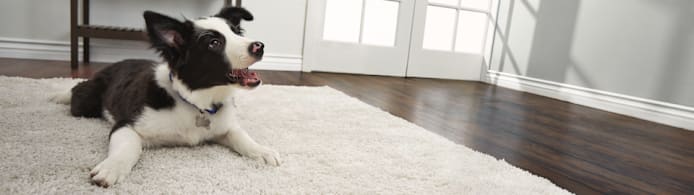
Looking for a trick to teach your dog at home? Try these steps to achieve a puppy push-up!
Puppy Push-Ups: What They Are and How to Teach Them
Puppy push-ups are a dog trick where your pup moves from a sit to a down and back up to a sit — repeatedly, without taking any steps in between. Think of it as the canine version of a squat-thrust: a fluid, back-and-forth movement that looks impressive and keeps your dog's mind working hard.
Before you start, your dog needs to know two foundational cues: sit and down. Once those are solid, you're ready to build on them.
What You're Working Toward
| Element | Detail |
|---|---|
| Goal | Dog moves sit → down → sit multiple times, staying in place |
| Verbal cues | "Sit" and "down" in quick succession — or a single "push-ups" cue once the behavior is fluent |
| Hand signals | Can substitute for or pair with verbal cues |
| Prerequisites | Reliable sit and down on cue |
| Who to go easy on | Older dogs, giant breeds, and any dog with hip or joint concerns — limit repetitions and watch for signs of discomfort |
Three Ways to Teach the Trick
Dogs learn new behaviors through three main training approaches. You may find your dog has a natural preference for one, but a new trick sometimes calls for a different method — so it's worth knowing all three.
1. Luring Use a treat or toy as a prompt to guide your dog's body into position. Hold the treat close to your dog's nose and move it downward to cue the down, then back up and slightly toward you to cue the sit. Your dog's nose leads, and his body follows. This is often the fastest starting point for push-ups.
2. Capturing Wait for your dog to offer a sit or a down on his own — no prompt from you. The moment he does, mark the behavior (with a clicker or a verbal "yes") and reward it. Over time, you can start cueing the behavior right as he's about to offer it naturally. Capturing builds strong, enthusiastic responses because the dog feels like he made the choice.
3. Shaping Break the full push-up sequence into tiny steps and reward each small improvement toward the finished behavior. For example, reward a partial shift of weight toward down, then a full down, then the first hint of rising back to sit. Shaping works especially well for complex or multi-step behaviors that dogs don't tend to offer spontaneously.
Why Bother With Tricks at All?
Foundational cues like "sit," "come" and "stay" are essential — they build polite behavior and can genuinely keep your dog safe in real-world situations. But layering in fun tricks like push-ups does something equally valuable: it deepens the trust and bond between you and your dog. Every training session is a conversation. The more you have, the stronger your relationship becomes.
And yes — it's also just really fun to show off what your dog can do.
Tip: Keep treat rewards small — no larger than a pea — and remember that treats should make up no more than 10% of your dog's daily caloric intake. Choose wholesome, high-quality treats that complement his regular daily diet.
Shaping Approach to Teaching Your Dog Push-ups
- Start with your dog in the down position.
- Verbally praise and reward any lifting of their head or body toward a sit.
- Continue shaping the behavior until your dog lifts into a full sitting position.Verbally praise them and offer a high-value treat.
- Return your dog to down.
- Repeat the steps until your dog lifts into sit almost immediately.
- To reinforce the trick, move to a different area and repeat steps 1-5.
- Continue shaping sit from down and down from sit until your dog is reliably moving from one to the other almost continuously.
- Add the verbal cue “push-up” to mark the desired behavior.
- When finished, release your dog with “go play” or their release cue.
Capturing Approach to Teaching Your Dog Push-ups
- Cue your dog to go to their down position.
- Verbally praise and reward when it’s performed.
- Wait. Most dogs will eventually pop up into a sit from the down position. When they do, verbally mark the behavior and reward.
- Cue for down again, mark and reward when performed.
- Wait again, mark and reward when your dog pops back into a sit.
- Once your dog is reliably completing the down and then popping up into a sit, stop cueing the down and wait to see if the dog offers it. If they do, mark and reward, then wait for them to pop up into a sit. Mark and reward the sit.
- Once your dog is reliably downing then sitting, begin phasing out the reward for down.
- When your dog continues to go into down and sit for a single reward, move a few steps away.
- If your dog follows and sits in front of you, mark and reward.
- Wait. If your dog offers down and sit, mark and give a reward.
- Repeat steps 8-10 until your dog reliably performs the behavior.
- Move a few feet away.
- When your dog moves to you and sits, withhold the mark and wait for a full sit-down-sit movement. When this occurs, mark and reward.
- Continue to practice withholding the verbal mark after the first sit-down-sit to see if your dog will offer another down-sit repetition. When they do, mark and reward.
- Once the behavior is given continually, add the verbal cue “push-up.”
- When finished, release your dog with “go play” or their release cue.
Luring Approach to Teachng Your Dog Push-ups
- Use your lure (or treat) to have your dog sit.
- Lure them to the down position.
- Praise and reward the behavior.
- Give your dog their down cue and lure them to a sit.
- Mark and reward when they lift up into a sit.
- Continue practicing steps 1-5.
- Add verbal cue “push-up” to mark the desired behavior.
- When finished, release your dog with “go play” or their release cue.
Once your dog has mastered the push-up post a video on social media and tag us using #Petco and @Petco. Then move on to more fun tricks like teaching your dog to shake!
Frequently Asked Questions
What age can puppies start learning push-ups? Most puppies are ready to begin basic cue training — including sit and down, the two building blocks of push-ups — between 8 and 12 weeks of age. Because young puppies tire quickly, keep sessions to 2–3 minutes and limit repetitions. Always prioritize low-impact movement for growing joints; if you have any concerns about your puppy's physical development, check with your veterinarian before adding repetitive floor exercises.
How long does it take a dog to learn push-ups? There is no single timeline — it depends on your dog's age, attention span, prior training experience and which method (shaping, capturing or luring) clicks best for him. Many dogs who already know sit and down reliably can string the two cues together within a handful of short daily sessions. Consistency and high-value rewards matter far more than speed.
What if my dog won't lift back up into sit from the down position? This is the most common sticking point. Try switching training methods — if luring isn't working, attempt the shaping approach and reward even the smallest upward movement of your dog's head or chest. Make sure your treat is genuinely high-value (small pieces of real meat or a favorite soft treat often outperform kibble here). If your dog seems reluctant or uncomfortable rising from the floor, rule out hip or joint discomfort with your veterinarian before continuing.
How many push-up repetitions are appropriate in one session? Keep repetitions low — especially for older dogs, giant breeds and any dog with hip or joint issues of any kind. A good rule of thumb is 3–5 clean repetitions per session, with a clear release cue ("go play") at the end. Short, frequent sessions across several days are more effective and far kinder to your dog's body than one long drilling session.
Do push-ups count as physical exercise for my dog? Push-ups are primarily a mental enrichment and bonding activity rather than a cardiovascular workout. The repeated sit-to-down movement does engage core and hindquarter muscles, so dogs with any diagnosed orthopedic condition should only practice this trick with veterinary clearance. For overall fitness, push-ups work best as a complement to regular walks and play — not a replacement.
Can I teach push-ups using only hand signals instead of verbal cues? Absolutely. The article's suggested approach allows for verbal or hand cues for sit and down used in succession, or a single cue — verbal or physical — once the behavior is fluent. Hand signals can be especially useful for dogs with hearing loss or for pet parents who prefer a quieter training style. The mechanics of shaping, capturing and luring work identically whether your prompt is spoken or gestured.
This article was created with assistance from AI tools and reviewed for accuracy by Petco's content team.


