


Two Easy Ways to Start Earning Rewards!
Become a member today! Members-only pricing and offers, personalized care notifications, Vital Care points back on every purchase and more!
 Become a credit card member today!
Earn 2X Pals Rewards points at Petco
when you use Petco Pay!APPLY NOWLearn More About Petco Pay Benefits
Heat Light for Lizards: Choosing the Right Reptile Lamp
Published on September 15th, 2023
Updated on July 16th, 2026

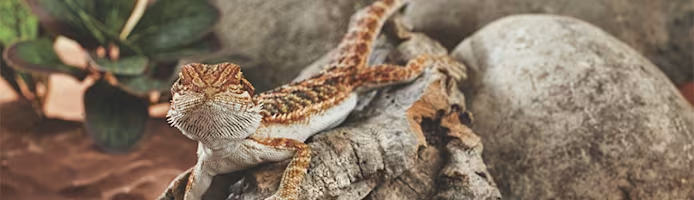
When it comes to reptile habitats, one of the most essential elements to creating a happy home for your pet is including the appropriate type of lighting. Zoo Med helps outline which lights are right for your pet.
Heat Lights for Lizards (and All Reptiles): What They Are and Why They Matter
A heat light for lizards isn't a luxury — it's a life-support system. Unlike dogs or cats, lizards and other reptiles are ectotherms, meaning they cannot generate their own body heat internally. They depend entirely on external heat sources to regulate their body temperature, digest food, fight off illness and stay active. Without the right heat lamp, even a well-fed lizard in a spacious reptile habitat can decline quickly. Merck Veterinary Manual
That's the short answer. Here's everything you need to choose the right setup.
Why Lizards Need a Heat Lamp — Not Just a Warm Room
Room temperature is almost never enough. Most lizard species need a carefully structured thermal gradient inside their habitat — a warm basking zone on one end and a cooler retreat on the other — so they can move between temperatures and self-regulate throughout the day. A heat lamp creates that gradient in a way that a space heater or a warm apartment simply cannot replicate.
Beyond warmth, the right reptile lighting does three critical jobs at once:
- Supports vitamin D3 production. Reptiles need vitamin D3 to absorb calcium and maintain strong, dense bones. The primary source of vitamin D3 for lizards is UVB light — not diet alone. Merck Veterinary Manual
- Drives natural behavior. The correct light cycle influences when your lizard eats, how active he is, whether he'll breed and how he interacts with his environment.
- Maintains digestive health. Reptiles digest food most efficiently at species-appropriate temperatures. A lizard kept too cool may stop eating or fail to process nutrients properly.
Consult your veterinarian if you're unsure what temperature range or UVB output is right for your specific lizard species. Requirements vary widely — a bearded dragon's needs look very different from a crested gecko's.
The 7 Key Features of Reptile Heat Lamps — Explained
Reptile lighting and heating products are not one-size-fits-all. Bulbs differ by the type of light they emit, the heat they produce and the behavior they support. Before you shop, understand these seven features — because your lizard's lamp will likely need to deliver more than one of them.
| Light/Heat Feature | What It Does | When You Need It |
|---|---|---|
| Visible daylight | Establishes a natural day/night cycle; should run 10–14 hours daily, adjusted by species | All lizards; cycle length varies by species |
| Basking heat | Delivers a focused, directed beam of heat to a single basking spot | Species that bask in the wild (bearded dragons, blue-tongued skinks, many agamids) |
| Diffuse heat | Spreads warmth broadly across the upper canopy rather than concentrating it in one spot | Arboreal species or enclosures that need ambient warmth without a hot spot |
| UVB light | Triggers vitamin D3 synthesis in the lizard's skin, enabling calcium absorption and bone health | Nearly all diurnal (daytime-active) lizards; essential, not optional Merck Veterinary Manual |
| UVA light | Stimulates appetite, encourages natural activity patterns and can support breeding behavior | All lizards benefit; often included in full-spectrum bulbs |
| Night heat | Provides gentle, diffused warmth after lights-out without emitting visible light that disrupts sleep | Species whose habitat temperatures drop below the safe minimum at night |
| Variable wattage | Higher-wattage bulbs heat larger enclosures; lower wattage suits smaller habitats or species needing milder warmth | Matched to enclosure size and species temperature requirements |
Basking Bulbs vs. Diffuse Bulbs: A Closer Look
These two heat-delivery styles are the most commonly confused — and choosing the wrong one can leave your lizard either overheated in a single spot or unable to find adequate warmth anywhere in his habitat.
Basking bulbs concentrate heat into a tight, directed beam aimed at a specific surface — a rock, a branch, a slate tile. Your lizard moves into that beam to warm up and moves away when he's reached his target temperature. This mirrors exactly how a lizard would use a sun-drenched rock in the wild. Basking bulbs are the cornerstone heat light for most popular lizard species, including bearded dragons, water dragons and uromastyx.
Diffuse bulbs scatter heat more evenly across a wider area, raising the ambient temperature of the upper canopy without creating an intense focal point. They're well-suited to species that don't bask intensely — some chameleons, for example — or to enclosures where you need to raise the overall background temperature without adding another hot spot.
Many lizard habitats use both: a basking bulb over the warm end and a diffuse or ambient heat source to maintain the cooler side's minimum temperature.
UVB Is Non-Negotiable for Most Lizards
If there's one feature pet parents most often underestimate, it's UVB. Visible warmth is easy to see and feel; UVB is invisible — but its absence has serious consequences. Without adequate UVB exposure, lizards cannot synthesize sufficient vitamin D3, which means they cannot properly absorb dietary calcium. Over time, this leads to metabolic bone disease, a painful and debilitating condition. Merck Veterinary Manual
UVB bulbs have a finite effective lifespan — they stop producing meaningful UVB output well before the bulb burns out visibly. Replace UVB bulbs on the schedule recommended by the manufacturer, even if the bulb still appears to be working.
Night Heating: Keeping Warmth Without Disrupting Sleep
Most lizards follow a strict light/dark cycle, and exposing them to visible light at night can disrupt sleep, stress the animal and interfere with natural behavior patterns. If your lizard's habitat temperature drops below the species-appropriate nighttime minimum after the main lights go off, a night heat source — such as a ceramic heat emitter or a red/black infrared bulb — provides warmth without emitting the visible spectrum that signals "daytime" to your lizard.
Whether you need supplemental night heat depends on your home's ambient temperature and your lizard's species requirements. Your veterinarian or a knowledgeable Petco associate can help you determine if a nighttime heat source belongs in your setup.
Quick-Reference: Matching Lamp Features to Common Lizard Needs
| Lizard Type | Basking Bulb | UVB Bulb | Night Heat | Diffuse Ambient Heat |
|---|---|---|---|---|
| Bearded dragon | Essential | Essential | Often needed | Optional |
| Leopard gecko | Recommended | Low-level UVB beneficial | Often needed | Optional |
| Crested gecko | Mild only | Low-level UVB beneficial | Rarely needed | Recommended |
| Blue-tongued skink | Essential | Essential | Often needed | Optional |
| Green iguana | Essential | Essential | Often needed | Recommended |
Species requirements vary. Always confirm the specific needs of your lizard with your veterinarian or a reptile-knowledgeable Petco associate before finalizing your lighting setup.
Choosing the right reptile lighting and heating combination is one of the most important decisions you'll make for your lizard's wellbeing. The sections below will walk you through how to size your setup, position your lamps correctly and build a lighting schedule that keeps your lizard thriving.
Reptile Heat Light and Lamp Types: What Each Bulb Does
Not all reptile lighting and heating products work the same way — and choosing the wrong heat light for your lizard, tortoise, or snake can leave your pet without the warmth or UV exposure it needs to thrive. Here's a plain-language breakdown of the most common bulb types, what each one provides, and when to use it.
| Lamp | Light Type | Heat Output | UVB/UVA | Best Used For |
|---|---|---|---|---|
| ReptiSun 5.0 | Fluorescent | Low | UVB 5% / UVA | Forest & temperate species needing moderate UVB (e.g., corn snakes, leopard geckos in some setups) |
| ReptiSun 10.0 | Fluorescent | Low | UVB 10% / UVA | Desert species requiring high UVB output (e.g., bearded dragons, Russian tortoises) |
| PowerSun UV | Mercury vapor | High | UVB + UVA + heat | All-in-one basking and UVB for large desert enclosures; replaces separate basking and UV bulbs |
| PowerSun H.I.D. | High-intensity discharge | Very high | UVB + UVA + heat | Large or tall enclosures where maximum UV penetration and intense basking heat are needed |
| ReptiHalogen | Halogen | High | None | Dedicated basking spot heat; pairs with a separate UVB tube for species that need both |
| Nocturnal Infrared Heat Lamp | Infrared (red) | Moderate | None | Nighttime heat without disrupting a reptile's day/night cycle; safe to run continuously after lights-out |
| Daylight Blue | Incandescent (blue-tinted) | Moderate | None | Daytime ambient light and gentle warmth; enhances visible color in the enclosure |
| Nightlight Red | Incandescent (red) | Low–moderate | None | Low-level nighttime heat and dim light; less disruptive to nocturnal behavior than white light |
| Moonlite | Incandescent (blue-white) | Very low | None | Simulates moonlight for nighttime observation without significantly raising enclosure temperature |
| ReptiCare Ceramic Heat Emitter | Ceramic (no light emitted) | Moderate–high | None | 24-hour heat supplementation without any light output; ideal for species sensitive to continuous white or colored light |
Quick rule of thumb: If your reptile is a desert species — think bearded dragons or Russian tortoises — it almost certainly needs a dedicated UVB heat light alongside a basking lamp. Nocturnal species like leopard geckos and ball pythons need heat but can often get by without UVB. When in doubt, consult your veterinarian before finalizing your lighting setup.
Lighting Needs by Reptile: A Species-by-Species Guide
Once you understand what each bulb type does, matching the right heat light to your specific reptile becomes much more straightforward. The species below are among the most common reptile pets, and their lighting requirements differ meaningfully — so it's worth reviewing these before you shop.
Corn Snake
- Daily light: 8–12 hours
- Daytime heat light: A low-wattage incandescent or halogen basking bulb provides a warm side without overheating the enclosure
- Nighttime heat: Switch to a Nocturnal Infrared Heat Lamp or a Ceramic Heat Emitter — never leave white light on continuously, as it disrupts the snake's natural day/night rhythm
- UVB: Not strictly required, though low-level UVB exposure is not harmful Merck Veterinary Manual
Leopard Gecko
- Daily light: 10–12 hours
- Daytime heat light: An incandescent basking bulb works well during daylight hours to create a warm basking zone
- Nighttime heat: A Ceramic Heat Emitter or Nocturnal Heat Bulb can run at all hours without emitting visible light that would disturb this nocturnal species
- UVB: Because leopard geckos are nocturnal, they do not require UVB lighting — but maintaining a consistent photoperiod (light/dark cycle) is still important for their overall wellbeing
Russian Tortoise
- Daily light: 12–14 hours of UVB lighting
- UVB requirement: High — a ReptiSun 10.0 tube or a mercury vapor bulb like the PowerSun UV is appropriate for this desert-adapted species
- Why it matters: UVB exposure is essential for Russian tortoises to synthesize vitamin D3, which drives calcium absorption and supports shell and bone health Merck Veterinary Manual
- Basking heat: Pair your UVB source with a dedicated basking lamp (halogen or incandescent) to create a proper thermal gradient
Bearded Dragon
- Daily light: 10–12 hours of full-spectrum UVB lighting
- UVB requirement: High — a ReptiSun 10.0 or PowerSun UV mercury vapor bulb is well-suited to this desert species
- Daytime basking: An incandescent or halogen day bulb creates the intense basking spot bearded dragons need to regulate their body temperature
- Nighttime heat: Transition to a Ceramic Heat Emitter or Nocturnal Heat Bulb after lights-out; white light should never remain on continuously
Ball Python
- Daily light: 8–12 hours
- Daytime heat light: A low-wattage incandescent or halogen bulb provides ambient warmth; a Daylight Blue bulb is a suitable option
- Nighttime heat: Use a Nocturnal Infrared Heat Lamp or Ceramic Heat Emitter — white light must never be left on continuously with ball pythons, as it stresses this crepuscular species
- UVB: Not required, though a consistent photoperiod supports natural behavior patterns Merck Veterinary Manual
Species Lighting Quick-Reference
| Reptile | Hours of Light/Day | UVB Required? | Safe Nighttime Heat Option |
|---|---|---|---|
| Corn snake | 8–12 hrs | No | Infrared or Ceramic Heat Emitter |
| Leopard gecko | 10–12 hrs | No | Ceramic Heat Emitter or Nocturnal bulb |
| Russian tortoise | 12–14 hrs | Yes (high UVB) | Ceramic Heat Emitter |
| Bearded dragon | 10–12 hrs | Yes (high UVB) | Ceramic Heat Emitter or Nocturnal bulb |
| Ball python | 8–12 hrs | No | Infrared or Ceramic Heat Emitter |
Selecting the right heat light for your lizard, tortoise, or snake is one of the most impactful decisions you'll make for your reptile's habitat. With the right combination of daytime basking heat, UVB output (where needed), and nighttime warmth, you give your pet the conditions it needs to regulate its body temperature, absorb nutrients, and behave naturally. Browse reptile lighting and heating options at Petco to find bulbs suited to your specific species — and if you're ever unsure whether your current setup meets your reptile's needs, consult your veterinarian for personalized guidance.


Heat Light for Lizards & Reptiles: Lamp Comparison Guide
Choosing the right heat light for your lizard or reptile starts with matching the lamp type to your pet's species, habitat size and biological needs. Use this table to quickly compare the most common reptile heat lamp options — then cross-reference with your specific reptile's requirements below.
| Lamp Type | UVB Output | Heat Output | Best For | Typical Wattage Range | Day / Night Use |
|---|---|---|---|---|---|
| Full-Spectrum UVB Fluorescent (e.g., ReptiSun 5.0) | 5% UVB | Low–moderate ambient heat | Corn snakes, crested geckos, tropical species needing moderate UVB | 15–26 W | Day only |
| High-Output UVB Fluorescent (e.g., ReptiSun 10.0) | 10% UVB | Low ambient heat | Bearded dragons, Russian tortoises, desert species requiring intense UVB | 15–26 W | Day only |
| Mercury Vapor Bulb (e.g., PowerSun UV) | 5–10% UVB | High basking heat | Large habitats; bearded dragons, monitors, iguanas needing combined UVB + heat in one bulb | 100–160 W | Day only |
| Halogen Basking Bulb (e.g., ReptiHalogen) | None | Focused, intense basking heat | Bearded dragons, blue-tongued skinks, any lizard requiring a defined basking spot | 25–100 W | Day only |
| Incandescent Daylight Bulb | None | Moderate focused heat | Leopard geckos (daytime basking), ball pythons, corn snakes | 40–100 W | Day only |
| Ceramic Heat Emitter (CHE) | None | Steady, diffuse radiant heat; no visible light | All species needing 24-hour heat maintenance without disrupting night cycle | 60–150 W | Day or night |
| Nocturnal / Infrared Red or Blue Bulb | None | Low diffuse heat; minimal visible light | Corn snakes, ball pythons, leopard geckos — nighttime heat without sleep disruption | 25–75 W | Night only |
| Moonlite / Deep Blue Nocturnal Bulb | None | Very low heat | Observation lighting; nocturnal species; supplemental nighttime warmth in warm climates | 15–25 W | Night only |
| HID (High-Intensity Discharge) (e.g., PowerSun H.I.D.) | High UVB | Very high basking heat | Large enclosures; large monitors, tortoises, iguanas; professional-grade setups | 70–150 W | Day only |
How to read this table: Match your reptile's UVB requirement first, then confirm the wattage suits your habitat size. A 40-gallon habitat generally needs less wattage than a 120-gallon setup to reach the same basking temperature. Always verify actual basking-spot and ambient temperatures with a digital thermometer or temperature gun — never rely on wattage alone.
Key rule: Reptiles are ectotherms — they rely entirely on external heat sources to regulate body temperature. Providing the wrong lamp type or wattage can lead to thermal stress, metabolic bone disease from inadequate UVB, or dangerous overheating. Merck Veterinary Manual
Frequently Asked Questions
Do all lizards need a UVB heat light? Most diurnal (daytime-active) lizards — including bearded dragons, Russian tortoises and iguanas — require UVB lighting to synthesize vitamin D3, which is essential for calcium absorption and bone health. Nocturnal species such as leopard geckos have a reduced UVB requirement and can often be maintained with a ceramic heat emitter or incandescent basking bulb for daytime warmth alone. When in doubt, consult your veterinarian about your specific species' needs. Merck Veterinary Manual
How many hours a day should a reptile heat lamp run? Most reptiles thrive on 10–14 hours of visible daylight lighting per day, depending on species and season. Corn snakes and ball pythons do well on 8–12 hours; bearded dragons and Russian tortoises typically need 10–14 hours of full-spectrum UVB light daily. Nighttime heat should be maintained with a ceramic heat emitter or nocturnal bulb — never leave a white or daylight bulb on continuously, as this disrupts your reptile's natural sleep cycle.
What wattage heat lamp does my lizard need? Wattage depends on habitat size, ambient room temperature and species. A small 20-gallon habitat for a juvenile leopard gecko may only need a 40–60 W incandescent bulb, while a large bearded dragon enclosure (75+ gallons) may require a 100 W halogen basking bulb plus a separate UVB fluorescent tube. Always measure the actual basking-spot temperature (typically 95–110°F for desert species) with a thermometer rather than assuming wattage alone is sufficient.
Can I use a regular household bulb as a reptile heat lamp? A standard incandescent household bulb can provide supplemental heat in a pinch, but it does not emit UVB radiation, which is critical for most diurnal lizards. It also lacks the spectral output that supports natural feeding and activity behaviors associated with UVA light. For any long-term setup, use bulbs specifically designed for reptile habitats to ensure your pet receives the correct light spectrum and safe, consistent heat output.
Is a heat lamp the same as a UVB lamp? No — these are distinct functions that are sometimes combined in one bulb and sometimes not. A basking or heat lamp (halogen, incandescent, ceramic heat emitter) primarily raises temperature. A UVB lamp emits ultraviolet-B radiation that enables vitamin D3 synthesis. Mercury vapor bulbs (such as the PowerSun UV) combine both functions in a single bulb. Many setups use two separate fixtures — one for heat, one for UVB — to give you independent control over each. Merck Veterinary Manual
What should I do if my reptile seems lethargic or stops eating after a lamp change? Lethargy, appetite loss and unusual hiding can all signal that temperatures or light cycles are off — but they can also indicate illness unrelated to lighting. Check basking-spot and ambient temperatures immediately with a calibrated thermometer. If temperatures are within the correct range for your species and the behavior continues for more than a day or two, contact your veterinarian. Do not attempt to diagnose or treat your reptile at home.
Frequently Asked Questions
Do all lizards need a heat light? Most lizards do need some form of supplemental heat because they are ectotherms — they rely on external sources to regulate their body temperature rather than generating their own. However, the type and intensity of heat light varies by species. Nocturnal lizards like leopard geckos can often be kept warm with a ceramic heat emitter rather than a visible basking bulb, while diurnal species like bearded dragons require a dedicated basking lamp during daylight hours. Consult your veterinarian to confirm the right setup for your specific lizard. Merck Veterinary Manual
What is the difference between a UVB light and a heat light for lizards? These two lamp types serve distinct purposes and should not be confused. A heat light (such as a basking bulb or ceramic heat emitter) raises the ambient and basking-spot temperature so your lizard can thermoregulate. A UVB light emits ultraviolet-B radiation, which enables your lizard's skin to synthesize vitamin D3 — a nutrient essential for calcium absorption and strong bones. Many diurnal lizards need both types running simultaneously during daylight hours; a single bulb does not typically fulfill both roles unless it is a specialized mercury vapor or high-intensity discharge lamp. Merck Veterinary Manual
How many hours a day should a lizard's heat lamp be on? The correct photoperiod depends on the species. As a general guideline, most diurnal lizards thrive with 10–14 hours of combined visible daylight and basking heat per day, while nocturnal species such as leopard geckos do well with 10–12 hours. Bearded dragons and Russian tortoises, for example, typically need 10–12 and 12–14 hours of full-spectrum UVB lighting per day, respectively. White or visible-spectrum lights should never be left on continuously overnight; switch to a nocturnal infrared or ceramic heat emitter to maintain nighttime temperatures without disrupting your lizard's sleep cycle.
Can I use a regular household bulb as a heat light for my lizard? Standard incandescent household bulbs can produce some warmth, but they are not calibrated for reptile habitats and may not reach the precise basking temperatures your lizard needs. They also lack UVB output entirely. Reptile-specific basking bulbs are engineered to deliver focused, measurable heat at appropriate wattages for different habitat sizes, making it far easier to maintain the correct thermal gradient. Using an unverified bulb risks either overheating or under-heating your lizard's habitat — both of which can affect feeding, behavior and long-term health.
Is it safe to leave a ceramic heat emitter on all night? Ceramic heat emitters (CHEs) emit heat without producing visible light, making them a widely recommended option for maintaining overnight temperatures without disrupting a lizard's natural light cycle. They are generally considered suitable for continuous use, but you should always pair them with a thermostat to prevent overheating, and inspect the fixture and bulb regularly for wear. If you notice unusual lethargy, appetite changes or signs of thermal burns on your lizard, contact your veterinarian promptly.
What temperature should a lizard's basking spot be? Ideal basking temperatures vary considerably by species and should be researched carefully for your particular lizard. As a broad reference, many common pet lizards — such as bearded dragons — require a basking spot in the range of 95–110 °F, with a cooler side of the habitat in the 75–85 °F range so they can self-regulate. Always use a reliable thermometer (ideally a digital probe or infrared temperature gun) rather than estimating by touch. Your veterinarian or a knowledgeable Petco associate can help you dial in the correct gradient for your species. Merck Veterinary Manual
This article was created with assistance from AI tools and reviewed for accuracy by Petco's content team.


