


Two Easy Ways to Start Earning Rewards!
Become a member today! Members-only pricing and offers, personalized care notifications, Vital Care points back on every purchase and more!
 Become a credit card member today!
Earn 2X Pals Rewards points at Petco
when you use Petco Pay!APPLY NOWLearn More About Petco Pay Benefits
Reptile Habitat Setup Guide | Petco
Published on January 20th, 2023
Updated on July 16th, 2026

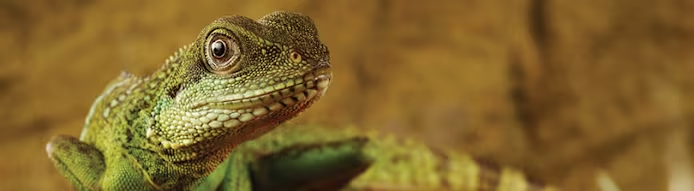
Learn how to setup your reptiles terrarium to ensure your reptile lives a wholesome & happy life. Shop at your local Petco for all reptile terrarium needs.
How to Set Up a Reptile Habitat: What Your Pet Needs to Thrive
Setting up a proper reptile habitat means more than making a terrarium look like the wild — it has to function like it, too. Reptiles have precise biological requirements for temperature, light, humidity and space that must be met from day one. Use the checklist below as your starting point, then dial in the details for your specific species.
Reptile Habitat Setup Checklist
- [ ] Appropriately sized enclosure with a secure lid
- [ ] Heating source(s) to establish a thermal gradient
- [ ] UVB/UVA lighting on the correct schedule for your species
- [ ] Species-appropriate substrate (bedding)
- [ ] Humidity controls (hygrometer, mister or humidifier)
- [ ] Decorations and hides that support natural behavior
- [ ] Thermometer to monitor temperatures at both ends of the enclosure
Space: Bigger Is Always Better
A larger home is always preferred for your reptile. Beyond simple comfort, a spacious enclosure is essential because it gives you room to establish a proper thermal gradient — a warm basking zone on one end and a cooler resting zone on the other. Without enough space, your reptile cannot move between temperature zones to regulate its body temperature, which is a core biological need. Browse reptile enclosures and supplies at Petco to find the right size for your species.
Temperature: The Non-Negotiable Foundation
Reptiles are ectotherms — they cannot generate their own body heat and depend entirely on their environment to regulate their temperature Merck Veterinary Manual. This makes a reliable heating setup the single most critical element of any reptile habitat.
General temperature guidelines for most reptiles:
| Zone | Typical Target Range |
|---|---|
| Ambient (cool side) | 70–85°F (varies by species) |
| Basking spot | 95–110°F+ (varies by species) |
| Nighttime low | Must not drop below species minimum |
These ranges vary by species, time of day and season — always research your specific reptile or ask a knowledgeable Petco associate for precise targets Merck Veterinary Manual.
Heating options to consider:
- Basking lamps — mounted on one end of the enclosure to create the warm zone; your reptile will move in and out of the basking area to thermoregulate, just as basking species do in the wild
- Ceramic heating elements — produce heat without light, making them ideal for maintaining overnight temperatures without disrupting your pet's day/night cycle
- Under-tank heaters — provide gentle belly heat, particularly useful for species that absorb warmth from the ground
- Tubular heaters and heat pads — additional options for fine-tuning ambient temperatures
Always confirm that the cool-side ambient temperature does not fall below the low end of your reptile's ideal range even when all lights are off. Ceramic heating elements and under-tank heaters are especially useful here because they maintain warmth around the clock without requiring continuous light. Find reptile lighting and heating options at Petco to build the right setup for your pet.
Safety note: Heat lamps must always be mounted well above the enclosure or fitted with a protective barrier. Direct contact with a heat lamp can cause serious burns. Never leave heating equipment unsecured.
Lighting: More Than Just Brightness
Lighting requirements vary significantly by species, so this is one area where research really pays off.
UVB lighting is essential for many diurnal (daytime-active) reptiles, including lizards like Collared Lizards and Green Iguanas. These species need UVB exposure to synthesize vitamin D3, which in turn allows them to absorb calcium properly . Standard household light bulbs cannot provide UVB — you must use a bulb specifically rated for reptile UVB output.
Key UVB setup rules:
- Your reptile needs to bask within 12 inches of the UVB bulb to absorb it effectively
- Always place a physical barrier (mesh or guard) between the bulb and your pet to prevent burns
- Nocturnal reptiles generally require more subdued lighting — bright UVB setups are not appropriate for all species
- Follow a consistent light schedule that mirrors your reptile's natural day/night cycle
Humidity: Matching Your Reptile's Native Climate
Humidity needs differ dramatically across species, and getting this wrong can affect your reptile's ability to shed, breathe and stay hydrated Merck Veterinary Manual.
Examples of humidity variation by species type:
| Species Type | Humidity Needs | Notes |
|---|---|---|
| Tropical species (e.g., Green Iguana) | High | Requires consistent moisture in the air |
| Chameleons | Moderate to high | Often drink from water droplets on foliage or habitat walls, not standing water |
| Desert species (e.g., Bearded Dragon) | Low | Excess humidity can cause respiratory issues |
How to manage humidity in your reptile's home:
- Use a hygrometer to monitor moisture levels at all times
- Raise humidity by misting the air or enclosure walls with water regularly
- Provide standing or running water sources where appropriate for your species
- Use commercially available humidifiers, misters and aeration devices to maintain consistent levels
- Decorative mini-waterfalls are a popular option — they add visual interest to the vivarium while also contributing to ambient humidity
- Adjust ventilation and temperature to fine-tune moisture levels; more airflow lowers humidity, less airflow raises it
Substrate: What Goes on the Floor Matters
The material lining the bottom of your reptile's home affects humidity, hygiene, comfort and safety. Species-appropriate substrate is essential — what works for a desert tortoise is wrong for a tropical gecko.
Substrate safety warning — avoid these materials:
- Cedar and pine shavings — the natural oils in these woods can irritate a reptile's skin and respiratory tract and should never be used
Always research the substrate that matches your specific reptile's native environment, and replace it on a regular schedule to prevent bacterial buildup.
Decorations, Hides and Enrichment
Decorations do more than make a terrarium look appealing — hides, branches and climbing structures support natural behaviors and reduce stress. However, not all materials are safe.
What to avoid inside your reptile's home:
| Material | Risk | What to Do Instead |
|---|---|---|
| Living or freshly cut wood | Sap can harm your reptile; in aquatic or semi-aquatic setups, sap can contaminate water | Use commercially prepared, reptile-safe wood |
| Items collected outdoors (rocks, driftwood, branches) | May harbor dangerous bacteria, parasites or organisms | Only use after proper decontamination (see below) or purchase reptile-safe décor |
| Metal objects (especially copper, zinc, lead) | Heavy metals are toxic and can cause gradual poisoning, particularly in humid or aquatic environments | Avoid all metal decorations in moist habitats |
| Toxic plants | Many common plants cause reactions ranging from skin irritation to life-threatening illness the ASPCA | Use only plants confirmed safe for your species |
If you want to use found driftwood or rocks, follow this decontamination process:
- Soak the item in a diluted bleach-and-water solution for 24 hours
- Remove and soak in clean, fresh water for another 24 hours to fully remove bleach residue
- Allow to dry completely before placing in the enclosure
Signs a plant may be causing a toxic reaction in your reptile the ASPCA:
- Swelling, especially around the mouth
- Breathing difficulties
- Vomiting
- Skin irritation
If you observe any of these signs, contact your veterinarian immediately. Plant toxicity reactions can be life-threatening and require prompt professional care.
Filters: Required for Aquatic and Semi-Aquatic Setups
A filter is not necessary in a dry terrarium, but it is essential in any vivarium, aquatic or semi-aquatic setup. Filters remove bacteria and toxins that accumulate in standing water and in the filter media itself. Change your filter on the schedule listed on the product label — and if the water looks cloudy or dirty before that date, change it early.
A Final Word Before You Build
Every reptile species has its own precise requirements, and the guidelines above are a starting point — not a complete prescription. Before you finalize your setup, research the specific needs of your reptile's species, and don't hesitate to consult a knowledgeable Petco associate in store. For any health concerns, unusual behavior or questions about your individual pet's needs, always bring those to your veterinarian. Getting the habitat right from the beginning is one of the most meaningful things you can do for your reptile's long-term wellbeing.
Common Reptile Habitat Requirements at a Glance
Different reptiles have vastly different environmental needs. Use this table as a starting point, then research your specific species and consult your veterinarian to dial in the details.
| Reptile | Enclosure Size (minimum) | Basking Temp | Cool-Side Temp | Humidity | Substrate | UVB Needed? |
|---|---|---|---|---|---|---|
| Leopard Gecko | 20-gal long | 88–92°F | 70–75°F | 30–40% | Paper towel, tile or reptile carpet | Low (5.0 UVB) |
| Bearded Dragon | 40-gal (adult: 75–120-gal) | 100–110°F | 80–85°F | 30–40% | Reptile sand mat, ceramic tile | Yes (10.0 UVB) |
| Ball Python | 40-gal (adult) | 88–92°F | 76–80°F | 60–80% | Coconut fiber, cypress mulch | Low to none |
| Corn Snake | 20-gal (adult: 40-gal) | 85–88°F | 72–78°F | 40–60% | Aspen shavings, coconut fiber | Low to none |
| Blue-Tongued Skink | 40–55-gal | 95–105°F | 75–80°F | 40–60% | Topsoil-sand mix, coconut fiber | Yes (10.0 UVB) |
| Green Iguana | 6 ft × 3 ft × 6 ft (adult) | 95–100°F | 80–85°F | 65–75% | Reptile bark, coconut fiber | Yes (10.0 UVB) |
| Red-Eared Slider | 75-gal aquatic setup | Basking dock: 85–95°F | Water: 75–80°F | N/A (aquatic) | Aquatic gravel, bare-bottom | Yes (5.0 UVB) |
| Russian Tortoise | 4 ft × 8 ft enclosure | 95–100°F | 70–80°F | 30–50% | Sandy loam, topsoil mix | Yes (10.0 UVB) |
| Crested Gecko | 20-gal tall | 78–82°F | 72–75°F | 70–80% | Coconut fiber, peat-moss mix | Low (5.0 UVB) |
| Veiled Chameleon | 24 × 24 × 48 in screen | 85–95°F | 70–80°F | 50–70% (misted foliage) | N/A (arboreal; no floor contact) | Yes (5.0 UVB) |
How to read this table: Temperatures reflect the warm basking zone and the cooler resting zone your reptile needs to thermoregulate. Humidity ranges are daytime targets; some species tolerate a nighttime dip. Substrate choices listed exclude cedar and pine shavings, which contain oils that can irritate reptile skin and respiratory systems. Merck Veterinary Manual
A note on UVB: UVB bulbs degrade before they visibly dim. Replace them every 6–12 months even if the light still appears bright, and position them so your reptile can bask within 12 inches of the bulb's surface. Always use a mesh or screen barrier — never glass — between the bulb and your reptile to allow UVB rays to pass through while preventing burns. Merck Veterinary Manual
Frequently Asked Questions
What temperature does a reptile habitat need to be? Most reptiles need a basking zone between 85–110°F (depending on species) and a cool side between 70–85°F so they can move between areas to regulate their body temperature — a process called thermoregulation. Because reptiles are cold-blooded and cannot generate their own body heat, an accurate thermal gradient is one of the most critical elements of any reptile home. Always verify the exact range for your specific species with your veterinarian. Merck Veterinary Manual
How do I control humidity in a reptile habitat? Humidity is managed through a combination of ventilation, misting, standing or drip water sources, and substrate choice. Use a hygrometer to monitor levels daily. Commercially available misters and humidifiers make it easier to hold a consistent range. Tropical species like green iguanas and veiled chameleons need higher humidity (65–80%), while desert species like Russian tortoises and leopard geckos thrive at 30–50%.
What substrate is safe for reptiles? Safe substrate options vary by species but commonly include coconut fiber, cypress mulch, aspen shavings, reptile-grade sand mats and ceramic tile. Cedar and pine shavings should always be avoided — the natural oils in these woods can irritate a reptile's skin and respiratory tract. Never use soil, sand or wood collected from outdoors, as it may harbor parasites, pesticides or harmful bacteria. Merck Veterinary Manual
Are live plants safe to put in a reptile habitat? Some live plants are safe and even beneficial for humidity and enrichment, but many common houseplants are toxic to reptiles. Signs of a reaction include swelling around the mouth, breathing difficulty, vomiting and skin irritation — all of which require immediate veterinary attention. Never place plants collected from outdoors into your reptile's home. Consult your veterinarian or the ASPCA Animal Poison Control Center before introducing any new plant. the ASPCA
Can I use rocks or driftwood I found outside in my reptile's habitat? Wild-collected rocks and driftwood can harbor dangerous bacteria, parasites and organisms that put your reptile at serious risk. If you choose to use them, soak the items in a diluted bleach-and-water solution for 24 hours, then soak in clean water for another 24 hours to remove all bleach residue before placing them in the enclosure. When in doubt, opt for commercially prepared decorations that are confirmed safe for reptile use.
When should I call a veterinarian about my reptile's habitat setup? Consult a reptile-knowledgeable veterinarian any time you are unsure about temperature, humidity or lighting requirements for your specific species, if your reptile shows signs of illness (lethargy, loss of appetite, abnormal shedding or swelling), or if you suspect toxic plant or metal exposure. Heavy metals such as copper, zinc and lead — sometimes found in metal decorations — can cause gradual poisoning and require prompt veterinary care. the ASPCA the AVMA
Frequently Asked Questions About Reptile Habitat Setup
What size habitat does my reptile need? A larger habitat is always preferred — it gives your reptile room to move, explore and thermoregulate properly by choosing between warmer and cooler zones. As a general rule, the enclosure should be at least as long as your reptile's full body length, though species-specific requirements vary significantly. Always research your particular species or ask a knowledgeable Petco associate before purchasing an enclosure.
What temperature should a reptile habitat be? Most reptiles need an ambient temperature between 70–85°F, with a dedicated basking area that can reach above 100°F. Because reptiles are cold-blooded and cannot regulate their own body temperature, a thermal gradient — a warm end and a cool end — is essential for digestion, activity and rest. Temperature needs shift by species, time of day and season, so confirm the exact range for your reptile with your veterinarian or a species care guide. Merck Veterinary Manual
What lighting do reptiles need, and how often should it run? Diurnal (daytime-active) reptiles such as Green Iguanas and Collared Lizards require full-spectrum UVB lighting to synthesize vitamin D3, which supports calcium absorption. Standard household bulbs cannot provide UVB. Position the UVB bulb so your reptile can bask within 12 inches of it, and use a barrier to prevent burns. Most reptiles benefit from a 10–12 hour light cycle that mimics natural daylight. Nocturnal species need far more subdued lighting. Replace UVB bulbs every 6 months even if they still appear to glow, as UVB output degrades before visible light does.
How often should I change or clean the substrate in a reptile habitat? Spot-clean the substrate (the sand, gravel, coconut fiber or other ground covering in your reptile's home) daily to remove waste. A full substrate replacement is typically recommended every 4–8 weeks, though heavily soiled enclosures may need more frequent changes. Keeping substrate clean reduces bacterial growth and helps maintain appropriate humidity levels. Merck Veterinary Manual
How do I control humidity in a reptile habitat? Humidity is managed through a combination of ventilation, temperature and water introduction. Use a hygrometer to monitor levels consistently. You can raise humidity by misting the enclosure with water, adding a shallow water dish, or using a commercially available humidifier or mister. Tropical species like Green Iguanas need high humidity, while desert species like bearded dragons thrive in drier conditions. Some chameleons will only drink water droplets from foliage or enclosure walls rather than standing water, so always confirm your species' specific needs.
Are all plants and decorations safe to use in a reptile habitat? No — many common plants are toxic to reptiles and can cause reactions ranging from skin irritation to life-threatening respiratory distress. Never place plants, branches, rocks or driftwood collected from outdoors into your reptile's home, as they may carry harmful bacteria, parasites or chemical residues. If you choose to use found driftwood or rocks, soak them in a diluted bleach-and-water solution for 24 hours, then rinse in clean water for another 24 hours before use. If your reptile shows swelling around the mouth, breathing difficulty, vomiting or skin irritation after contact with any plant or decoration, contact your veterinarian immediately. the ASPCA
This article was created with assistance from AI tools and reviewed for accuracy by Petco's content team.
Related Articles


