


Two Easy Ways to Start Earning Rewards!
Become a member today! Members-only pricing and offers, personalized care notifications, Vital Care points back on every purchase and more!
 Become a credit card member today!
Earn 2X Pals Rewards points at Petco
when you use Petco Pay!APPLY NOWLearn More About Petco Pay Benefits
Reptile UVB Light Guide: What Every Pet Parent Needs to Know
Published on November 3rd, 2021
Updated on July 16th, 2026

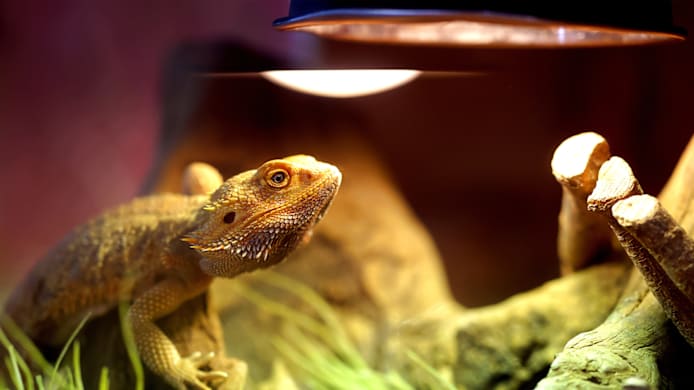
Learn the importance of UVB light for your reptiles and the right reptile lights for your pet’s habitat.
Setting up your reptile’s habitat can present a few questions – especially when it comes to which lighting options you will need. With the help of Zoo Med, we’ve compiled the following information and recommendations in order to ensure your reptiles have a happy home.
Importance of Reptile UVB Lights
Having the correct reptile UV lighting, often including UVB light, in your companion’s habitat is extremely important as certain species need UVB to synthesize Vitamin D3 which allows them to properly absorb and metabolize calcium. Different lighting and heating bulbs help create the proper environment as reptiles use external sources to regulate their body temperature, while also promoting overall health. However, while all reptiles require the right temperature, according to their species’ needs in order to remain healthy, nocturnal animals do not have UVB requirements.
What is UVB Lighting?
UVB, or ultraviolet B light, is part of the sun’s natural light spectrum. However, you will need to provide the reptiles inside your home with a source of UVB since they will not be garnering it from the sun. Most reptiles require exposure to UVB in order to produce vitamin D3. UVB wavelength allows reptiles the ability to regulate their own Vitamin D3 levels naturally, enabling them to properly absorb calcium. Without sufficient UVB, these reptiles can develop metabolic bone disease, bone softening and deformation, or other serious illnesses.
What is the UV Index (UVI)?
The UV Index (UVI) is a unitless measure of UV radiation. In this index, the wavelengths measured are those that contribute most to a reptile’s ability to manufacture their own vitamin D3. This is important because not all UVB wavelengths are equal in their ability to promote vitamin D synthesis.
What Are Ferguson Zones?
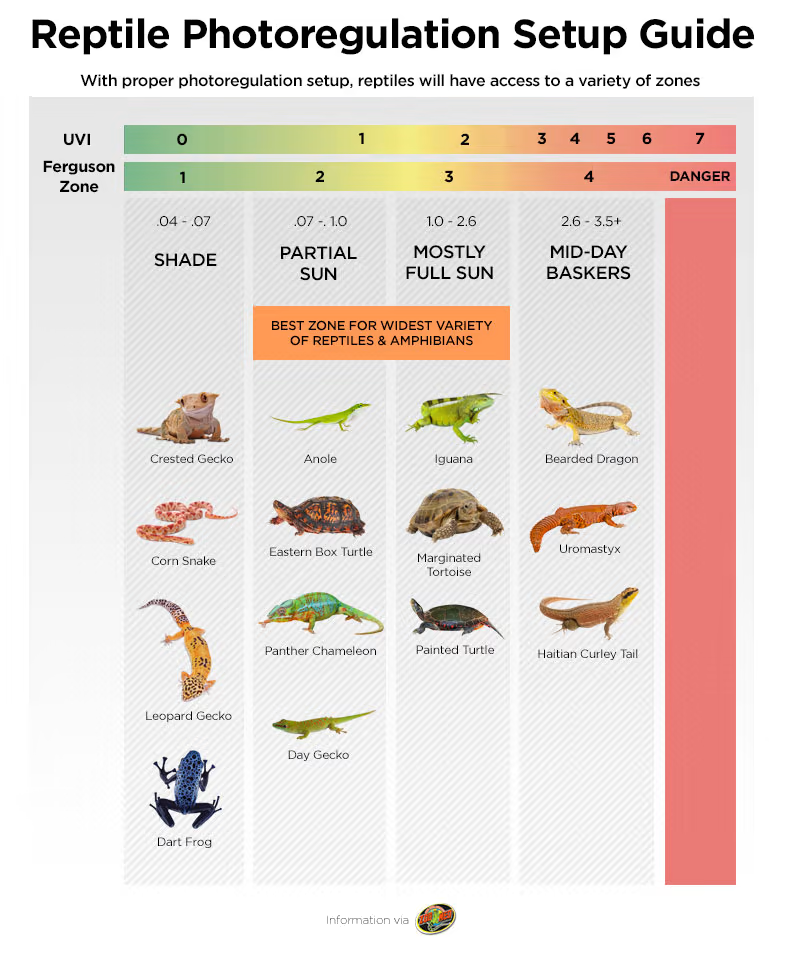
Dr. Ferguson, a renowned herpetologist and researcher, observed and documented the daytime activities of many different reptile species and recorded the UV Index they were found in. Over time, and with the contributions of many other dedicated researchers, these observations and recordings have been used to create the “Ferguson Zones” we use today when recommending lighting zones for reptiles.

What Reptile Lighting Zone is Right for My Animal?
It’s important to keep in mind that every reptile habitat should provide a photo gradient with zones that go all the way down to 0 UVI, which allows animals to photo-regulate, or control their exposure to UVB. The upper zone limit should be based on your animal’s unique natural basking behavior. To help you determine what zone is your pet’s upper limit, you can reference the chart below. If your specific pet isn’t listed, you can also get expert advice at your local Petco location.
Reptile UVB Lights: Choosing a Bulb and Placement
Once you have determined what your pet’s upper zone and UVI limits are, you then can research what UVB bulb will suit your needs. To make this determination, you will need to consider not only your pet’s species and recommended zone, but also the habitat you have for your reptile. The size and type of the habitat will help you determine what bulb will give your pet the needed light spectrum throughout its home. The guide below will help you narrow down what bulb you can look to investigate further.

The other important consideration when searching for the right bulb is the optimal distance from animal to bulb.

To help create the different spectrum of UVI your pet needs, adding accessories like hideaways, rocks, and larger wood pieces can allow your pet to hide from the light or bask in it – depending on how they feel.
If you have further questions about reptiles and their habitats, discover additional information in our reptile guide and find the right reptile UVB light for your pet, today.
Frequently Asked Questions
Do all reptiles need UVB light? No — not all reptiles require UVB lighting. Diurnal (daytime-active) reptiles such as bearded dragons, tortoises and many lizards depend on UVB to synthesize vitamin D3 and absorb calcium properly. Nocturnal species, however, do not have the same UVB requirements because they are naturally active outside peak UV hours. Always research your specific species' needs, and consult your veterinarian if you are unsure which lighting setup is right for your reptile. Merck Veterinary Manual
Which reptiles need UVB the most? Reptiles that bask openly in sunlight in the wild — including bearded dragons, water dragons, uromastyx, chameleons, tortoises and many skinks — have the highest UVB requirements and typically fall into Ferguson Zones 3 or 4. Species that spend more time in shaded or forested environments, such as leopard geckos and crested geckos, have lower UVB needs but can still benefit from low-level exposure.
What happens if a reptile doesn't get enough UVB? Without adequate UVB exposure, diurnal reptiles cannot produce sufficient vitamin D3, which means they cannot properly absorb and metabolize calcium. Over time this leads to metabolic bone disease (MBD) — a serious condition characterized by bone softening, skeletal deformities, weakness and, in severe cases, death. Early signs can include lethargy, tremors and difficulty moving. If you notice any of these symptoms, contact your veterinarian promptly.
How many hours of UVB light does a reptile need per day? Most diurnal reptiles thrive with 10–12 hours of UVB light per day, which mimics a natural daylight cycle. Using a timer helps maintain a consistent photoperiod, which supports healthy circadian rhythms, appetite and behavior. The exact duration can vary by species and season, so confirm the ideal schedule with your veterinarian or a knowledgeable Petco associate. Merck Veterinary Manual
How often should UVB bulbs be replaced? UVB bulbs lose their UV-emitting capacity well before they stop producing visible light — meaning a bulb can appear to be working while delivering little to no beneficial UVB. Most manufacturers recommend replacing UVB bulbs every 6–12 months depending on bulb type and brand. Using a UV meter (solarmeter) is the most reliable way to confirm your bulb is still producing adequate UVI levels for your reptile's Ferguson Zone.
Can a reptile get too much UVB? Yes. Excessive or unregulated UVB exposure can cause eye damage and skin irritation in reptiles. This is why every habitat should include a photo gradient — areas ranging from full basking UVI down to 0 UVI — so your reptile can self-regulate its own exposure by moving in and out of the light as needed. Providing hideaways, rocks and wood pieces gives your reptile the ability to seek shade whenever it chooses. Merck Veterinary Manual
Reptile UVB Requirements by Species: Quick-Reference Guide
Different reptile species need very different levels of UVB exposure based on where they live and how they behave in the wild. Use this table as a starting point — then dial in placement and duration with the help of your Ferguson Zone chart and your veterinarian.
| Species | Ferguson Zone | Target UVI (Basking Spot) | Daily UVB Duration | Notes |
|---|---|---|---|---|
| Bearded dragon | Zone 3 | 2.9 – 7.4 UVI | 10 – 12 hrs | High-output T5 HO bulb recommended; strong baskers |
| Leopard gecko | Zone 1 | 0.4 – 0.6 UVI | 10 – 12 hrs | Crepuscular; low UVB acceptable but still beneficial |
| Crested gecko | Zone 1–2 | 0.4 – 1.4 UVI | 10 – 12 hrs | Nocturnal tendencies; low-output bulb or shade-heavy setup |
| Ball python | Zone 1 | 0.4 – 0.6 UVI | 10 – 12 hrs | Primarily nocturnal; UVB not required but low-level exposure is not harmful |
| Blue-tongued skink | Zone 3 | 2.9 – 7.4 UVI | 10 – 12 hrs | Active basker; treat similarly to bearded dragon |
| Russian tortoise | Zone 3–4 | 2.9 – 9.5 UVI | 12 – 14 hrs | High UVB demand; outdoor time beneficial when climate allows |
| Red-eared slider | Zone 2–3 | 1.0 – 2.9 UVI | 10 – 12 hrs | Semi-aquatic; UVB lamp positioned above dry basking platform |
| Green iguana | Zone 3–4 | 2.9 – 9.5 UVI | 12 – 14 hrs | Requires very high UVB; large enclosures with multiple basking zones |
| Corn snake | Zone 1 | 0.4 – 0.6 UVI | 10 – 12 hrs | Crepuscular/nocturnal; low UVB or none strictly required |
| Chameleon (veiled) | Zone 3 | 2.9 – 7.4 UVI | 10 – 12 hrs | Sensitive species; consult your veterinarian for precise setup guidance |
How to read this table: The UVI range listed reflects the basking spot — the hottest, brightest point in the habitat. Every habitat must also include shaded areas that drop all the way to 0 UVI so your reptile can self-regulate its own UV exposure. Without that gradient, even the correct bulb can cause harm. Metabolic bone disease, a serious and painful condition caused by insufficient UVB and calcium absorption, is one of the most common preventable illnesses in captive reptiles. Merck Veterinary Manual
A note on nocturnal species: Reptiles that are primarily active at night — such as ball pythons and corn snakes — do not have the same UVB requirements as diurnal baskers. However, current research suggests that even these species may benefit from low-level UVB exposure. When in doubt, consult your veterinarian before skipping UVB entirely.
Frequently Asked Questions
What happens if my reptile doesn't get enough UVB light? Without adequate UVB, reptiles cannot synthesize vitamin D3, which means they cannot properly absorb calcium. Over time this leads to metabolic bone disease — characterized by soft, deformed bones, weakness and, in severe cases, paralysis. This condition is serious but largely preventable with the correct lighting setup. Merck Veterinary Manual
How often should I replace my reptile's UVB bulb? UVB output degrades significantly before a bulb visibly burns out — most manufacturers recommend replacing UVB bulbs every 6 to 12 months even if the bulb still appears to produce light. A UV meter is the most reliable way to confirm your bulb is still delivering the UVI your reptile needs.
Can I use a window to provide UVB for my reptile? No. Standard glass and most plastics filter out UVB wavelengths almost entirely, meaning a reptile sitting in a sunny window is receiving heat but very little usable UVB. A purpose-built reptile UVB lamp is necessary for indoor habitats.
Do nocturnal reptiles need UVB lighting? Strictly nocturnal reptiles have lower or no documented UVB requirements compared to diurnal species. That said, emerging research suggests low-level UVB may still support overall wellness even in nocturnal animals. Speak with your veterinarian about the specific needs of your reptile's species before deciding to omit UVB lighting entirely. Merck Veterinary Manual
What is the difference between UVA and UVB light for reptiles? UVB (ultraviolet B) drives vitamin D3 synthesis and calcium metabolism. UVA (ultraviolet A) influences behavior, appetite, activity levels and reproductive cycles. Both are present in natural sunlight, and many quality reptile bulbs emit both spectrums — check the product specifications to confirm what your bulb provides.
Is it possible to give my reptile too much UVB? Yes. Overexposure to UVB can cause eye damage and skin irritation. This is why every habitat must include a photo gradient — shaded hides and lower-light zones where your reptile can retreat when it has had enough UV exposure. Always follow the Ferguson Zone guidelines for your species and position bulbs at the manufacturer-recommended distance from the basking surface.
This article was created with assistance from AI tools and reviewed for accuracy by Petco's content team.


