


Two Easy Ways to Start Earning Rewards!
Become a member today! Members-only pricing and offers, personalized care notifications, Vital Care points back on every purchase and more!
 Become a credit card member today!
Earn 2X Pals Rewards points at Petco
when you use Petco Pay!APPLY NOWLearn More About Petco Pay Benefits
How to Clean a Dirty Aquarium: Step-by-Step Guide
Published on September 18th, 2023
Updated on June 11th, 2026


Reviewed by Don Spaeth
Find out what tools you’ll need and discover the best way to get your aquarium back on track without starting over and find out how to maintain a clean fish tank.
How to Clean a Dirty Fish Tank: Step-by-Step
Cleaning a dirty fish tank comes down to six core steps: scrub the glass walls, clean decorations and accessories, service the filter, vacuum the gravel while doing a partial water change, return everything to the tank, then wipe down the outside. Work through them in order and you'll restore water quality without crashing the beneficial bacteria colony your fish depend on.
Why avoid a full drain? Beneficial bacteria live in your gravel, filter media and on tank surfaces. They drive the nitrogen cycle — converting toxic ammonia into less harmful compounds. Draining the tank completely wipes that colony out and forces you to start the cycle from scratch, stressing or endangering your fish in the process.
Overfeeding or adding new fish can tip a well-maintained tank into "dirty" territory faster than routine upkeep can handle. The steps below get things back on track without a full restart.
Supplies You'll Need
Gather everything before you begin so you're not hunting for tools mid-clean with wet hands.
| Supply | Purpose |
|---|---|
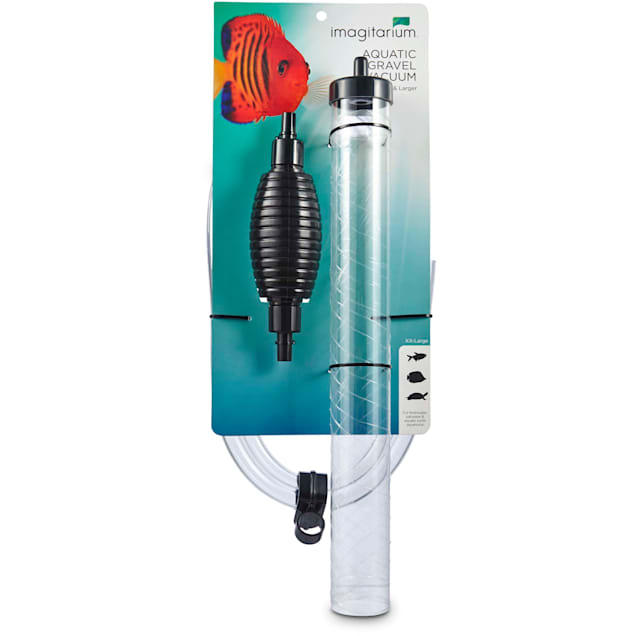
| Siphon / gravel vacuum | Removes waste from gravel and drains water during water changes |
| Dedicated aquarium bucket | Holds removed tank water; never share with household cleaning buckets |
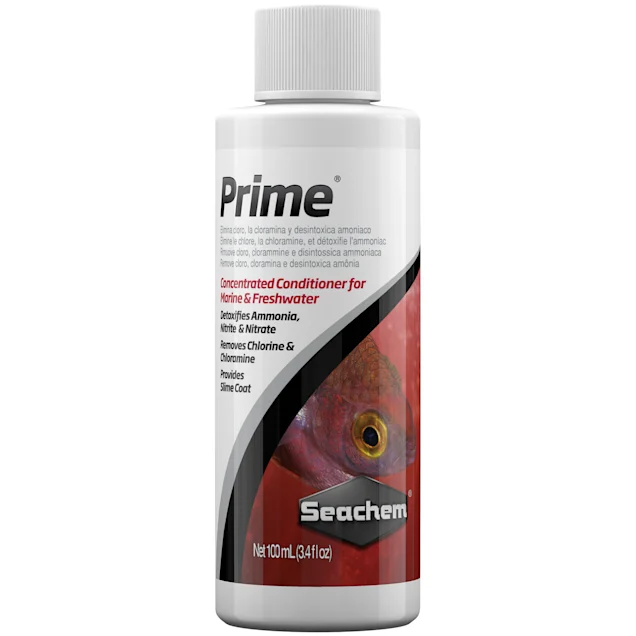
| Water dechlorinator / conditioner | Neutralizes chlorine, chloramine and heavy metals in tap water |
| Algae scrubber and scraper | Cleans glass or acrylic walls and stubborn corner buildup |
| Algae pad | Scrubs decorations, accessories and non-media filter parts |
| Aquarium-safe glass cleaner | Cleans the outside of the tank without toxic fume risk |
| Towels | Mops up spills around the tank |
| Bleach (3% dilution only) | Deep-disinfects decorations when hot water alone isn't enough |
Step 1 — Prepare Your Work Area
Wash your hands thoroughly with soap and rinse completely before touching anything in or around the tank. Even small traces of lotion, perfume or household chemicals can harm fish. Gloves are a good option if you have sensitive skin or want an extra layer of protection for both you and the water.
Keep a dedicated set of supplies — sponges, buckets, siphon — used for the fish tank only. Cross-contaminating with household cleaning tools is one of the most common ways toxic residues end up in a tank.
Step 2 — Scrub the Glass or Acrylic Walls
Start inside the tank before doing anything with the water. Algae and mineral deposits on the walls need to come off first so the debris can be vacuumed out during the water change in Step 4.
- Glass tanks: Use an aquarium glass scrubber and scraper. The sponge side handles most buildup; switch to the scraper blade for stubborn algae in corners and along edges.
- Acrylic tanks: Use only scrubbers specifically designed for acrylic. Acrylic scratches far more easily than glass, and standard scrubbers or scrapers will leave permanent marks.
Wiping down the walls at every routine maintenance session — not just deep cleans — keeps mineral deposits and algae from reaching the "stubborn" stage in the first place.
Step 3 — Clean Decorations and Accessories
Artificial plants, rocks and other decorations collect waste and algae just like the walls do. A buildup of debris on these surfaces adds to the ammonia load in the water and creates an unhealthy environment for your fish.
Hot water scrub (routine cleaning): Remove each decoration and scrub it under hot running water with an algae pad. This loosens most debris without introducing any chemicals to the tank.
Bleach soak (deep disinfection when needed):
- Mix a solution of 1 part household bleach to 32 parts water — this yields approximately a 3% bleach concentration.
- Submerge decorations and soak for 15 minutes.
- Scrub, then rinse thoroughly under running water.
- Allow items to air dry completely.
- If any bleach smell remains after drying, soak the decorations in a bucket of water treated with dechlorinator before returning them to the tank. Residual bleach is toxic to fish. [https://www.aspca.org/pet-care/animal-poison-control]
Set cleaned decorations aside to finish drying while you work through the next steps.
Step 4 — Service the Filter
The filter is the engine of your tank's ecosystem. Handle it carefully to preserve the beneficial bacteria living inside it.
What to do:
- Remove the filter and place it in a bucket of water taken directly from the tank (or dechlorinated tap water). Working in tank water keeps bacteria alive.
- Use an algae pad and that same water to scrub algae and debris off the non-media parts of the filter housing and impeller area.
- Inspect all parts to confirm everything is working properly.
What NOT to do:
- Do not rinse filter parts under hot tap water — heat kills beneficial bacteria.
- Do not use bleach or any household cleaner on the filter.
Filter media guidance:
| Media Type | What to Do |
|---|---|
| Biological media (ceramic rings, bio-balls, etc.) | Do NOT replace or rinse; disturb as little as possible |
| Sponge filters and filter pads | Rinse gently in tank water; replace when falling apart |
| Chemical media (activated carbon) | Replace every 3–4 weeks |
Biological filtration media houses the bacteria that process ammonia and nitrites. Replacing it resets your nitrogen cycle.
Step 5 — Vacuum the Gravel and Do a Partial Water Change
This is the step that removes the accumulated waste driving ammonia and nitrate levels up. Do this while decorations are still drying.
Before you siphon: Use an algae pad or your hand to scrub through the gravel and loosen trapped algae and waste. Then wait a few minutes for the dislodged debris to settle to the bottom.
Vacuuming technique:
- Move the siphon in a slow, deliberate up-and-down motion across the gravel.
- Work systematically from one end of the tank to the other so you don't miss patches.
- Avoid pressing the siphon so deep that you pull up large amounts of gravel — you want waste, not substrate.
How much water to remove: For routine maintenance, remove no more than 25% of the total water volume. This preserves the beneficial bacteria in the water column and prevents a sudden shift in water chemistry that can stress fish.
Heads up: If an unusual situation requires removing significantly more than 25% of the water, unplug heaters and filters first. Running them without adequate water can burn out the motor or crack a glass heater.
Replacing the water: Add fresh tap water that has been pre-treated with a water conditioner/dechlorinator to neutralize chlorine, chloramine and heavy metals before it enters the tank. Never add untreated tap water directly — chlorine is harmful to fish and to the beneficial bacteria in your filter. [https://www.aspca.org/pet-care/animal-poison-control]
Step 6 — Return Decorations and Restart Equipment
Once the gravel is vacuumed and the water level is restored:
- Confirm decorations have no remaining bleach smell before placing them back in the tank. If in doubt, do a second dechlorinator soak.
- Arrange decorations as desired.
- Plug the filter and heater back in. Confirm the filter is primed and flowing normally.
- Check that the heater is maintaining the correct temperature for your fish species.
Step 7 — Clean the Outside of the Tank
With everything back in order, wipe down the exterior.
- Glass tanks: Spray an aquarium-safe glass cleaner onto a towel (never directly on the tank) and wipe down the outside panels to remove water spots, mineral deposits and fingerprints.
- Acrylic tanks: Use a cleaner specifically formulated for acrylic. Standard household glass cleaners contain chemicals that break down acrylic over time, leaving it permanently cloudy.
- Use a dry towel to soak up any water spilled on the stand or floor.
Important: Never use standard household glass cleaners like ammonia-based sprays near an open tank. The fumes alone can be harmful to fish. Always use products labeled safe for aquarium use.
Key Takeaways
- Answer-first: Clean in order — glass walls → decorations → filter → gravel/water change → restock → outside glass.
- Never do a full drain unless absolutely necessary; it destroys beneficial bacteria and restarts the nitrogen cycle.
- 25% water changes are the routine standard — enough to remove waste without destabilizing water chemistry.
- Dedicated supplies only — cross-contamination from household buckets or sponges is a leading cause of chemical exposure in fish tanks.
- Bleach is usable on decorations at a 3% dilution, but must be fully rinsed and neutralized with dechlorinator before items re-enter the tank.
- Biological filter media should never be replaced during a routine clean — doing so removes the bacteria that keep your fish safe.
- If your fish show signs of stress — gasping at the surface, clamped fins, unusual lethargy — after a cleaning session, consult your veterinarian or an aquatic specialist promptly.
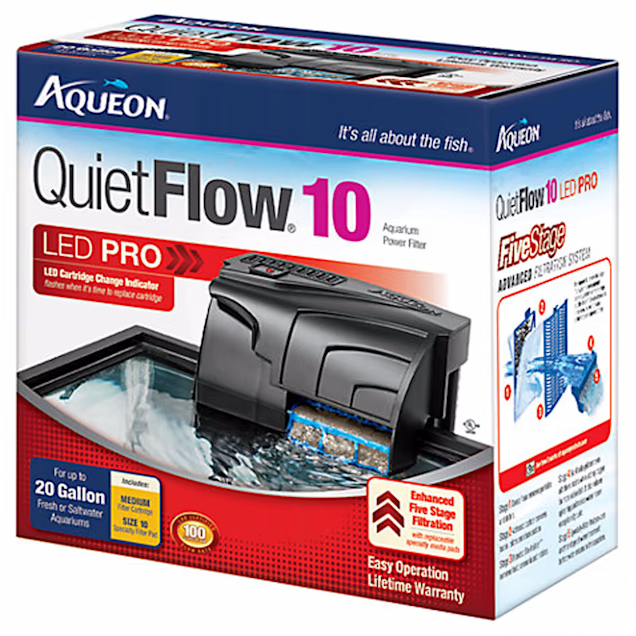
Recommended Products for Cleaning a Dirty Aquarium
Frequently Asked Questions
How often should I clean my fish tank? For most home aquariums, a partial water change of up to 25% combined with gravel vacuuming is recommended every one to two weeks. Heavily stocked tanks or those with messy fish may need attention weekly. Regular maintenance prevents the kind of serious buildup that requires a full deep clean. [VERIFY]
Can I use tap water when refilling my fish tank? Yes — but tap water must be pretreated with a water conditioner (dechlorinator) before it enters the tank. Tap water contains chlorine and chloramine that are harmful to fish and can destroy the beneficial bacteria that keep your nitrogen cycle stable. Never add untreated tap water directly to an aquarium with fish in it. [VERIFY]
How long does a full aquarium cleaning typically take? A thorough cleaning — scrubbing the glass walls, vacuuming the gravel, cleaning decorations and the filter, and completing a partial water change — generally takes 45 minutes to two hours depending on tank size and how much buildup has accumulated. Routine weekly maintenance is much faster, usually 15 to 30 minutes. [VERIFY]
What should I do if a fish dies during or after cleaning? Remove the fish from the tank immediately to prevent ammonia spikes from decomposition. Test your water parameters as soon as possible and check that your dechlorinator was used, the temperature is stable and no cleaning chemicals entered the water. If multiple fish are affected or you suspect poisoning, contact your veterinarian or an aquatic specialist right away. For suspected chemical exposure, the ASPCA Animal Poison Control Center is also a resource. [https://www.aspca.org/pet-care/animal-poison-control]
Is it safe to use bleach to clean aquarium decorations? A diluted bleach solution (water mixed with 3% bleach) can be used to disinfect stubborn decorations and accessories, but it must be handled carefully. Soak items for no more than 15 minutes, then rinse thoroughly, scrub and allow to air dry completely. If any bleach smell remains, soak the items in a bucket of dechlorinated water before returning them to the tank. Never use bleach on filter media or inside a tank that contains fish. [VERIFY]
Will cleaning my fish tank harm the beneficial bacteria that keep it healthy? It can, if done incorrectly. Avoid replacing all the water at once, rinsing filter media under hot tap water or using any soap, bleach or household chemicals inside the tank. Limiting water changes to no more than 25% at a time and cleaning filter media only in dechlorinated or existing tank water helps preserve the beneficial bacterial colonies your fish depend on for a safe, stable environment. [VERIFY]


