


Two Easy Ways to Start Earning Rewards!
Become a member today! Members-only pricing and offers, personalized care notifications, Vital Care points back on every purchase and more!
 Become a credit card member today!
Earn 2X Pals Rewards points at Petco
when you use Petco Pay!APPLY NOWLearn More About Petco Pay Benefits
Activated Carbon in Aquarium Filters: Complete Guide
Published on August 18th, 2022
Updated on July 16th, 2026


Reviewed by Don Spaeth
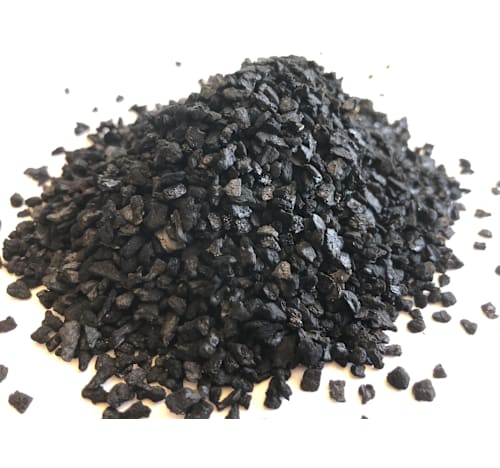
What is activated carbon and should you add it to your aquarium filter? Learn about activated carbon's uses, maintenance, and how to add it to your filter.
What Is Activated Carbon — and Why Does It Matter for Your Fish Tank?
Activated carbon is one of the most widely used filtration media in the aquarium hobby, and for good reason: it pulls dissolved contaminants out of the water column before they can stress your fish or cloud your tank. Understanding how it works — and where to place it — helps you get the most out of every filter cycle.
How Activated Carbon Is Made
Activated carbon starts as an organic raw material. Natural lignite and bituminous coal have been used for decades, but manufacturers also produce it from wood, peat and coconut shells. Whichever material is used, it goes through the same essential process: heating at extremely high temperatures. That heat dramatically increases the material's overall surface area, drives out impurities and creates a dense network of tiny internal pores. Those pores are what make activated carbon so effective — water passes through them and dissolved contaminants adsorb (bind) to the carbon's surface, leaving the water cleaner and clearer.
What Activated Carbon Removes — and What It Doesn't
Activated carbon earns its place in the filter by targeting a specific category of water-quality problems. Here's a quick breakdown:
| What Activated Carbon Does Remove | What Activated Carbon Does NOT Remove |
|---|---|
| Chlorine and chloramine from tap water | Ammonia |
| Phenols and tannins (yellowing/browning water) | Nitrites |
| Many dissolved organic compounds | Nitrates |
| Residual medications (post-treatment) | Trace elements (it removes these too — see below) |
Chlorine and chloramine are among the most common reasons aquarists reach for activated carbon. Municipal tap water is treated with both, and carbon filtration is highly effective at pulling them out before they reach your fish.
Phenols and tannins are organic compounds that leach from driftwood, leaves and some gravels, giving aquarium water a yellow or tea-colored tint. Activated carbon clears that discoloration efficiently.
What carbon won't touch: Ammonia, nitrites and nitrates are inorganic compounds that activated carbon simply does not adsorb. Those must be managed through regular water changes and, where needed, additional chemical filtration media.
One important trade-off: Activated carbon is not selective. Along with the contaminants you want gone, it will also pull some beneficial trace elements out of the water. The straightforward fix is consistent water changes, which replenish those trace elements naturally.
Activated Carbon and Aquarium Medications
This is one of the most practical things to know about carbon filtration: remove your activated carbon before you add any medication to the tank. Because carbon is so effective at adsorbing dissolved compounds, it will pull medication out of the water before it can do its job, making treatment far less effective.
Once the treatment course is complete and you've done your post-treatment water change, add a fresh batch of activated carbon to the filter. It will help clear any remaining medication residue from the water — a useful final step in the treatment process. Always follow your veterinarian's guidance on medication protocols for your fish.
Where to Place Activated Carbon in Your Filter
Placement matters more than most people realize. You might wonder whether you can simply drop a bag of activated carbon directly into your fish tank — and while it will adsorb some contaminants that way, it won't come close to its full potential.
Here's why: activated carbon's pores can become quickly clogged with debris if water isn't pre-cleaned before it reaches the carbon. Once those pores are impacted, the carbon loses its ability to adsorb the dissolved contaminants it's designed to target.
The right approach:
- Place activated carbon after mechanical filtration — mechanical media (sponge, floss or filter pad) captures particulate debris first, so only cleaner water reaches the carbon.
- Use a filter compartment, not open water — water needs to be actively forced through the carbon for maximum contact time and adsorption efficiency.
- Keep an eye on your aquarium gravel and substrate — debris that settles on the bottom can re-enter the water column and reach your filter, so a clean tank bottom supports better overall filtration.
Following this sequence — mechanical filtration first, activated carbon second — keeps the carbon working at peak efficiency for as long as possible and gives your fish the cleanest water your filter can deliver.
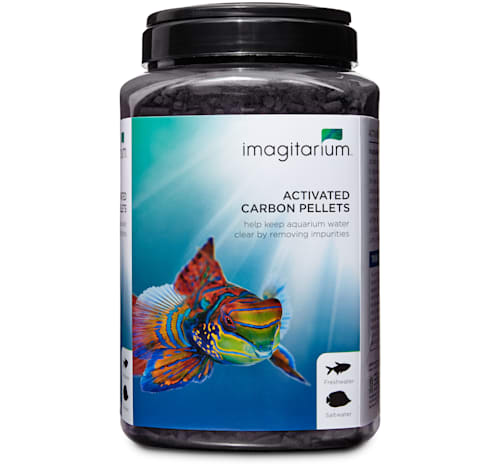
Activated Carbon Maintenance & Replacements
Anyone that has ever touched activated carbon knows how dusty it is. This dust can be harmful to your aquatic life if not rinsed thoroughly. New carbon should be rinsed until the dust has diminished and the water runs clear. Rinsing activated carbon with prefiltered or distilled water will prevent it from absorbing chlorine and chloramine prior to being placed into the filter, thereby expanding its absorption capability.
Activated carbon has a phenomenal absorption rate but does not last forever. Eventually those tiny pores will have attracted and bound with as much contaminates as it can hold, becoming saturated. Typically activated carbon is effective for one month. If there is a heavy bioload in the aquarium or if it is used to remove medications, you may need to change the carbon more frequently. Putting your aquarium on a regular maintenance schedule which includes water changes and carbon replacement in addition to rinsing or replacing your mechanical filter cartridge will help provide an environment in which your aquatic life will thrive and have you seeing clearly!
Frequently Asked Questions
Does activated carbon remove ammonia from a fish tank? No — activated carbon does not remove ammonia, nitrites, or nitrates from your aquarium water. These inorganic compounds require regular water changes or dedicated chemical filtration media (such as zeolite) to keep levels safe for your aquatic life. If ammonia readings remain elevated, consult your veterinarian or an aquatic specialist promptly.
How often should I replace activated carbon in my aquarium filter? Under normal conditions, activated carbon is effective for approximately one month before its pores become saturated and it can no longer bind additional contaminants. Fish tanks with a heavy bioload — or those that have been used to clear medication residue after a treatment course — may require more frequent replacement. Building carbon changes into your regular monthly maintenance schedule is the simplest way to stay on track.
Can I reuse or "recharge" activated carbon? No. Once the microscopic pores in activated carbon are saturated with bound contaminants, there is no reliable consumer-level method to restore its absorption capacity. Attempting to bake or boil used carbon at home can release the trapped compounds back into the water, which may harm your aquatic life. Always replace spent carbon with fresh media rather than reusing it.
Will activated carbon remove the medication I'm treating my fish tank with? Yes — and that's exactly why carbon must be removed from your filter before you begin any medication course. Because activated carbon is highly effective at pulling dissolved compounds from the water, it will neutralize treatments before they can work. Once the full treatment is complete and you've performed a water change, adding fresh carbon to your filter will help clear any remaining medication residue from the water.
Does activated carbon remove chlorine and chloramine from tap water? Yes. Activated carbon is highly effective at removing both chlorine and chloramine — the disinfectants most commonly added to municipal tap water — making it a reliable first line of defense when filling or topping off your fish tank. For best results, rinse new carbon with pre-filtered or distilled water before placing it in your filter so it doesn't exhaust its capacity on tap-water chlorine before it even enters the tank.
Can I just drop a bag of activated carbon directly into my fish tank instead of placing it in the filter? You can, but it will be far less effective. Activated carbon works best when aquarium water is actively forced through it inside a filter compartment, positioned after mechanical filtration so debris doesn't clog its pores prematurely. A loose bag sitting in open water will absorb some contaminants, but without directed flow the contact time is too limited to deliver meaningful water clarity or chemical filtration. Always place carbon behind your mechanical filter media for optimal results.
This article was created with assistance from AI tools and reviewed for accuracy by Petco's content team.


