


Two Easy Ways to Start Earning Rewards!
Become a member today! Members-only pricing and offers, personalized care notifications, Vital Care points back on every purchase and more!
 Become a credit card member today!
Earn 2X Pals Rewards points at Petco
when you use Petco Pay!APPLY NOWLearn More About Petco Pay Benefits
Cat Labor and Birth: A Complete Queening Guide
Published on September 9th, 2024
Updated on June 18th, 2026

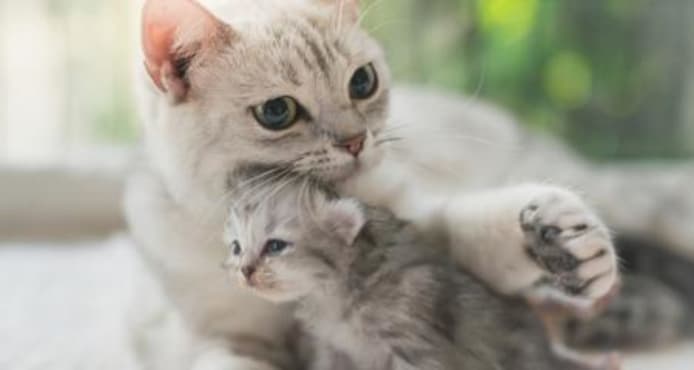
What you need to know about the stages of labor, supplies you will need for queening (when the cat gives birth) and records to keep.
Giving birth in cats is called queening. As the delivery date approaches, preparations should be made 10 to 14 days ahead of time, and the necessary supplies should be collected and placed together.
Providing Your Cat with Peaceful Place to Deliver
The queen should be given a box (cardboard box, laundry basket, etc.) in which she can have her kittens. It should be easy to clean and lined with soft blankets. Do not use material that kittens could get caught or lost in such as small or torn blankets or shredded paper. Allow her one to two weeks before her due date to become comfortable with the area you have decided to use for the delivery. It should be clean, dry, darkened, and quiet. Do not allow people or other pets to disturb her while she is in the delivery area. Feline phermone spray like Feliway can be sprayed or diffused in the delivery area to help the mother cat feel safe and calm.
During delivery, newspapers may be used to line the box with new ones added as they become wet. Once she is finished, the entire box should be cleaned and lined with clean papers and a blanket. Do not use strong smelling cleaners in the delivery area, as the mother and offspring identify each other by smell. Do not allow the queen to have the kittens in the litter box, as that increases the likelihood of disease. Privacy, cleanliness, dryness, and warmth are needed for an ideal queening location.
Supplies Needed for Birthing Kittens
A second box to place kittens into during sibling births may be necessary. This protects the new kittens, if the queen is moving a lot. A heating pad should be placed on the bottom with a fleece pad over it. The kittens should NEVER be placed directly on heating pads as they may be burned. Another 1-2 towels should be placed over the top of the basket to keep the heat in. The fleece and the air in the basket should feel comfortably warm to your hand. If the kittens are moving around and crying, they are too cold or too hot. If they are bobbing their heads, searching, and crying, they are hungry. They should be put with mom as soon as possible to nurse. The kittens can be placed with the queen between births to allow them to nurse and bond, and if necessary, be put back in the basket while the next sibling arrives.
A stack of soft, clean towels should be handy to help clean off kittens, if necessary. White or light colored towels will show the color of any discharge or placenta. Have a laundry basket handy to throw the towels in as they are used. Wash as soon after birth as possible with detergent and bleach to minimize staining of the towels. Paper towels work well to dry the kittens and reduce the need for doing laundry afterward.
Other supplies to have on hand include the following:
1. Sterile hemostats and blunt-end scissors to cut the umbilical cord if necessary
2. Alcohol and matches to sterilize the hemostats and scissors
3. Heavy sewing thread, dental floss, or suture to tie umbilical cords if necessary
4. Lubricating (petroleum) jelly
5. Several pairs of sterile surgical gloves
6. Rubber pediatric bulb syringe
7. Surgical antiseptic scrub/iodine
8. Tube feeder, syringe, bottle and nipple, and kitten milk replacer such as KMR
9. Gram scale to weigh newborns
10. Stethoscope
11. Nail polish to mark kittens for identification if necessary
12. Thermometer - 9 second rectal thermometer to monitor the queen's temperature
13. Household thermometer to monitor the air temperature in the box
14. High-quality kitten food, yogurt, and/or vanilla ice cream to offer the queen during and after delivery
15. Fresh water for the queen
16. Veterinary clinic and the emergency veterinary clinic numbers and directions
17. Numbers for family/friends/sitter to watch the children during delivery and if necessary to go to the veterinary clinic
18. Books and information on delivery and care of newborn kittens
19. Watch or clock to record times of delivery
20. Phone or camera to take photos
21. Ink pen and note pad to mark the arrival time, sex, weight, color, and markings, and if the placenta was expelled
Stages of Labor in Cats
The hair on the queen's belly and around the tail may need to be shaved if it is long or thick to make it easier for the kittens to find the nipples and to keep her clean.
Average gestation is about 60 to 63 days. It can be about 1 week either side of that date and still be normal. Several changes that may be noticeable in the queen the last week before delivery include a distended, dropped abdomen, enlarged and softened vulva, enlarged nipples, and full mammary glands. Loss of appetite and nervousness alternating with sleep also indicate the time is near.
Labor and delivery have three stages. In the first stage, the cervix is being dilated and softened. She may moan, meow, or pant during labor. She may make frequent trips to the litter box which should be moved close, and she may show nesting behavior such as rearranging the towels in the nesting box. She may lick her mammary and perineal area more vigorously. Abdominal contractions are not evident in this stage. She may be restless, secretive, and try to hide. This is why the box is in a quiet area in the house. The lights can be dimmed if she is more comfortable. Stage 1 may take 12-24 hours and ends when the first kitten passes into the pelvic canal.
The queen is able to delay parturition, if she is moved to a strange place or strange people or animals are around. She may also stop delivery for several hours between kittens, if she perceives any disturbance to the delivery area.
Stage two starts when she begins actively pushing to deliver the first kitten. The first kitten tends to take the longest to deliver, as this kitten passing through the cervix fully dilates the cervix. She may deliver standing, laying, or squatting. The abdominal muscles assist in the delivery. She should deliver within 15-30 minutes of the start of contractions for each kitten. Normally, 3-5 strong contractions are necessary to deliver each kitten.
The amniotic fluid (water bubble) is seen first. The kitten may come head first or rear paws first. Either way is normal. As soon as the kitten is born, the queen should remove the sac from the kitten's face. She will clean herself, the newborn, and the birthing area. Her licking stimulates the kitten to breathe and start moving. The kitten should be breathing and moving within seconds. The queen will tear the umbilical cord an inch or two away from the kitten's body. If she does not, clamp the cord between two hemostats about half an inch from the body and cut it or tear it between the hemostats. If the umbilical cord bleeds, tie it off with the suture. Kittens have gotten tangled in the umbilical cord, and if it dries tangled around the leg, they may lose the leg. Make sure to remove the placenta and cord, if the queen does not. If you need to pick up the kitten right after birth, keep it in a head-down position to allow fluid to drain out of the lungs and nasal passages.
A kitten that had a difficult time being born may be weak or not breathing when finally delivered. The bulb syringe should be used to clear the airways. When fluid has been removed from the air passages, the kitten needs to be roughly, but carefully, rubbed with a cloth to stimulate the breathing. Try CPR on a nonbreathing kitten for at least 5 minutes to see if he will breathe. Some kittens, especially if born by c-section, need 20 minutes of work to survive. Once the kitten starts giving lusty cries and moving, the immediate danger should be past.
At this point, the kitten can be presented to the mother. Allowing the mother to lick the kitten will continue to stimulate respirations.
Kittens may attempt to start nursing right away or may take several minutes to recover from birth. Some queens do not nurse kittens until all the kittens are delivered.
Stage three is the delivery of the placenta. Each kitten has a placenta and it is usually delivered with the kitten. Keep track of the placentas on the notepad, as she may have two kittens and then two placentas. The queen will usually eat the placenta. After two or three, the pet parent can remove some of them to prevent her from eating them all. The placenta does offer nourishment to the queen, but too many may cause diarrhea or vomiting.
She will repeat the second and third stages of labor until all the kittens are born. Some queens will have all the kittens within an hour and others will take several hours for each kitten. Expect about 2-6 hours to deliver all the kittens. If she is resting comfortably and caring for the kittens that have already arrived, just watch her. If she is continuing to contract and does not deliver another kitten within half an hour, contact your veterinarian right away.
She may like a drink of fresh water or small amount of food during labor and delivery.
Allow the kittens to nurse between deliveries, if the queen will allow. This will stimulate release of the hormone oxytocin which will help in the delivery of the next kitten as well as the "let down" of milk. The kittens are only able to absorb the colostrum through their intestines for the first 24 hours of life. After that time, they are no longer able to get any immunity from the dam. The queen should be licking their perineal area and abdomen to stimulate urination and defecation. She will continue this for 2-3 weeks.
Keeping Detailed Records
It is important to keep accurate records during the delivery. A sample record is shown below (although records of weight gain should be kept longer than 3 days). Keeping such records will help you recognize problems early and be a way to follow each kitten during their first weeks of life.
Record of Delivery For 'Greta' 1/5/2000
| Births | Time | Male/Female | ID Marking | Weight | Placenta | Weight Day 1 | Weight Day 2 | Weight Day 3 |
|---|---|---|---|---|---|---|---|---|
| #1 | 12:10 P.M. | Male | Black | 95 gm | yes | * | * | * |
| #2 | 12:25 P.M. | Male | Black with white chest | 103 gm | yes | |||
| #3 | 12:50 P.M. | Female | Calico | 96 gm | yes |
* Record the daily weight of each kitten here.
Frequently Asked Questions
How long does cat labor last from start to finish? Cat labor unfolds in three stages. Stage 1 (cervical dilation) can last 12–24 hours and may show no visible contractions. Stage 2 begins with active pushing; each kitten should arrive within 15–30 minutes of strong contractions starting. Stage 3 — placenta delivery — follows each birth. A full litter can take anywhere from a few hours to 24+ hours depending on litter size, so keep a watch handy and log each arrival time.
What are the early signs that a cat is in labor? In the final week before queening, watch for a dropped, distended abdomen; enlarged, softened nipples; full mammary glands; and a swollen vulva. As active labor approaches, your cat may become restless or secretive, make frequent trips to the litter box, rearrange bedding in her nesting box, pant or vocalize, and lick her mammary and perineal area more vigorously. Loss of appetite alternating with periods of sleep is also common.
When should I call the veterinarian during a cat birth? Contact your veterinarian immediately if your cat strains with strong, visible contractions for more than 30 minutes without delivering a kitten; if more than 4 hours pass between kittens and you know additional kittens remain; if a kitten appears stuck in the birth canal; if there is heavy, bright-red bleeding or a foul-smelling discharge; or if your cat becomes unresponsive or extremely weak at any point. Always have your veterinary clinic and an emergency clinic's number written down before the due date. https://www.vet.cornell.edu/departments-centers-and-institutes/cornell-feline-health-center/health-information
What should I do if a kitten seems stuck during delivery? If a kitten is partially visible but not progressing after 10–15 minutes of active straining, this is a veterinary emergency — call your clinic right away. While waiting for guidance, do not pull forcefully on the kitten. If instructed by your vet, you may apply a small amount of lubricating (petroleum) jelly around the visible portion to ease passage. A kitten delivered after a prolonged birth may be weak or not breathing; use a rubber bulb syringe to clear the airways, rub the kitten firmly but gently with a clean towel to stimulate breathing, and attempt kitten CPR for at least 5 minutes.
Is it normal for a cat to stop labor between kittens? Yes — queens can pause active delivery for up to several hours between kittens, particularly if they sense any disturbance in the birthing area. Noise, unfamiliar people, or other pets can cause a cat to delay or temporarily halt parturition. This is why a quiet, darkened, private nesting space is so important. However, if your cat is actively straining without results, or if the pause extends beyond 4 hours with kittens still expected, contact your veterinarian.
How do I know if a newborn kitten is warm enough and nursing properly? A kitten that is comfortable will be calm and relatively still between feedings. If kittens are moving around restlessly and crying, they are likely too cold or too hot — adjust the heating pad under the secondary box accordingly, and never place kittens directly on a heating pad. If kittens are bobbing their heads, rooting, and crying, they are hungry and should be placed with their mother to nurse as soon as possible. Weigh each kitten on a gram scale at birth and daily thereafter; steady weight gain is the clearest sign that nursing is going well. https://www.vet.cornell.edu/departments-centers-and-institutes/cornell-feline-health-center/health-information
Stages of Cat Labor & What to Expect
Use this table as a quick-reference guide during queening. Times are typical ranges — every cat is different, and your veterinarian is your best resource if anything seems off.
| Stage | What's Happening | Visible Signs | Typical Duration | When to Call Your Vet |
|---|---|---|---|---|
| Pre-labor (1–2 weeks before) | Hormonal shifts; queen seeks a nesting spot | Dropped, distended abdomen; enlarged, softened vulva; full mammary glands; enlarged nipples; reduced appetite; restlessness alternating with sleep | Days to weeks before delivery | If mammary glands appear infected, or queen stops eating entirely more than 48 hours before expected due date |
| Stage 1 — Cervical dilation | Cervix softens and dilates; no visible abdominal contractions | Panting, moaning, or meowing; frequent litter box trips; vigorous licking of mammary and perineal area; nesting (rearranging towels); restlessness and hiding | 12–24 hours; ends when first kitten enters the pelvic canal | If Stage 1 exceeds 24 hours with no progress, or queen is in obvious distress |
| Stage 2 — Active delivery (per kitten) | Abdominal contractions push each kitten through the fully dilated cervix | Visible straining; queen may stand, squat, or lie down; amniotic fluid sac ("water bubble") appears first; kitten delivered head-first or rear-paws-first (both normal) | 15–30 minutes of active pushing per kitten; 3–5 strong contractions typical | If queen strains hard for more than 30 minutes without delivering a kitten, or if you can see a kitten stuck in the birth canal |
| Stage 3 — Placenta expulsion | Placenta (afterbirth) is passed, usually within 15 minutes of each kitten | Dark greenish-black placenta delivered; queen may eat it (normal); umbilical cord torn by queen ~1–2 inches from kitten's body | Minutes after each kitten; one placenta per kitten | If a placenta is retained (count them — there should be one per kitten); retained placentas can cause serious infection |
| Inter-kitten interval | Queen rests, nurses, and cleans between births | Nursing, grooming kittens, calm contractions subsiding; may pause delivery if disturbed | 10 minutes to 1 hour between kittens is common; queen may pause up to several hours if she feels unsafe | If more than 4 hours pass between kittens and you know more are expected, or if queen appears exhausted and strains without result |
| Post-delivery | Uterus contracts back; queen focuses on nursing and bonding | Quiet, attentive mothering; kittens nursing actively; small amount of reddish-brown vaginal discharge (lochia) normal for a few days | Hours to days of recovery | If discharge is bright red, foul-smelling, or persists beyond 1 week; if queen ignores kittens, runs a fever, or refuses food beyond 24 hours post-delivery |
Quick tip: Keep a notepad and watch nearby. Record the arrival time, sex, weight, color and markings of each kitten, and whether its placenta was expelled. That log is invaluable if you need to call your veterinarian. https://www.vet.cornell.edu/departments-centers-and-institutes/cornell-feline-health-center/health-information
Frequently Asked Questions
How long does cat labor typically last from start to finish? Stage 1 (cervical dilation) can last 12–24 hours, and Stage 2 delivery of all kittens may span several more hours depending on litter size. The entire queening process from first signs to the last placenta can range from a few hours to more than 24 hours in total. If active straining continues for more than 30 minutes without a kitten being born, contact your veterinarian promptly.
Is it normal for a cat to deliver kittens rear-paws first? Yes. Kittens can be born head-first or rear-paws first (breech), and both presentations are considered normal in cats. What matters is that each kitten is delivered within 15–30 minutes of the start of strong contractions for that kitten.
What should I do if a kitten isn't breathing at birth? Use a rubber pediatric bulb syringe to gently clear fluid from the kitten's airways, then rub the kitten firmly but carefully with a clean towel to stimulate breathing. Keep the kitten in a head-down position immediately after birth to help fluid drain from the lungs and nasal passages. If the kitten still isn't breathing, attempt kitten CPR for at least five minutes — some kittens, particularly those born by cesarean section, may need up to 20 minutes of stimulation to survive. Always have your veterinary clinic's number on hand before queening begins.
How many placentas should a cat pass, and does it matter? There should be exactly one placenta per kitten. Count them carefully, because a retained placenta can lead to a serious uterine infection (metritis). If the number of placentas doesn't match the number of kittens, call your veterinarian. https://www.vet.cornell.edu/departments-centers-and-institutes/cornell-feline-health-center/health-information
When is it an emergency during cat labor? Contact your veterinarian or an emergency clinic immediately if: your cat strains hard for more than 30 minutes without delivering a kitten; more than 4 hours pass between kittens and more are expected; a kitten appears stuck in the birth canal; the queen collapses, shows extreme pain, or has bright-red or foul-smelling vaginal discharge; or if Stage 1 labor exceeds 24 hours with no progress. Always have both your regular vet's number and an emergency clinic's number written down before the due date.
Can I feed my cat during labor? Yes — offering the queen high-quality kitten food, plain yogurt, or a small amount of vanilla ice cream during and after delivery can help keep her energy up. Fresh water should be available at all times throughout queening and nursing. Kitten food is recommended because its higher calorie and nutrient density supports the demands of lactation. https://www.merckvetmanual.com/management-and-nutrition/nutrition-small-animals/nutritional-requirements-of-small-animals
This article was created with assistance from AI tools and reviewed for accuracy by Petco's content team.
162Pet Parents found this article helpful


