


Two Easy Ways to Start Earning Rewards!
Become a member today! Members-only pricing and offers, personalized care notifications, Vital Care points back on every purchase and more!
 Become a credit card member today!
Earn 2X Pals Rewards points at Petco
when you use Petco Pay!APPLY NOWLearn More About Petco Pay Benefits
How to Trim Cat Nails Safely: A Step-by-Step Guide
Published on February 7th, 2023
Updated on June 18th, 2026


Written by Elizabeth Anderson Lopez
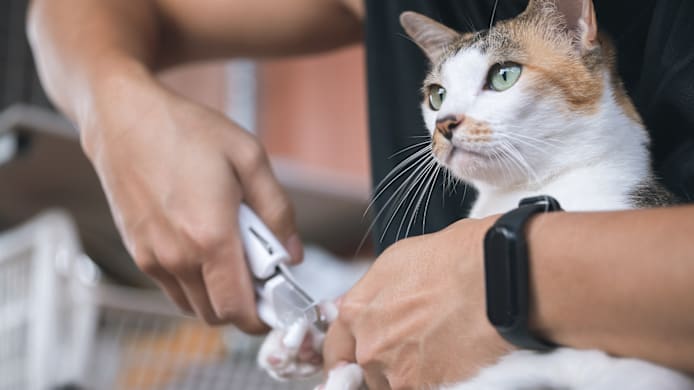
Is your cat obsessed with scratching your furniture? It may be a sign it’s time to cut their claws. Learn how to ease into it and steps to become a cat nail trimming pro!
Cat nail trimming: why it matters and how to do it safely
Regular nail trims are a simple but important part of feline care. They protect your furniture, reduce accidental scratches, and, most importantly, help keep your cat comfortable. Read on for details on how to give your cat a home "pawdicure," while minimizing stress-for both of you!
Cats naturally shed the outer layers of their claws, yet indoor lifestyles often mean less natural wear. Routine trimming helps:
- Protect furniture and fabrics: Shorter nails cause less damage during scratching and reduce the cat's need for scratching to self-groom.
- Reduce painful snags: Overgrown claws can catch on carpets, blankets, and upholstery.
- Improve comfort and mobility: Long nails may alter how a cat walks or rests.
- Minimize accidental scratches: Especially helpful for families with children.
Scratching itself is healthy and necessary. Nail trims do not stop scratching behavior, but they reduce the impact. Similarly, scratching posts and pads don't completely wear down the nails.
How to check if your cat's nails are too long
No ruler required-just a few simple observations of your cat's paws, gait and "sound effects."
Look/listen for:
- Nails visibly extending past the paw pad
- That clickety clack on tile or hard floors
- Nails snagging on fabric
- Curved claws nearing the pad-this one is particularly urgent
- Changes in walking posture
How to prepare
A little preparation can make the process smoother for both you and your cat. We know nail trims can be a bit intimidating, especially the first time. Before you sit down with your cat to start trimming, gather the items below; nothing breaks a mood like getting up for an item, then having to get kitty relaxed again.
Essential items checklist:
- Cat nail clippers
- Towel or small blanket
- Styptic powder (in case of minor bleeding)
- Treats
Helpful supplies like nail clippers, styptic powder and calming aids are readily available at Petco.
Set a calming mood
Speaking of mood, if you get pedicures, then you're already familiar with those spa chairs and gentle music. Things aren't that different for the purrfect environment for this task. Music and candles aren't necessary, but definitely choose a space that is:
- Quiet
- Well lit
- Free from distractions
- Comfortable for you to sit
Avoid trimming when your cat is highly playful or overstimulated; your cat should be relaxed, too.
How to Trim Your Cat's Nails: A Complete 5-Step Guide
If you've ever typed "how to cut a cat's nails" into a search bar at midnight, you're in good company. Nail trims can feel intimidating — but with the right setup, a little patience, and a positive attitude, most cats can learn to tolerate (and some even accept) the routine. This detailed 5-step process is designed for real homes and real cats, so you can trim safely and confidently.
Step 1: Prepare Your Cat and the Space
The single biggest factor in a successful nail trim is your cat's emotional state before you ever pick up the clippers. Avoid forced interaction by building positive associations with paw handling well before trim day.
Methods to try:
- Gentle petting along the legs and paws during everyday cuddle time
- Soft, calm praise in a low, reassuring voice
- Offering a favorite treat when your cat allows paw contact
- Waiting for a naturally relaxed moment — never rushing the process
Best times to schedule a trim:
- Right after a meal, when your cat is content and a little drowsy
- During or after a long cuddle session
- When your cat has already settled into a calm, relaxed posture on a stable, comfortable surface
Timing matters more than most pet parents realize. A cat who is alert, playful, or agitated is not a good candidate for a trim — no matter how overdue those nails are. Wait for the right window.
Step 2: Safely Hold Your Cat and Expose the Nail
Your goal here is gentle stability — not restraint. Cats who feel trapped become stressed, and a stressed cat makes every step harder. Choose the hold that matches your cat's experience level and temperament.
For cats who are already comfortable with nail trims:
- Place your cat on your lap or a stable, non-slip surface at a comfortable height for you
- Support the body with one arm or hand so your cat feels secure
- Hold the paw gently but firmly with your free hand
For cats (or pet parents) who are still building confidence:
Try the towel "purrito" method:
- Lay a soft towel flat on a table or your lap
- Place your cat in the center of the towel
- Wrap the towel snugly around the body, leaving only the head exposed
- Work one paw out at a time as needed
The purrito wrap helps many cats feel secure rather than exposed, and it's a widely used, practical technique for keeping both cat and pet parent calm during the process. See the section below for additional tips tailored to kittens and senior cats.
To extend the claw for trimming:
- Hold the paw gently in your hand
- Place your thumb lightly on top of the paw
- Place your index finger underneath, applying light upward pressure
The nail will slide forward naturally — no forcing needed.
Step 3: Identify the Quick
Before any clipper touches the nail, take a moment to locate the quick. The quick is the living tissue inside the nail that contains blood vessels and nerves. Cutting into it causes pain and minor bleeding, so identifying it first is a non-negotiable step.
What to look for:
| Nail Color | What You'll See | How to Trim |
|---|---|---|
| Clear or light-colored | Pink center (the quick) is clearly visible | Trim the curved tip beyond the pink area |
| Dark or black | Quick is harder to see; look for a darker oval center when viewing the cut end | Trim very conservatively, a tiny bit at a time |
The golden rule: When in doubt, trim less. You can always take off a little more. You cannot undo cutting too deep. Only remove the sharp, curved tip of the nail — never the base.
Step 4: Trim the Nails One at a Time
With the quick identified and the nail extended, you're ready to cut. Technique and confidence both matter here.
Clipper positioning:
- Hold the clipper at a slight angle that follows the natural curve of the nail tip
- Cut from top to bottom (not side to side, which can cause splitting)
- Keep the blade well clear of the quick
Clip with a single, smooth, decisive motion. Hesitation — a slow, tentative squeeze — can cause the nail to compress and crack rather than cut cleanly, which adds unnecessary stress for your cat.
Work at your cat's pace:
- Tackle one paw per session if that's all your cat will allow
- Trim one nail at a time if needed — there is no rule that says all 18 nails must happen in one sitting
- Celebrate small wins; finishing two paws today and two tomorrow is still progress
If minor bleeding occurs:
Nicking the quick happens, even to experienced groomers. Stay calm — your cat reads your energy, and if you panic, your cat is likely to panic too.
- Apply styptic powder directly to the nail tip
- Hold gentle pressure for 30–60 seconds
- Offer calm reassurance and a treat
- Let your cat decompress before continuing
Important: If bleeding is heavy, does not stop quickly, or your cat shows signs of significant pain or distress, contact your veterinarian right away. https://www.vet.cornell.edu/departments-centers-and-institutes/cornell-feline-health-center/health-information
Step 5: Respond to Squirming, Stress, or Accidents
Cats communicate clearly when they've had enough. Recognizing those signals — and respecting them — is what separates a trust-building experience from one that makes the next trim even harder.
Stop the session immediately if you notice:
- Tail thrashing or lashing
- Flattened or pinned-back ears
- Growling, hissing, or vocalizing
- Sudden, forceful escape attempts
- Dilated pupils or a rigid, tense body
Stopping is not failure. It is the right call. A 5-minute session that ends on a calm note is far more valuable than a 20-minute struggle that ends in stress for everyone involved. Short, positive sessions build trust over time, and trust is what makes future trims easier. A session that wraps up after 5 minutes this week and 10 minutes next week is genuine, measurable progress.
Patience is your most powerful tool in this entire process.
Tips for More Challenging Cats: Kittens, Seniors, and Hesitant Cats
Not every cat fits the same approach. Adjust your technique based on your cat's age and experience level.
Kittens
- Start early — the younger a cat is introduced to paw handling, the more naturally it becomes part of normal life
- Handle paws often between trims, not just when clippers come out
- Keep sessions brief — a kitten's attention span and patience are both short; a few nails and done is a win
- Early, consistent exposure builds lifelong tolerance and makes nail trims a non-event as your cat grows
Senior Cats
Older cats may present unique challenges that require extra care:
- Thicker nails that require a sharper, higher-quality clipper to cut cleanly
- Reduced flexibility in joints, making certain holds uncomfortable — always let your senior cat guide the position
- Greater sensitivity overall, including in the paws
Trim slowly, use gentle pressure, and take more breaks than you think you need.
Cats Who Show Hesitancy or Resistance
For cats who are not quite ready to accept a nail trim — regardless of age:
- Try shorter sessions that always end with positive reinforcement (a favorite treat, play, or affection)
- Use a calming pheromone spray on the towel or surface 15–20 minutes before the session begins
- Consider professional grooming as a bridge while you continue building at-home tolerance
Petco's grooming services are a great option when at-home trims feel like too much — for you or your cat. A knowledgeable Petco groomer can also demonstrate safe handling techniques you can practice at home.
When to Call a Groomer or Your Veterinarian
There is absolutely no shame in deciding that DIY isn't the right fit — at least not right now. A professional groomer or veterinarian can trim your cat's nails safely, demonstrate handling strategies, and help you build a plan for eventually doing it at home if that's your goal.
Reach out to a professional when:
- Nails are severely overgrown, curved into the paw pad, or causing visible discomfort
- Your cat becomes aggressive, extremely stressed, or unsafe to handle during attempts
- You feel unsure, unsafe, or simply want a demonstration before trying on your own
Your veterinarian is always the right call if you have concerns about your cat's nail health, paw condition, or overall comfort. https://www.vet.cornell.edu/departments-centers-and-institutes/cornell-feline-health-center/health-information
Key Takeaways for a Successful Nail Trim
Nail trims are a manageable, learnable skill — and one that genuinely improves your cat's comfort and protects your home. With the right preparation, the right tools, and a whole lot of patience, most cats can learn to tolerate the routine. Some may even come to accept it as just another part of life with you.
| What to Do | Why It Matters |
|---|---|
| Have all tools ready before you start | Scrambling mid-trim adds stress for both of you |
| Trim during calm, relaxed moments | A content cat is a cooperative cat |
| Use treats generously and consistently | Positive associations make every future trim easier |
| Keep sessions short | Ending on a good note builds long-term trust |
| Praise frequently throughout | Your voice is a powerful calming tool |
| Stop at the first sign of real stress | Respecting limits prevents setbacks |
| Ask for help when you need it | Groomers and vets are partners, not last resorts |
Aim for progress, not purrfection — and remember that Petco is here to support you and your cat every step of the way.
Frequently Asked Questions
How often should I trim my cat's nails? Most cats benefit from a nail trim every 2–4 weeks, though the exact frequency depends on your cat's age, activity level and how quickly her nails grow. Senior cats and indoor-only cats often need more frequent trims because they get less natural wear. Check your cat's nails weekly and trim whenever you notice the tips curving or clicking on hard floors.
What happens if I accidentally cut the quick? Nicking the quick causes minor bleeding and brief discomfort, but it is rarely a serious injury. Stay calm, apply styptic powder directly to the nail tip and hold gentle pressure for a few seconds. Offer your cat a treat and some quiet reassurance. If bleeding does not slow within a few minutes, is heavier than a small spot, or your cat seems to be in significant pain, contact your veterinarian.
My cat won't let me trim her nails — what should I do? Start with very short, low-pressure sessions focused only on touching and holding her paws, rewarding each step with treats and soft praise. Over several days, gradually introduce the clippers — let her sniff them, then rest them against an unextended nail before making any cut. Calming pheromone sprays used in the space beforehand can also help reduce anxiety. If she remains highly stressed or reactive, Petco grooming services or a veterinary visit are safe, judgment-free alternatives.
Is it safe to use human nail clippers on a cat? Human nail clippers can crush or split a cat's nail rather than making a clean cut, which increases discomfort and the risk of a jagged edge that snags on fabric. Cat-specific scissor-style or guillotine clippers are designed for the shape and thickness of feline nails and produce a cleaner result. Replace clippers when the blades feel dull — a sharp blade means less pressure and less stress for your cat.
Do I need to trim my cat's dewclaws separately? Yes. Dewclaws — the small claws located higher on the inner side of the front legs — do not contact the ground and therefore receive no natural wear at all. They are among the most likely nails to curve back toward the paw pad and become embedded if left untrimmed. Check and trim them at every session, applying the same technique you use for the other nails.
When should I see a veterinarian instead of trimming at home? Schedule a veterinary visit if a nail is already embedded in the pad, if you notice swelling, discharge or a foul odor around any claw, or if your cat suddenly resists handling that she previously tolerated — that change in behavior can signal underlying pain or illness worth investigating. Your veterinarian can also demonstrate safe restraint techniques and recommend appropriate calming options for cats who find grooming highly stressful. https://www.vet.cornell.edu/departments-centers-and-institutes/cornell-feline-health-center/health-information
This article was created with assistance from AI tools and reviewed for accuracy by Petco's content team.


FAQs: Cat nail trimming basics
Yes, especially for indoor cats. Regular trims support comfort and reduce injury risks. Scratching posts are a great way to dull the nails between “pawdicures.”
If your cat is showing signs of stress or aggression, seek professional help from a groomer or veterinarian.
If introducing your cat to nail trims, use the towel burrito (or “purrito”) technique, trim one nail at a time and take breaks. Don’t undertake this task when you or your cat is stressed or in a rush.
Trim only the sharp tip, avoiding the quick. It’s better to trim your cat’s nails again sooner than risk cutting them too short and drawing blood.
Use a slight natural angle, cutting from top to bottom.