


Two Easy Ways to Start Earning Rewards!
Become a member today! Members-only pricing and offers, personalized care notifications, Vital Care points back on every purchase and more!
 Become a credit card member today!
Earn 2X Pals Rewards points at Petco
when you use Petco Pay!APPLY NOWLearn More About Petco Pay Benefits
Dog Nail Trimming Guide: How to Cut Dog Nails Safely
Published on October 25th, 2022
Updated on June 18th, 2026

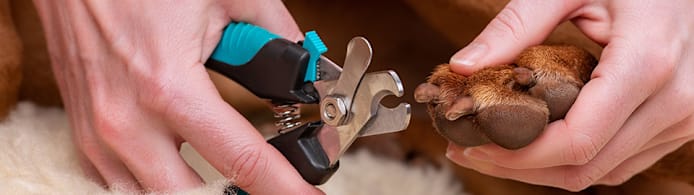
Learn more about dog nail trimming and paw caring for your pet to help them look good and feel great.
Trimming your dog’s nails offers as much benefit to you as does to your dog. Neglected nails can lead to discomfort or infection, not to mention the damage they can do to your floors and furniture. If your dog’s nails appear long or brittle, or if you hear a constant clicking sound when they walk, those are clear signs that it is time for a trim. It’s best to start this routine when your dog is young so they get used to dog nail clippers or grinders, as it should be performed as needed thereafter.
While humans may appreciate a routine mani/pedi, it’s common for dogs not to love the experience of having their nails cut. This may lead you to wonder how necessary it is to keep your pup’s nails nice and trim. However, keeping your dog’s nails at an appropriate length isn’t all about looks, it can actually affect their overall health and comfort. Nails that have grown too long may:
- Split and break, which can be painful
- Lead to an infection
- Become caught in carpets or other surfaces
- Make walking or running uncomfortable and difficult
- Cause irreversible damage or deformities to the paws or legs
How often you cut your dog’s nails will likely differ slightly based on how fast they grow (which sometimes differs slightly between breeds) and how much normal wear they get from the surfaces they walk on. However, Dr. Whitney Miller, DVM, MBA, DACVPM and Head of Veterinary Medicine at Petco recommends cutting your dog’s nails at least once per month. If you notice their nails becoming too long or are clacking on your floor, it’s definitely time for a trim.
When doing home nail care, you’ll want to invest in high-quality, appropriately sized clippers for your dog. Choose dog nail clippers with a sharp blade made especially for dogs so as not to crush the nail. If the blade is sharp, it’s less likely that a nail will be pulled or cracked. An emery board or pet nail grinder can smooth out any rough edges and give your dog’s nails a more rounded appearance. There are different types of clippers that work better with some dogs than others:
Scissor clippers work like scissors and can be used for any size dog as long as you purchase the appropriate size.
Guillotine clippers are best for small to medium dogs. With guillotine clippers, stick the end of your dog’s nail into the hole created by the blades and squeeze.
Dog nail grinders wear away at the nail slowly to remove length which can be a great option for both new and experienced pet parents and often helps a pet parent avoid nicking the quick of the nail.

How to Trim Your Dog's Nails: Step-by-Step
Gather Your Supplies and Get Comfortable
Before you begin, collect everything you'll need: dog nail clippers or a dog nail grinder, a towel, styptic powder, and plenty of treats. Settle onto the floor with your dog in a calm, quiet spot — sitting at their level helps them feel at ease. Offer reassurance through a relaxed voice and gentle petting before you ever pick up a clipper.
If your dog isn't used to paw handling yet, start there first. Gently play with your dog's paws during everyday cuddle time, gradually applying light pressure to each nail over several days. This slow, positive introduction makes the actual trim far less stressful for both of you.
The Clipping Process
Once your dog is relaxed and not pulling his leg away, you're ready to clip.
- Hold the paw firmly but gently. Only proceed if your dog is calm and not actively resisting.
- Position the clipper at a 45-degree angle, angled away from the paw pad.
- Avoid the quick — the living core of the nail that contains blood vessels and nerves. Cutting into the quick causes pain and bleeding, and can make future nail trims much harder to get through.
Reading the Nail: How to Know When to Stop Cutting
This is the step most pet parents find tricky, and it's worth slowing down here.
For dogs with white or light-colored nails: The quick is visible as a pink area inside the nail. Clip just below it, leaving a small buffer — you can always remove a little more, but you can't undo a cut that went too deep.
For dogs with dark or black nails: The quick isn't visible from the outside, so trim in thin, incremental slices from the tip. After each small cut, look straight at the freshly cut surface of the nail. You're looking for two specific visual cues:
- A hollow area in the center of the nail cross-section, or
- A small dark dot (sometimes described as a black or gray circle) appearing in the center of the cut surface
You will see these markers whether your dog's nails are light or dark. The moment you spot a hollow area or a dark center dot, stop trimming — this signals you are approaching the quick and the nail is now at an appropriate length.
Trimming thin slices and checking the cut surface after each one is the single most reliable way to avoid cutting the quick on dark nails. If you do nick the quick and see bleeding, apply styptic powder to the tip of the nail and hold gentle pressure for a few seconds.
Don't forget the dewclaws. These nails sit higher on the inner leg and never touch the ground, so they don't wear down naturally. They can curl and grow into the skin if left untrimmed — check and clip them every session.
Reward Every Win
The moment you finish — even if you only managed one nail — offer your dog a treat and genuine praise. Pairing nail trims with something your dog loves reinforces that the experience is safe and worthwhile. Keeping a bag of dog treats nearby throughout the session (not just at the end) can help maintain a positive association.
Building Confidence in Anxious Dogs
Not every dog is ready to sit through a full trim on the first try — and that's completely normal. Use this progression to build comfort at your dog's own pace:
| Stage | What to Do |
|---|---|
| Stage 1 — Clipper in the room | Let your dog sniff the clippers; reward calmly with treats. No clipping yet. |
| Stage 2 — Clippers near paws | Touch the clippers gently to your dog's paws without clipping; reward. |
| Stage 3 — One nail | Clip a single nail, reward generously, then stop for the day. |
| Stage 4 — Gradual increase | Add one or two more nails per session as your dog's comfort grows. |
If your dog shows signs of distress at any stage, stop immediately. Don't end the session on a struggle — pivot to something easier your dog can succeed at (like a simple sit), reward that, and return to nail trimming another day. Ending on a calm, positive moment preserves the trust you've built.
If your dog is highly anxious or fearful around nail trims, work on desensitization at home using the stages above, but in the meantime bring him to a knowledgeable Petco groomer or your veterinarian to keep nail length in a safe range. Overgrown nails can affect your dog's gait and joint comfort over time, so maintaining regular trims — even while you're still building confidence at home — matters for his long-term wellbeing. Your veterinarian can also help rule out any underlying anxiety that may be making the process harder than it needs to be.
Black dog nails can present a challenge when trimming since the quick is not visible. A good way to work around this is to observe the underside of your dog’s nail toward the tip. Where the underside of the nail looks full, that’s where the quick is present and you should not clip there.
Just past the part of the nail that looks full, there should be two outer walls shaped like a triangle where no quick is present, and you can safely clip that part of the nail that forms the tip. A hollow area or black dot will appear in the center of the nail when you’ve cut to the shortest point, regardless of what color your dog’s nails are. Use this as your guide to ensure that you’re not trimming too much. However, even if your dog is typically comfortable with nail trims, they will also pull away if you get too close to the quick which is an indicator that they are uncomfortable and it is time to stop.
If you, or your pet, feel anxious about nail trims, or if you simply don’t have the time to do it yourself, Petco Grooming Salons offer professional, accessible dog grooming services that include nail trims, nail buffing, paw care and even pet-safe nail polish. Let our stylists give them a paw-dicure in a relaxing environment that will keep their paws in tip-top shape for weeks.
Frequently Asked Questions
How do I know if my dog's nails are too long? The clearest sign is an audible clicking sound when your dog walks across a hard floor. You can also look at your dog's paw from the side: if the nail touches the ground while your dog is standing naturally, it's time for a trim. Nails that curl, split or snag on carpet are also overdue for attention. When in doubt, ask your veterinarian or a Petco-certified groomer to assess nail length at your next visit.
What should I do if I cut the quick? Don't panic — it happens even to experienced groomers. Apply styptic powder or a styptic pencil directly to the nail tip and hold gentle pressure for 30–60 seconds to stop the bleeding. If you don't have styptic powder on hand, cornstarch can work as a temporary substitute. Keep the area clean and monitor for signs of infection (swelling, discharge or persistent lameness) over the next 24–48 hours. If bleeding doesn't stop within a few minutes or you notice any of those signs, contact your veterinarian.
Can I use human nail clippers on my dog? It's strongly advisable not to. Human nail clippers are designed for the flat, thin profile of a human nail and can crush or crack a dog's thicker, rounded nail rather than cutting cleanly through it. A crushed nail is more painful and more prone to splitting down toward the quick. Always use clippers or a grinder specifically designed for dogs, sized appropriately for your dog's breed and nail thickness.
How can I calm an anxious dog during nail trimming? Start well before the first trim by simply handling your dog's paws daily so he becomes comfortable with the sensation. Introduce the clippers gradually — let him sniff them, then touch them to his paw without cutting, then trim a single nail and reward generously with a high-value treat. Keep sessions short and positive. For dogs with significant anxiety, a lick mat spread with peanut butter (xylitol-free) can provide a calming distraction during the trim. If your dog's stress is severe, consult your veterinarian — he or she can discuss additional calming strategies or refer you to a trainer.
How often should I trim my dog's nails? Dr. Whitney Miller, DVM, MBA, DACVPM and Petco's Head of Veterinary Medicine recommends trimming at least once per month for most dogs. The exact frequency depends on how quickly your individual dog's nails grow and how much natural wear they get from the surfaces he walks on — dogs who spend a lot of time on pavement may need less frequent trims than dogs who mostly walk on grass or carpet.
Is a nail grinder better than clippers? Neither tool is universally superior — the right choice depends on your dog and your comfort level. Grinders remove nail length gradually, which makes it easier to avoid the quick and leaves a smoother edge, but the vibration and noise can bother some dogs. Clippers are faster and quieter but require a confident, precise cut. Many pet parents keep both on hand: clippers for the bulk of the trim and a grinder or emery board to smooth any rough edges afterward.
This article was created with assistance from AI tools and reviewed for accuracy by Petco's content team.


