


Two Easy Ways to Start Earning Rewards!
Become a member today! Members-only pricing and offers, personalized care notifications, Vital Care points back on every purchase and more!
 Become a credit card member today!
Earn 2X Pals Rewards points at Petco
when you use Petco Pay!APPLY NOWLearn More About Petco Pay Benefits
Cat & Dog Scratches: Essential Home First Aid & When to See Your Vet
Published on October 25th, 2017
Updated on June 18th, 2026

Written by Marcy McKeithen, DVM
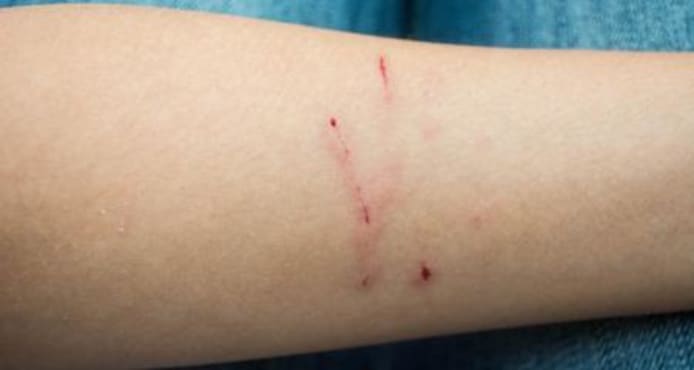
If you're a dog or cat owner, you will most likely get scratches from your pet every now and then. Read on to learn how to deal with them at home.
Even though we know they never intend to hurt us, our furry family members can scratch us. Our fragile human skin is sometimes no match for the claws of our dogs and cats. Sometimes, these scratches can be quite severe. Read on to learn about some simple first-aid tips for scratches that you may sustain at home.
Who’s the offender?
A dog or cat that is a member of your household may carry different risks than animals with an unknown history. If you are scratched by a stray or unknown pet, it's always best to seek a medical professional as you may need a tetanus shot or antibiotics.
How bad is the wound?
Understanding that it can be extremely painful, it is very important that you take time to assess the damage. For instance, you always want to take note of the location and depth of the wound. If a scratch happens near mucous membranes (eyes, mouth), these can be more critical. Other locations that are concerning are deep scratches near joints. Wounds that are extremely deep are more prone to infection. Always keep in mind that babies, the elderly, and people with decreased immune systems are more likely to develop infection.
How do I treat it?
After the bite happens, the first thing to do is clean the area. It's best to clean scratches with mild soap. If it seems to be difficult to get it to stop bleeding, apply pressure with a bandage or gauze. If you are tending to someone else's wounds, try to use gloves if they are available. If not, please be sure to wash your hands afterwards.
Apply a thin layer of antibiotic cream to the wound once it is clean, dry, and no longer bleeding. You should keep and protect the wound from exposure to more germs for the first 24-48 hours. This will also provide some cushion if the wound is painful.
What do I need to look out for?
Even with our best first aid, sometimes wounds will get infected. If you notice any of the following after a scratch, this is a sign that further medical treatment is warranted:
● Swelling
● Redness
● Purulent discharge (pus)
● Fever
● Flu-like symptoms
● Swollen lymph nodes
● Body rash
Cat scratch fever
One of the most serious side effects of cat scratches is an infection called "cat scratch disease" or "cat scratch fever." This infection is caused by a bacterium called Bartonella. Cats get this bacterium from fleas. Flea feces containing this bacterium can get under the cat's nails and make it extremely easy to transmit to humans. This bacterium can also be transmitted via bite wounds from cats as well. Symptoms of cat scratch disease in humans happen about 3-14 days from the time of the scratch. This disease can cause pain, redness, lymph node swelling, and fever. If gone undiagnosed, it can affect other organs, such as the heart, brain, spleen, and others. If you suspect this, it requires immediate medical attention.
In conclusion...
Bear in mind that some people are more at risk for infection, and you should pay special attention to scratches in this population. Even if the wound is minor, it is always wise to keep your physician informed of what's going on, even if it's only a phone call to your doctor.
Also, these recommendations are for scratches, not for bites. There are different risks and protocols that have to be followed when discussing bites.
Finally, keep in mind that this general information isn't intended to be medical advice, and you should always consult with a doctor to make sure you're treating your wounds properly.
This article was created with assistance from AI tools and reviewed for accuracy by Petco's content team.
1270Pet Parents found this article helpful
Related Articles


