


Two Easy Ways to Start Earning Rewards!
Become a member today! Members-only pricing and offers, personalized care notifications, Vital Care points back on every purchase and more!
 Become a credit card member today!
Earn 2X Pals Rewards points at Petco
when you use Petco Pay!APPLY NOWLearn More About Petco Pay Benefits
Can Cats Eat Tomatoes? What's Safe and What's Not
Published on February 3rd, 2023
Updated on June 18th, 2026

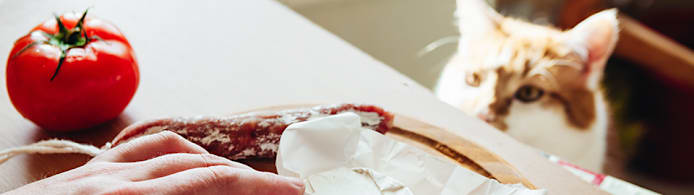
Are you wondering if it’s safe for your cat to eat tomatoes? Petco has all the information about the safety of tomatoes and tomato sauce for cats.
Can cats eat tomatoes and are they safe?
Yes, your cat can eat the ripe fruit of a red tomato, if it doesn’t contain a stem or leaves. However, tomatoes don’t have much nutrition for cats. Always consult your veterinarian before feeding your cat new foods, and if they’ve eaten a green tomato or the leaves or stem of any variety, consult your vet or pet poison control.
If your cat manages to eat some plain diced tomato off the floor, don’t worry—the worst that’s likely to happen is that they’ll experience an upset stomach. However, whole tomatoes are another matter. The reason the leaves and stems of tomatoes, as well as the fruit of unripe or green tomatoes, can be so dangerous to cats is because of solanine, also called tomatine. Eating enough solanine can be harmful to humans, but for your small cat, it can be fatal.
The digestive systems of cats are meant to absorb essential nutrition from meat and grains, and not vegetables or fruits like tomatoes. While your cat may receive some nutrition from tomatoes, it doesn’t compare to the nutrients they receive from commercially available cat food. This is why tomatoes should be considered a treat for cats, if even that.
Can cats eat tomato sauce?
No, there are too many harmful ingredients for cats to eat tomato sauce. Added sugar causes weight gain and is bad for your cat’s teeth, salt levels can lead to dehydration and salt toxicity and common ingredients in tomato sauce like garlic and onions are toxic to felines.
What to do if your cat eats a tomato
What if your cat has already eaten some tomato or tomato sauce that you spilled on the floor? Chances are they’ll be fine if they pick up a small amount of ripe tomato, but if they lap up any sauce, check the ingredients—toxic ingredients might require immediate veterinary attention. Always monitor them for signs of an upset stomach and other symptoms so all concerns can be clearly described to your vet or Pet Poison Hotline at 855-764-7661. Please note an incident fee applies when you call the Pet Poison Helpline.
What fruits can cats eat and why?
Cats are carnivores, meaning their primary diet should consist of meat. While fruit is not a primary food source for felines, some fruits are safe for cats to consume but should only be offered as an occasional snack and served in moderation. However, not all fruit is safe for cats, and some are toxic, so it’s important to know the difference. All the fruit on the following list of safe fruits for cats should be served without any seeds, stems, or pits and washed and cut into bite-sized pieces before feeding to your pet.
Safe fruits for cats to eat:
- Apples
- Bananas
- Pears
- Watermelon
- Strawberries
- Blueberries
- Raspberries
- Cranberries
- Blackberries
- Mangos
- Pineapples
- Cantaloupe melon
- Honeydew melon
- Kiwis
- Nectarines
- Apricots
Never feed your cat grapes, raisins, lemons, limes or oranges. These fruits are not safe for cats to eat.
What vegetables can cats eat and why?
While cats are carnivores and should eat a diet primarily made up of meat protein, there are some vegetables cats can eat. However, never feed your cat garlic, onions, wild mushrooms, rhubarb and added salts and spices. Also, only serve your cat vegetables without seeds, stems and pits and ensure they are washed, prepared or cooked appropriately and cut into bite-sized pieces for them.
- Celery
- Beans
- Broccoli
- Cabbage
- Artichokes
- Asparagus
- Carrots
- Cauliflower
- Eggplant
- Lettuce
- Olives
- Peas
- Peppers
- Pumpkin
- Sweet potato
- Squash
Frequently Asked Questions
Can cats eat tomatoes at all? Yes — a small amount of ripe, red tomato flesh (no stem, leaves or seeds) is generally not toxic to cats. That said, cats are carnivores whose digestive systems are built to draw nutrition from meat, not fruit or vegetables, so tomatoes offer little meaningful nutritional value for them. Treat ripe tomato as an occasional, tiny snack at most, and always check with your veterinarian before introducing any new food. https://www.vet.cornell.edu/departments-centers-and-institutes/cornell-feline-health-center/health-information
What happens if my cat ate a green tomato or unripe tomato? Contact your veterinarian or an animal poison control resource right away. Green and unripe tomatoes contain significantly higher concentrations of solanine (also called tomatine), a naturally occurring compound in the nightshade family that can be harmful — and in sufficient quantities, potentially fatal — to a small animal like a cat. Don't wait for symptoms to appear before seeking guidance. https://www.aspca.org/pet-care/animal-poison-control
What are the symptoms of tomato plant poisoning in cats? Signs of solanine toxicity can include drooling, vomiting, diarrhea, lethargy, weakness, dilated pupils and, in serious cases, changes in heart rate or difficulty breathing. If your cat has chewed on any part of a tomato plant — leaves, stem or unripe fruit — and you notice any of these signs, call your veterinarian or the Pet Poison Helpline (855-764-7661) immediately. Note that an incident fee applies when calling the Pet Poison Helpline. https://www.aspca.org/pet-care/animal-poison-control
How much tomato is toxic to a cat? There is no established "safe dose" of solanine for cats, and the amount that causes harm varies with a cat's size, age and overall health. Because cats are considerably smaller than humans, even a modest quantity of green tomato or tomato plant material can be dangerous. When in doubt, treat any ingestion of leaves, stems or unripe tomato as a potential emergency and consult your veterinarian rather than waiting to see what happens. https://www.aspca.org/pet-care/animal-poison-control https://www.merckvetmanual.com/management-and-nutrition/nutrition-small-animals/nutritional-requirements-of-small-animals
Can cats eat tomato sauce or tomato-based products? No. Even setting aside the tomato itself, most tomato sauces and processed tomato products contain ingredients that are outright toxic to cats — garlic and onions chief among them — along with high levels of salt (which can cause dehydration and salt toxicity) and added sugars that contribute to weight gain and dental problems. If your cat laps up any tomato sauce, check the ingredient list immediately and contact your veterinarian if garlic, onion or large amounts of salt are listed. https://www.aspca.org/pet-care/animal-poison-control
Do cats actually need fruits or vegetables in their diet? No. Cats are obligate carnivores, meaning their bodies are designed to meet all essential nutritional needs through animal-based protein and fat. Fruits and vegetables — including tomatoes — are not a required part of a cat's diet and cannot replace the nutrients delivered by a complete and balanced commercial cat food that meets AAFCO nutritional standards. Any fruit or vegetable should be considered an occasional, supplemental treat (no more than 10% of daily caloric intake) rather than a dietary staple, and your veterinarian is the right person to advise on what extras, if any, are appropriate for your individual cat. https://www.aafco.org/consumers/understanding-pet-food/ https://www.merckvetmanual.com/management-and-nutrition/nutrition-small-animals/nutritional-requirements-of-small-animals
This article was created with assistance from AI tools and reviewed for accuracy by Petco's content team.


FAQs about Cats and Tomatoes
If your cat does manage to eat some tomato, the most likely scenario is that nothing serious will happen. A ripe tomato without the stem or leaves is not considered toxic to cats, but that does not mean tomatoes should be offered to a cat. And remember, unripe tomatos and tomato leaves or stems are toxic to cats.
If you have a healthy cat and the amount of tomato they ate isn’t excessive—and the tomato was ripe but not seasoned with anything harmful, then the possibility of your cat having a noticeable reaction is relatively small.
It’s still recommended to keep a close eye on them and monitor their behavior for the next 24 hours. They may still be sensitive or have a delayed reaction to the tomato they ate. If your cat exhibits any side effects, call your veterinarian or the Pet Poison Hotline at 855-764-7661. Please note a $65 incident fee applies when you call the Pet Poison Helpline.
If you have a cat that seems to love munching on tomatoes, there is no good explanation. Cats are obligate carnivores, and their diet consists almost completely of meat. However, felines are curious pets and may just be interested in what you’re eating. Just be sure tomatoes are kept out of reach of your cat in the event they won’t leave them alone.
Tomato sauce is not recommended for your cat. Part of the reason is that some cats may have adverse reactions to eating tomatoes, but also because tomato sauce typically contains other unhealthy or toxic ingredients for your cats—such as garlic, onions, salt and oil.
If your cat does manage to eat tomato sauce, check the label for toxic ingredients and watch them closely for signs of gastrointestinal distress, weakness or lethargy. If your cat shows any of these symptoms, call your veterinarian or Pet Poison Control at 855-764-7661. Please note a $65 incident fee applies when you call the Pet Poison Helpline.
Ripe cherry tomatoes are no more or less dangerous to cats than other types of tomatoes. Remember, tomatoes are not a recommended treat for your cat and unripe tomatoes, their stems and leaves are toxic to cats.