Two Easy Ways to Start Earning Rewards!
Earn 2X Pals Rewards points at Petco
when you use Petco Pay!
Get It Today
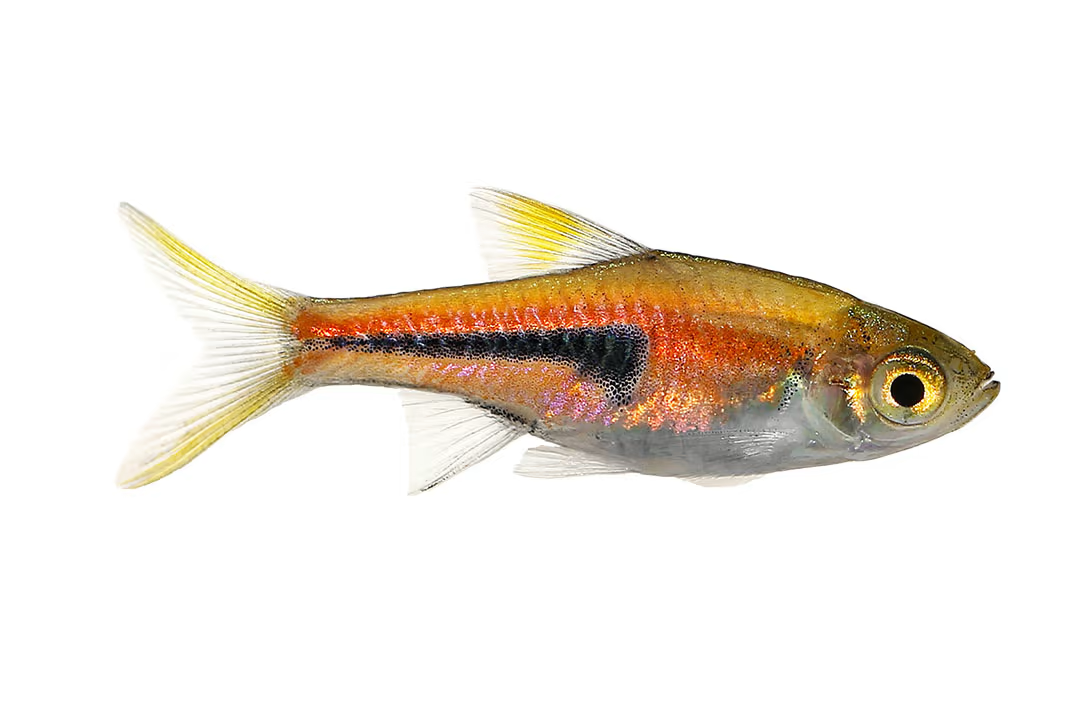
Learn how to care for semi-aggressive fish, recommended diet & aquarium setup. Find the right food, supplies & equipment at your neighborhood Petco.
Updated on April 9th, 2026
Discover how to hardscape your aquarium here at Petco. Visit Petco and check out aquarium hardscape ideas, solutions and much more for your fish.
Updated on July 17th, 2026
Search Petco to learn about blackwater fish aquariums. We want to help you decide what lifestyle is best for your unique fish.
Updated on June 19th, 2026
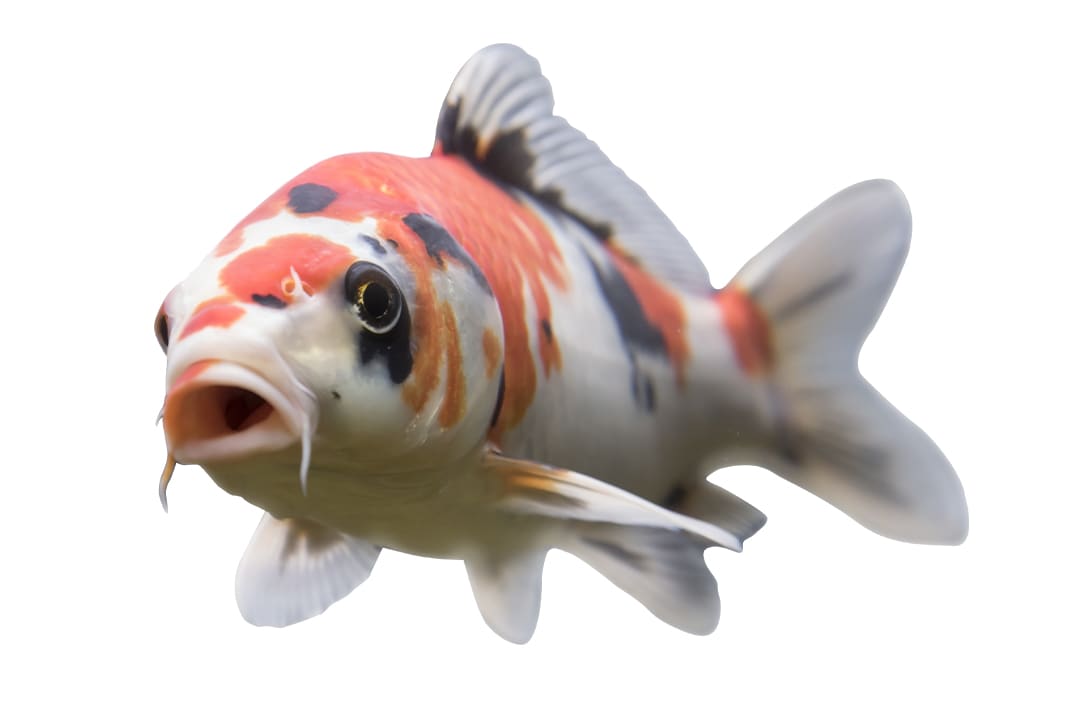
Learn how to care for a Koi, recommended diet and aquarium setup. Find Koi for sale, supplies and equipment at your neighborhood Petco.
Updated on April 9th, 2026

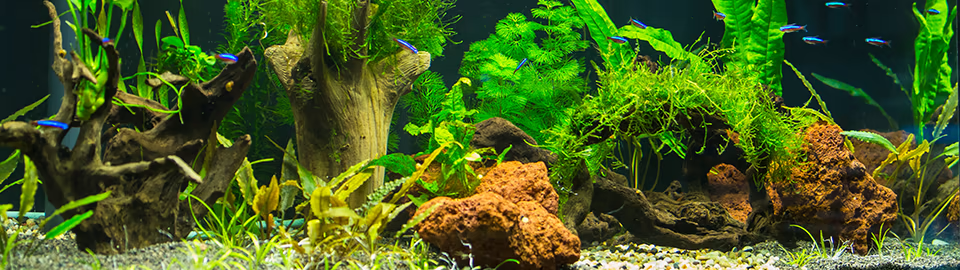
Tanks with live plants can be excellent additions to your home, bringing a touch of nature indoors. Learn how to take care of aquatic plants.
Updated on November 6th, 2025
Without anything to use for scale, it is hard for me to tell how big your tank is, but in general it seems very small. Also, the water that is in the tank appears very cloudy right now, so that would be the first place to start. Water quality is very important, and will make or break your ability to house and care for fish. I would recommend getting a good filter system (you can visit a local pet store to assist you with brands in your area, as I am not familiar with what you can get in India). Be sure to bring the measurements (height, length, width) of your tank, or the gallons or liters so they can tell you what capacity of filter you will need. Everything else will depend on what types of fish you get - if you plan on getting multiple fish, they will need to be small - a general rule of thumb is one square inch of fish per gallon of water. Depending on the species you get, you may need to also get a bubbler to ensure there is enough oxygen in the water for them, and you will also likely need to get some sort of substrate for the bottom and cage furniture (different species have different air requirements, and some are secretive and like to hide). You may also need a water heater, depending on the species you would like to house. But, depending on how small your tank is, it may be hard to get a water heater that will fit. The food type will also depend on what species you get, as there can be differences in diet type between species. I hope that gives you a place to start, and good luck!
Updated on September 24th, 2025
It is possible the tank has not cycled properly which results in high ammonia and nitrite levels which can kill fish. Allow the tank to run, without fish, for at least 4-6 weeks. During this time, use a home test kit or submit a water sample for testing every few days. The local Petco may do this for free or for a small fee. What you are looking for is to have ammonia and nitrites at 0 ppm and nitrates at 20ppm or less. pH can hover around 7 for most community fish. Avoid large, rapid swings in pH though. What is happening in the tank during this time is that beneficial bacteria are populating the gravel/substrate and the filter. These bacterial populations are responsible for the Nitrogen Cycle. This cycle breaks down wastes from fish, uneaten food and plant matter into by-products that are filtered out or dissipate. You can "cycle" a tank with fish, however this increases the risk of loss. Once your tank has cycled, you can add fish. You will still need to monitor water chemistry and perform partial water changes regularly. Use only conditioned water that is temperature matched to prevent stress or shock. You will also need to vacuum the gravel regularly and rinse the filter media. Never use tap water to rinse. Use a bit of tank water to protect bacterial populations in the sponge.
Updated on September 24th, 2025
Platys, Mollies, Neons, Dwarf Gouramis and Cory Cats are all excellent choices. Be sure to not overstock the tank and allow it to properly cycle before adding fish. You would need to contact the Petco in question and ask them directly. Some locations will accept fish to rehome if they have the tank space. Most local fish stores will not, due to risk of disease or parasite transmission.
Updated on September 24th, 2025
The majority of the acclimation guide is intended for introducing animals recently purchased online into a quarantine environment that have been inside a dark box for 24+ hours and the water quality is most likely degraded from waste. Hopefully you followed these steps before introducing your pond animals into their quarantine environment. After the quarantine period the acclimation from this environment should be relatively easy and quick – given the water parameters in the quarantine environment are ideal and similar to your pond. The best way to move the fish would be to put them in a 5 gal. bucket and float the bucket in the pond for at least 30 minutes so the temperature in the bucket can gradually reach the same temperature as the pond. Make sure you do this in a shady spot of the pond or during a time period when the bucket will not be in the sun. In order to keep the bucket from tipping it may take some creativity but it may be as simple as using a wooden pole laid across the pond centered through the bucket handle to achieve this. Make sure to add a small air-stone to the bucket to agitate the surface so the oxygen and pH levels don’t change. From there you can gradually introduce pond water to the bucket and remove the mixed water until you are confident that the majority of the water left in the bucket is water from your pond (should take no more than 20-30 minutes). From there, gently scoop the fish out and place them in the pond and discard the water from the bucket.
Updated on September 24th, 2025
The most common cause of death of a newly acquired fish is usually shock or incorrect water quality. Fish tanks should be set up and left running without fish for at least 3-4 weeks to establish a proper nitrogen cycle. There are products that can shorten this time period. If this is not done, there may be high levels of ammonia, chloramine, nitrates and nitrites which can kill a fish. When introducing a fish, the bag should be floated in the tank for about 30 minutes to acclimate the fish to water temperature. This can prevent shock if the water is too hot or too cold. Test your water quality with a home test kit or submit a sample for testing. Most pet stores or aquarists will do this for free or for a nominal fee. Correct any imbalances as indicated. Slowly acclimate any new fish as written above. You can request a consultation to discuss your concerns in greater detail if necessary. Buying fish and starting a tank can be quite confusing initially.
Updated on September 24th, 2025