


Two Easy Ways to Start Earning Rewards!
Become a member today! Members-only pricing and offers, personalized care notifications, Vital Care points back on every purchase and more!
 Become a credit card member today!
Earn 2X Pals Rewards points at Petco
when you use Petco Pay!APPLY NOWLearn More About Petco Pay Benefits
Male vs Female Bearded Dragon: How to Tell the Sex
Published on November 25th, 2024
Updated on June 18th, 2026

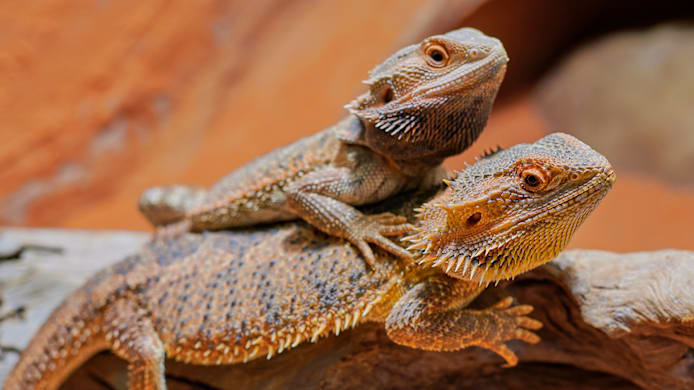
Do you want to know if your bearded dragon is a male or female? Visit Petco to learn how to identify the sex of your bearded dragon.
Male vs. Female Bearded Dragon: How to Tell the Difference
Figuring out whether your bearded dragon is male or female is one of the most common questions new beardie pet parents have — and the answer depends largely on your dragon's age. There are five reliable methods for sexing a bearded dragon, ranging from a quick visual check to a simple flashlight technique. The older your beardie is, the easier and more accurate the process becomes.
Quick answer: The fastest method for bearded dragons 4–6 months and older is checking for hemipenal bulges on the underside of the tail. For babies under 8–12 weeks, wait — the physical differences simply haven't developed enough to read reliably.
Key Takeaways: Male vs. Female Bearded Dragon at a Glance
| Physical Feature | Male Bearded Dragon | Female Bearded Dragon |
|---|---|---|
| Hemipenal bulges | Two distinct bulges, one on each side of the tail's midline | One single, centered, smoother bulge |
| Femoral pores | Large, pronounced, clearly visible | Smaller, less distinct |
| Tail base | Thicker, wider at the base | Narrower, tapers more sharply |
| Head/skull | Larger, wider skull | Smaller, thinner skull |
| Beard color | Tends to darken more dramatically | Generally lighter |
| Cloacal opening | Wider | Narrower |
| Behavior | More frequent head-bobbing, beard fluffing, stomping, hissing | Similar behaviors possible but less frequent |
Adult bearded dragons are sexually dimorphic — meaning males and females are physically distinct from one another. These differences become most reliable and readable once your beardie reaches 12 months of age, though several methods work well from 4–6 months onward.
How to Determine the Sex of a Bearded Dragon: 5 Methods
1. Check for Hemipenal Bulges
This is the fastest and most reliable method for bearded dragons 4–6 months or older. Hemipenal bulges indicate the presence of hemipenes — the male bearded dragon's internal sex organs, located just beneath the skin at the base of the tail.
How to do it safely:
- Rest your beardie on a solid, sturdy surface, or pick him or her up by applying gentle pressure to the thoracic region underneath while supporting the shoulder blades with your thumb. Support all four legs between your fingers and the palm of your hand, or rest the body along your forearm.
- With your free hand, gently lift the base of the tail upward at an angle — never exceeding 90 degrees. Always lift from the base of the tail, never the tip, which can be damaged or broken.
- Lifting the tail stretches the skin around the sex glands, making the bulges easier to see.
- Look for the outline of one or two hemipenal bulges.
What you're looking for:
- Male: Two defined grooves running vertically down the tail toward the cloacal opening, creating two distinct, side-by-side bulges.
- Female: One single, centered vertical bulge above the cloacal opening — smoother and less prominent than a male's.
If the bulges aren't immediately visible, lift the tail slightly more to stretch the skin further. Take care not to overextend — discomfort is a sign you've gone too far.
2. The Flashlight Method
This technique works on the same principle as Method 1 but uses a small flashlight to backlight the tail, making the sex organs visible even in younger or smaller beardies. It is the preferred method for baby bearded dragons.
How to do it:
- Position your beardie as described in Method 1.
- In a darkened room, place a small flashlight directly against the upper side of the tail right at the point where the tail meets the body.
- Shine the light through the base of the tail and look from behind.
- The base of the tail will glow red. Dark shadows within that glow indicate the location of the bulges.
What you're looking for:
- Male: Two distinct dark shadows, one on each side of the tail's center.
- Female: One central shadow (or none), with the rest of the base glowing evenly red.
3. Femoral Pores
Bearded dragons use femoral pores to secrete pheromones. These pores appear as small circles running in a line across the underside of the back legs, along the thighs.
- Male: Femoral pores are significantly larger, more distinct and more pronounced.
- Female: Femoral pores are present but noticeably smaller and less defined.
There is no standardized measurement for femoral pore size in male vs. female bearded dragons, but the difference is visually clear when you can compare a male and female side by side. Important: Femoral pores only fully develop at adulthood. If your beardie is under 12 months old, this method may not give you accurate results.
4. Tail Base and Head Size
These physical differences are most useful as confirming details rather than standalone methods, especially in juveniles.
Tail base:
- Males have a noticeably thicker, wider tail base to accommodate the hemipenes.
- Females have a narrower tail that tapers more sharply from the base.
Head and skull:
- Males typically have a larger, wider skull.
- Females have a smaller, thinner head.
In baby bearded dragons, head size differences are present but subtle enough that relying on them alone is not recommended — wait until your beardie is older for a clearer read.
5. Cloacal Opening
The cloaca (also called the vent) is the opening on the underside of your bearded dragon, between the rear legs. It serves as the exit point for feces, urate and eggs.
- Male: Wider cloacal opening.
- Female: Narrower cloacal opening.
This difference is real but can be subtle, making it most useful as a secondary confirmation alongside the hemipenal bulge or flashlight method.
6. Behavior
Behavioral differences between male and female bearded dragons are real, but behavior is the least reliable method for sexing and should never be used alone.
- Males tend to head-bob more frequently, fluff and darken their beards (a display used to appear larger and more threatening), hiss and stomp.
- Females can display all of the same behaviors, just less often.
Because females can and do exhibit "male" behaviors, behavioral observation requires close, skilled judgment over time and still won't give you a definitive answer.
How to Sex a Baby Bearded Dragon
Sexing a baby beardie is genuinely harder — the physical features used to identify sex simply haven't fully developed yet. Here's what to keep in mind:
- Wait at least 8–12 weeks before attempting any sexing method.
- Start with the flashlight technique (Method 2 above) — it's the most effective option for young dragons.
- Confirm with tail shape: A female's tail narrows and tapers sharply at the base; a male's tail is slightly thicker toward the base. These differences become more pronounced as your beardie grows.
- Avoid relying on head size in babies — while males do develop wider skulls, the difference is too subtle in young dragons to read accurately.
- For certainty, wait until 12 months. Adult bearded dragons show all five physical markers clearly. If you need a definitive answer sooner, your veterinarian or a knowledgeable reptile specialist can help.
Does Sex Affect How You Care for Your Bearded Dragon?
The day-to-day approach to caring for male and female bearded dragons is largely the same — diet, lighting, temperature gradients and habitat setup don't change based on sex. That said, knowing your beardie's sex is genuinely useful: female bearded dragons can develop eggs even without a male present, which is important health information your veterinarian will want to know. If you ever notice changes in your beardie's appetite, behavior or body condition, consult your veterinarian — especially for female dragons who may be carrying eggs.
Male vs. Female Bearded Dragon: At-a-Glance Comparison
Use this quick-reference table to compare the most reliable physical and behavioral differences between male and female bearded dragons. Keep in mind that these traits are most clearly visible in adults 12 months and older — younger beardies may not yet show fully developed characteristics. When in doubt, consult your veterinarian or a reptile-knowledgeable Petco associate for confirmation.
| Trait | Male Bearded Dragon | Female Bearded Dragon | Best Age to Assess |
|---|---|---|---|
| Hemipenal bulges | Two distinct, symmetrical bulges on either side of the tail base above the cloaca | One single, centered, less pronounced bulge | 4–6+ months (flashlight method works earlier) |
| Femoral pores | Large, clearly defined pores running along the inner thighs; waxy secretions often visible | Smaller, less distinct pores; secretions rarely visible | 12+ months for reliable comparison |
| Head shape & size | Wider, broader skull; noticeably larger head relative to body | Narrower skull; smaller, more tapered head | 12+ months |
| Tail base | Thicker, wider at the base to accommodate hemipenes | Narrower base; tapers more sharply near the body | 8–12+ weeks (more reliable at adulthood) |
| Cloacal opening (vent) | Wider opening | Narrower opening | 12+ months |
| Beard color during display | Darkens dramatically (often turns black) during dominance or mating displays | May darken, but typically less intensely and less frequently | Any age |
| Head-bobbing behavior | Frequent, vigorous head bobbing — especially toward other dragons | Occasional head bobbing; more likely to arm-wave in submission | Any age (behavior alone is not definitive) |
| Arm-waving behavior | Less common; typically a submissive or stress response | More commonly observed as a submissive signal | Any age |
| Body size (general) | Tends to be larger overall at full adult size | Tends to be slightly smaller and more slender at maturity | 18+ months for clearest size difference |
| Spikes along the body | Often appear more pronounced along the sides | Generally present but may appear slightly finer | Adult |
A note on accuracy: No single trait is foolproof on its own — especially in juveniles. The hemipenal bulge check (with or without the flashlight method) combined with femoral pore assessment gives the most reliable result in dragons over 12 months. If you're still unsure after trying multiple methods, a reptile-experienced veterinarian can confirm your beardie's sex quickly and safely.
Frequently Asked Questions
At what age can you accurately tell a bearded dragon's sex? Most pet parents find reliable results once a bearded dragon is at least 4–6 months old using the hemipenal bulge or flashlight method. For the clearest confirmation across all traits — including femoral pores, head size and tail thickness — waiting until 12 months or older is recommended. Baby beardies under 8 weeks are extremely difficult to sex accurately because secondary sex characteristics have not yet developed.
What are femoral pores, and why do they matter for sexing? Femoral pores are small, circular openings that run along the underside of a bearded dragon's rear thighs. Both sexes have them, but males develop significantly larger, more prominent pores that can produce waxy pheromone secretions — especially during breeding season. Because these pores don't fully mature until adulthood, this method works best in dragons over 12 months old.
Can a female bearded dragon bob her head or fluff her beard like a male? Yes — and this is exactly why behavior alone is the least reliable sexing method. Females can and do head-bob, darken their beards and display dominant postures, particularly when they feel threatened or are establishing territory. Arm-waving is more commonly seen in females as a submissive signal, but males perform it too. Always combine behavioral observation with physical checks for a more accurate result.
Is it safe to lift my bearded dragon's tail to check for hemipenal bulges? Yes, when done gently and correctly. Support your beardie's full body on a stable surface or along your forearm, then slowly lift the tail at the base — never grab the tip — to no more than a 90-degree angle. Lifting beyond 90 degrees or pulling the tail tip can cause discomfort or injury. If your dragon is new to your home, allow time for trust-building before attempting this handling.
Do male and female bearded dragons require different care? Day-to-day husbandry — diet, lighting, temperature gradients and habitat setup — is essentially the same for both sexes. The most significant care difference arises with females, who can develop and lay infertile eggs (a process called being "gravid") even without a male present. A gravid female needs appropriate laying substrate and close monitoring; retained eggs can become a serious health concern. Always consult your veterinarian if you suspect your female is gravid or is showing signs of difficulty laying.
Should I have a veterinarian confirm my bearded dragon's sex? If you've tried multiple methods and are still uncertain — or if you're planning to house multiple bearded dragons together — a reptile-experienced veterinarian can provide a definitive answer quickly and safely. Professional confirmation is especially worthwhile before any breeding decisions or if you notice unexpected physical changes in your beardie that may signal a health concern.
Frequently Asked Questions
Can you tell a bearded dragon's gender at birth? Sexing a hatchling bearded dragon with confidence is extremely difficult. The physical features used to identify sex — hemipenal bulges, femoral pores and tail thickness — have not yet developed enough to read accurately. Most experienced reptile keepers recommend waiting a minimum of 8–12 weeks before attempting the flashlight method, and waiting until 12 months for the most reliable results.
Does gender affect how you care for a bearded dragon? Day-to-day husbandry — diet, lighting, temperature gradients and habitat setup — is essentially the same for male and female bearded dragons. The key difference is that sexually mature females can develop and lay infertile eggs (a process called being gravid) even without a male present, which requires extra nutritional support and a lay box. Always consult your veterinarian if you notice your female straining, losing appetite or showing signs of lethargy during a potential laying cycle.
Is the flashlight method safe for baby bearded dragons? Yes, when done gently and correctly. Use a small penlight held at the very base of the tail — right where the tail meets the body — and never lift the tail beyond 90 degrees. The technique relies on light passing through tissue to reveal shadows, so no pressure is applied to the sex organs themselves. Stop immediately if your beardie shows signs of stress, and give him or her time to settle before trying again.
Why do female bearded dragons sometimes display "male" behaviors like head-bobbing and beard-darkening? Hormonal fluctuations — particularly around ovulation or when a female is establishing territory — can trigger behaviors typically associated with males, including head-bobbing, beard fluffing and stomping. Because of this overlap, behavior alone is considered the least reliable method for determining sex and should always be confirmed with the hemipenal bulge or flashlight technique.
At what age are femoral pores a reliable sexing tool? Femoral pores only reach their full, distinguishable size once a bearded dragon reaches adulthood — generally around 12 months of age. In juveniles younger than 12 months, the pores of both sexes appear similarly small, making size comparison unreliable. Once your beardie is fully grown, a male's femoral pores will be noticeably larger and more pronounced than a female's, especially when you can compare two adults side by side.
Should I have a veterinarian confirm my bearded dragon's sex? If you are uncertain after trying the methods above — or if you are planning to house multiple bearded dragons together — a reptile-savvy veterinarian can confirm sex quickly and with confidence during a routine wellness exam. Professional confirmation is especially worthwhile before any breeding attempt or if your female shows signs of being gravid, since reproductive complications can become a serious health concern.
This article was created with assistance from AI tools and reviewed for accuracy by Petco's content team.


