


Two Easy Ways to Start Earning Rewards!
Become a member today! Members-only pricing and offers, personalized care notifications, Vital Care points back on every purchase and more!
 Become a credit card member today!
Earn 2X Pals Rewards points at Petco
when you use Petco Pay!APPLY NOWLearn More About Petco Pay Benefits
Bearded Dragon Eggs: Complete Care Guide
Published on September 18th, 2023
Updated on June 18th, 2026


Learn the signs your bearded dragon is gravid and how to care for a pregnant beardie. Also, find out if the eggs are fertile and how to care for bearded dragon eggs.
Do bearded dragons lay eggs?
Yes. When a bearded dragon—or any reptile—is carrying eggs, she is referred to as gravid. However, these reptiles can lay eggs that haven’t been fertilized by a male and don’t contain juveniles. Either way, the female will lay from 11 to 30 eggs at a time, up to four times, over several months.
Only a small number of reptiles give live birth; these reptiles are know as viviparous. Most reptiles, like bearded dragons, lay eggs, and are referred to as oviparous. Understanding the process of caring for a gravid (pregnant) or egg-bound bearded dragon before she starts laying eggs can help ensure the best possible outcome for your beardie if she does become gravid.
When do bearded dragons lay eggs?
Female bearded dragons generally lay eggs when they become sexually mature at around 8-18 months (about 1 and a half years) of age, but some bearded dragons have laid eggs as early as 9 months of age in rare cases! If your female bearded dragon hasn’t been around a male in over a year, more than likely, the eggs will be infertile. Wait, a whole year?! That’s right - female beardies can store males’ sperm in their reproductive tracts for egg fertilization for up to a year!
Signs your beardie might be gravid
When a female beardie is gravid, she might begin to act abnormally. She may become lethargic, eat less, and sleep more. She might begin to scratch and dig around the habitat, searching for a suitable place to lay her eggs. You may notice her becoming bloated, and you may feel several marble-sized swellings in her abdomen. Once you notice these nesting behaviors, offering her a suitable place to lay her eggs is critical to helping prevent her from becoming egg-bound.
Setting Up a Nest Box for Your Gravid Bearded Dragon
When your bearded dragon is gravid (carrying eggs), giving her a proper laying box is one of the most important things you can do. Set it up before she shows signs of active nesting — once she starts digging, you won't want to delay.
What You Need
| Item | Details |
|---|---|
| Container | Clean plastic box or small plastic wastebasket |
| Fill depth | At least 12 inches (roughly halfway full) |
| Substrate | Potting soil or vermiculite (small mineral flakes that retain moisture well) |
| Placement | A quiet corner of her enclosure — or just outside it |
| Orientation | Tipped on its side so she can crawl fully inside |
Lay the box on its side so your beardie can enter, turn around and dig in privacy. Some bearded dragons refuse to lay inside their usual enclosure, so placing the box just outside is a perfectly fine option. The goal is a warm, quiet, private space where she feels secure enough to complete the clutch.
Warning Signs: When to Call Your Veterinarian
It is completely normal for a gravid bearded dragon to stop eating while she is carrying eggs. That alone is not a cause for alarm. However, egg-binding (dystocia) is a life-threatening condition if left untreated — and it requires prompt veterinary attention. Contact your veterinarian right away if your beardie shows any of the following signs:
- Becomes very lethargic or noticeably weak
- Strains repeatedly to lay eggs but none are passing
- Has had a visibly swollen abdomen for several weeks without laying
Do not wait to see if the situation resolves on its own. Egg-binding can be fatal, and early intervention gives your dragon the best chance of a full recovery.
Caring for Bearded Dragon Eggs After Laying
Step 1 — Wait Until She Has Finished
Do not attempt to candle or handle the eggs while your dragon is still in the process of laying. Disturbing her mid-clutch can cause her to stop and retain the remaining eggs, which raises the risk of egg-binding. Bearded dragons typically bury their eggs once the full clutch is laid — that is your signal that it is safe to proceed.
Step 2 — Candle the Eggs
Candling tells you whether an egg has been fertilized. Here is how to do it correctly:
- Wait until your dragon has buried the entire clutch and moved away.
- Hold one egg gently at eye level.
- Place a small flashlight against the far side of the egg, pointing the light toward you.
- Look through the egg. A pinkish embryo visible inside means the egg is fertilized.
- If the egg appears clear with no embryo, it is most likely unfertilized.
Remove unfertilized eggs promptly — leaving them in the nest can encourage your beardie to eat them. Handle fertilized eggs as little as possible, and never rotate or jostle them; the developing embryo inside is fragile.
Step 3 — Incubate Fertilized Eggs
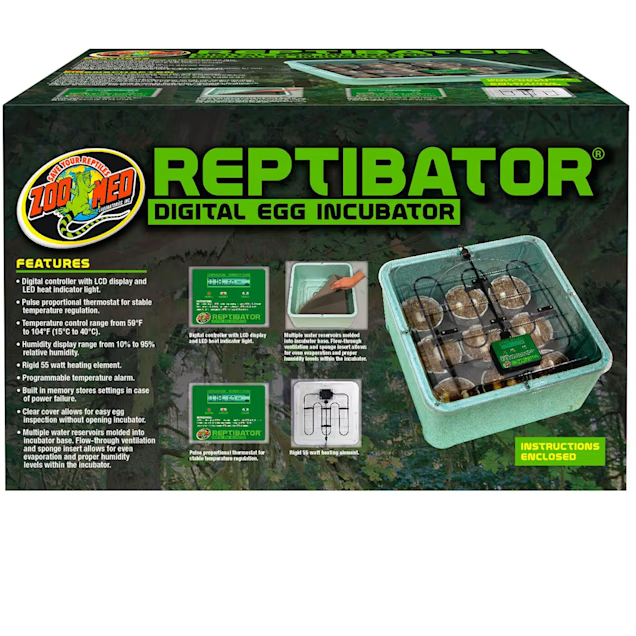
Fertilized eggs can be incubated right in the laying box or moved to a dedicated incubator. Either way, maintaining stable conditions is critical.
| Parameter | Target Range |
|---|---|
| Temperature | 80–85°F |
| Humidity | ~75% |
| Incubation period | 55–75 days |
- Monitor temperature and humidity daily with a reliable thermometer and hygrometer.
- If humidity drops too low, lightly mist the substrate around the eggs — never mist the eggs directly, as excess moisture promotes mold.
- As incubation progresses, fertilized eggs will turn chalk-white. Just before hatching, they will visibly deflate — this is normal and means hatchlings are on their way.
Helping Your Beardie Recover After Laying
Egg-laying is physically demanding. Once your dragon has finished her clutch, she needs focused support to rebuild her strength. Prioritize the following:
- A clean enclosure — refresh the substrate and wipe down surfaces to reduce any bacterial load.
- A balanced diet — offer a mix of leafy greens, vegetables and appropriately sized protein sources to help her replenish energy stores.
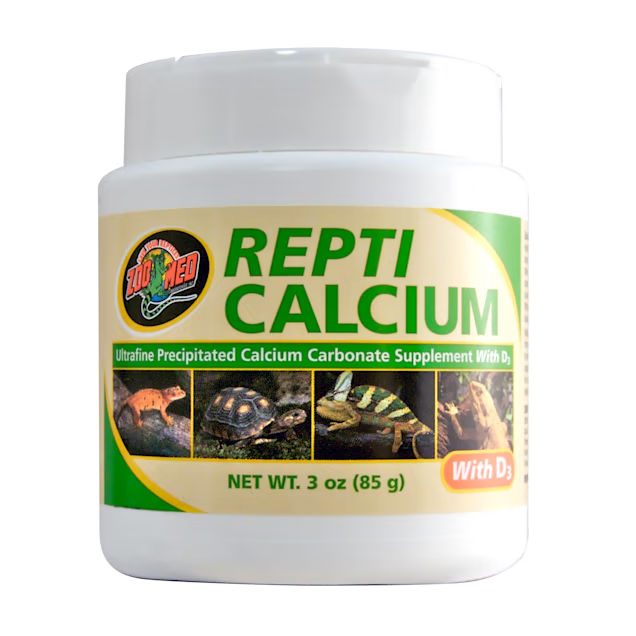
- Calcium and vitamin/mineral supplementation — laying depletes calcium significantly; consistent supplementation is essential during recovery.
- Adequate hydration — offer fresh water daily and consider a lukewarm soak to encourage drinking and support overall recovery.
Caring for a gravid bearded dragon — and then her eggs — takes attention and patience, but the effort is well worth it. If at any point you are concerned about your beardie's behavior, her appetite, or how the hatchlings are developing, consult your veterinarian as soon as possible. They are your best resource for guidance tailored to your individual dragon's needs.
Recommended Products for Bearded Dragons After They Lay Eggs


Frequently Asked Questions
How long do bearded dragon eggs take to hatch? Fertilized bearded dragon eggs typically take 55 to 75 days to hatch when incubated at the correct temperature and humidity. You'll know hatching is near when the eggs turn chalk-white and begin to deflate slightly. Avoid opening the incubator unnecessarily during this period, as temperature swings can harm developing embryos.
What temperature do bearded dragon eggs need? Bearded dragon eggs should be incubated at 80–85°F (27–29°C) with approximately 75% relative humidity. Monitor conditions continuously with a reliable thermometer and hygrometer. If humidity drops, lightly mist the surrounding substrate — never mist the eggs directly, as excess moisture on the shell encourages mold growth.
Can unfertilized bearded dragon eggs hatch? No. Unfertilized eggs do not contain an embryo and will never hatch. You can confirm fertility through candling: hold the egg up to a bright flashlight in a darkened room. A fertilized egg shows a visible pinkish embryo and network of blood vessels; an unfertilized egg appears uniformly translucent. Infertile eggs can be safely discarded to prevent your beardie from consuming them.
How many eggs does a bearded dragon lay at one time? A gravid female typically lays 11 to 30 eggs per clutch and may produce up to four clutches over several months. Clutch size varies with the female's age, size and overall condition. Providing a proper laying box and a nutritious diet before and after laying helps her recover her strength between clutches.
What should I do if my bearded dragon won't lay her eggs? A bearded dragon that strains to lay eggs without passing any, has a swollen abdomen for several weeks, or becomes severely lethargic may be egg-bound (dystocia) — a potentially life-threatening condition. Do not attempt to intervene at home. Contact your veterinarian promptly if you observe these signs, as egg-binding requires professional medical attention.
How do I care for my bearded dragon after she lays eggs? Egg-laying is physically demanding. Once your beardie has finished laying, replenish her resources with a balanced diet of leafy greens and appropriate protein sources, along with calcium and vitamin and mineral supplements. Maintain a clean habitat with proper humidity and lighting. If she seems unusually weak or refuses food for an extended period after laying, consult your veterinarian.
Bearded Dragon Egg-Laying: Quick-Reference Guide
Use this table to quickly compare the key milestones and conditions involved in bearded dragon egg-laying and incubation. All ranges reflect commonly reported values for Pogona vitticeps in captivity.
| Stage / Factor | Typical Range | Notes |
|---|---|---|
| Age at sexual maturity | 8–18 months | Rare cases reported as early as 9 months |
| Eggs per clutch | 11–30 eggs | Unfertilized clutches fall within the same range |
| Clutches per season | Up to 4 | Laid over several months; each clutch separated by weeks |
| Sperm storage duration | Up to 12 months | Females can retain viable sperm in the reproductive tract |
| Nest box depth | At least 12 inches | Fill with potting soil or vermiculite to allow natural burrowing |
| Incubation temperature | 80–85 °F | Monitor continuously with a calibrated thermometer |
| Incubation humidity | ~75% | Mist the substrate — never the eggs directly — to maintain levels |
| Incubation period (fertilized eggs) | 55–75 days | Eggs turn chalk-white as development progresses |
| Pre-hatch sign | Visible deflation of egg | Normal; hatchlings pip within hours to a day or two |
| Egg-binding risk window | Swollen abdomen 2+ weeks without laying | Seek veterinary care immediately — can be life-threatening |
Always consult your veterinarian if your beardie shows signs of egg-binding, prolonged lethargy, or straining without passing eggs.
Frequently Asked Questions
Do bearded dragons lay eggs without a male? Yes. Female bearded dragons can lay infertile (unfertilized) eggs without ever being around a male. These clutches are biologically normal but will not produce hatchlings. If your beardie has had no contact with a male for more than 12 months, her eggs are almost certainly infertile.
How do I know if bearded dragon eggs are fertilized? Use a technique called candling: in a darkened room, hold the egg gently and shine a small flashlight through it from the far side. A fertilized egg will show a pinkish embryo and visible veining inside. An infertile egg will appear uniformly translucent or yellowish. Candle only after your beardie has finished laying and buried the clutch to avoid disrupting the process.
What temperature and humidity do bearded dragon eggs need to incubate? Fertilized eggs should be incubated at 80–85 °F with approximately 75% relative humidity. Monitor conditions with both a thermometer and a hygrometer. Mist the surrounding substrate lightly if humidity drops — never mist the eggs directly, as excess surface moisture encourages mold.
What is egg-binding in bearded dragons, and is it dangerous? Egg-binding (dystocia) occurs when a gravid female cannot pass her eggs. Signs include prolonged straining, a swollen abdomen lasting several weeks without any eggs being laid, and increasing weakness or lethargy. Egg-binding is a medical emergency that can be life-threatening if left untreated — contact your veterinarian right away if you observe these signs.
How should I care for my bearded dragon after she lays eggs? Egg-laying is physically demanding. Once your beardie has finished, restore her energy by offering a balanced diet of leafy greens and appropriate protein sources, along with calcium and vitamin and mineral supplements. Keep her habitat clean and humidity levels stable. Monitor her closely for several days; if she remains lethargic or refuses food beyond a short recovery period, consult your veterinarian.
How long does it take for bearded dragon eggs to hatch? Fertilized bearded dragon eggs typically hatch between 55 and 75 days after being laid, provided incubation conditions remain consistent. Just before hatching, the eggs will visibly deflate — this is normal and signals that hatchlings are preparing to pip. Avoid handling eggs during this final stage.
This article was created with assistance from AI tools and reviewed for accuracy by Petco's content team.
Related Articles


