


Two Easy Ways to Start Earning Rewards!
Become a member today! Members-only pricing and offers, personalized care notifications, Vital Care points back on every purchase and more!
 Become a credit card member today!
Earn 2X Pals Rewards points at Petco
when you use Petco Pay!APPLY NOWLearn More About Petco Pay Benefits
Freshwater Fish in Tank: Compatibility Guide
Published on February 5th, 2025
Updated on June 18th, 2026


Reviewed by Don Spaeth
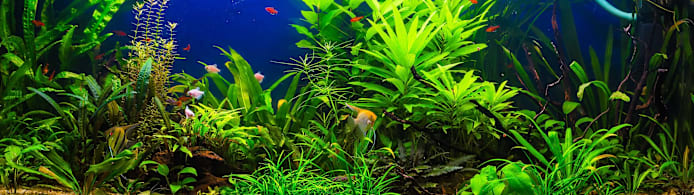
Find out which freshwater fish can live together with our compatibility chart and tips for creating a harmonious aquarium.
Setting up a freshwater fish tank is an excellent way to enjoy the beautiful colors and companionship of fish and other aquatic life. Watching your freshwater fish swish and swim through their aquarium or small invertebrates, like cherry shrimp frolicking about, is relaxing and can bring an immediate smile to your face.
When setting up a freshwater fish tank or adding new fish to your finned family, it is important to make sure that you are creating an environment where all your fish and additional aquatic life will thrive. While many freshwater fish enjoy sharing their watery home with others, not all freshwater aquatic life are compatible with one another. To help understand what it takes to create a harmonious habitat for your fish, read on to learn more about what makes certain fish and other aquatic critters compatible. Then, use our handy freshwater fish compatibility chart to discover which aquatic life species will reside happily with one another.
Freshwater fish compatability
When picking new fish for your aquarium, it is important to understand what makes certain fish compatible with one another. Incompatible fish can lead to increased stress for all tank mates. This can result in illness, injury and an overall decline in health. There are three key areas of compatibility to consider when adding new fish to your family.
1. Fish temperaments
Not all fish have the same temperament. Depending on a fish's temperament, they may or may not enjoy the companionship of other fish.
Many community fish have a mild temperament. They do well as tank mates with other mild temperament fish and are the perfect pick for fish parents who want to have a variety of fish in a single tank.
Some fish have a semi-aggressive temperament. These fish might only do well with other semi-aggressive-tempered fish or specific fish species.
Finally, there are certain species of fish that are naturally more aggressive. These fish prefer to swim solo or can only hang out with specific like-minded tank makes.
Keep in mind that all fish are unique. Each fish will have its own personality. While the chart below highlights typical characteristics of certain fish, you may find your own fish differ. Always watch their interactions and look for any signs of stress or aggression. If you notice any of your fish are distressed, it might be best to separate and house them in their own tank.
2. Water Parameters
Beyond simply which fish and additional aquatic life species enjoy the company of others, there are specific water requirements that can differ by species as well. While it is easy to understand why freshwater and saltwater fish can't cohabitate, it is equally important to understand that even freshwater fish, invertebrates and plant life may need a different habitat. From the pH to the temperature of the water, what might make a comfortable home for one freshwater fish will not be for another. It is important to make sure that all your fish and additional aquatic life species share the same water and habitat requirements before housing them together.
Water Conditioner
pH Treatments
Water Test Kits
3. Diet Compatibility: Why What Your Fish Eats Matters
Not all freshwater fish eat the same foods — and mismatched diets are one of the most overlooked reasons a community aquarium runs into trouble. When fish with very different nutritional needs share a fish tank, feeding time becomes a balancing act: one species may outcompete others for food, or a diet suited to one fish may leave another malnourished over time. https://vcahospitals.com/know-your-pet
Freshwater fish generally fall into three feeding categories:
- Carnivores – protein-focused fish that thrive on live, frozen, or freeze-dried meaty foods (worms, brine shrimp, small feeder invertebrates). Examples include oscars, cichlids, and most bettas. Feeding these fish a plant-heavy diet can lead to poor condition and sluggishness. https://www.merckvetmanual.com/all-other-pets
- Herbivores – plant-eaters that need algae wafers, spirulina-based foods, and blanched vegetables as dietary staples. Common examples include plecos and certain livebearers like mollies. Kept with carnivores, herbivores are often outcompeted at feeding time and may go underfed.
- Omnivores – the most flexible feeders, accepting both protein and plant matter. Tetras, corydoras, and goldfish fall into this group, making them easier to pair with a wider range of tankmates. https://vcahospitals.com/know-your-pet
At-a-Glance: Freshwater Fish Diet Compatibility
| Feeding Type | Common Examples | Primary Foods | Compatibility Note |
|---|---|---|---|
| Carnivore | Oscar, betta, cichlid | Meaty proteins, live/frozen foods | Difficult to pair with herbivores; may ignore plant-based foods entirely |
| Herbivore | Pleco, molly, silver dollar | Algae wafers, spirulina, vegetables | Can be outcompeted by aggressive carnivore feeders |
| Omnivore | Tetra, corydoras, goldfish | Varied flakes, pellets, proteins | Most flexible; generally easier to house with other feeding types |
Practical Feeding Tips for a Mixed Community Tank
If your fish tank does include species with different dietary needs, a few simple strategies can help every fish get what it needs:
- Feed in zones. Drop carnivore foods (sinking pellets, frozen bloodworms) at one end of the tank and herbivore wafers at the other. This reduces competition and ensures each fish finds its appropriate food.
- Use sinking foods for bottom-dwellers. Plecos and corydoras often miss surface feedings entirely. Sinking algae wafers or bottom-feeder pellets make sure they're not going hungry while other fish eat at the surface.
- Watch for food aggression. Larger carnivorous fish — especially cichlids and oscars — may bully smaller tankmates away from food. If you notice one fish consistently dominating feeding time, reconsider the pairing or add a second feeding spot.
- Don't overfeed to compensate. Adding extra food to make sure every fish gets some leads to uneaten food breaking down in the water, which degrades water quality and can stress all your fish. https://www.merckvetmanual.com/all-other-pets
When in doubt about whether two species can realistically share a feeding routine, consult your veterinarian or a knowledgeable Petco aquatics associate before adding a new fish to your tank.
Freshwater Fish Food
Freshwater compatability chart
To discover which fish do best housed together or with other aquatic life species, check out the following compatible freshwater fish chart. You can use this chart to discover what aquatic life you might be able to add to your new or existing freshwater tank.
Freshwater Fish Compatibility: What the Chart Tells You
As the compatibility chart above shows, not all freshwater fish in a tank get along equally well — and understanding why makes stocking decisions much easier. Some species thrive only in the company of their own kind, while others are natural community fish that adapt to a wide range of tankmates.
Goldfish and koi, for example, do best when kept exclusively with one another. Both prefer cooler water temperatures and grow large enough that most smaller community fish become vulnerable around them. Platies, on the other hand, are among the most reliably peaceful community fish available — adaptable, hardy and compatible with a broad range of similarly sized, non-aggressive freshwater species. If you want to add a sweep of color to a community setup, rasboras are another excellent choice: schooling fish with a calm temperament that rarely causes conflict.
Where Do Fish Like to Swim? Understanding the Water Column
One of the most practical — and most overlooked — compatibility factors is where in the tank a fish naturally spends its time. Most freshwater fish occupy one of three distinct zones in the water column: the top, the middle and the bottom. Stocking fish across all three levels creates a visually dynamic, well-balanced aquarium and reduces competition for space and resources.
A reliable shortcut: look at the fish's mouth position.
| Mouth Position | Preferred Zone | Why It Works That Way |
|---|---|---|
| Upturned mouth | Top of the water column | Angled to grab food from the surface |
| Forward-facing mouth | Middle of the water column | Built to dart and intercept food mid-water |
| Downward-facing or underslung mouth | Bottom of the tank | Designed to extract food from the substrate or tank floor |
Top Swimmers
These species spend the majority of their time near the surface and are often the first fish pet parents notice:
- African butterfly fish — a surface ambush predator; best kept with larger, non-nippy tankmates
- Killifish — vivid coloration; many species prefer a tight-fitting lid since they jump
- Furcata rainbowfish
- Halfbeaks
- Hatchetfish — another jumper; a secure lid is essential
- Pencilfish
- Arowanas — grow very large; require a spacious tank and experienced care
Labyrinth fish — including betta fish, paradise fish and gouramis — also hover between the top and middle zones. Their labyrinth organ allows them to breathe air directly from the surface, so they naturally return to the top regularly. Mollies, guppies and platies are primarily top-to-middle swimmers and will cruise both zones throughout the day.
Mid-Water Swimmers
The middle of the tank is often the most active zone in a community aquarium. Species that thrive here include:
- Neon tetras
- Glowlight tetras
- Black neon tetras
- Emperor tetras
- Bleeding heart tetras
- Tiger barbs
- Denisoni barbs
- Silver dollars
- Discus
- Boesemani rainbowfish
Many of these are schooling species — tetras and barbs especially — and do best in groups of six or more, which also helps reduce fin-nipping behavior.
Bottom Dwellers
The lower third of the tank is home to some of the hardest-working members of a freshwater community. Many bottom dwellers double as cleanup crew, grazing on algae and scavenging uneaten food:
Algae eaters:
- Plecostomus (common pleco — note that many grow quite large)
- Otocinclus
- Chinese algae eaters
Catfish:
- Panda corydoras
- Green corydoras
- Bronze corydoras
- Striped raphael catfish
- Pictus catfish
- Synodontis eupterus catfish
Loaches:
- Clown loaches
- Botia loaches
- Redtail botias
- Dojo loaches
- Kuhli loaches
Loaches and corydoras are social by nature and generally do better in small groups than alone. Most bottom dwellers appreciate smooth substrate, hiding spots and low-light areas near the tank floor.
Putting It All Together: Stocking a Balanced Freshwater Tank
When you combine an understanding of temperament compatibility (from the chart) with water-column placement, you have the two most important tools for building a thriving freshwater community. A well-stocked tank typically includes representatives from each zone — a few peaceful top swimmers, a school of mid-water fish and a small cleanup crew on the bottom — so every level of the aquarium stays active and visually interesting.
Before adding any new species, always research its specific temperature range, pH preferences, adult size and social needs. A fish that looks small at the store may outgrow its tankmates — or outgrow the tank entirely. When in doubt, the aquatic specialists at your local Petco Pet Care Center are glad to walk you through compatibility questions for your exact setup before you bring anyone new home.
Freshwater Fish Compatibility Chart: Species at a Glance
Use this table to quickly compare common freshwater fish across the four factors that matter most when building a community tank: temperament, preferred water temperature, pH range and swimming level. All fish sharing a tank should overlap comfortably across every column before you bring them home.
| Species | Temperament | Temp. Range (°F) | pH Range | Swimming Level | Compatible With |
|---|---|---|---|---|---|
| Neon Tetra | Peaceful | 70–81 | 6.0–7.0 | Middle | Other tetras, rasboras, corys, guppies, mollies |
| Guppy | Peaceful | 72–82 | 7.0–8.5 | Top–Middle | Mollies, platies, tetras, corys |
| Molly | Peaceful | 72–82 | 7.5–8.5 | Top–Middle | Guppies, platies, tetras, corys |
| Platy | Peaceful | 70–82 | 7.0–8.2 | Top–Middle | Most community fish; guppies, mollies, tetras |
| Zebra Danio | Peaceful | 65–77 | 6.5–7.5 | Middle | Tetras, rasboras, corys, gouramis |
| Harlequin Rasbora | Peaceful | 72–82 | 6.0–7.5 | Middle | Tetras, danios, corys, small gouramis |
| Betta (male) | Semi-aggressive | 76–82 | 6.5–7.5 | Top–Middle | Peaceful bottom dwellers (corys); not other male bettas or fin-nippers |
| Gourami | Semi-aggressive | 72–82 | 6.0–7.5 | Top–Middle | Tetras, rasboras, corys; not male bettas |
| Tiger Barb | Semi-aggressive | 74–82 | 6.0–7.0 | Middle | Other tiger barbs (groups of 6+), larger tetras; avoid long-finned fish |
| Angelfish | Semi-aggressive | 76–84 | 6.0–7.5 | Middle | Larger tetras, gouramis, corys; not small neons or shrimp |
| Discus | Peaceful–Sensitive | 82–88 | 6.0–7.0 | Middle | Other discus, cardinal tetras, corys; requires stable, warm water |
| Goldfish | Peaceful | 65–72 | 7.0–8.4 | Middle | Other goldfish, koi; not tropical fish (temperature mismatch) |
| Koi | Peaceful | 59–77 | 7.0–8.6 | Middle | Other koi, goldfish; pond-scale fish — not suited to most indoor community tanks |
| Plecostomus | Peaceful | 72–82 | 6.5–7.5 | Bottom | Most community fish; can become territorial with other plecos |
| Cory Catfish (all species) | Peaceful | 72–82 | 6.0–8.0 | Bottom | Nearly all peaceful community fish; best kept in groups of 3+ |
| Clown Loach | Peaceful | 77–86 | 6.0–7.5 | Bottom | Tetras, rasboras, corys; best in groups of 5+ |
| Kuhli Loach | Peaceful | 75–86 | 6.0–7.0 | Bottom | Peaceful community fish; needs hiding spots |
| Cherry Shrimp | Peaceful | 65–80 | 6.5–8.0 | Bottom | Corys, small tetras, rasboras; not bettas, angelfish or any fish large enough to eat them |
| Killifish | Peaceful–Semi-aggressive | 72–75 | 6.0–7.5 | Top | Species-dependent; research individual species before mixing |
| Hatchetfish | Peaceful | 73–81 | 6.0–7.5 | Top | Tetras, rasboras, corys; needs a tight-fitting lid — strong jumpers |
How to read this table: Find every fish you want to keep, then check that their temperature ranges and pH ranges overlap. A mismatch in either column is a hard incompatibility, regardless of temperament. When temperament is listed as "semi-aggressive," success depends heavily on tank size, group size and the availability of hiding spots. Consult your veterinarian or a Petco aquatic specialist if you are unsure whether a specific combination is appropriate for your setup. https://vcahospitals.com/know-your-pet
Frequently Asked Questions
What is the most important factor in freshwater fish compatibility? Water parameters — specifically temperature and pH — are the foundation of compatibility. Even two peaceful species will struggle if their temperature or pH requirements do not overlap, because chronic exposure to unsuitable water conditions suppresses immune function and increases disease risk. https://www.merckvetmanual.com/all-other-pets
Can goldfish live with tropical fish like tetras or guppies? Generally, no. Goldfish thrive in cooler water (65–72°F), while most tropical community fish require 75–82°F. Housing them together forces one group outside its comfortable range, leading to stress and increased susceptibility to illness. Goldfish do best with other goldfish or koi in a species-appropriate setup. https://vcahospitals.com/know-your-pet
Are betta fish compatible with community tanks? Male betta fish can coexist with peaceful, short-finned bottom dwellers such as cory catfish, but they should never be housed with other male bettas or fin-nipping species like tiger barbs. Female bettas are generally less aggressive but still require careful monitoring when introduced to new tank mates. Always watch for signs of stress or injury after any new introduction. https://vcahospitals.com/know-your-pet
Are cherry shrimp safe with fish? Cherry shrimp are compatible with small, peaceful fish such as neon tetras, harlequin rasboras and cory catfish. However, larger or predatory fish — including bettas, angelfish and cichlids — may view shrimp as food. Providing dense plant cover and hiding spots can help reduce predation risk in mixed tanks.
What plants or decorations are toxic to freshwater fish? Some ornamental aquatic plants treated with pesticides can be harmful if introduced without proper rinsing. Additionally, certain household plants placed near open tanks can drop leaves that may be toxic. The ASPCA Animal Poison Control Center is a reliable resource if you suspect a fish has been exposed to a toxic substance. https://www.aspca.org/pet-care/animal-poison-control
How many fish can I safely keep in one tank? A widely used starting guideline is one inch of adult fish body length per gallon of water, though this rule has real limitations — it does not account for fish waste output, swimming space needs or aggression levels. Heavily built fish like goldfish and cichlids need significantly more space per inch than slender species. When in doubt, err on the side of fewer fish and consult a Petco aquatic specialist or your veterinarian for species-specific guidance. https://www.merckvetmanual.com/all-other-pets
Frequently Asked Questions
Can goldfish live with tropical fish like tetras or guppies? Generally, no. Goldfish thrive in cooler water (65–72°F) while most tropical fish — including tetras, guppies and platies — need warmer temperatures (72–82°F). Housing them together forces one group into water conditions outside its comfort zone, increasing stress and the risk of illness. Stick to species that share the same water parameter requirements before combining them in one tank.
What makes two freshwater fish incompatible? Incompatibility usually comes down to three factors: temperament (aggressive fish will harass or injure peaceful ones), water parameters (mismatched pH, temperature or hardness), and diet (some species cannot safely eat the same foods). When any one of these factors is misaligned, fish experience chronic stress that can suppress their immune systems and shorten their lives. https://vcahospitals.com/know-your-pet
Can betta fish live with other fish in a community tank? Male bettas are labyrinth fish with a semi-aggressive to aggressive temperament and should not be housed with other male bettas or fin-nipping species like tiger barbs. Some bettas tolerate peaceful bottom dwellers such as corydoras catfish or otocinclus, but individual personality varies widely. Always monitor interactions closely and have a backup tank ready if aggression appears. https://vcahospitals.com/know-your-pet
Are invertebrates like cherry shrimp compatible with most freshwater fish? Not always. Many popular fish — including large cichlids, bettas and certain loaches — will readily prey on small invertebrates like cherry shrimp. Peaceful nano fish such as ember tetras, small rasboras and otocinclus are generally safer tank mates for shrimp. Always research a fish's feeding behavior before adding invertebrates to the same tank.
How do I know if my fish are stressed by incompatible tank mates? Watch for clamped fins, faded coloration, hiding, rapid gill movement, loss of appetite or visible injuries like torn fins. These are common signs that a fish is under stress from aggression or unsuitable water conditions. If you observe any of these behaviors, separate the affected fish promptly and consult your veterinarian or a Petco aquatic specialist to assess the situation. https://vcahospitals.com/know-your-pet
Can plants and live décor affect fish compatibility? Yes — live plants can actually improve compatibility by breaking up sightlines between aggressive and peaceful fish, reducing territorial behavior. Dense planting also provides hiding spots for smaller or more timid species, lowering overall stress levels in a mixed community tank. Make sure any plants you choose match the lighting and water parameter needs of your fish as well.
This article was created with assistance from AI tools and reviewed for accuracy by Petco's content team.


