


Two Easy Ways to Start Earning Rewards!
Become a member today! Members-only pricing and offers, personalized care notifications, Vital Care points back on every purchase and more!
 Become a credit card member today!
Earn 2X Pals Rewards points at Petco
when you use Petco Pay!APPLY NOWLearn More About Petco Pay Benefits
Best Fish for Beginners: Top Freshwater Picks
Published on July 18th, 2024
Updated on June 18th, 2026

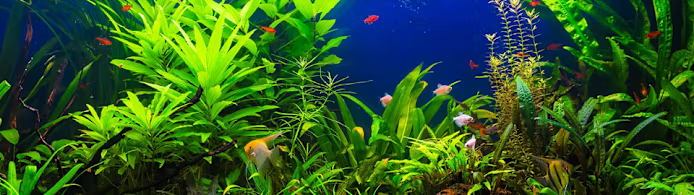
Some fish species generally do well in smaller aquariums, are more adapted to aquarium life, & can be slightly more forgiving with water quality fluctuations.
Getting started in fishkeeping can be an exciting new hobby for pet parents of any age! While having a properly set up aquarium that is cycled and established is important for keeping any fish, there are some species that have less requirements than others, making them easier to take core of for the first time fishkeeper. This grouping of fish species generally do well in smaller aquariums, are more adapted to aquarium life, and can be slightly more forgiving with water quality fluctuations. So, what are the best fish for beginners?
Bettas
Bettas are a great beginner fish for many reasons. These colorful fish come in an endless amount of color and fin pattern combinations, making every fish unique. Only one male bettas can be kept in an aquarium as they will fight with other male bettas. Female bettas can usually be kept in a community tank with other species without concern or in sorority with other female bettas if the tank is large enough and there are various hiding places. Bettas have a labyrinth organ allowing them to breathe from the water’s surface. This allows them to be kept in a tank without a filter, although a filter and heater are preferred in an ideal set-up. Betta fish have tons of personality and will often interact when their pet parent comes up to the aquarium.
Mollies, Platies, & Swordtails
Mollies, platies, and swordtails come in an assortment of color varieties and fin lengths. They are generally considered peaceful community fish that can be kept in schools in an appropriately sized aquarium. These fish are hardy, active, and livebearers that will reproduce quite easily if males and females are kept together.
Guppies
Guppies
Guppies (Poecilia reticulata) are one of the most popular choices for beginning aquarists — and for good reason. These colorful, hardy livebearers are forgiving of minor water-quality fluctuations, stay active throughout the day, and bring a splash of personality to any freshwater fish tank.
What makes guppies stand out:
- Color and variety. Dozens of selectively bred varieties exist, each with its own distinct color, pattern, or tail shape — from the fan-tailed Fantail to the sword-tailed Swordtail. Males carry the showiest colors, with large, boldly patterned tails that catch the light as they swim.
- Peaceful temperament. Guppies are generally peaceful community fish that coexist well with other calm, similarly sized species.
- Hardy constitution. They adapt readily to a range of water conditions, making them a forgiving first fish for pet parents still dialing in their tank maintenance routine.
A note on breeding. Guppies are livebearers, meaning females give birth to free-swimming fry rather than laying eggs. If you keep males and females together, breeding is virtually inevitable — a single female can produce dozens of fry in one cycle. If you'd prefer not to manage a growing population, consider keeping only males, which are typically the more colorful sex anyway.
Tip: Provide plenty of plants or decorations where fry can hide if you'd like to give them a chance to survive in a community fish tank.
Consult your veterinarian or an aquatic specialist if you notice any changes in your guppies' behavior, appetite, or appearance, as these can be early signs of illness.
Zebra Danios
Zebra Danios are active little fish displaying black and white stripes with an iridescent sheen. These fish do best in schools but only reach a maximum size of around 2”, so several can be kept in a 10 gallon or larger aquarium. These fish can do well in a wide range of water parameters, making them more forgiving of fluctuations and an excellent beginner fish. Despite being very active swimmers, they are generally peaceful fish and can be kept with other community fish.
Neon Tetras
These brightly colored fish are a fantastic addition to the tropical aquarium and can be an easy fish for beginners if water parameters are maintained. Neon Tetras do best when kept in schools of 5 or more, however their small size enables them to be kept in a 10 gallon or larger aquarium. Although these fish can be more sensitive to water quality concerns, they are peaceful community fish with voracious appetites making them an easy keeper in the established aquarium.
Whichever fish you choose to inhabit your new aquarium, ensuring you have the appropriate setup for the species is vital. Minimum size of the aquarium, appropriate heater, filtration, and décor are all important for happy and healthy fish.
Best Freshwater Fish for Beginners: Quick Comparison
Use this table to compare the most popular beginner-friendly freshwater fish at a glance. Tank size, temperament and special needs vary by species — matching the right fish to your setup from the start sets every pet parent up for success.
| Fish | Minimum Tank Size | Hardiness | Temperament | Keep In Groups? | Special Needs |
|---|---|---|---|---|---|
| Betta | 5 gallons | Moderate | Peaceful (one male per tank) | No (males); females in sorority with space | Labyrinth organ; filter + heater preferred; no male tankmates |
| Guppy | 10 gallons | High | Peaceful | Yes — mixed or single-sex schools | Males and females breed readily; separate sexes to control population |
| Molly | 10 gallons | High | Peaceful community | Yes — schools | Livebearer; will reproduce if males and females are housed together |
| Platy | 10 gallons | High | Peaceful community | Yes — schools | Livebearer; tolerates a range of water hardness |
| Swordtail | 15 gallons | High | Peaceful community | Yes — schools | Livebearer; males can show aggression toward each other in small spaces |
| Zebra Danio | 10 gallons | Very High | Active, peaceful | Yes — schools of 6+ | Tolerates wide water-parameter range; max size ~2 inches |
| Neon Tetra | 10 gallons | Moderate | Peaceful community | Yes — schools of 5+ | More sensitive to water quality; best added to a fully cycled, established aquarium |
A note on water quality: Even the hardiest beginner fish depend on a properly cycled aquarium with stable parameters. Consult your veterinarian or a knowledgeable Petco associate if you notice signs of illness, and refer to guidance from the Merck Veterinary Manual for general aquatic health information. https://www.merckvetmanual.com/all-other-pets
Frequently Asked Questions
What is the single easiest fish to care for as a beginner? Zebra danios are widely regarded as one of the most forgiving freshwater fish for first-time pet parents because they tolerate a wide range of water temperatures and parameters, stay small (around 2 inches), and thrive in a standard 10-gallon aquarium.
Can a betta fish live in a bowl without a filter? Bettas possess a labyrinth organ that allows them to breathe oxygen directly from the water's surface, which means they can survive without a filter — but a filtered, heated aquarium is strongly preferred for their long-term wellbeing. Stagnant, unfiltered water degrades quickly and can stress or sicken your fish; consult a knowledgeable Petco associate for setup guidance.
How many beginner fish can I keep in a 10-gallon aquarium? A common starting guideline is one inch of adult fish per gallon of water, but species behavior, bioload and filtration capacity all matter. For example, a 10-gallon aquarium can comfortably house a school of six zebra danios or five neon tetras, but would be too small for swordtails long-term. Always research the adult size and social needs of each species before stocking.
Do livebearers like guppies, mollies and platies breed on their own? Yes. Livebearers give birth to free-swimming fry rather than laying eggs, and they reproduce readily when males and females share an aquarium. If you are not prepared to care for offspring, keep only one sex or provide dense planting and hiding spots so fry have a chance of survival in a community setup.
Are neon tetras good for a brand-new aquarium? Neon tetras are peaceful and visually striking, but they are more sensitive to water quality than danios or livebearers. They do best when introduced to a fully cycled, established aquarium with stable pH and ammonia levels at zero. If your aquarium is newly set up, consider starting with hardier species like zebra danios first. https://www.merckvetmanual.com/all-other-pets
When should I call a veterinarian about my fish? Contact an aquatic-experienced veterinarian if you notice persistent symptoms such as clamped fins, unusual spots or lesions, erratic swimming, loss of appetite or rapid gill movement. The AVMA offers resources to help pet parents find veterinarians experienced with aquatic life. https://www.avma.org/resources-tools/pet-owners
Frequently Asked Questions
What size fish tank do I need as a beginner? A 10-gallon aquarium is a practical starting point for most beginner-friendly species like zebra danios, neon tetras and guppies. Larger aquariums (20 gallons and up) are actually more forgiving for new pet parents because water chemistry stays more stable — sudden swings in temperature, pH or ammonia are diluted across a greater volume of water. Your veterinarian or a knowledgeable Petco associate can help you match tank size to the species you have in mind.
Can I keep multiple species together in one aquarium? Yes — many beginner fish are peaceful community species that coexist well. Guppies, mollies, platies, swordtails, zebra danios and neon tetras can generally share a properly sized aquarium. The key exceptions: never house two male bettas together, and avoid pairing bettas with long-finned or brightly colored fish that may trigger aggression. Always research the adult size, temperature needs and temperament of each species before mixing them.
How often should I do water changes? Most freshwater aquariums benefit from a partial water change of roughly 25–30% every one to two weeks, though the right schedule depends on your tank size, how many fish you keep and your filtration setup. Regular water changes help dilute nitrates and other waste byproducts that accumulate even in a well-filtered aquarium. Test your water weekly with a reliable kit so you can spot problems early.
What is "cycling" a fish tank, and why does it matter? Cycling refers to establishing a colony of beneficial bacteria in your aquarium's filter and substrate that convert toxic ammonia (from fish waste) first into nitrite and then into less harmful nitrate. Skipping this step is one of the most common reasons beginner fish become ill or die. The process typically takes two to six weeks. Zebra danios and other hardy species are sometimes used to help seed a cycle, but consult a knowledgeable associate before adding any fish to an uncycled tank.
Are beginner fish safe around children and other pets? Freshwater community fish pose very little risk to people, but household hazards can run the other direction — cats in particular may attempt to reach into an open aquarium. Always use a secure aquarium lid. On the toxicity side, certain aquarium additives and water treatments can be harmful if ingested by children or pets; store all aquarium chemicals out of reach and consult the ASPCA Animal Poison Control Center (888-426-4435) if accidental ingestion occurs. https://www.aspca.org/pet-care/animal-poison-control
When should I call a veterinarian about my fish? Consult a veterinarian — ideally one with aquatic or exotic animal experience — if you notice persistent lethargy, loss of appetite, unusual spots or lesions, labored breathing at the surface, or rapid unexplained deaths in your aquarium. These signs can point to bacterial, parasitic or water-quality issues that go beyond basic home care. The Merck Veterinary Manual's aquatic and exotic pet resources are a helpful reference for understanding common conditions before your appointment. https://www.merckvetmanual.com/all-other-pets
This article was created with assistance from AI tools and reviewed for accuracy by Petco's content team.


