


Two Easy Ways to Start Earning Rewards!
Become a member today! Members-only pricing and offers, personalized care notifications, Vital Care points back on every purchase and more!
 Become a credit card member today!
Earn 2X Pals Rewards points at Petco
when you use Petco Pay!APPLY NOWLearn More About Petco Pay Benefits
Do Horses Need Horseshoes? A Complete Guide
Published on August 18th, 2022
Updated on June 18th, 2026

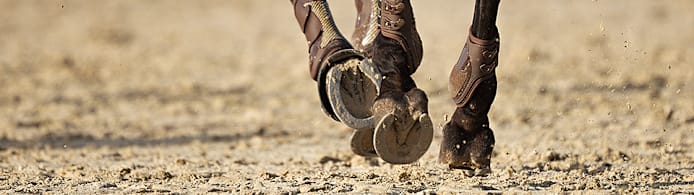
Learn about the purpose of horseshoes and the difference between horseshoes and boots to determine whether your horse should wear them or not.
Does Your Horse Need Horseshoes?
Most horses benefit from some form of hoof protection, but not every horse needs metal shoes — it genuinely depends on your individual horse's workload, hoof quality, terrain and health history. That said, this is not a decision to make casually or alone. Before going shod or barefoot (or transitioning between the two), work closely with your horse's veterinarian and farrier, and loop in your trainer if your horse is in active work. A transition in either direction takes a clear plan and adequate time to execute safely.
Here's a quick look at the key factors that typically tip the decision one way or the other:
| Factor | Leans Toward Shoes | Leans Toward Barefoot |
|---|---|---|
| Workload | Heavy work, frequent road or gravel riding | Light trail or pasture work on soft ground |
| Hoof quality | Thin soles, weak walls, or cracking | Thick, dense, well-formed hooves |
| Terrain | Hard, rocky or abrasive surfaces | Soft, grassy or sandy footing |
| Health conditions | Laminitis, navicular syndrome, or other hoof pathology | Sound horse with no underlying hoof issues |
| Recovery or rehab | Corrective or therapeutic shoeing prescribed by a vet | Barefoot trimming as part of a rehab protocol |
The bottom line: there is no universal right answer, and what works beautifully for one horse may not suit another. Your farrier can assess sole depth, wall integrity and breakover angle, while your veterinarian can flag any underlying conditions — such as laminitis or navicular changes — that make therapeutic shoeing a medical priority rather than just a preference. If you're considering a switch from shod to barefoot (or vice versa), give your horse's hooves time to adapt; rushing the transition can lead to soreness or injury.
For farm and ranch supplies to support your horse's overall care routine, explore Petco's farm and ranch collection.
Understanding Hooves
A horse’s hoof is made of keratin, the same material that makes up a human fingernail, and like your fingernail, does not feel pain when trimmed. A horse’s hoof naturally gets ground down as the horse moves around. Without any protection, the hoof can be ground down too far causing sensitivity and pain, much like a human nail being cut too short. Metal horseshoes can be attached, typically with nails, to the bottom part of the hoof, and assist in making sure your horse’s hoof is both protected and not ground down too quickly. Also like your fingernail, the hoof continuously grows, meaning the shoes will need to be removed regularly (typically every 4-6 weeks) for the hoof to be trimmed to an appropriate length.
Should Your Horse Wear Shoes?
Although metal horseshoes are common, there are many differing opinions across the industry on what is best for your horse. While it does not cause the horse pain, some feel using nails to secure a shoe on a hoof is unethical and often utilize a glue to adhere the shoe in place of nails. Metal shoes are placed on the outermost rim of the underside of a horse’s hoof, so when a horse places weight on its foot, the pressure will mainly end up where the shoe is located, around the edge of the foot. When a horse without shoes puts weight on its foot, the pressure spreads more evenly across the bottom of its foot, dispersing the weight across a larger surface area. Due to this, some people choose a more natural approach and allow their horses go without shoes. Horses can sometimes go back and forth between wearing shoes and not wearing shoes as long as their hoof is appropriately strong, healthy, and the correct length.
Horseshoes or Hoof Boots?
Deciding if your horse needs shoes, or what kind of shoes, can be a personal choice but can also depend greatly on the type and extent of activities and surface textures your horse is regularly on. A horse regularly on rough surfaces can grind down its hoofs more quickly than a horse regularly on soft ground and may be a greater candidate for shoes. Similarly, a horse that regularly competes, is regularly used on trails, or regularly carries/pulls a heavy load may also be at a higher likelihood of grinding its hoofs down faster than they can grow. For those with working horses needing protection that do not want to use metal shoes, utilizing boots during activity may be an alternative option. There are many horse boots options, which like shoes can come in different styles for different purposes and can be changed out easily. Since these boots can so easily be taken on and off, your horse can change its boots dependent upon the surface texture or activity type and can easily go without boots when they’re not needed. Be sure to follow product label instructions as some boots are built for short term wear while others can be left on for longer periods of time.
Special Considerations
Some horses may have hoofs that will always require special shoe protection due to the shape or prior injuries. Just like human fingernails, a horse’s hoof’s growth speed or strength may come down to genetics and some horses may naturally need more protection for their feet than others. A healthy diet is critical to a horse’s overall wellbeing but can also assist in strengthening and regular growth in a horse’s hoof.
Frequently Asked Questions
Do wild horses need shoes? Wild horses do not wear shoes — they self-maintain their hooves through constant movement across varied terrain, which naturally wears and toughens the hoof wall. Domesticated horses typically travel far less distance per day and on more uniform surfaces, so their hooves may not wear evenly on their own. Whether your horse can go barefoot like its wild counterparts depends on hoof strength, workload and the surfaces it lives and works on — your farrier and veterinarian are the best guides.
Can horses go completely barefoot? Yes, many horses live and work comfortably without shoes — a practice often called "going barefoot." Horses with strong, well-shaped hooves that spend most of their time on soft or moderate terrain and carry lighter workloads are often good candidates. The transition from shod to barefoot takes time and a plan, so work closely with your farrier and equine veterinarian before making the switch.
How do I know if my horse needs shoes? Signs that your horse may benefit from shoes include uneven or excessive hoof wear, sensitivity or soreness after work, frequent activity on hard or abrasive surfaces, a heavy competitive or trail schedule, or a history of hoof injuries. Genetics also play a role — some horses simply grow slower or weaker hooves and need ongoing protection. A qualified farrier, in partnership with your veterinarian, can assess your horse's individual hoof health and workload to make the right call.
How often do horseshoes need to be replaced or reset? Horseshoes typically need to be removed and the hoof trimmed every four to six weeks, because — like a human fingernail — the hoof continuously grows. Leaving shoes on too long can cause the hoof to grow out of balance, putting stress on joints and soft tissue. Even barefoot horses should be trimmed on a similar schedule to keep the hoof at a healthy length and shape.
What are the alternatives to traditional metal horseshoes? Two common alternatives are hoof boots and glue-on shoes. Hoof boots slip on and off easily, making them ideal for horses that only need protection during specific activities or on rough terrain — just follow product label instructions, as some are designed for short-term wear only. Glue-on shoes offer a nail-free option for horses whose hoof walls are too thin or fragile to hold nails securely. Both options should be selected in consultation with your farrier to ensure proper fit and function.
Can diet affect hoof health? Absolutely. A horse's hoof is made of keratin, and like any structural tissue, its growth rate and strength are influenced by overall nutrition. A balanced, species-appropriate diet supports consistent hoof growth and wall integrity — meaning nutritional gaps can show up literally underfoot as slow growth, cracking or brittleness. If you have concerns about your horse's hoof quality, discuss both diet and supplementation options with your equine veterinarian.
This article was created with assistance from AI tools and reviewed for accuracy by Petco's content team.


