


Two Easy Ways to Start Earning Rewards!
Become a member today! Members-only pricing and offers, personalized care notifications, Vital Care points back on every purchase and more!
 Become a credit card member today!
Earn 2X Pals Rewards points at Petco
when you use Petco Pay!APPLY NOWLearn More About Petco Pay Benefits
Rat Gestation: Mating, Birth & Growth Guide
Published on August 21st, 2000
Updated on June 18th, 2026

Written by Petco Editorial Team
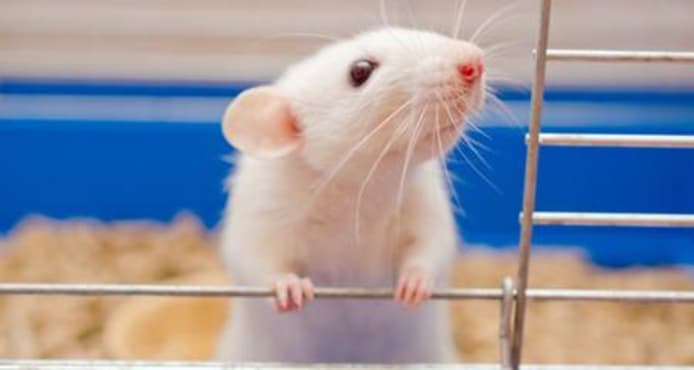
Thinking about breeding your rats? Read this guide to learn about rat reproduction, growth, and weaning.
Rat Gestation, Mating and Birth: What Every Pet Parent Needs to Know
Rat gestation lasts 21 to 23 days — one of the shortest pregnancy timelines of any common small pet. Because rats reach sexual maturity as early as 5 weeks of age and females cycle into heat every 4 to 5 days year-round, unplanned pregnancies happen quickly and often. Understanding the full arc — from first heat through birth — helps you make responsible decisions and keep your rats safe at every stage.
Rat Reproductive Basics
Rats are remarkably prolific, and the biology behind that is worth knowing before you ever consider pairing a male and female.
- Sexual maturity: As early as 5 weeks of age. Separate males and females before this point — no exceptions.
- Heat cycle: Females cycle every 4 to 5 days, year-round, with no true breeding season. Extreme heat or cold can reduce breeding activity, but don't count on temperature to prevent pregnancy.
- Heat timing: Each heat typically begins in the evening and lasts most of the night.
- Pregnancy and heat: Females generally stop cycling once pregnant, though they may come into heat once or twice early in the pregnancy.
- Menopause: Around 18 months of age, a female's cycle becomes irregular and eventually stops. Litter sizes shrink as fertility declines. A female who has stopped cycling can still occasionally become pregnant, though the pregnancy may not develop normally — consult your veterinarian if this occurs.
- Species note: Domestic rats (Rattus norvegicus) can technically mate with roof rats (Rattus rattus), but the offspring will not survive.
A Responsible Decision: Before You Breed
Breeding rats carries real responsibilities. Consider these points carefully before pairing any two rats.
Health screening matters. Do not breed any rat with an active mycoplasma infection, or one with a history of respiratory symptoms. Only breed rats that appear free of respiratory illness and are therefore more likely to carry resistance to mycoplasma.
Litter sizes are large. The average rat litter is 10 to 12 pups. Before breeding, have a concrete plan for every baby — responsible rehoming takes time and effort. Be aware that many pet shops purchase rats primarily as reptile feeders.
Female age is critical for first-time breeding. The safest window for a female's first litter is 4 to 5 months of age. Breeding a female older than 6 to 8 months for the first time is risky: her pelvic canal may have fused in a narrow position, making normal delivery difficult or impossible and potentially requiring a Cesarean section to save her life. If a female of any age experiences a difficult birth, do not breed her again.
Males are more flexible. Age is less of a concern for males — they can remain fertile well into old age.
Recovery time between litters. If you plan a second litter, wait several weeks after the previous litter is fully weaned. This gives the mother time to recover physically and mentally before another pregnancy.
The Mating Process
Pairing for 10 days — long enough to cover two full heat cycles — is the simplest approach to mating rats. However, because females sometimes fight males outside of heat, a more targeted method is to introduce the pair only when the female is actively in heat. This is especially practical if you are breeding with a rat from another household, since the pair only needs to be together for a single evening.
How to recognize heat in a female rat:
- Her vulva will gape visibly open (it remains tightly closed at all other times).
- Stroking her back will trigger the mating "dance": she may dart forward or spin, then brace her legs stiffly, lift her head and tail, and rapidly vibrate her ears — a clear signal to the male that she is ready.
What to expect during mating: The male will sniff and may lick the female before mounting, grasping her scruff lightly with his teeth. Mounting occurs many times during courtship, and the full mating process continues for some time. That said, a single mounting can result in pregnancy — so never allow unneutered males and females to interact unsupervised, even briefly. A persistent male can sometimes stimulate a female who is not yet in heat into cycling early. Females in heat are also motivated escape artists, so secure housing is essential.
Rat Gestation: The Pregnancy Timeline
| Milestone | Typical Timing |
|---|---|
| Gestation length (standard) | 21 to 23 days |
| Gestation length (postpartum pregnancy) | 28 days |
| Abdomen begins to visibly expand | Around day 14 |
| Mammary glands begin to enlarge | Around day 14 |
| Pup movement visible or palpable | Final days before birth |
| Female returns to heat after birth (postpartum estrus) | Within 24 hours of delivery |
The standard rat gestation period is 21 to 23 days, though in rare cases it can extend to 26 days. A postpartum pregnancy — when a female conceives during the postpartum estrus immediately after giving birth — lasts approximately 28 days.
Around the two-week mark, the mother's abdomen will usually begin to expand and her mammary glands will start to enlarge, though not every female shows obvious outward signs. In the final days before birth, you may be able to see or gently feel the pups moving inside her.
Supporting your pregnant rat:
- Provide a nutritious, well-balanced diet throughout pregnancy https://www.merckvetmanual.com/management-and-nutrition/nutrition-small-animals/nutritional-requirements-of-small-animals.
- Ensure she has regular opportunities for exercise.
- Add extra nesting material a few days before the anticipated birth date.
- Remove the father before birth. He is unlikely to harm the pups, but because females return to heat within 24 hours of delivery, leaving him in place will result in an immediate back-to-back pregnancy — which is hard on the mother's body.
Cage companions during pregnancy: A female living with another female or an altered male can generally remain with them through birth and pup-rearing, provided the habitat is large enough to give the mother privacy. Do not house two pregnant females together — while neither intends harm, they may steal each other's pups, and a tug-of-war over an infant can cause serious injury from their sharp teeth. Never introduce an unfamiliar rat to a pregnant or nursing female; she will attack it aggressively. The one exception: a nursing mother will almost always accept and foster other same-size pups, even those of different species.
Personality changes are normal. Hormonal shifts during pregnancy and nursing can make a female more aggressive or less playful than usual. In rat social dynamics, a nursing mother typically becomes dominant over all cage companions — even if she is normally submissive. Once her pups are weaned, her usual personality generally returns. Nursing mothers also commonly have soft stools, which is normal.
The Birth Process
Labor and delivery in rats is typically straightforward and moves quickly.
What to expect:
- Duration: The full birth process usually takes one to two hours.
- Delivery pace: One pup arrives approximately every 5 to 10 minutes.
- Litter size: Average is 6 to 13 pups.
- First sign of labor: A bloody discharge from the vulva.
- Contractions: The mother stretches out while her sides visibly draw inward.
- Active delivery: Once pups begin arriving, the mother sits up and assists with her forepaws and teeth, removes the birth sac, and licks each newborn clean. She will typically eat each placenta and umbilical cord.
- Newborn response: A healthy pup will wiggle and squeak — this response naturally inhibits the mother from accidentally consuming it. A weak or stillborn pup may not trigger this inhibition.
Rare but important problems to watch for:
Most female rats are attentive, capable mothers. However, stress — from a long or painful labor, or from environmental disturbances like sudden loud noises — can cause a mother to kill and eat healthy pups. A poor diet may increase this risk https://www.merckvetmanual.com/management-and-nutrition/nutrition-small-animals/nutritional-requirements-of-small-animals. If this occurs, remove the pups temporarily and return them once the mother has calmed down. After the birth is complete and the mother settles in to nurse, the risk drops significantly.
Handling newborns safely:
- Wait until the mother has left her nest before examining the litter.
- Your scent on the pups will not cause the mother to reject them.
- If the mother seems highly agitated, observe only for the first day or two before handling the pups directly.
- Some mothers will rush to defend pups that squeak when touched — move calmly and give her space.
When to call your veterinarian: If labor lasts significantly longer than two hours without all pups delivered, if the mother appears to be in severe distress, or if you notice signs of infection or illness after birth, contact your veterinarian promptly. Never attempt to intervene in a difficult delivery without professional guidance.
Frequently Asked Questions
How long is the gestation period for rats? The rat gestation period is normally 22 days, but can range from 21 to 23 days — and rarely up to 26 days. A postpartum pregnancy (when a female conceives immediately after giving birth) lasts approximately 28 days. Always consult your veterinarian if you suspect a pregnancy is progressing abnormally.
What are the signs that a rat is pregnant? Around two weeks into the pregnancy, a mother rat's abdomen will typically begin to expand and her mammary glands will start to enlarge. As the birth approaches, you may be able to see or gently feel the pups moving inside her. Behavioral changes — such as increased nesting activity or shifts in personality due to hormonal changes — can also signal that a birth is near.
How many pups does a rat have in one litter? Average litter size ranges from 6 to 13 pups, with many sources citing 10 to 12 as a common average. Litter size can decrease as a female approaches reproductive decline at around 18 months of age. Nutritional status during pregnancy can influence litter health and survival. https://www.merckvetmanual.com/management-and-nutrition/nutrition-small-animals/nutritional-requirements-of-small-animals
When do rats reach sexual maturity, and how often do females cycle? Rats can reach sexual maturity as early as 5 weeks of age, which is why males and females should be separated before that point. Females of breeding age come into heat year-round every 4 to 5 days — unless pregnant — with each heat typically beginning in the evening and lasting most of the night.
What happens during the rat birth process, and how long does it take? Labor typically lasts one to two hours. A bloody discharge from the vulva is usually the first sign of active labor, followed by visible contractions. The mother delivers one pup approximately every 5 to 10 minutes, cleaning each pup, removing the birth sac and typically consuming the placenta. A healthy newborn will wiggle and vocalize shortly after delivery. Contact your veterinarian promptly if labor stalls or appears prolonged.
When is it safe — and not safe — to breed a female rat for the first time? The ideal window for a female rat's first breeding is between 4 and 5 months of age. Breeding a female older than 6 to 8 months for the first time carries significant risk, because her pelvic canal may have fused in a narrow position, making normal delivery difficult or impossible and potentially requiring a Cesarean section. A female who has experienced a difficult birth should not be bred again. Consult your veterinarian before making any breeding decisions.
This article was created with assistance from AI tools and reviewed for accuracy by Petco's content team.
580Pet Parents found this article helpful
Related Articles


