


Two Easy Ways to Start Earning Rewards!
Become a member today! Members-only pricing and offers, personalized care notifications, Vital Care points back on every purchase and more!
 Become a credit card member today!
Earn 2X Pals Rewards points at Petco
when you use Petco Pay!APPLY NOWLearn More About Petco Pay Benefits
Best Small Fish for Small Tanks | Nano Aquarium Guide
Published on July 18th, 2024
Updated on July 16th, 2026


Reviewed by Don Spaeth
Small, AKA “Nano” tanks have grown in popularity over the past couple years and continue to gain momentum. Find out if a mini aquarium is right for you.
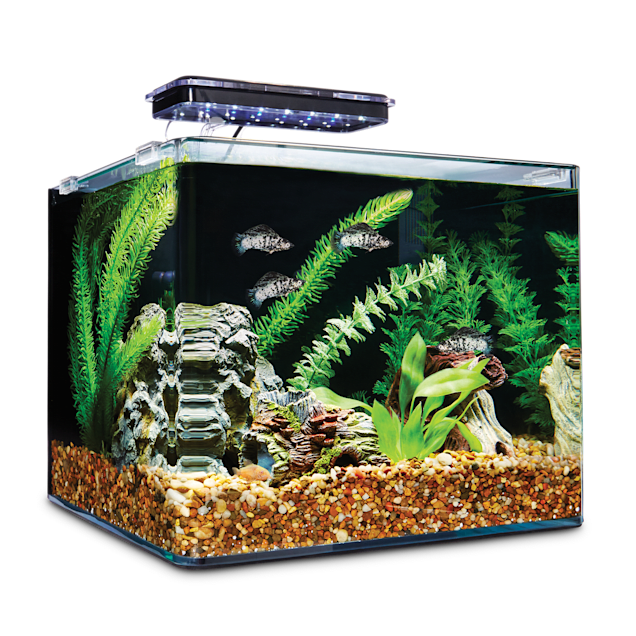
Small Fish for Small Tanks: Is a Nano Aquarium Right for You?
If you're looking for small fish for small tanks, a nano aquarium — typically defined as any fish tank under 20 gallons — may be exactly what you need. These compact setups have surged in popularity because they fit real life: an apartment living room, a child's bedroom, a college dorm, or a home office corner where a full-size tank simply isn't an option. And compared to larger builds, the initial investment is significantly lower, making it easier to get started without a major financial commitment.
That said, a smaller fish tank is not a simpler fish tank. Aquatic care is just as critical here — and in some ways more demanding — than it is for a larger setup. Understanding what you're signing up for before you stock your tank will set you and your fish up for long-term success.
Maintenance and Water Parameters in Small Fish Tanks
Here's the most important thing new nano-tank pet parents need to know: a small fish tank requires just as much routine maintenance as a large one — and sometimes more. The reason comes down to water volume. In a smaller body of water, temperature and water chemistry can shift rapidly, and those swings can be fatal to fish if left unchecked.
This instability is especially critical during the nitrogen cycle — the biological process a new aquarium must complete before it can safely house fish. During this period, ammonia and nitrite levels spike before beneficial bacteria establish themselves and convert those compounds into less harmful nitrate. In a small tank, those spikes happen faster and hit harder than in a larger volume of water.
The good news: consistent habits prevent most problems. Focus on these four areas:
1. Stick to a testing and water-change routine. Test your water parameters — ammonia, nitrite, nitrate, and pH — on a regular schedule. Perform partial water changes consistently rather than waiting until something looks wrong. Small, frequent water changes are far less stressful on fish than large, infrequent ones.
2. Choose and maintain the right filter. Select a filter rated appropriately for your tank's volume, and change or rinse filter media according to the manufacturer's schedule — not just when it looks dirty. A well-maintained filter is your first line of defense against deteriorating water quality. Browse aquariums and fish tanks to find setups that include filtration matched to nano tank sizes.
3. Control feeding carefully. Overfeeding is one of the fastest ways to crash water quality in a small tank. Uneaten food breaks down into detritus, which drives up nitrate levels and stresses your fish. Feed only what your fish can consume in two to three minutes, and remove any uneaten food promptly.
4. Mind your tank's location. Placement matters more than most pet parents expect. Keep your fish tank away from:
- Windows — direct sunlight can rapidly overheat a small volume of water
- Drafty areas or exterior walls — cold drafts cause temperature swings
- Heating and cooling vents — forced air hitting the tank destabilizes temperature
A stable ambient location — away from direct light and airflow — is one of the simplest things you can do to protect your fish.
Bioload: Don't Overstock Your Small Tank
With so many beautiful small fish for small tanks to choose from, it's genuinely tempting to add more fish than your setup can safely support. Resist that urge. Every fish produces waste, and in a nano tank, the cumulative bioload — the total biological waste your filtration system must process — fills up fast.
Overstocking leads to elevated ammonia and nitrate levels, reduced oxygen, and chronic stress in fish, all of which compromise their health. A good starting rule is to research the adult size and waste output of every species before you buy, not after. Your Petco-knowledgeable aquatics associate can help you build a stocking plan that works for your specific tank volume.
Pair the right fish with the right aquarium substrate and gravel to create a stable, low-maintenance environment that supports both water quality and your fish's natural behaviors.
Quick-Reference: Nano Tank Maintenance Checklist
| Task | Frequency |
|---|---|
| Test ammonia, nitrite, nitrate, pH | Weekly (daily during nitrogen cycle) |
| Partial water change (10–20%) | Weekly |
| Rinse or replace filter media | Per manufacturer schedule |
| Remove uneaten food | After every feeding |
| Check tank temperature | Daily |
| Inspect fish for signs of stress or illness | Daily |
If you notice unusual behavior in your fish — lethargy, loss of color, labored breathing, or loss of appetite — test your water parameters immediately and consult a veterinarian with aquatic experience.
Live Plants and Shrimp for Small Tanks
Which brings us to the fun part! Choosing aquatic life that pairs well with "Nano" tanks. One hobbyist favorite is live plants. Plants not only give a natural, vibrant appearance to the aquarium, but they also provide added filtration and aeration. Since water parameters can fluctuate in a small aquarium, plants can assist with water quality and stability by absorbing ammonia, nitrates, decaying matter, and carbon dioxide, also helping with reduced algae growth since they will compete with algae for nutrients.
Gaining a large following, shrimp continue to grow in popularity. There are a couple of different species including Bee shrimp (Caridina cantonensis), Cherry shrimp (Neocaridina davidi), and Ghost shrimp (Palaemonetes paludosus). These highly active and social shrimp are unique additions to any small aquarium.
Recommended Fish for a Small Tank
There are a multitude of options when it comes to small fish species that do well in a small-sized aquarium. Some of the more popular choices are guppies, rasboras, killifish, and pygmy catfish. A couple of specific favorites consist of the Endler's Livebearer (Poecilia wingei). The male Endlers have some striking color patterns and are a relatively easy species to breed, even within a small aquarium. Chili rasbora (Boraras brigittae) is a peaceful fish with a stunning, almost iridescent appearance. There are even some cichlids that make great additions to the nano tank. Yes, I did say cichlids; the Agassiz's dwarf cichlid (Apistogramma agassizi) is a small-sized cichlid that only grows to 3"! Let your imagination swim wild!
Entering the aquarium hobby can be extremely rewarding. If you take the leap into having a nano aquarium, ensure you take your time and do not rush it. There are hundreds of plants, invertebrates, and fish to choose from, but always do your homework and research prior to purchasing to set yourself up with a successful endeavor that can bring hours of enjoyment.
Best Small Fish for Small Tanks: Species Comparison
Use this table to match the right fish to your aquarium before you buy. Tank size minimums reflect the smallest appropriate volume for a healthy, long-term setup — not just survival. Always confirm compatibility with a knowledgeable Petco associate before mixing species.
| Fish | Max Size | Temperament | Care Level | Min. Tank Size | Notes |
|---|---|---|---|---|---|
| Endler's Livebearer (Poecilia wingei) | 1.5 in. | Peaceful | Beginner | 5 gal. | Males display vivid color patterns; easy to breed; thrives in planted tanks |
| Chili Rasbora (Boraras brigittae) | 0.75 in. | Peaceful; schooling | Beginner–Intermediate | 5 gal. | One of the smallest schooling fish available; best kept in groups of 8–10 |
| Guppy (Poecilia reticulata) | 2 in. | Peaceful | Beginner | 5 gal. | Hardy and colorful; males and females should be kept at a 1:2 ratio to reduce stress |
| Pygmy Corydoras (Corydoras pygmaeus) | 1.25 in. | Peaceful; bottom-dweller | Beginner | 10 gal. | Social; keep in groups of 6+; excellent at cleaning uneaten food from the substrate |
| Killifish (Fundulopanchax spp.) | 2.5 in. | Peaceful–Semi-aggressive | Intermediate | 10 gal. | Stunning coloration; some species prefer a species-only or carefully curated tank |
| Agassiz's Dwarf Cichlid (Apistogramma agassizii) | 3 in. | Semi-aggressive | Intermediate | 20 gal. | One of the few cichlids suited to nano setups; males can be territorial; provide hiding spots |
| Cherry Shrimp (Neocaridina davidi) | 1.5 in. | Peaceful; invertebrate | Beginner | 5 gal. | Not a fish, but a popular nano-tank companion; sensitive to ammonia spikes and copper-based medications Merck Veterinary Manual |
| Ghost Shrimp (Palaemonetes paludosus) | 1.5 in. | Peaceful; invertebrate | Beginner | 5 gal. | Excellent scavengers; nearly transparent; avoid housing with larger, predatory fish Merck Veterinary Manual |
Stocking tip: A common starting guideline is 1 inch of fish per gallon of water, but body shape, bioload and behavior matter just as much as size. When in doubt, stock lighter than you think you need to — water quality in a small aquarium can shift rapidly, and a lower bioload gives you a meaningful safety margin.
Frequently Asked Questions
What is the smallest fish suitable for a 5-gallon tank? The chili rasbora (Boraras brigittae), reaching just 0.75 inches, is among the smallest schooling fish well-suited to a 5-gallon aquarium. Endler's livebearers and a small colony of cherry shrimp are equally appropriate choices for that volume. Always monitor water parameters closely in any tank under 10 gallons, since temperature and water chemistry can shift quickly in a small water volume.
How many small fish can I keep in a nano tank? There is no single universal formula, but a conservative starting point is 1 inch of adult fish per gallon of water — and that guideline assumes good filtration, regular water changes and a cycled aquarium. Overstocking is one of the most common mistakes in small aquariums; a higher bioload accelerates nitrate buildup and stresses aquatic inhabitants. When in doubt, stock fewer fish and add slowly.
Do small tanks require more maintenance than large ones? In many ways, yes. Because the water volume is lower, temperature swings and shifts in water chemistry — including ammonia and nitrate spikes — happen faster and can become dangerous to aquatic life more quickly than in a larger aquarium. Consistent water testing, routine partial water changes and a properly sized filter are essential. Merck Veterinary Manual
Are live plants helpful in a small aquarium? Live plants are one of the most effective tools for maintaining water quality in a small aquarium. They absorb ammonia, nitrates, carbon dioxide and decaying matter, and they compete with algae for nutrients — helping keep algae growth in check. For nano tanks in particular, a planted setup can meaningfully improve water stability between maintenance sessions.
Can shrimp and small fish share the same tank? Many peaceful small fish — including chili rasboras, Endler's livebearers and pygmy corydoras — coexist well with cherry shrimp and ghost shrimp. However, avoid housing shrimp with fish large enough to eat them, and never use copper-based treatments in a tank with invertebrates, as copper is toxic to shrimp even at low concentrations. the ASPCA
When should I consult a veterinarian about my aquarium fish? If you notice unusual behavior, loss of color, labored breathing, visible lesions or unexplained deaths in your aquarium, consult a veterinarian with aquatic animal experience as soon as possible. Changes in water parameters can cause rapid health decline in small tanks, so early intervention matters. Your Petco associate can also help you troubleshoot water quality concerns before they become a health issue.
Frequently Asked Questions
What is the smallest aquarium that can comfortably house fish? Most aquarists and aquatic care specialists recommend a minimum of 5 gallons for fish. Tanks smaller than 5 gallons experience rapid swings in temperature and water chemistry that can be dangerous — even fatal — to aquatic life. A 5- to 10-gallon nano aquarium gives you a manageable footprint while still providing enough water volume to maintain stable parameters.
How many small fish can fit in a 5-gallon tank? A widely used starting guideline is 1 inch of adult fish per gallon of water, but this is a rough rule, not a guarantee — fish body shape, bioload, and filtration capacity all matter. For a 5-gallon aquarium, plan for no more than 4–6 nano-sized fish (such as Chili rasboras or Endler's livebearers) to avoid overcrowding and dangerous spikes in ammonia and nitrate. Always research the adult size of any species before purchasing.
Are small tanks harder to maintain than large ones? Yes — in a smaller volume of water, temperature and water chemistry can shift much more quickly than in a larger aquarium, making routine maintenance especially important. Consistent water testing, scheduled water changes, controlled feedings, and a properly sized filter are all essential to keeping a nano aquarium stable and its inhabitants thriving.
What fish are best suited for nano or small aquariums? Popular choices for small aquariums include guppies, Chili rasboras (Boraras brigittae), killifish, Endler's livebearers (Poecilia wingei), pygmy catfish and — perhaps surprisingly — Agassiz's dwarf cichlid (Apistogramma agassizi), which reaches only about 3 inches at full adult size. Shrimp species such as Cherry shrimp (Neocaridina davidi) and Ghost shrimp (Palaemonetes paludosus) are also excellent, low-bioload additions.
Can live plants really improve water quality in a small tank? Yes. Live aquatic plants absorb ammonia, nitrates, carbon dioxide and decaying matter, helping buffer the rapid water-quality fluctuations that small aquariums are prone to. They also compete with algae for nutrients, which can help keep algae growth in check — a meaningful benefit when you have less water volume to work with.
Is a nano aquarium a good choice for beginners? A nano aquarium can be rewarding for a beginner who commits to a consistent care routine, but it is not necessarily the easiest starting point. The smaller water volume leaves less margin for error with feeding, filtration and water changes. New pet parents should research the nitrogen cycle thoroughly before adding any aquatic life, stock the aquarium lightly, and test water parameters regularly to set themselves up for success.
This article was created with assistance from AI tools and reviewed for accuracy by Petco's content team.
Related Articles


