


Two Easy Ways to Start Earning Rewards!
Become a member today! Members-only pricing and offers, personalized care notifications, Vital Care points back on every purchase and more!
 Become a credit card member today!
Earn 2X Pals Rewards points at Petco
when you use Petco Pay!APPLY NOWLearn More About Petco Pay Benefits
Baking Soda for Dogs: Smell, Safety & What to Know
Published on October 5th, 2017
Updated on June 18th, 2026

Written by Christie Long, DVM
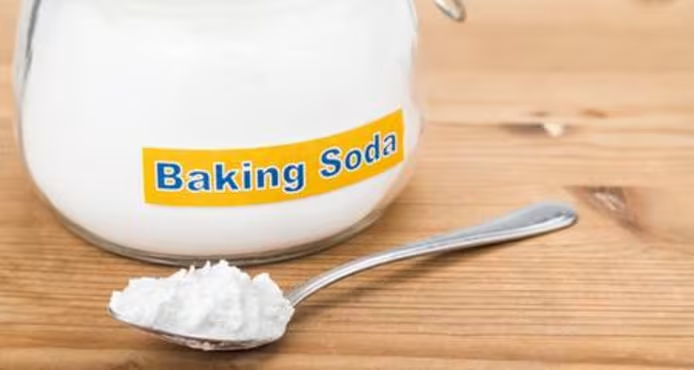
Is baking soda helpful to your pet? Could it potentially be harmful? Read on to find out.
Baking Soda for Dogs: Does It Really Control Odor — and Is It Safe?
If your dog has rolled in something unpleasant or your home carries that unmistakable "wet dog" scent, you've probably eyed the box of baking soda on your pantry shelf and wondered whether it could help. The short answer: yes, baking soda can be a useful, low-cost odor neutralizer for dogs — but how you use it matters enormously, because the same powder that freshens your carpet can cause serious harm if your dog ingests too much of it.
Here's what every pet parent should know before reaching for that orange box.
How Baking Soda Works on Pet Odors
Baking soda (sodium bicarbonate) neutralizes odors chemically rather than simply masking them. It reacts with both acidic and basic odor molecules — the compounds responsible for that "doggy" smell — and converts them into neutral, largely odorless salts. That's why it works on:
- Coat and skin odors — sprinkled lightly into your dog's fur, worked through with your fingers, then thoroughly brushed out for a between-bath refresh
- Bedding and fabric odors — sprinkled on dog beds, cushions or rugs, left for 15–20 minutes, then vacuumed completely before your dog returns to the area
- Carpet and hard-floor accidents — applied to a dried urine or odor spot, allowed to sit, then vacuumed up to lift residual smell
Pet parent tip: Always brush or vacuum baking soda out completely before your dog has access to the treated surface or area. Residue left in the coat or on bedding creates an easy opportunity for accidental ingestion.
The Safety Line You Should Not Cross
Baking soda is non-toxic in the tiny amounts that might transfer from a freshly brushed coat — but it becomes a genuine health concern when a dog consumes it in meaningful quantities. Sodium bicarbonate can disrupt the body's electrolyte and acid-base balance, and in larger amounts it has been associated with serious signs including vomiting, muscle spasms and, in severe cases, heart and respiratory complications. https://www.aspca.org/pet-care/animal-poison-control
The risk is real enough that the ASPCA Animal Poison Control Center lists sodium bicarbonate as a substance to watch. If your dog gets into a significant amount — say, a spilled box — contact your veterinarian or the ASPCA Animal Poison Control Center immediately rather than waiting to see whether symptoms develop. https://www.aspca.org/pet-care/animal-poison-control
Quick-Reference: Baking Soda Uses for Dogs
| Use | How to Apply | Key Safety Step |
|---|---|---|
| Between-bath coat refresh | Sprinkle lightly into fur; work through with fingers | Brush out thoroughly before dog licks coat |
| Dog bed & fabric deodorizer | Dust over surface; wait 15–20 min | Vacuum completely; keep dog away until done |
| Carpet odor spot treatment | Apply to dry spot; let sit; vacuum | Ensure full removal before dog re-enters area |
| Ingestion (any amount) | Do not use internally | Contact your vet immediately if consumed |
The Bottom Line Before You Reach for That Box
Baking soda earns its place as a practical, affordable odor-control tool for pet parents — when it stays on the outside of your dog and gets fully removed afterward. Think of it as a topical, temporary solution, not a substitute for regular bathing with a dog-formulated shampoo. And if you ever have doubts about whether your dog has ingested a concerning amount, don't wait: call your veterinarian. When it comes to your dog's wellbeing, a quick phone call is always the right move.
It’s a key component of the best de-skunking recipes
Baking soda is good old sodium bicarbonate, one of nature’s best neutralizers of odors. If your dog (and subsequently, you) are unfortunate enough to be on the receiving end of a skunk’s wrath, you’ll need a good recipe for a shampoo that will effectively remove the smell.
Many recipes exist, but one of the never-fail concoctions used by veterinarians contains one quart of 3% hydrogen peroxide, ¼ cup of good-ole baking soda, and one teaspoon of liquid hand soap. Lather into the coat, and rinse very well – even as long as 10 minutes, to ensure that you remove all of the residue from the coat. This mixture may lighten the coat of black dogs, and will surely bleach your clothes, so use with caution.
It’s a pretty good carpet deodorizer, within limits
Carpet smelling a little stale? A little baking soda sprinkled onto the surface, allowed to sit for 10 minutes, then vacuumed up may be all it needs to regain its freshness. And if your pet has an accident on the carpet, baking soda applied to the area after cleaning may be enough to hide the smell from your nose.
But don’t be fooled: your cat or dog can still smell urine that’s masked with a little baking soda. And an area of carpet that smells like urine to your pet continues to smell like a place that’s OK to eliminate. So be sure to use an enzymatic cleaner.
It's not a dental miracle
Bad Breath in Dogs and Cats: Skip the Baking Soda — See Your Vet
If your dog or cat has bad breath, baking soda is not the answer — and here's why that matters.
Don't add baking soda to your pet's drinking water. While a small amount is not acutely toxic, the taste is noticeably bitter and off-putting to most dogs and cats. That unpleasant flavor can discourage your pet from drinking enough water throughout the day — a real concern, since adequate hydration supports kidney function and overall health. Trading a cosmetic fix for reduced water intake is not a worthwhile trade-off. https://www.aspca.org/pet-care/animal-poison-control
More importantly, bad breath is rarely just a smell problem. In dogs and cats, persistent or worsening breath odor is most often a sign of:
- Dental disease — tartar buildup, gingivitis, or periodontal disease affecting the teeth and gums
- Oral infection or tooth root abscess — which can be painful and may go unnoticed without a professional exam
- Underlying illness — kidney disease, diabetes, or gastrointestinal issues can all produce distinctive breath odors that no amount of baking soda will address https://www.vet.cornell.edu/departments-centers-and-institutes/cornell-feline-health-center/health-information
Masking the odor — even temporarily — can delay a diagnosis and allow the underlying condition to progress.
What to do instead: Schedule a veterinary visit. Your vet will examine your pet's teeth and gums, and may recommend bloodwork or urinalysis to rule out internal causes. Catching dental disease or systemic illness early almost always means simpler, less costly treatment and a more comfortable pet.
Bottom line: Baking soda does not treat bad breath in pets — it only risks putting them off their water. If your dog's or cat's breath has changed or smells persistently unpleasant, that's your cue to call your veterinarian, not reach for the pantry.
It makes a lousy toothpaste
Pet toothpaste is formulated specifically for pets so that it is safe for them to ingest it, since we can’t teach them to spit out the toothpaste once they’re done. Because baking soda contains large amounts of sodium, if sufficient quantities are ingested it can cause hypernatremia, or sodium toxicosis.
Hypernatremia can cause swelling of the brain, and ultimately seizures and coma – even death – if not treated. Since you can’t make sure your dog doesn’t ingest dangerous amounts of sodium while brushing his teeth with baking soda, avoid it, and use a pet-safe toothpaste.
It may relieve itching in some pets
Can a Baking Soda Bath Soothe Your Dog's Itchy Skin?
A baking soda bath can offer temporary relief for mild skin irritation and itchiness in some dogs. Baking soda (sodium bicarbonate) is mildly alkaline, and when dissolved in warm water it may help calm surface-level irritation — think minor contact reactions, light seasonal itchiness, or skin that's been mildly irritated by environmental allergens.
That said, it's important to set realistic expectations: baking soda addresses surface discomfort only. It does not treat the underlying cause of itching, and it is not a substitute for veterinary care.
How to try it (if your veterinarian gives the go-ahead):
- Dissolve a small amount of baking soda — roughly 1 tablespoon per gallon of warm water — in a tub or basin before your dog steps in.
- Let your dog soak for 5–10 minutes, keeping the solution away from his eyes, nose and mouth.
- Rinse thoroughly with clean, warm water to remove all residue from his coat and skin.
- Pat dry gently with a soft towel.
When to skip the home remedy and call your vet instead:
If your dog's itching is persistent, intense, or accompanied by any of the following, a baking soda bath is not the right first step — contact your veterinarian promptly:
- Redness, swelling or hot spots
- Hair loss or broken skin
- Discharge, odor or signs of infection
- Scratching that disrupts sleep or daily activity
- No improvement after a single gentle trial
Chronic or severe itching in dogs has many possible causes — including environmental allergies, food sensitivities, parasites, bacterial or fungal infections, and underlying skin conditions — and most of these respond well to targeted treatments your veterinarian can prescribe. https://www.aspca.org/pet-care/animal-poison-control Waiting too long to seek that care can allow the underlying issue to worsen.
Bottom line: A baking soda bath is a low-risk option for mild, occasional skin irritation, but it's a comfort measure, not a cure. If your dog is noticeably uncomfortable or the itching returns, make an appointment with your veterinarian rather than repeating home remedies.
Your cat may not "dig" it in his litter box
Be aware that baking soda may artificially increase the pH of urine. This doesn’t do any inherent harm to the cat, but urine that’s collected for diagnostic testing from a litter box that contains litter with baking soda may yield invalid test results. Accurate measurement of urine pH is critical in managing feline lower urinary tract disease, as those cats need to be creating urine that measures neutral on the pH scale. So an inaccurate measurement may confuse your veterinarian and make his job more difficult.
Frequently Asked Questions
Is baking soda safe for dogs? It depends on how it's used. Baking soda is generally safe for external uses — such as a skunk-odor rinse or a carpet deodorizer — when applied carefully and rinsed thoroughly. It becomes a safety concern when ingested in meaningful quantities, because sodium bicarbonate is high in sodium and can cause sodium toxicosis (hypernatremia) in dogs. Signs of sodium toxicosis can include vomiting, tremors, seizures and, in severe cases, coma. If you suspect your dog has ingested a large amount of baking soda, contact your veterinarian or the ASPCA Animal Poison Control Center immediately. https://www.aspca.org/pet-care/animal-poison-control
Can I use baking soda to get rid of dog smell on carpet? Yes — with an important caveat. Sprinkling a light layer of baking soda on dry carpet, letting it sit for about 10 minutes and then vacuuming it up can help neutralize mild, stale odors. However, baking soda only masks odors at the human nose level. Your dog can still detect the underlying scent of urine or other biological odors, which can encourage him to eliminate in the same spot again. For pet accidents, always treat the area first with an enzymatic cleaner to fully break down odor-causing compounds, then use baking soda as a finishing step if desired.
Can I brush my dog's teeth with baking soda? No. While baking soda is a common home tooth-whitening remedy for people, it is not appropriate for use in dogs. Because dogs cannot spit out toothpaste, they inevitably swallow whatever is applied to their teeth. The high sodium content in baking soda means that even a small amount ingested during brushing can contribute to sodium toxicosis over time. Always use a toothpaste formulated specifically for pets — these are designed to be swallowed safely and come in flavors dogs find appealing. https://www.aspca.org/pet-care/animal-poison-control
Will baking soda in my cat's litter affect veterinary test results? It can. Many commercial cat litters contain baking soda as a deodorizer, and baking soda can artificially raise the pH of urine collected from the litter box. Accurate urine pH measurement is critical for managing feline lower urinary tract disease (FLUTD), where maintaining a neutral pH is an important part of care. An artificially elevated reading could mislead your veterinarian and complicate diagnosis or treatment. If your veterinarian has requested a urine sample from your cat, ask whether you should temporarily switch to a baking-soda-free litter before collection. https://www.vet.cornell.edu/departments-centers-and-institutes/cornell-feline-health-center/health-information
Can baking soda soothe my dog's itchy skin? Occasionally, a lukewarm bath with baking soda dissolved in the water has been reported to offer mild, temporary relief for dogs with itchy skin. If you'd like to try it, keep the soak brief, rinse thoroughly and monitor your dog closely. That said, baking soda does not address the underlying cause of itchiness — which may be allergies, a skin infection, parasites or another condition — and results are inconsistent. If your dog's itching does not improve quickly and noticeably, schedule a veterinary visit. There are both topical and systemic treatments that can address the root cause far more effectively.
How much baking soda is too much for a dog? There is no established "safe" ingestion threshold for dogs, and the amount that causes harm varies with a dog's size and overall health. Because the risk of sodium toxicosis is real and the margin for error is narrow, the safest approach is to treat baking soda as a household chemical — useful for external cleaning tasks, but never intentionally fed to or ingested by your dog. If accidental ingestion occurs, contact the ASPCA Animal Poison Control Center (888-426-4435) or your veterinarian right away rather than waiting for symptoms to appear. https://www.aspca.org/pet-care/animal-poison-control
This article was created with assistance from AI tools and reviewed for accuracy by Petco's content team.
481Pet Parents found this article helpful
Related Articles


