


Two Easy Ways to Start Earning Rewards!
Become a member today! Members-only pricing and offers, personalized care notifications, Vital Care points back on every purchase and more!
 Become a credit card member today!
Earn 2X Pals Rewards points at Petco
when you use Petco Pay!APPLY NOWLearn More About Petco Pay Benefits
Can Dogs Eat Sweet Potatoes? A Complete Guide
Published on October 10th, 2022
Updated on June 12th, 2026


Do you have questions about whether or not it is safe to give your dog sweet potatoes? Petco has the answers to this & other canine diet questions!
Yes, in general, dogs can eat sweet potatoes. But remember to always consult your veterinarian before introducing any new foods into your pet’s diet, especially if they have any underlying health concerns such as food allergies, diabetes, etc.
Sweet potatoes are one of the best vegetables for us humans to eat. They provide an abundance of vitamins C and B6, which are great for your brain and nervous system health. And those are just a few of the wellness benefits they offer. But the question we’re here for is, can dogs have sweet potatoes? That answer is yes.
Even though humans and dogs have different nutritional needs, sweet potatoes provide many of the same health benefits to both us and them. Many Association of American Feed Control Officials (AAFCO)-approved dog foods have sweet potatoes among their ingredients, as they contain a healthy dose of dietary fiber, which helps the canine digestive system function effectively.
Health benefits of sweet potatoes for dogs
Are sweet potatoes good for dogs? Yes. Sweet potatoes can be a wonderful part of a commercially available dog food or as an occasional snack/treat for your pet when you are cooking them at home.
Some of the benefits sweet potatoes offer include:
- Excellent source of dietary fiber
- Contain disease-fighting antioxidants
- Can help reduce the risk of heart disease and cancer
- Excellent source of vitamin C
- Excellent source of vitamin B6
- Low in fat
- High in potassium
- Helps support good vision
- Excellent source of calcium and iron
Sweet potatoes are loaded with vitamins, calcium, potassium and plenty of other nutrients. However, as with other high-fiber foods, sweet potatoes should be served to pups in moderation because too much fiber can cause diarrhea.
» MORE: Learn about fruits and vegetables that dogs can and cannot eat.
How to Feed Sweet Potatoes to Your Dog
Before adding sweet potatoes to your dog’s bowl, keep in mind that all treats offered throughout the day (including sweet potatoes) should amount to no more than 10 percent of your pet’s daily caloric intake.
Can dogs eat raw sweet potatoes? No. Prior to feeding your pet this tasty root vegetable, remove the skin and cook the rest thoroughly.
Can dogs eat sweet potato skins? No, skins should be avoided, as they can cause digestive issues. The skin also contains oxalates, which when fed in large quantities or too frequently may cause tremors, increased thirst and, ultimately, kidney damage. Raw sweet potatoes are not only hard to chew, but they also contain solanine, a toxin that can cause vomiting, diarrhea, lethargy or weakness in small amounts and more serious side effects in larger quantities. Once they’ve been skinned and cooked, sweet potatoes can be cut into bite-size pieces or mashed up for an extra treat or a topper for their dog food.
Frequently Asked Questions
Can dogs eat sweet potatoes every day? Sweet potatoes are nutritious, but they should be an occasional treat rather than a daily staple. All treats — sweet potatoes included — should make up no more than 10% of your dog's total daily caloric intake. Too much fiber from frequent feeding can lead to loose stools or diarrhea. Ask your veterinarian what portion size and frequency makes sense for your dog's size, age and activity level. https://sites.tufts.edu/petfoodology/
Can dogs eat raw sweet potatoes? No. Raw sweet potatoes contain solanine, a naturally occurring compound that can cause vomiting, diarrhea, lethargy and weakness — with more serious effects at higher quantities. Raw sweet potato is also very hard for dogs to chew and poses a choking risk. Always cook sweet potatoes thoroughly and remove the skin before offering them to your dog. https://www.aspca.org/pet-care/animal-poison-control
Can dogs eat sweet potato skin? No. The skin should always be removed before serving. Sweet potato skins can be difficult to digest and contain oxalates, which in large or frequent amounts may contribute to increased thirst, tremors and, over time, kidney stress. Stick to plain, cooked, peeled sweet potato flesh only. https://www.aspca.org/pet-care/animal-poison-control
How should I prepare sweet potatoes for my dog? Peel the sweet potato, then cook it thoroughly — steaming, boiling or baking without added seasonings, butter, salt, sugar or spices are all fine methods. Once cooked and cooled, you can cut it into bite-size pieces appropriate for your dog's size, or mash it plain as a food topper. Never add garlic, onion, nutmeg or sweeteners like xylitol, all of which are harmful to dogs. https://www.aspca.org/pet-care/animal-poison-control
Are sweet potatoes safe for dogs with diabetes or weight concerns? Sweet potatoes have a relatively high natural sugar content, which means dogs managing diabetes, obesity or other metabolic conditions may need stricter limits — or should avoid them altogether. Because dogs are omnivores with varying nutritional needs, what's appropriate varies significantly by individual health status. https://www.merckvetmanual.com/management-and-nutrition/nutrition-small-animals/nutritional-requirements-of-small-animals Always consult your veterinarian before introducing sweet potatoes if your dog has any underlying health condition.
Are sweet potatoes found in commercial dog foods? Yes. Many Association of American Feed Control Officials (AAFCO)-compliant dog foods include sweet potato as an ingredient, valued for its dietary fiber and nutrient profile. If you see sweet potato listed on a dog food label, it has been incorporated as part of a formulated, balanced diet — which is different from feeding additional sweet potato as a treat on top of a complete food. Check the ingredient list and consult your veterinarian if you have questions about your dog's current diet. https://www.aafco.org/consumers/understanding-pet-food/
Sweet Potato Feeding Guide by Dog Size
Use this quick-reference table to serve sweet potato safely. All amounts assume plain, cooked, skin-removed sweet potato given as an occasional treat — not a daily staple. Treats of all kinds combined should make up no more than 10% of your dog's daily caloric intake. https://www.aafco.org/consumers/understanding-pet-food/
| Dog Size | Approximate Weight | Suggested Treat Portion | Frequency | Notes |
|---|---|---|---|---|
| Extra Small | Under 10 lbs | 1–2 teaspoons, mashed or diced | Occasionally (1–2×/week max) | Cut into very small pieces to prevent choking |
| Small | 10–25 lbs | 1–2 tablespoons, mashed or diced | Occasionally (1–2×/week max) | Monitor stool; reduce if loose |
| Medium | 26–50 lbs | 2–3 tablespoons, diced or mashed | Occasionally (1–2×/week max) | Good as a food topper in small amounts |
| Large | 51–90 lbs | ¼ cup or less, diced | Occasionally (1–2×/week max) | Still counts toward 10% treat limit |
| Extra Large | 90+ lbs | Up to ¼ cup, diced | Occasionally (1–2×/week max) | Larger dogs still need moderation; high fiber can cause diarrhea |
| Preparation Method | Safe for Dogs? | Why It Matters |
|---|---|---|
| Raw, with skin | ❌ No | Contains solanine (a naturally occurring toxin) and oxalates; hard to chew and digest https://www.aspca.org/pet-care/animal-poison-control |
| Raw, skin removed | ❌ No | Solanine is still present in raw flesh; texture poses a choking risk https://www.aspca.org/pet-care/animal-poison-control |
| Cooked, skin on | ❌ No | Skin contains oxalates that in excess may contribute to kidney stress and digestive upset https://www.merckvetmanual.com/management-and-nutrition/nutrition-small-animals/nutritional-requirements-of-small-animals |
| Cooked, skin removed — plain | ✅ Yes | Safest option; retains fiber, vitamins C and B6, potassium and antioxidants https://www.merckvetmanual.com/management-and-nutrition/nutrition-small-animals/nutritional-requirements-of-small-animals |
| Mashed, plain (no butter/salt) | ✅ Yes | Easy for small or senior dogs to eat; ensure no added seasonings or dairy |
| Sweet potato fries / chips | ❌ No | Typically high in salt, fat or seasonings that are harmful to dogs |
| Canned sweet potato (plain, no additives) | ⚠️ Check label | Only if ingredient list is 100% sweet potato with no added sugar, salt or spices https://www.aafco.org/consumers/understanding-pet-food/ |
| Sweet potato pie / casserole | ❌ No | Contains sugar, spices (nutmeg can be toxic) and other ingredients unsafe for dogs https://www.aspca.org/pet-care/animal-poison-control |
Tip: When introducing sweet potato for the first time, offer a very small amount and wait 24–48 hours to watch for any digestive changes or signs of food sensitivity before making it a regular treat. If your dog has diabetes, kidney disease or a history of food sensitivities, consult your veterinarian before offering sweet potato at all.
Frequently Asked Questions
Can dogs eat sweet potatoes every day? Sweet potatoes are nutritious, but they are relatively high in natural sugars and fiber. Feeding them daily — even in small amounts — can contribute excess calories and may cause loose stools over time. Offer them as an occasional treat, keeping all treats combined to no more than 10% of your dog's daily caloric intake. https://www.aafco.org/consumers/understanding-pet-food/
Why can't dogs eat raw sweet potatoes? Raw sweet potatoes contain solanine, a naturally occurring compound that can cause vomiting, diarrhea, lethargy and weakness in dogs. The raw texture is also dense and difficult to chew, creating a choking or digestive-blockage risk. Always cook sweet potato thoroughly and remove the skin before offering it to your dog. https://www.aspca.org/pet-care/animal-poison-control
Are sweet potato skins safe for dogs? No. Sweet potato skins should always be removed before serving. The skin contains oxalates, which in large or frequent amounts may contribute to increased thirst, tremors and potential kidney stress. When in doubt, consult your veterinarian, especially if your dog has any existing kidney concerns. https://www.merckvetmanual.com/management-and-nutrition/nutrition-small-animals/nutritional-requirements-of-small-animals
Can dogs with diabetes eat sweet potatoes? Sweet potatoes have a relatively high glycemic index and contain natural sugars that can affect blood glucose levels. If your dog has been diagnosed with diabetes or insulin resistance, speak with your veterinarian before introducing sweet potato — even as an occasional treat. Your vet can help you determine whether and how much is appropriate for your dog's specific condition. https://sites.tufts.edu/petfoodology/
Do commercial dog foods use sweet potatoes? Yes. Many Association of American Feed Control Officials (AAFCO)-compliant dog foods include sweet potato as an ingredient because it provides dietary fiber that supports healthy digestion. If you see sweet potato on a dog food ingredient label, it has been processed and portioned appropriately for daily feeding — which is different from adding home-cooked sweet potato on top. https://www.aafco.org/consumers/understanding-pet-food/
What should I do if my dog eats sweet potato skin or a large amount of raw sweet potato? Contact your veterinarian or the ASPCA Animal Poison Control Center right away. While a small accidental nibble may cause only mild digestive upset, larger quantities of raw sweet potato or skin — particularly in small dogs — can cause more significant symptoms. Don't wait for symptoms to appear before reaching out to a professional. https://www.aspca.org/pet-care/animal-poison-control
This article was created with assistance from AI tools and reviewed for accuracy by Petco's content team.
-
WholeHearted Heavenly Layers Salmon & Sweet Potato Flavor Gourmet Dog Treats, 10 oz.
-
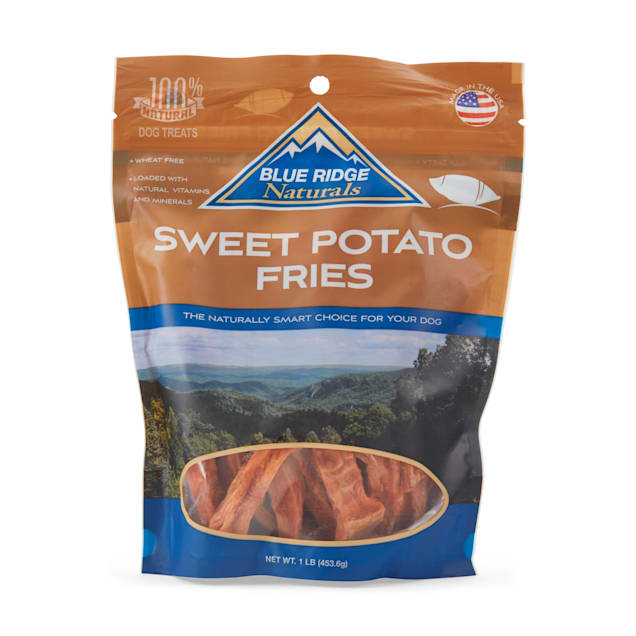
Blue Ridge Naturals Sweet Potato Fries, 1 lb.
-
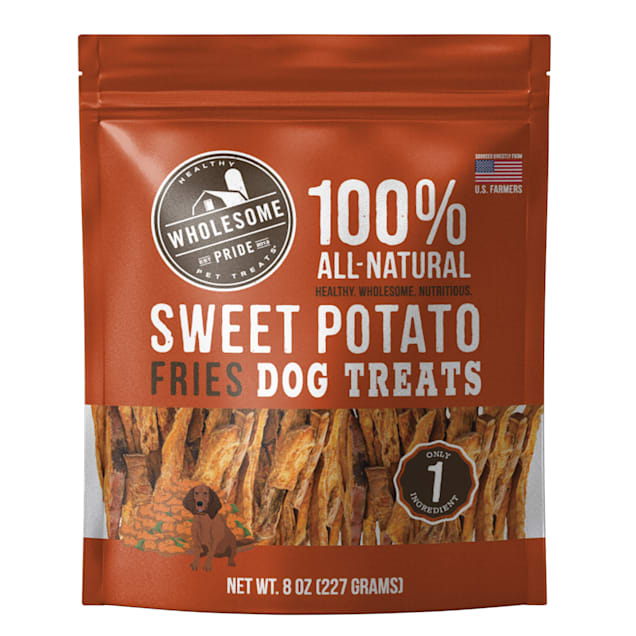
Wholesome Pride Sweet Potato Fries Dog Treats, 8 oz.
-
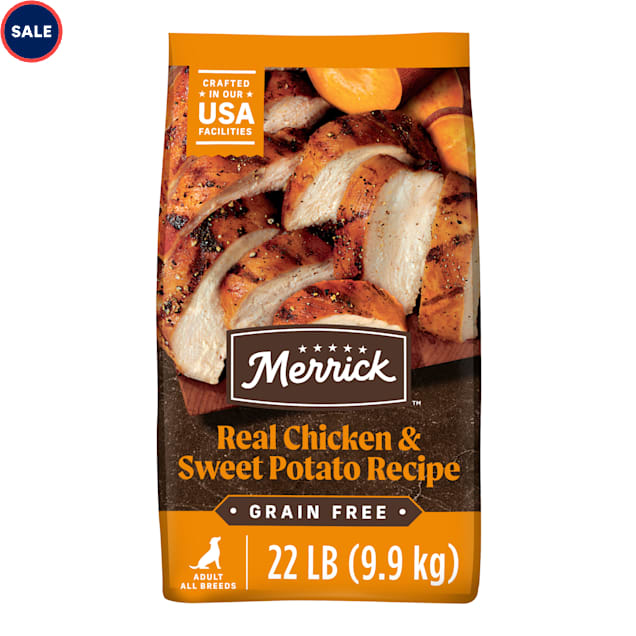
Merrick Grain Free Real Chicken & Sweet Potato Recipe Dry Dog Food, 22 lbs.
-
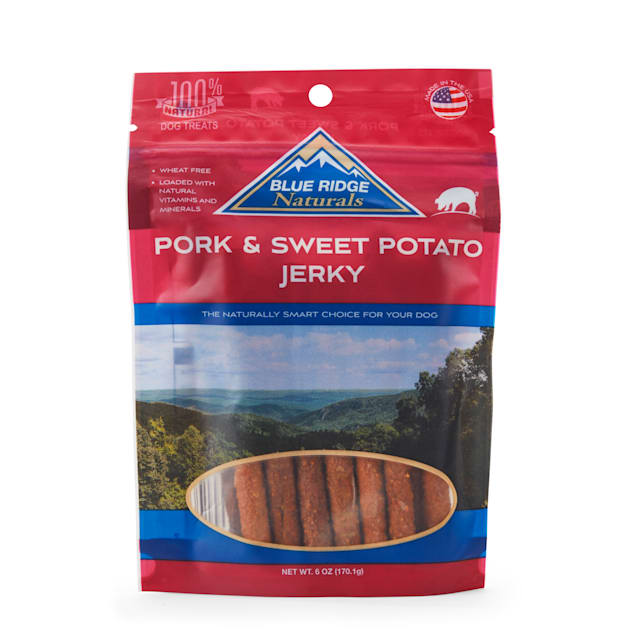
Blue Ridge Naturals Pork & Sweet Potato Jerky, 6 oz.
-
JustFoodForDogs Daily Diets Fish & Sweet Potato Frozen Dog Food, 18 oz.



FAQs about feeding your dog sweet potatoes
Yes, your dog can safely eat properly cooked sweet potatoes in moderation. Peel the skin completely off and thoroughly cook the rest until the potatoes are soft and tender.
As with people, moderation is essential. Remember that all treats offered throughout the day—and this includes sweet potatoes—should make up no more than 10 percent of your pet’s daily caloric intake. The amount you feed them depends on various factors, like your dog’s size, breed, energy level and overall health. Sweet potatoes are higher in carbohydrates than a lot of other foods, which means they should not be your pet’s main source of nutrition and should never be fed to dogs with diabetes. If your veterinarian says it’s OK to introduce sweet potatoes to your dog’s diet, be sure to introduce it in small amounts in case they don’t like them or have a negative reaction to them.
No, you should not give your dog sweet potatoes every day. These delicious treats should be looked at as exactly that—treats. Oversupplementation of foods containing high amounts of vitamin A for weeks or months at a time may result in poor coat condition, dry or rough skin, constipation, weight loss, painful or limited movement and excessive bone development. Overfeeding snacks and treats can lead to obesity, too.
This is a common question among pet parents. Both pumpkin and sweet potatoes can deliver health benefits to your dog when fed in moderation. Sweet potatoes are loaded with nutritional benefits, and so are pumpkins. Plain canned pumpkin is the healthiest choice to feed your dog because it’s easily digestible, loaded with nutrients and helps support digestive health. While both of these vegetables can provide your dog with health benefits, they should always be offered as a treat to complement the nutrition your dog receives from eating a base diet of commercially available, nutritionally complete and balanced dog food.
Sweet potatoes are high in dietary fiber. Fiber is essential for keeping your dog’s digestive system working properly and it’s already included in AAFCO-approved, commercially available diets. When added to a balanced diet in moderation, sweet potatoes can help firm up your dog’s stool, ease the complications of diarrhea and relieve constipation. With that said, not all diarrhea in dogs responds to higher amounts of dietary fiber. If your dog's condition isn't getting better with more fiber in their diet, consult your veterinarian about the next steps in their treatment plan.
Technically, your dog can eat sweet potato fries, but they are not good for them. Sweet potato fries, like regular french fries, tend to be cooked in fat, oil and seasonings like salt, all of which can cause major health issues in your canine, even in small amounts. They serve almost no nutritional value because of the way they are fried. Stick to cooked sweet potatoes and stay away from the fries.