


Two Easy Ways to Start Earning Rewards!
Become a member today! Members-only pricing and offers, personalized care notifications, Vital Care points back on every purchase and more!
 Become a credit card member today!
Earn 2X Pals Rewards points at Petco
when you use Petco Pay!APPLY NOWLearn More About Petco Pay Benefits
Can Dogs Eat Mushrooms? Safe Types & Toxic Risks
Published on August 17th, 2023
Updated on June 16th, 2026

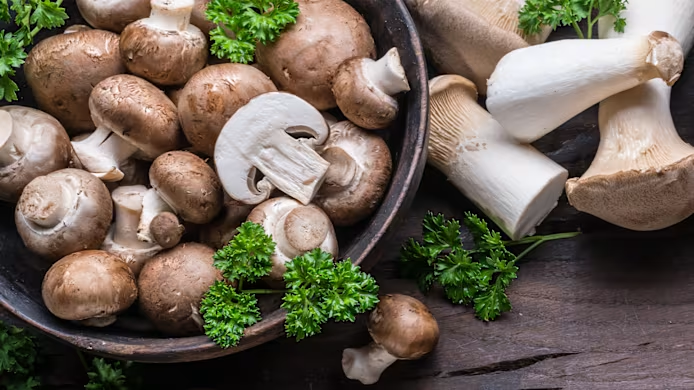
Do you have any questions if you can you give mushrooms to a dog? Visit Petco for answers to these and other questions!
Can Dogs Eat Mushrooms?
Yes, dogs can eat store-bought mushrooms, though they provide little nutrition. However, wild mushrooms can be toxic to both dogs and humans. Dogs can generally eat canned, cremini, portobello, and shiitake mushrooms found in grocery stores. Never allow your pet to consume wild mushrooms while exploring outdoors. If your dog eats a wild mushroom, contact your veterinarian or pet poison control immediately. Always consult your veterinarian before introducing new foods.
Can dogs eat cooked mushrooms?
Yes, dogs can eat cooked, store-bought mushrooms safe for human consumption. Ensure they aren’t prepared with harmful ingredients like garlic, onions, or excessive oil, salt, and spices.
Can dogs eat raw mushrooms?
Yes, dogs can eat raw, store-bought mushrooms that are washed and cut into bite-sized pieces. Never feed dogs raw wild mushrooms, as these can be toxic or deadly.
Can dogs eat portobello mushrooms?
Yes, dogs can eat store-bought portobello mushrooms when washed and served in moderation. Since mushrooms provide limited health benefits, feed them only as an occasional treat. Keep treats and snacks to under 10% of your dog's daily caloric intake.
Can dogs eat white mushrooms?
Yes, dogs can eat white button, cremini, and portobello mushrooms if they are store-bought and prepared appropriately. Do not feed dogs wild mushrooms, regardless of their color.
Can dogs eat button mushrooms?
Yes, dogs can safely eat white button mushrooms (also called “common mushrooms”). Cook them before feeding, avoiding toxic additives like garlic or onions. These mushrooms can provide some fiber, protein, and antioxidants.
Safe mushroom list
Here are some common varieties of store-bought mushrooms safe for dogs to eat:
- White button mushrooms
- Cremini mushrooms
- Portobello mushrooms
- Porcini mushrooms
- Shiitake mushrooms
- Reishi mushrooms
- Maitake mushrooms
Symptoms of poisonous mushroom ingestion
If your dog ate poisonous mushrooms, consult your veterinarian immediately and look out for the following symptoms:
- Diarrhea
- Vomiting
- Fever
- Excessive drool
- Seizures
- Stomach issues
- Weakness
- Uncoordinated or unnatural movements
- Jaundice
- Lack of energy
- Liver failure
It’s important never to feed your dog wild mushrooms or those you don’t recognize.
Visual signs of poisonous mushrooms include:
- White gills on the underside of the cap
- Red colored mushrooms
- Mushrooms with rings around the stem
- Mushrooms with bulging at the base of the stem
Store-Bought vs. Wild Mushrooms: What's Safe for Dogs?
Use this quick-reference table before sharing any mushroom with your dog. Store-bought varieties sold for human consumption are generally considered safe when served plain and in moderation — wild mushrooms are a different story entirely and should always be treated as a potential emergency.
| Mushroom Variety | Type | Safe for Dogs? | Notes |
|---|---|---|---|
| White button (Agaricus bisporus) | Store-bought | ✅ Yes | Serve plain, cooked or raw, cut into small pieces; no garlic, onion or excess salt |
| Cremini (Agaricus bisporus — brown) | Store-bought | ✅ Yes | Same species as white button, just more mature; plain preparation only |
| Portobello (Agaricus bisporus — fully mature) | Store-bought | ✅ Yes | Large cap — always slice into bite-sized pieces; keep treats ≤ 10% of daily calories |
| Shiitake (Lentinula edodes) | Store-bought | ✅ Yes | May offer some antioxidant compounds; serve plain with no seasonings |
| Porcini (Boletus edulis) | Store-bought | ✅ Yes | Dried or fresh from a grocery store only; never foraged from the wild |
| Reishi (Ganoderma lucidum) | Store-bought | ✅ Yes (with vet guidance) | Often sold as a supplement; consult your veterinarian before adding to your dog's routine |
| Maitake (Grifola frondosa) | Store-bought | ✅ Yes (with vet guidance) | Sometimes used in functional pet nutrition; always confirm with your vet first |
| Death cap (Amanita phalloides) | Wild | 🚫 Never | One of the most lethal mushrooms known; causes liver failure and death https://www.aspca.org/pet-care/animal-poison-control |
| Destroying angel (Amanita bisporigera) | Wild | 🚫 Never | White gills, ring on stem, bulge at base — classic danger signs; highly toxic https://www.aspca.org/pet-care/animal-poison-control |
| Fly agaric (Amanita muscaria) | Wild | 🚫 Never | Distinctive red cap; causes neurological symptoms including seizures and uncoordinated movement https://www.aspca.org/pet-care/animal-poison-control |
| Autumn skullcap (Galerina marginata) | Wild | 🚫 Never | Resembles edible varieties; contains the same deadly toxins as the death cap https://www.aspca.org/pet-care/animal-poison-control |
| Any unidentified wild mushroom | Wild | 🚫 Never | If your dog eats any wild mushroom, contact your veterinarian or the ASPCA Animal Poison Control Center immediately https://www.aspca.org/pet-care/animal-poison-control |
Golden rule: If it didn't come from a grocery store shelf, don't let your dog eat it — no exceptions. Wild mushroom identification is notoriously difficult even for trained foragers, and the consequences of a mistake can be fatal.
Frequently Asked Questions
Can dogs eat cooked mushrooms from a restaurant or takeout meal? Not safely. Restaurant mushrooms are almost always prepared with garlic, onions, butter, oil or heavy seasoning — ingredients that can be harmful to dogs. Stick to plain, home-prepared store-bought mushrooms only, and keep portions to a small, occasional treat. https://www.aspca.org/pet-care/animal-poison-control
How much mushroom can a dog safely eat? Mushrooms should be treated as an occasional snack, not a dietary staple. Treats and extras of any kind — mushrooms included — should make up no more than 10% of your dog's total daily caloric intake. Because mushrooms offer limited nutritional value for dogs, there's no strong reason to feed them regularly. https://sites.tufts.edu/petfoodology/
What should I do if my dog eats a wild mushroom? Act immediately — don't wait for symptoms to appear. Contact your veterinarian or the ASPCA Animal Poison Control Center right away. If possible, take a photo of the mushroom or collect a sample in a paper bag (not plastic) to help with identification. Time is critical with mushroom toxicity. https://www.aspca.org/pet-care/animal-poison-control
Are mushrooms nutritious for dogs? Store-bought mushrooms contain some fiber, protein and antioxidant compounds, but dogs are omnivores with nutritional needs best met by a complete and balanced commercial diet. https://www.merckvetmanual.com/management-and-nutrition/nutrition-small-animals/nutritional-requirements-of-small-animals Mushrooms are not a meaningful nutritional addition and should be thought of as an occasional low-calorie treat rather than a health food. https://sites.tufts.edu/petfoodology/
How can I tell if a wild mushroom is poisonous? You generally cannot tell reliably — and neither can most people. Visual warning signs include white gills on the underside of the cap, a ring around the stem, a bulging or cup-like base, and red coloring. However, some of the most toxic species closely resemble harmless ones. The only truly safe approach is to keep your dog away from all wild mushrooms and contact poison control if ingestion occurs. https://www.aspca.org/pet-care/animal-poison-control
Can puppies eat mushrooms? Store-bought mushrooms are not known to be harmful to puppies in small amounts, but puppies have sensitive, still-developing digestive systems. Consult your veterinarian before introducing any new food to a puppy's diet, and focus first on a complete and balanced puppy formula that meets their growth-stage nutritional needs. https://www.merckvetmanual.com/management-and-nutrition/nutrition-small-animals/nutritional-requirements-of-small-animals
Frequently Asked Questions
Can my dog eat mushrooms from a pizza or pasta dish? It depends on the other ingredients. Store-bought mushrooms themselves are fine for dogs, but pizza and pasta dishes almost always contain garlic, onions, or heavy salt — all of which are toxic or harmful to dogs. When in doubt, skip the table scraps and offer a plain, washed mushroom slice instead. Always consult your veterinarian if you're unsure whether a specific dish is safe. https://www.aspca.org/pet-care/animal-poison-control
What should I do if my dog ate a wild mushroom? Act immediately — don't wait for symptoms to appear. Contact your veterinarian or the ASPCA Animal Poison Control Center (888-426-4435) right away. If you can, collect a sample or take a photo of the mushroom without touching it with bare hands, as this helps with identification. Time is critical: some toxic mushrooms, like the Amanita species, can cause delayed but life-threatening liver failure. https://www.aspca.org/pet-care/animal-poison-control
How much store-bought mushroom can a dog safely eat? Treats and snacks — including mushrooms — should make up no more than 10% of your dog's total daily caloric intake. For most dogs, that means a few small pieces of plain, cooked or raw store-bought mushroom is plenty. Mushrooms offer limited nutritional value for dogs, so they're best thought of as an occasional treat rather than a dietary staple. https://www.merckvetmanual.com/management-and-nutrition/nutrition-small-animals/nutritional-requirements-of-small-animals
What are the signs that a dog has eaten a poisonous mushroom? Symptoms of toxic mushroom ingestion can include vomiting, diarrhea, excessive drooling, weakness, uncoordinated movement, seizures, fever and jaundice. In severe cases, liver failure can occur — sometimes with a delay of 24–48 hours after ingestion. If you notice any of these signs and your dog has been outdoors, treat it as an emergency and contact your veterinarian immediately. https://www.aspca.org/pet-care/animal-poison-control
Are mushroom supplements or powders safe for dogs? Mushroom-based supplements (such as reishi or maitake powders) are increasingly popular, but their safety and efficacy for dogs have not been fully established through peer-reviewed research. Never give your dog any supplement without first consulting your veterinarian, who can evaluate the product's ingredients and appropriate use for your individual pet.
How can I tell if a wild mushroom is dangerous? You generally cannot tell with certainty — and neither can most people. Even experienced foragers misidentify toxic species. As a rule, treat every wild mushroom as potentially dangerous for your dog. Visual warning signs include white gills on the underside of the cap, a red-colored cap, rings around the stem, or a bulging or cup-like base — all features associated with toxic varieties. The safest approach is to keep your dog on a leash in wooded or grassy areas and redirect him away from any fungi on the ground. https://www.aspca.org/pet-care/animal-poison-control
This article was created with assistance from AI tools and reviewed for accuracy by Petco's content team.


FAQs About Giving Mushrooms to Dogs
If it’s a common store-bought mushroom, your dog should be able to digest it without any issues. If you’re wondering, “Can dogs eat baby bella mushrooms?” or “Can dogs eat mushrooms from pizza?” your pet will likely be fine after consuming those, too.
Yes, white mushrooms—also known as table, button, champignon or common mushrooms—are typically acceptable for canines to eat, though there’s no reason to offer them to your pet.
Can dogs eat mushrooms they found growing outdoors? Some mushrooms are sought-after sources of nutrients for many woodland creatures. Others are deadly poisonous to humans and dogs alike.
If your dog consumes a wild mushroom that you can identify, contact your vet or animal poison control immediately to determine if it could be harmful to your pet. If you can’t identify it, make those calls anyway for advice on how to proceed. If your dog is acting abnormal after being outside and the only concern you find is a mushroom patch in your yard, grab a sample of the mushroom to help your veterinarian identify it. Symptoms of mushroom poisoning include vomiting, diarrhea, excess salivation, weakness, lethargy, a staggering gait and signs of abdominal pain. More serious symptoms of mushroom poisoning include seizures, coma, liver failure, abdominal pain and death, making it imperative you see your veterinarian or an emergency vet immediately if you suspect your dog got into wild mushrooms.
Take some time to learn about the most common wild mushrooms in your area so you can quickly identify which ones are toxic to dogs. The adverse effects of most poisonous mushrooms stop at severe gastrointestinal distress, but some mushrooms—such as fly agaric and death cap mushrooms—can cause a painful and sudden death.
Yes, some varieties can cause a wide range of illnesses in your pet. Some mushrooms are a favorite snack of many forest animals, but others can be deadly. This includes mushrooms like the amanita phalloides—also known as death cap—or the amanita muscaria—called fly agaric or deadly agaric.
If you suspect your dog may have eaten a dangerous wild mushroom and/or your pet experiences vomiting, diarrhea and excess salivation after exposure, take them to a pet hospital ASAP or contact pet poison control right away. Try to bring a sample of the mushroom eaten to help your vet determine the best treatment for your dog.
As a pet parent, it’s a good idea to acquaint yourself with some of the most common mushrooms grown in gardens. Some pose little threat, some can cause gastrointestinal distress and others can be deadly poisonous. However, most mushrooms that are toxic to canines are also dangerous for humans, and it’s unlikely that a home garden would contain any that are toxic to dogs. When determining what’s OK for your pet, consider that the answer to the question “Can dogs eat mushrooms that are toxic to humans?” is no.