


Two Easy Ways to Start Earning Rewards!
Become a member today! Members-only pricing and offers, personalized care notifications, Vital Care points back on every purchase and more!
 Become a credit card member today!
Earn 2X Pals Rewards points at Petco
when you use Petco Pay!APPLY NOWLearn More About Petco Pay Benefits
Boxer Dog Breed Information, Characteristics & Fun Facts
Updated on June 17th, 2025



Boxers are energetic, intelligent dogs known for their playful spirit and strong loyalty. This medium-sized working breed thrives on activity and companionship, making them devoted family pets with a protective edge.
TEMPERAMENT
Playful, Devoted, Energetic
COLORS
Brindle, Fawn, White markings
 WEIGHT
60 – 70 Pounds
 HEIGHT
21 – 25 Inches
 LIFE EXPECTANCY
10 – 12 years
Maintenance Level
Low Maintenance
High Maintenance
Friendliness
Reserved
Extroverted
About Boxers
Boxers are charismatic, goofy, devoted, intelligent, and energetic companion dogs. They’re the 10th most registered breed in America. When working, they can be counted on for their alertness, self-assurance, and fearlessness. They are a medium-sized breed with a need for substantial amounts of exercise and mental engagement. As a short-muzzled breed, they are at risk for overheating–both during activity and in extreme heat. Unfortunately, they are also the breed most at risk for developing cancer. During any given day with a Boxer, it will dole out affection to every member of the family, young and old, and demand just as much attention in return.
Origin: Germany, late 19th c. Other Names: None
Working Group
Dogs of the Working Group were bred to perform such jobs as guarding property, pulling sleds and performing water rescues.
Breed Appearance
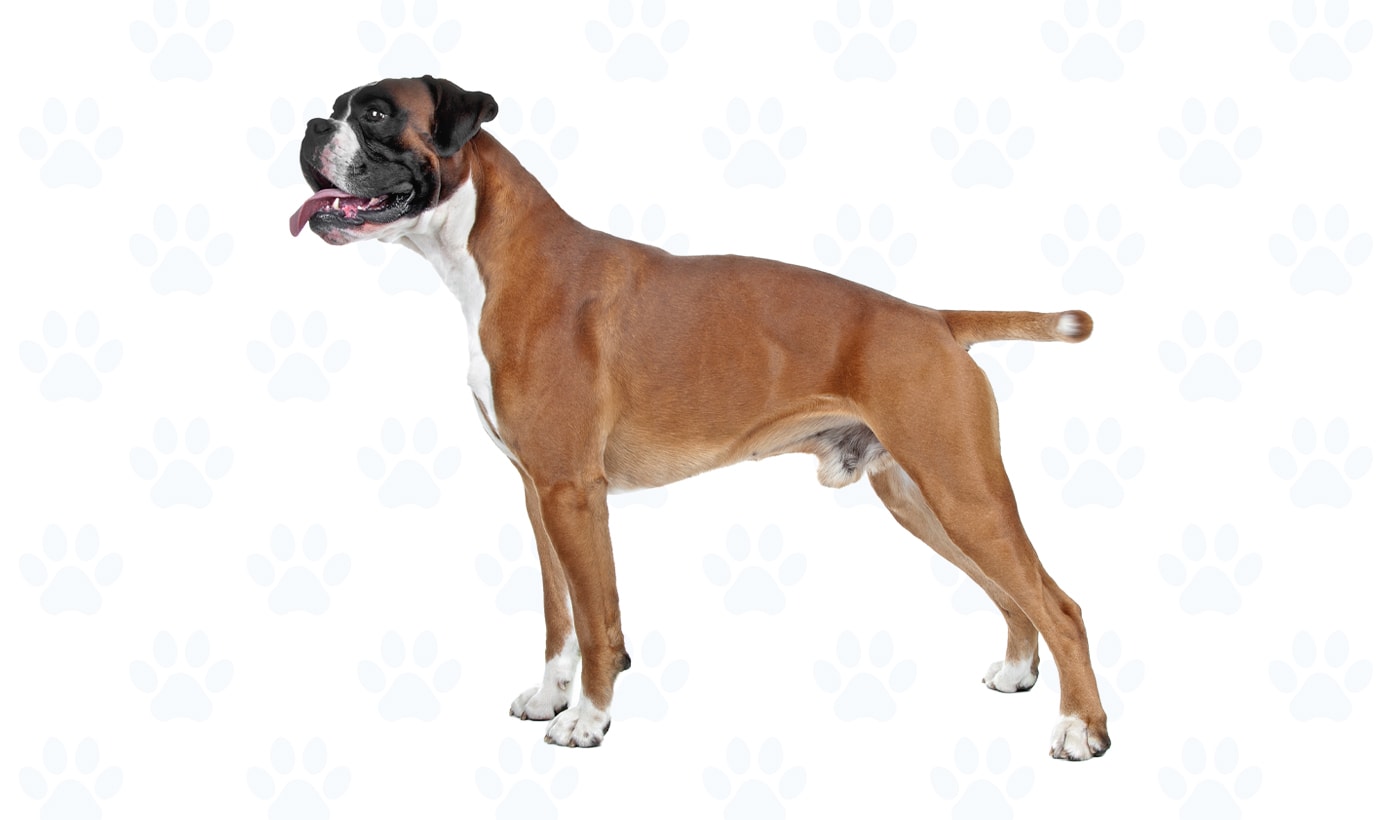
Boxers are powerful, squarely built, well muscled, dogs. They should have a proud carriage that conveys a combination of confidence, agility, and elegance. One of the Boxer’s key features is its blocky, short-muzzled head. The correct muzzle proportion is one third the length and two thirds the width of the head. They also have an underbite and strong jaws; these allowed their ancestors to hold onto game, no matter how large or ferocious.
Boxers have dark, wide-set eyes that do not protrude, and slightly wrinkled foreheads. Their ears are set high on the skull, and have been customarily cropped in the past to stand in tall triangles. If the ears are uncropped, they’re thin and medium length, lying close to the head when relaxed and creasing forward when interested. Their overall look should be expressive and alert.
Boxers have an elegantly arched, well-muscled neck. Their backs are short and slightly sloping when standing, which levels out when in motion. They have a tucked stomach, with long, slightly angled thighs. The tail sits high on the rump and is usually docked shortly after birth. Boxers come have a short, shiny, tight coat in either brindle or fawn. They often have white markings on the feet and chest, a black mask on the face, and a white blaze from the muzzle stretching up between the eyes. While white boxers are fairly common, the color is disallowed in the show ring, and about 18% of white boxers are deaf.
Size & Weight
Males typically stand 22.5 to 25 inches tall and weigh about 70 pounds. Females are slightly smaller: they normally stand 21 to 23.5 inches and weigh about 60 pounds.
Full Grown
Female
23 in. / 60 lbs.
Male
24 in. / 70 lbs.
Height is measured up to the shoulders.
Breed Characteristics
- Size & Coat
- Lifestyle
- Training & Behavior
How to Care for a Boxer
Caring for a Boxer involves meeting their grooming, training, and health needs while providing proper nutrition, exercise, and a supportive lifestyle. This energetic breed thrives with structure, regular activity, and attentive care routines.
Cost of Owning
Savings & Rewards
Unlock exclusive rewards with Petco Perks. Plus, members get 35% off their first Autoship order and 5% off all future orders.

Enjoy exclusive rewards on expert rated and pet parent approved products, like member prices, extra points and special offers designed to help you save on what your pet needs.

Get your pet’s essentials delivered on your schedule so you never run out and save up to 35% on your first order, then 5% on every order after that.
Your love story starts here.
Find adoptable pets near you with a simple search.
Fun Facts
Boxers were one of the first breeds trained for police work in Germany
A Boxer holds the record for dog with the longest tongue, 17 inches.
There is no such thing as a black Boxer. If a dog looks almost black it’s considered ‘reverse brindle’, very dark brown.
Boxers are known for grooming themselves, like cats do.
History
Boxers were created in Germany, from an indigenous breed called the Bullenbeisser. These mastiff-like dogs were hunting companions that helped to bring down large game like bear, deer, and wild boar. During the late 19th century, Old English Bulldogs were introduced into the breeding pool, which produced the modern Boxer. Origins of the breed’s name are unclear, however ‘boxl’ in regions where the breed became popular, is the word for tight, leather shorts. This is what the smaller Bullenbeisser variant were referred to as, and the name may have just stuck. In 1904 the Boxer was recognized by the American Kennel Club. After discovering the breed during World War II, soldiers took Boxers back to their homes around the world, where the Boxer gained a reputation as the companionable breed it is today.