


Two Easy Ways to Start Earning Rewards!
Become a member today! Members-only pricing and offers, personalized care notifications, Vital Care points back on every purchase and more!
 Become a credit card member today!
Earn 2X Pals Rewards points at Petco
when you use Petco Pay!APPLY NOWLearn More About Petco Pay Benefits
Kitten Personality: How to Choose the Right Kitten
Published on August 21st, 2000
Updated on June 18th, 2026

Written by Lauren M. Jones, VMD
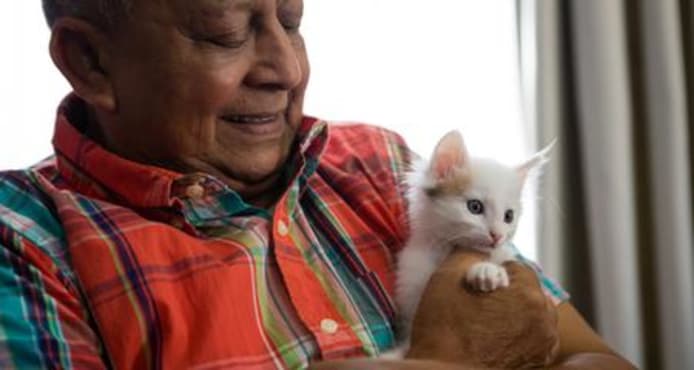
It is important to consider the personality of the kitten you want, as well as their age, health and appearance.
Kitten Personality: How to Choose the Right Match for Your Home
Every kitten is an individual — curious, bold, gentle, or somewhere in between. Before you think about logistics, think about personality. The kitten you bring home will shape your daily life for 15 years or more, so understanding kitten personality types and how to read them during your visit is the single most important step in choosing well.
The Four Broad Kitten Personality Types
Most kittens fall somewhere along two spectrums: bold ↔ cautious and people-focused ↔ independent. Watching a litter for even 15–20 minutes usually reveals where each kitten lands.
| Personality Type | What You'll Observe | Best Match For |
|---|---|---|
| Bold & social | Approaches strangers first, initiates play, comfortable being held | First-time pet parents, families with children, multi-pet homes |
| Playful & curious | Explores actively, investigates new objects, engages readily with toys | Active households, people who enjoy interactive play sessions |
| Gentle & calm | Content to be near people without demanding attention, relaxed when handled | Quieter homes, seniors, people who want a lap companion |
| Cautious or reserved | Hangs back, warms up slowly, may startle at sudden sounds | Experienced cat pet parents, patient adopters, low-traffic homes |
A cautious kitten is not a "bad" kitten — she simply needs more time and consistency to build trust. A bold kitten is not automatically easy; he may need more enrichment and boundaries. Match the personality to your lifestyle honestly.
Why Age at Adoption Shapes Personality
Kittens are not small puppies, and the rules that apply to dogs don't automatically carry over to cats. While 7–8 weeks is considered the ideal adoption window for puppies, kittens need more time with their mother and littermates. Most veterinary behaviorists recommend waiting until at least 9 weeks, and many suggest 12 weeks as the better benchmark. That extra time allows kittens to learn normal, acceptable social behavior from other cats — lessons that people simply cannot replicate.
The Socialization Window: Weeks 2–9
The single biggest predictor of a kitten's adult personality is what happened to her between 2 and 9 weeks of age. During this window, the brain is primed to form lasting associations with people, animals, sounds and environments.
Kittens who thrive socially tend to have:
- Been gently handled by multiple people, multiple times a day, from an early age
- Met a variety of people — different ages, appearances and voices
- Been exposed to common household sounds (vacuum cleaners, kitchen appliances, televisions) between weeks 2 and 8
- Grown up in a home environment rather than a shelter-only or outdoor setting
Kittens who may need extra patience tend to have:
- Had limited or no human contact during the socialization window
- Been handled roughly or inconsistently
- Come from a feral (free-roaming, wild-living) mother — feral kittens can be particularly challenging to socialize, especially for pet parents without extensive cat experience
- Spent their early weeks in a single, unstimulating environment
If a kitten sensed fear of people in her mother, she is more likely to mirror that fear herself. Conversely, friendly, people-comfortable parents meaningfully increase the odds of a friendly kitten — though genetics alone are never a guarantee.
How to Read Kitten Personality During Your Visit
Bring a simple toy — a piece of string or a shoelace works perfectly. Drag it slowly across the floor in front of the litter and watch what happens. That one small test tells you a great deal.
Signs of a well-adjusted kitten:
- Eagerly approaches and pounces on the toy
- Makes eye contact and shows curiosity toward you
- Accepts gentle petting on the head without cowering or pulling away
- Interacts with littermates in a give-and-take way — plays without relentless bullying
- Recovers quickly after a startle
Signs to take seriously:
- Hissing, growling or biting when calmly handled by a person
- Hiding in a corner and refusing to engage even after several minutes
- Consistently bullying every other kitten in the litter
- Freezing or cowering when petted gently on the head
One important caveat: if the litter just finished a vigorous play session, the kittens may be sound asleep and unresponsive. Kittens tend to cycle between full-throttle activity and deep sleep with very little in between. Ask to come back or wait — a tired kitten is not the same as a fearful one.
Litter Dynamics and What Parents Tell You
Whenever possible, observe the kittens interacting with each other and ask to meet the mother. A mother cat who is comfortable around people, allows you to approach her and shows no signs of fear or aggression is a meaningful positive signal for her kittens' social potential. If the father is available, observe him too.
Kittens raised together in a litter learn critical lessons that no human can teach: how to tolerate disruptions (a sibling stealing their sleeping spot), how to signal "enough" during play and how to inhibit biting and scratching — because other cats simply won't tolerate it. These are lessons that stick.
Special Consideration: Hand-Raised and Orphaned Kittens
Kittens who are raised without their mother or littermates — whether orphaned or separated too early — are more likely to develop behavior challenges as they grow older. Without feline feedback, they often fail to develop natural inhibitions against hard biting and scratching, because no one ever told them to stop. They may also struggle to cope with everyday disturbances that a litter-raised kitten would take in stride.
This doesn't mean a hand-raised kitten can't become a wonderful companion — many do. It does mean going in with realistic expectations and a commitment to patient, consistent socialization from day one.
Overall Health: What to Check Before You Commit
Personality matters, but health is equally non-negotiable. Always have your kitten examined by your veterinarian — ideally on the same day you bring her home https://www.vet.cornell.edu/departments-centers-and-institutes/cornell-feline-health-center/health-information. While you're visiting the litter, run through this checklist yourself.
A healthy kitten should have:
- Eyes — Clear, fully open, no tearing or discharge; able to track your finger or a piece of string
- Nose — Clean, no nasal discharge, no sneezing, no labored breathing
- Ears — No odor, no head shaking or scratching; black granular discharge can indicate ear mites, bacteria or yeast
- Gums and mouth — Pink gums, no sores or ulcers on the tongue or mouth lining; white, properly aligned teeth; no breath odor
- Anal area — Clean, no discoloration, no matted fur, no visible parasites (tapeworm segments may look like grains of rice; roundworms may resemble strands of spaghetti)
- Coat — Clean and soft, no dandruff, no evidence of fleas or lice; flea dirt looks like tiny black granules that dissolve into reddish-brown spots on a damp paper towel; no scabs, scratching or missing patches of fur (note: a kitten's coat is naturally less glossy than an adult's)
- Body shape — Symmetrical, neither too thin nor with a protruding belly; a distended belly can signal a significant intestinal parasite burden
- Appetite — Good appetite and fully weaned
- Umbilicus — No lumps or bumps at the belly button
- Movement — Coordinated, no head tremors; some kittens are polydactyl (extra toes), which rarely causes any health concern
Know your breed differences. Scottish Fold kittens have ears that fold naturally forward and downward — this is normal for the breed, not a sign of ear problems. Siamese kittens may appear lean due to the length of their bodies and limbs. Assess health in the context of what's typical for the specific breed you're considering.
If anything on this checklist gives you pause, consult your veterinarian before finalizing your decision. A kitten with treatable health issues can still become a wonderful companion — you simply deserve to know what you're walking into.
Kitten Personality Types at a Glance: Which One Fits Your Home?
Not every kitten is the same — and that's a good thing. Understanding the range of kitten personalities before you visit a litter helps you make a thoughtful match for your household, your schedule and your experience level. Use this table as a starting point, then observe each kitten in person before making your decision.
| Personality Type | Typical Behaviors You'll See | Best Match For | Watch Out For | Socialization Notes |
|---|---|---|---|---|
| Playful & Outgoing | Pounces on toys immediately, approaches strangers confidently, initiates contact | Active households, families with children, multi-pet homes | May need extra enrichment to prevent boredom-related mischief | Thrives when handled gently and frequently from 2–9 weeks of age https://www.vet.cornell.edu/departments-centers-and-institutes/cornell-feline-health-center/health-information |
| Calm & Easygoing | Relaxed body language, tolerates handling without squirming, content to observe | Quieter households, first-time cat parents, seniors | Can be mistaken for lethargy — rule out illness with a vet visit | Benefits from steady, low-stress early exposure to household sounds and routines |
| Curious & Independent | Explores new spaces boldly, investigates objects on his own terms, less lap-focused | Pet parents with busy schedules, single-pet homes | May resist being held; needs environmental enrichment like puzzle feeders and climbing spaces | Early positive human contact shapes how comfortable he becomes with handling https://www.vet.cornell.edu/departments-centers-and-institutes/cornell-feline-health-center/health-information |
| Shy & Cautious | Hangs back from strangers, warms up slowly, may hide initially | Patient, experienced cat parents willing to build trust gradually | Hissing or hiding when handled is a red flag — avoid kittens who show fear consistently at meeting time | Kittens with limited human contact before 9 weeks are more likely to be timid; early socialization window is critical |
| Assertive & Confident | First to approach, may nudge siblings aside, holds eye contact | Experienced cat parents who can set clear boundaries; homes without very young children | Assertiveness that tips into bullying littermates is a warning sign — look for confidence without aggression | Needs consistent, positive interaction; rough play during kittenhood can reinforce unwanted behaviors |
| Affectionate & Social | Seeks lap time, purrs readily, follows people from room to room | Pet parents who want a close bond, work-from-home households | Can develop separation anxiety if left alone for long stretches — consider adopting a pair | Kittens raised in a home environment and exposed to multiple people tend to be more consistently social |
How to use this table in person: Bring a lightweight string toy to the litter visit. Drag it slowly across the floor and watch each kitten's response. A well-adjusted kitten will engage eagerly — though keep in mind that a kitten who just finished a wrestling match with a sibling may simply be tired. Kittens tend to be either fully "on" or deeply asleep, with little in between. Observe for at least 10–15 minutes before drawing conclusions.
A note on breed: Certain breeds carry predictable personality tendencies — Ragdolls are often described as placid and people-oriented, while Abyssinians tend toward high energy and curiosity. Breed traits are a useful starting point, but individual temperament and early socialization still play the largest role in shaping who your kitten becomes. Always consult your veterinarian if you have questions about breed-specific health or behavioral considerations.
Frequently Asked Questions
How do I identify a kitten's personality before bringing her home? Spend at least 10–15 minutes observing the litter together, then interact one-on-one. A well-adjusted kitten will approach you with curiosity, accept gentle handling without hissing or cowering, and engage readily with a dragged string or toy. Kittens who hide in corners, flatten their ears, or swat without provocation may need a more experienced pet parent and a slower socialization plan. Your veterinarian can also flag any underlying health issues that might be influencing behavior during the first wellness visit. https://www.vet.cornell.edu/departments-centers-and-institutes/cornell-feline-health-center/health-information
Do kitten personalities change as they grow into adult cats? Yes — to a degree. Core temperament traits (boldness, sociability, curiosity) have a genetic component, but early socialization between 2 and 9 weeks of age is the single biggest environmental shaper of adult personality. A kitten who receives gentle, frequent human handling during that window is far more likely to remain confident and affectionate as an adult. Personality can continue to shift through adolescence (roughly 6–18 months), so consistent positive interaction matters well beyond kittenhood. https://www.vet.cornell.edu/departments-centers-and-institutes/cornell-feline-health-center/health-information
What is the best age to adopt a kitten, and why does it matter for personality development? Kittens should be at least 9 weeks old at adoption — and many feline behaviorists recommend waiting until 12 weeks. Unlike puppies, kittens need the extended time with their mother and littermates to learn bite inhibition, appropriate play, and how to read feline social cues. Kittens separated too early are more prone to aggression, fearfulness and compulsive behaviors later in life.
Can a shy or fearful kitten become more social over time? Many can, with patience and the right environment. Gradual, positive exposure — short, calm handling sessions, play-based interaction, and a predictable routine — can help a timid kitten build confidence. However, kittens from feral mothers or those with minimal human contact before 9 weeks may always be more reserved. Consult your veterinarian or a certified feline behaviorist if fearfulness is severe or is accompanied by aggression. https://www.vet.cornell.edu/departments-centers-and-institutes/cornell-feline-health-center/health-information
Does a kitten's breed affect her personality? Breed can influence general tendencies — some breeds are known for being more vocal, more active or more lap-oriented — but individual variation within a breed is significant. Socialization history, litter dynamics and early handling will often outweigh breed predispositions. Always assess the individual kitten in front of you rather than relying on breed stereotypes alone.
What health signs should I check for alongside personality when choosing a kitten? Personality and health are closely linked — a lethargic or irritable kitten may simply be unwell rather than naturally timid. Before or alongside your personality assessment, look for clear, discharge-free eyes; a clean nose with no sneezing; pink gums; a clean, parasite-free coat; a symmetrical body (neither too thin nor pot-bellied); and coordinated movement. Schedule a veterinary wellness exam — ideally on the same day you bring your new kitten home — to confirm what you observed. https://www.vet.cornell.edu/departments-centers-and-institutes/cornell-feline-health-center/health-information
This article was created with assistance from AI tools and reviewed for accuracy by Petco's content team.
77Pet Parents found this article helpful


