


Two Easy Ways to Start Earning Rewards!
Become a member today! Members-only pricing and offers, personalized care notifications, Vital Care points back on every purchase and more!
 Become a credit card member today!
Earn 2X Pals Rewards points at Petco
when you use Petco Pay!APPLY NOWLearn More About Petco Pay Benefits
What Do I Feed a Bunny? Complete Rabbit Diet Guide
Published on July 18th, 2024
Updated on June 18th, 2026

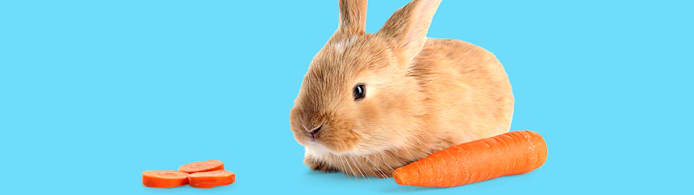
Do you have questions about what fruits and vegetables you should give your rabbit? Petco has the answers to this and other rabbit diet questions!
There's a longstanding stereotype that rabbits are always eating carrots; however, the truth behind rabbit diets is quite different. Your pet rabbit's diet should be composed primarily of Timothy or pet-quality grass hay such as orchard, oat, or meadow hay, a high-quality pelleted food, and some fruits and vegetables can be added for diversity and supplemental nutrition.
Some good vegetables for rabbits include leafy greens and carrot tops. Your vet may also recommend small amounts of fruits and non-leafy vegetables on occasion as a special treat. Read on to learn more specifics about what vegetables rabbits can eat, and check out our Rabbit Care Sheet for additional tips.
What vegetables can rabbits eat?
The best vegetables for rabbits are those which offer lots of nutrients and are easy to digest. It's recommended that pet parents feed no more than two cups of leafy greens and no more than two tablespoons of non-leafy veggies to their rabbit per day. Consult your veterinarian to find out what foods are most appropriate for your bunny.
Here are some vegetables rabbits can eat:
- Carrot tops
- Watercress
- Spinach
- Endive
- Romaine lettuce
- Escarole
- Kale
- Red sails lettuce
- Ruby gem lettuce
- Lollo rossa lettuce
- Butter lettuce
- Basil
- Cilantro
- Bell peppers
- Radicchio
- Zucchini
- Cucumber
- Brussels sprouts
- Wheatgrass
What fruits are good for my rabbits?
Can rabbits eat fruit? Yes, but they should consume it with even more caution than most vegetables. Your pet rabbit should eat fruit no more than two times per week and with approval from your vet. Due to the high sugar content, you need to be very careful about feeding your rabbit different kinds of fruit. It's recommended that you stick to a single serving size of 1 to 2 tablespoons and only offer it once or twice a week. Also, be sure to remove all pits, seeds, cores, stems, and leaves before providing fruit to your pet.
This can leave many pet parents wondering, "What fruits can rabbits eat?" Fruits that rabbits love and are typically acceptable for them to eat include the following:
- Apples
- Pears
- Strawberries
- Cranberries
- Mango
- Apricots
- Grapes
- Watermelon
- Nectarines
- Plum
General tips for feeding your rabbit
Most of your rabbit's diet should consist of grass hay. Never offer grass trimmings from your yard or cow-quality hay. You can find high-quality rabbit food and hay at Petco and other pet food stores. There are many different blends available, and the right choice for your pet can depend on the nutrition it provides and their personal preference. It's recommended that pet parents avoid feeding alfalfa hay in large quantities because it contains more protein and calcium than is recommended for most adult rabbits. Stick with Timothy, orchard, oat, or meadow hay, or reach out to your veterinarian for a recommendation.
Grass hay is crucial for rabbit digestion and is also rich in the nutrients they need-including vitamin A. Grass hay has a lot of fiber, which keeps your rabbit regular and helps maintain gastrointestinal health. Your rabbit needs to eat grass hay for their digestive system to work properly.
In addition to these must-eat grass hays, you can feed them 1-2 tablespoons of a high-quality pelleted food each day and rabbit-safe veggies and fruits as directed above. It's helpful to think of fruits and vegetables as treats rather than the staple of your pet's diet.
Water requirements for rabbits
Fresh water should be available at all times for rabbits to help them digest fruits and vegetables. Some pets prefer to drink from a bowl-but be aware that an open bowl may need to be cleaned more often throughout the day as your pet will drop bits of food in it. Another option is a water bottle sipper, which can be attached to the side of rabbit cages and habitats. These water bottles only release water when your pet pushes on a ball at the bottom of the sipper.
Frequently Asked Questions: Fruits & Vegetables for Rabbits
What fruits and vegetables do rabbits like?
Fruits and vegetables can add welcome variety and flavor to your bunny's diet — but moderation is key. In the wild, rabbits graze primarily on grasses and leafy plants, not root vegetables or fruit. Those foods are high in sugar and can disrupt gastrointestinal health when eaten in large quantities [https://www.merckvetmanual.com/management-and-nutrition/nutrition-small-animals/nutritional-requirements-of-small-animals]. That said, most bunnies will happily accept a small piece of fruit as an occasional treat, and leafy greens can be offered daily as a wholesome complement to unlimited timothy hay.
Quick reference:
| Food type | How often |
|---|---|
| Leafy greens (lettuce, herbs, watercress) | Daily |
| Non-leafy vegetables (bell pepper, zucchini) | A few times per week |
| Root vegetables (carrots) | Occasional treat only |
| Fruit (apple, blueberries, strawberries) | Once or twice a week, small portions |
What vegetables can bunnies eat every day?
Leafy greens are the best daily vegetable choice for rabbits. Aim for an adult-sized handful per day for a full-grown bunny. Good daily options include:
- Green, red or butter leaf lettuce (avoid iceberg — it has little nutritional value)
- Watercress
- Chard
- Fresh herbs such as basil, cilantro and dill
Always wash all vegetables thoroughly before serving. Pesticide residue and other contaminants can make your rabbit sick [https://www.fda.gov/animal-veterinary/animal-foods-feeds/pet-food]. Introduce any new green slowly — one new item at a time — and watch for soft stools or digestive upset, which signal that a particular food doesn't agree with your pet.
Are there vegetables I should avoid feeding my rabbit?
Yes. While many vegetables are nutritious for people, some are less suitable — or even harmful — for rabbits. The main concerns are high sugar content, excess calcium or oxalates, and foods that are simply too difficult for a rabbit's digestive system to process [https://www.merckvetmanual.com/management-and-nutrition/nutrition-small-animals/nutritional-requirements-of-small-animals].
Vegetables to limit or avoid:
| Vegetable | Guidance |
|---|---|
| Whole carrots | Occasional treat only — naturally high in sugar |
| Carrot tops | Small quantities only |
| Potatoes | Avoid entirely — too starchy to digest properly |
| Corn | Avoid entirely — difficult to digest |
| Cauliflower | Avoid — likely to cause gas and bloating |
| Kale, parsley, collard greens, dandelion greens, escarole | Moderation only — high in calcium or oxalates |
| Peas, turnip greens | Offer fresh only, as a very rare small treat |
A note on calcium: Rabbits absorb calcium differently than most mammals — their bodies take in more than they need for skeletal development. Excess calcium or oxalates in the diet can contribute to urinary crystals and a thick calcium buildup in the kidneys over time [https://www.merckvetmanual.com/management-and-nutrition/nutrition-small-animals/nutritional-requirements-of-small-animals]. This is why high-calcium greens like kale should never be a daily staple, even though they're often considered nutritious for other species.
If you notice changes in your rabbit's urination, appetite or energy level after introducing a new vegetable, stop offering that food and consult your veterinarian.
How often should I feed my rabbit?
Rabbits do best with a consistent daily feeding routine built around these proportions:
- Unlimited timothy hay — This should make up roughly 80–90% of your rabbit's total diet. Hay keeps the digestive tract moving and naturally wears down continuously growing teeth [https://www.merckvetmanual.com/management-and-nutrition/nutrition-small-animals/nutritional-requirements-of-small-animals].
- Fresh leafy greens — An adult-sized handful daily, rotating through safe varieties to provide a range of nutrients.
- High-quality pellets — A measured portion appropriate to your rabbit's size and age; your veterinarian can help you determine the right amount.
- Treats (fruit and root vegetables) — No more than 10% of the total daily diet, offered only a few times per week at most.
Fresh water should be available at all times. If you're ever unsure whether a specific food is appropriate for your rabbit — or if your pet shows any signs of digestive distress — reach out to your veterinarian before continuing to offer that item. For questions about food and supplies, a knowledgeable Petco associate is also happy to help [https://www.petco.com/].
Safe Vegetables for Rabbits: Serving Guide
Use this quick-reference table to plan your bunny's daily veggie rotation. Leafy greens form the bulk of the vegetable allowance; non-leafy vegetables are occasional extras. Always introduce any new vegetable gradually and one at a time, and consult your veterinarian before making changes to your rabbit's diet. [https://www.merckvetmanual.com/management-and-nutrition/nutrition-small-animals/nutritional-requirements-of-small-animals]
| Vegetable | Category | Suggested Serving Size | How Often |
|---|---|---|---|
| Romaine lettuce | Leafy green | Up to 1 cup per 2 lbs body weight | Daily |
| Red sails lettuce | Leafy green | Up to 1 cup per 2 lbs body weight | Daily |
| Butter lettuce | Leafy green | Up to 1 cup per 2 lbs body weight | Daily |
| Ruby gem / Lollo rossa lettuce | Leafy green | Up to 1 cup per 2 lbs body weight | Daily |
| Escarole | Leafy green | Up to 1 cup per 2 lbs body weight | Daily |
| Endive | Leafy green | Up to 1 cup per 2 lbs body weight | Daily |
| Radicchio | Leafy green | Up to 1 cup per 2 lbs body weight | Daily |
| Carrot tops | Leafy green | Up to 1 cup per 2 lbs body weight | Daily |
| Watercress | Leafy green | Up to 1 cup per 2 lbs body weight | Daily |
| Wheatgrass | Leafy green | Up to 1 cup per 2 lbs body weight | Daily |
| Basil | Leafy herb | A few leaves | Daily |
| Cilantro | Leafy herb | A few sprigs | Daily |
| Spinach | Leafy green (high oxalates) | Small handful | 2–3 times per week — rotate with other greens |
| Kale | Leafy green (high calcium) | Small handful | 2–3 times per week — rotate with other greens |
| Bell pepper (any color, no seeds) | Non-leafy | 1–2 tablespoons | 2–3 times per week |
| Zucchini | Non-leafy | 1–2 tablespoons | 2–3 times per week |
| Cucumber | Non-leafy | 1–2 tablespoons | 2–3 times per week |
| Brussels sprouts | Non-leafy (gas-forming) | 1 tablespoon | Once or twice per week — introduce slowly |
Total daily vegetable allowance: Up to 2 cups of leafy greens plus no more than 2 tablespoons of non-leafy vegetables per rabbit per day. [https://www.merckvetmanual.com/management-and-nutrition/nutrition-small-animals/nutritional-requirements-of-small-animals]
A note on spinach and kale: Both are nutritious but contain higher levels of oxalates (spinach) and calcium (kale). Rotate them with lower-oxalate greens rather than serving them every day.
Never feed: iceberg lettuce (very low nutrition, high water content that can cause loose stools), rhubarb, onion, garlic, or any plant from your yard that may have been treated with pesticides or herbicides. If you suspect your rabbit has eaten something toxic, contact the ASPCA Animal Poison Control Center immediately. [https://www.aspca.org/pet-care/animal-poison-control]
This article was created with assistance from AI tools and reviewed for accuracy by Petco's content team.


