


Two Easy Ways to Start Earning Rewards!
Become a member today! Members-only pricing and offers, personalized care notifications, Vital Care points back on every purchase and more!
 Become a credit card member today!
Earn 2X Pals Rewards points at Petco
when you use Petco Pay!APPLY NOWLearn More About Petco Pay Benefits
Terrestrial Turtle Care Guide: Food, Habitat, & Setup for a Happy Pet
Updated on July 18th, 2024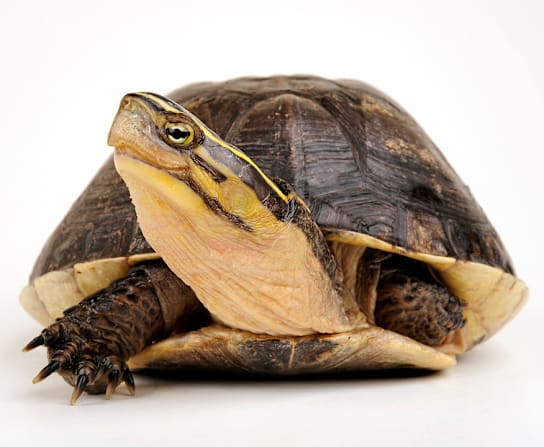
Terrestrial turtles spend most of their time on dry land but are typically found in or near shallow water. Native to Mexico, Costa Rica, and other parts of Central America, the painted wood turtle (also called the ornate wood turtle) is found in rainforests and, moist woodlands, and along rivers. Terrestrial turtles spend time on dry land and can typically be found in or near shallow water. Asian box turtles originated in subtropical and temperate regions of China, Taiwan, and Japan. Asian box turtles are called box turtles because they can withdraw their head and limbs fully into their shells and have a hinge on the bottom part (the plastron) of their shell that they can close tightly against the top part (the carapace) so that they are completely enclosed, as if in a box.
Learn how to care for terrestrial turtles, recommended diet & habitat setup. Find the right food, supplies & equipment at your neighborhood Petco.
Care recommendations cover a variety of species, including:
- Painted wood turtle – Rhinoclemmys pulcherrima
- Asian box turtle – Cuora amboinensis
Typical appearance and behavior
- Painted wood turtles have a dome-shaped carapace (top shell) and a plastron (bottom shell) with a continuous line down the center. The carapace has bright red and orange scutes (small plates of keratin protein on the outside of the shell) that have olive-green circular markings on them that look like eyeThey also have distinctive bright red stripes outlined in black on their olive-green legs and below their eyes.They have webbed feet for swimming
- Painted wood turtles are medium-size, semi-terrestrial turtles. Juveniles prefer to spend more time in the water than adults, who prefer land
- Male painted wood turtles grow to 7 to8 inches long, while females are larger at 9 to10 inches. Males have longer tails and more concaveplastrons to mount females when mating
- Asian box turtles have a dark brown to black carapace with black or brown scutes. Their plastron is pale to light brown with a darker blotch in the center. Their heads are dark brown to black with yellow necks and three yellow stripes on the sides of their heads and their neck
- Asian box turtles are medium-size, semi-terrestrial turtles who grow up to 12 inches in length. Males have a thicker, longer tail than females with a vent opening closer to the tail tip than in females. Males also have a more concave plastron than females
- Juvenile semi-terrestrial turtles spend most of their time in the water, while adults are more terrestrial
- Initially these turtles may be shy, but over time and with gentle handling, they can learn to recognize their pet parents as they approach and may even come to accept food from their hands
Characteristics
| Care Difficulty | Intermediate |
|---|---|
| Average Life Span | Up to 40 years with proper care, depending on the species |
| Average Adult Size | 5-12 inches long, depending on the species |
| Diet | Omnivore |
| Minimum Habitat Size | Minimum 20-40 gallon habitat indoors for a juvenile; 50-gallon habitat for an adult Minimum 4’x4’x1’ outdoor pen for one to two adults |
Habitat
Habitat size
These turtles may be housed indoors or outdoors, depending on the climate. Outdoor housing is preferable if the environmental temperature allows it, even for a few months of the year, as these turtles enjoy roaming over large areas. Juveniles may be kept indoors in a indoor habitat of a 20- to 40- gallon aquariumhabitat that allows for free movement within the habitat. A full-grown adult can live in a minimum of 50 -gallons indoors but will thrive if housed in an aquarium habitat that is 75 gallons or larger. If housed outdoors, one or two adults (a male and a female or two females) may be kept in anAdult outdoor pen—at least 4' x4' x1’ to accommodate normal behavior and exercise— with a screened lid., at least 43'x4'x1’2", to accommodate normal behavior and exercise.;Males should not be housed together, as they are very territorial and may fight. Outdoor pens should have some sunny areas and some shade. At least 25 to -50% of the habitat should be comprised of a shallow area of water, as these turtles are semi-aquaticterrestrial and will spend some time swimming. The walls of outdoor enclosures should extend 10 inches” below the ground, as turtles dig and can escape, and enclosures should be predator-proof. These turtles must not be housed outdoors don't keep outdoors if the temperature drops below 70°F. .
Terrestrial turtles will reach adult size in three37 to 10 years, depending on their gender and species and under ideal conditions. Males typically reach full size before females.
Building your habitat
- Décor - Whether housed indoors or out, turtles must be provided with hide boxes for security and protection from the elements (extreme heat and rain) if outside. Provide a shaded hiding area in both dry and wet areas of the habitat. Hide boxes may be commercially available or made from hollow cork bark logs, upside-down terra-cotta planters, wooden boxes or deep leaf litter. There should be at least one hide box in the cool end of the habitat and one in the warm end. Large rocks, driftwood and plants provide both enrichment and stimulation to turtles
- Humidity - Maintain 70 to 90% humidity by misting as needed every day. Larger enclosures may be kept moist by using a commercially available fogger. Having an open, shallow pool of water large enough for turtles to swim in aids in maintaining humidity through evaporation. Monitor humidity with a humidity gauge
- Substrate - Paper-based or alfalfa pelleted bedding, coconut fiber, sphagnum moss and orchard bark may be used to help retain moisture and increase habitat humidity. Bedding made of small particles such as sand or small bark chips is not recommended, as these substrates are indigestible and can lead to life-threatening gastrointestinal tract obstruction if they are accidentally consumed. As these turtles like to dig, providing deep substrate in outdoor habitats or a “dig box” of untreated soil in which they can dig is ideal
- Temperature – Turtles need a temperature gradient so that they can self-regulate their body temperature. The cool end should be no lower than 75 to 80°F, and the warm end should be 85 to 90°F with a basking area of 90 to 95°F, and nighttime temperature of 70 to 76°F. Monitor temperature with at least two thermometers—one in the cool zone and the other in the hot (basking) zone. Heat may be provided by an incandescent bulb, ceramic heat bulb or an under-tank heating pad. Heat sources should be attached to thermostats to regulate temperatures. Thermostats are especially important with heating pads, which can get hot and cause burns through the tank floor if not regulated properly. Hot rocks should not be used as a heat source, as they can burn reptiles. Reptiles not kept at the appropriate temperature ranges are more likely to become immunosuppressed and get sick
- Lighting – Turtles require full-spectrum ultraviolet (UV) lighting for 10 to 12 hours a day to expose them to the UVB rays that enable them to make vitamin D in their skin so that they can absorb dietary calcium. UV bulbs should be turned off at night, as turtles see some infrared light and need all lights off at night to establish a clear day-night cycle. Change UV bulbs every six months, as their potency wanes
- Water – These semi-terrestrial turtles require constant access to water. Juveniles spend more time in water, and adults spend more time on land. Whether housed indoors or out, these turtles should have a container large enough for them to soak in, swim in and drink from. If they are housed outdoors, they should have access to a small pool or pond. Water bowls or pools should be shallow and easy for turtles to enter and exit
Cleaning your habitat
Thoroughly clean and disinfect water and food bowls daily. The habitat should be spot-cleaned daily to remove droppings. Thoroughly clean the habitat at least once a week:
- Place the turtle in a secure habitat
- Scrub the tank and furnishings with a reptile habitat cleaner or 3% bleach solution
- Rinse the tank and all furnishings thoroughly with water, removing all traces of habitat cleaner or bleach smell
- Dry the tank and furnishings and add clean substrate before putting the turtle back into the habitat
Feeding
A well-balanced terrestrial turtle diet consists of:
- A diet of 50% animal protein (insects), 40% vegetables and leafy greens and 10% fruit for Asian box turtles, and 30% animal protein, 60% vegetables and leafy greens and 10% fruit for painted wood turtles
- Insects such as crickets, waxworms, mealworms, calci-worms, superworms, hornworms, snails, roaches and earthworms should be gut-loaded (recently fed)
- Greens should include deep leafy greens (collards, dandelion/mustard greens, bok choy, watercress, romaine lettuce and pond plants such as duckweed, flowers, water lilies, water hyacinth and others) plus vitamin A-rich foods such as bell peppers and squash. Fruits that can be fed as treats include berries, mango, melon, apple and banana.
- Commercial diets meant for terrestrial turtles are available for feeding
Things to remember when feeding your terrestrial turtle:
- Fresh, clean water should be available all the time
- Many turtles defecate in their water bowl, so it should be cleaned and disinfected daily
- Feed juveniles daily and adults every other day
- Sprinkle food with calcium supplement without vitamin D two to three times per week and a multivitamin supplement once a week. Be sure to use calcium without vitamin D, as turtles are sensitive to over-supplementation of vitamin D in their diets
- Discard uneaten vegetables and fruits within 10 hours
- Avoid feeding certain vegetables such as broccoli, spinach, beet greens, Swiss chard and kale in excess, as they contain substances called oxalates that can contribute to the development of bladder stones
- Do not feed dog food or cat food to your turtle, as these foods do not contain the proper balance of calcium and phosphorus that reptiles need
Care
Turtles’ shells are made of an underlying layer of bone (that comprises their ribs and spine) that is attached to the turtles’ limbs and covered in keratin scutes. Scutes are shed as more keratin develops at the base of each scute, not as the turtle grows
Where to buy
Terrestrial turtles are available for purchase at your local Petco Pet Care Center. Please call ahead to check availability.
Supplies
- Appropriately-sized habitat
- Commercial terrestrial turtle food
- Substrate
- Sphagnum moss
- Food dish and water ramp bowl
- Mealworm dish
- Hideaway place
- Climbing décor
- Plants
- Heat bulb
- Heat fixture
- Under-tank heater
- UVB lighting and fixture
- Multivitamin supplement
- Calcium supplement without vitamin D
- Cricket keeper
- Cricket quencher
- Cricket food
- Thermometers
- Humidity gauge
- Mister
Habitat mates
Terrestrial turtles can be housed individually or in pairs of one male to one female or a female with another female. Males should not be housed together, as they are territorial and will fight
Do not house different turtle species together
Health
Signs of a healthy turtle
- Active and alert
- Eats and passes stool regularly
- Smooth, hard shell with no lesions, pitting or soft spots
- Clear, bright eyes with no swelling or discharge
- Supple skin with no sores, lesions, swellings or discoloration
- Clear nose and vent
Red flags (If you notice any of these signs, contact your veterinarian.)
- Discoloration, bumps, soft spots or pitting on shell
- Lesions, swellings or discoloration of skin
- Lethargy
- Abnormal feces
- Difficulty breathing
- Swollen eyes
- Discharge or bubbles from eyes, nose or mouth
- Overgrown beak
- Swelling on the sides of the face, in the area of the ears
Common health issues
| Health Issue | Symptoms or Causes | Suggested Action |
|---|---|---|
| Health IssueGastro-intestinal disease | Symptoms or CausesRunny stools, caked or smeared stool around the vent, cloacal (colon) prolapse, weight loss and loss of appetite; may be caused by bacterial, viral or parasitic infection or nutritional imbalance. | Suggested ActionConsult your veterinarian as soon as possible. |
| Health IssueMetabolic bone disease/vitamin deficiency | Symptoms or CausesInability to absorb calcium due to insufficient UVB light or inappropriate diet or supplementation. If untreated, can lead to skeletal deformities, soft or fractured bones, swollen limbs, lethargy, decreased appetite, weight loss, seizures and death. | Suggested ActionConsult your veterinarian and ensure a proper diet with appropriate vitamin and mineral supplementation, and proper lighting. |
| Health IssueRespiratory tract disease | Symptoms or CausesLabored breathing, mucus and/or bubbles in the mouth or nose; can be caused by inappropriate habitat temperature and humidity, leading to secondary bacterial, viral or fungal infection. | Suggested ActionConsult your veterinarian and ensure habitat hasi the proper temperature and humidity. |
| Health IssueShell infection/ulcers | Symptoms or CausesDiscolored, soft or foul-smelling patches or pits on the shell that can become infected with bacteria or fungus; may be caused by imbalanced nutrition or inappropriate lighting, temperature or humidity. | Suggested ActionConsult your veterinarian and ensure proper nutrition and appropriate habitat lighting, temperature and humidity. |
| Health IssueEye infection/ abscess/conjunctivitis | Symptoms or CausesSwollen, inflamed eyes and swellings on sides of head (where ear openings are); commonly caused by a vitamin A deficiency leading to secondary bacterial infection. | Suggested ActionConsult your veterinarian and ensure a balanced diet with appropriate vitamin and mineral supplementation. |
Notes and resources
Ask a Pet Care Center associate about Petco's selection of products available for the care and happiness of your new pet. All products carry a 100% money-back guarantee.
Because all reptiles are potential carriers of infectious diseases such as salmonella bacteria, always wash your hands before and after handling your invertebrate or habitat contents to help prevent the potential spread of disease.
Pregnant women, children under the age of 5, senior citizens and people with weakened immune systems should contact their physicians before purchasing or caring for invertebrates and should consider having a pet other than a turtle.
Go to cdc.gov/healthypets for more information about reptiles and disease.
The information on this Care Sheet is not a substitute for veterinary care. If your pet is sick or if you need additional information, please contact your veterinarian as appropriate.
Related Articles


FAQs
Box turtles can live up to 40 years with proper care.
Eastern box turtles (which are a different species than Asian box turtles) eat about 50% animal protein (insects, worms, snails) and 50% plant matter (greens, other vegetables, small amounts of fruit).
Asian box turtles grow to be 5 to 12 inches long.
Box turtles get their name because they can withdraw their head and limbs fully into their shells and have a hinge on the bottom part (plastron) of their shell that they can close tightly against the top part (carapace) of their shell so that they are completely enclosed, as if in a box.
Asian box turtles originated in subtropical and temperate regions of China, Taiwan and Japan.
Box turtles are not tortoises. Tortoises generally spend their time on land, while turtles spend their time in water, on land or are semi-terrestrial, spending time both on land and in water.